🏛 Part of the "health" topic shelf →
The Wan'er Collection: Humor, Red Excreta After Dragon Fruit, and the Evidentiary Boundaries of Health Claims
The “Wan'er Collection” brings together medical testimonials, observations from daily life, linguistic inquiry, and humor. The key to an evidence-based reading is first to identify which statements are verifiable health propositions, then to distinguish mechanistic evidence, clinical outcomes, and personal testimony. Current literature supports that food pigments can cause benign, reversible red discoloration of excreta, and that well-being and humor interventions are associated with some health indicators. As for claims that LifeWave patches treat cancer, stroke, or shock, this ECU search found no usable controlled clinical evidence.
An Evidence-Based Health Reading of the Wan'er Collection
Conclusion in one sentence
The Wan'er Collection reminds us that humor can be part of a healthy life, but food pigments, psychological well-being, and therapeutic efficacy are claims at different evidentiary levels. Each must be judged on its own evidence; anecdotes and testimonials cannot be used to cross scientific boundaries. (PMID: 24959539; PMID: 42057043; PMID: 42001147)
First, separate content of different kinds
Professor Ching-Shun Lin's “Wan'er Collection” does not consist entirely of medical arguments. It also includes miscellaneous discussions of Taiwanese word origins, Buddhist culture, and English etymology. Such linguistic or religious-cultural material is not a claim about disease, drugs, therapies, or nutrition, so biomedical databases cannot determine whether it is true or false. To turn “no biomedical study was found” directly into “the etymological claim is wrong” would confuse the purpose of the database. The appropriate conclusion is only that claims of this kind are not suited to this form of medical evidence checking.
Health topics likewise require us first to determine what question the evidence actually answers. The chemical properties of a pigment, a change in appearance after consumption, a disease diagnosis, and a treatment effect cannot stand in for one another. A person's sense of improvement can be the starting point for a research question, but it is not the endpoint for proving efficacy.
Testimonials about LifeWave patches are not treatment evidence
The original article takes a clear and reasonable skeptical stance toward personal testimonials claiming that LifeWave patches can treat advanced eye cancer or terminal leukemia, restore function after a stroke, or rapidly revive a person in shock. These are major claims of clinical efficacy. They should be supported by testable, reproducible human research with appropriate comparison conditions, not merely by cases retold by promoters.
ECU searched the product name together with cancer, stroke, and clinical-trial terms and obtained no usable results. The conclusion currently justified is therefore “insufficient evidence”: this search found no literature supporting the claims, but zero results are not, by themselves, an experiment proving that the product must be ineffective. This boundary both preserves Professor Lin's original demand for scientific evidence and avoids inflating “no reliable evidence yet” into a definitive rejection of every possibility.
Why dragon fruit may turn excreta red
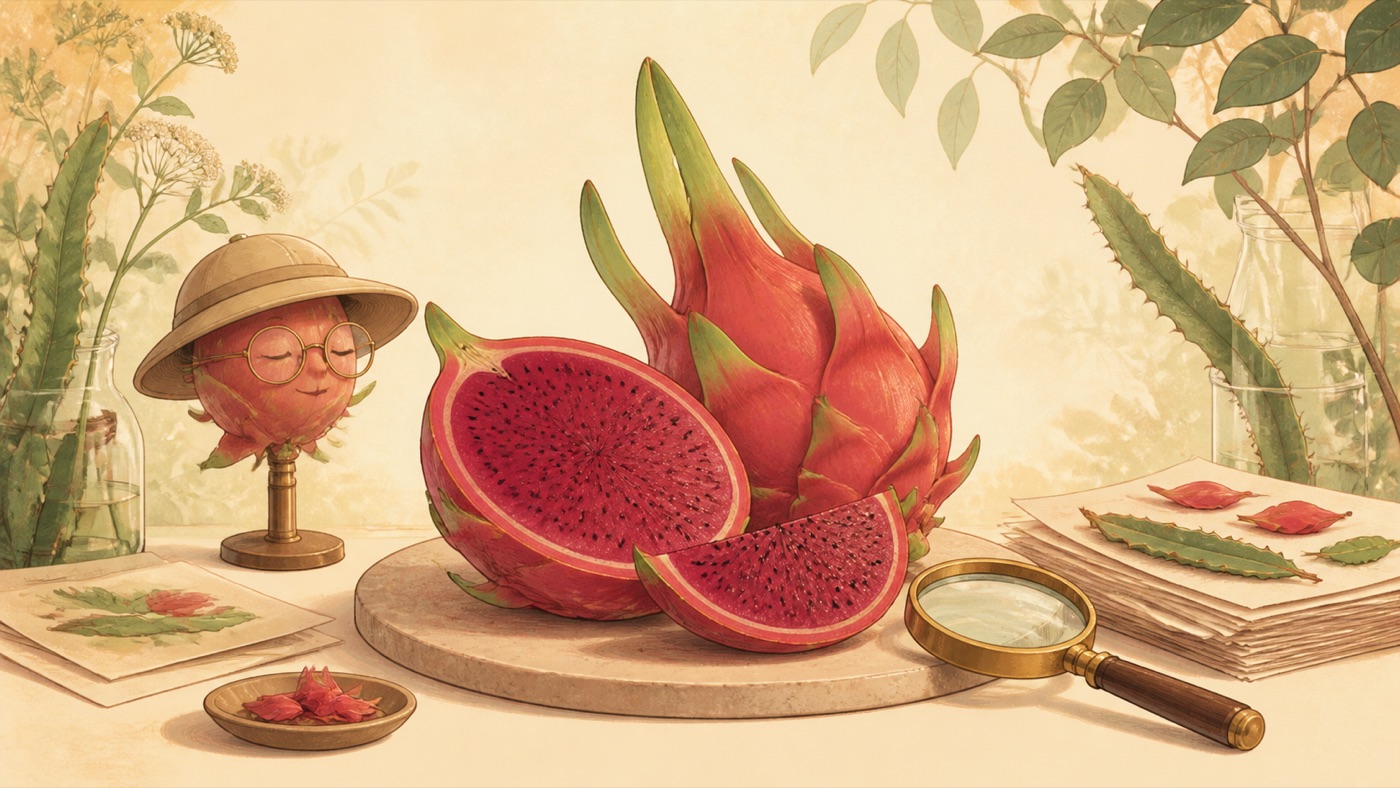
The reddish-purple appearance of red-fleshed dragon fruit can be explained by betacyanin, a betalain pigment. Relevant literature confirms that betacyanin is a water-soluble reddish-purple pigment found in plants of the order Caryophyllales. (PMID: 33925891)
Exogenous pigments can indeed turn urine or other excreta red, and this type of discoloration can often be benign, temporary, and reversible. (PMID: 24959539)
However, ECU found evidence for the pigment mechanism and the general principle that exogenous pigments can cause red excreta; it did not find a dedicated case report specifically addressing “pseudohematuria or stool that mimics blood after eating red-fleshed dragon fruit.” Professor Lin's dragon-fruit scenario is therefore directionally consistent with the known mechanism and is judged partially consistent. In writing, a reasonable attribution should not be elevated into a conclusion fully established by dragon-fruit-specific clinical research.
Red excreta still require a differential perspective
Knowing that food pigments can cause discoloration does not mean every instance of red urine or stool can be assumed harmless. The literature supports that discoloration from exogenous pigments is usually benign and reversible, while also emphasizing the need to distinguish it from true hematuria, bleeding, hemolysis, and other conditions. (PMID: 24959539)
In practice, one can consider the timing of recent foods and the onset of discoloration. If the cause is unclear, the condition persists, or other symptoms occur, evaluation by a healthcare professional remains appropriate. This does not negate the original article's everyday experience of a “false alarm”; it places that humorous narrative back within safe clinical boundaries.
The link between happiness and health has support, but it is not magic
Professor Lin uses amusing subjects to make readers smile and suggests that happiness and a positive mood benefit health. A meta-analysis indicates that psychological well-being, which includes happiness, independently predicts a lower risk of all-cause mortality, consistent with the direction of the original article. (PMID: 42057043)
Such findings primarily show a robust association between positive psychological states and better health outcomes. They do not mean that staying happy can prevent or treat every disease. Psychological state is intertwined with health behaviors, social support, and pre-existing health status. Evidence-based language should retain the boundaries around these causal interpretations instead of packaging an association as a single prescription.
Evidence for humor chiefly concerns psychological and emotional outcomes
Current research supports that laughter or humor interventions can improve aspects of mental health such as stress, depression, and anxiety. Within this scope, the proposition that “humor benefits health” has support in the literature. (PMID: 42001147; PMID: 42019364)
Expanding that statement to claim that humor has been shown to improve all physiological outcomes, or even reduce hard endpoints across many diseases, would go beyond the evidence included by ECU. A more accurate formulation is that humor can be a way to promote emotional adjustment and psychological well-being. Direct evidence for overall physical health or mortality outcomes remains more limited, so the assessment is partially consistent.
How to read health stories that still require verification
When confronted with an astonishing recovery story, first ask whether the claim specifies a disease, an intervention, and an outcome, then look for controlled human research rather than being persuaded at once by the drama of the narrative. With red excreta, keep both food pigment and actual bleeding in mind. With the claim that “happiness benefits health,” acknowledge the support concerning psychological well-being and some health outcomes while refusing to turn it into a mythical guarantee of cure.
This is precisely the evidence-based reminder that the Wan'er Collection is well suited to offer: laughter need not be belittled, but neither should it be marketed as therapeutic efficacy; lived experience deserves understanding, but cannot replace diagnosis; and Professor Lin's vigilance toward exaggerated medical testimonials remains sound under today's evidentiary framework.
FAQ
- If excreta turn red after eating red-fleshed dragon fruit, does that necessarily mean bleeding?
- Not necessarily. Water-soluble reddish-purple betacyanin and other exogenous pigments can explain benign discoloration, but color alone cannot rule out actual bleeding. (PMID: 33925891; PMID: 24959539)
- 赤肉種ドラゴンフルーツを食べた後に排泄物が赤くなった場合、必ず出血ということですか? — 必ずしもそうではありません。水溶性の赤紫色色素 betacyanin と外因性色素で良性の変色を説明できますが、色だけでは実際の出血を除外できません。(PMID: 33925891;PMID: 24959539)
- If excreta turn red after eating red-fleshed dragon fruit, does that necessarily mean bleeding? — Not necessarily. Water-soluble reddish-purple betacyanin and other exogenous pigments can explain benign discoloration, but color alone cannot rule out actual bleeding. (PMID: 33925891; PMID: 24959539)
- Will red discoloration caused by food pigments resolve on its own?
- The literature supports that discoloration caused by exogenous pigments is often benign, temporary, and reversible. If the cause is unclear, it persists, or it is accompanied by discomfort, medical evaluation is still warranted. (PMID: 24959539)
- 食品色素による赤い排泄物は自然に元へ戻りますか? — 外因性色素による変色は多くの場合、良性、一過性、可逆性であると文献は示しています。原因が不明な場合、状態が続く場合、不調を伴う場合は、医療機関で鑑別を受けてください。(PMID: 24959539)
- Will red discoloration caused by food pigments resolve on its own? — The literature supports that discoloration caused by exogenous pigments is often benign, temporary, and reversible. If the cause is unclear, it persists, or it is accompanied by discomfort, medical evaluation is still warranted. (PMID: 24959539)
- Can red urine or stool simply be attributed to eating dragon fruit?
- No. Exogenous pigment is only one possible cause and must still be distinguished from hematuria, bleeding, hemolysis, and other conditions. (PMID: 24959539)
- 赤い尿や便を見たら、ドラゴンフルーツを食べたせいだと判断してよいですか? — いいえ。外因性色素は考えられる原因の一つにすぎず、血尿、出血、溶血などとの区別が必要です。(PMID: 24959539)
- Can red urine or stool simply be attributed to eating dragon fruit? — No. Exogenous pigment is only one possible cause and must still be distinguished from hematuria, bleeding, hemolysis, and other conditions. (PMID: 24959539)
- Is happiness genuinely related to health?
- Yes. A meta-analysis indicates that psychological well-being, including happiness, is associated with a lower risk of all-cause mortality, but this does not mean happiness itself can replace medical care. (PMID: 42057043)
- 幸福は本当に健康と関係がありますか? — はい。メタ解析では、幸福を含む心理的ウェルビーイングがより低い全死因死亡リスクと関連していることが示されていますが、幸福そのものが医療に代わるという意味ではありません。(PMID: 42057043)
- Is happiness genuinely related to health? — Yes. A meta-analysis indicates that psychological well-being, including happiness, is associated with a lower risk of all-cause mortality, but this does not mean happiness itself can replace medical care. (PMID: 42057043)
- Can reading jokes or receiving a humor intervention improve psychological well-being?
- Current research supports benefits of laughter or humor interventions for aspects of mental health such as stress, depression, and anxiety. (PMID: 42001147; PMID: 42019364)
- 笑い話を読んだり、ユーモア介入を受けたりすることで心理状態は改善しますか? — 現在の研究は、笑いやユーモア介入がストレス、抑うつ、不安などの心理的健康側面に役立つことを支持しています。(PMID: 42001147;PMID: 42019364)
- Can reading jokes or receiving a humor intervention improve psychological well-being? — Current research supports benefits of laughter or humor interventions for aspects of mental health such as stress, depression, and anxiety. (PMID: 42001147; PMID: 42019364)
- Since humor is beneficial, does that mean it can treat all kinds of physical disease?
- That inference is not justified. The evidence included by ECU focuses mainly on psychological and emotional indicators; direct support for a broad range of physical diseases or hard clinical endpoints remains more limited. (PMID: 42001147; PMID: 42019364)
- ユーモアが有益なら、さまざまな身体疾患を治療できるということですか? — そのようには推論できません。ECU が収載するエビデンスは主に心理・感情指標に集中しており、広範な身体疾患やハードな臨床エンドポイントを直接支持するエビデンスは比較的限られています。(PMID: 42001147;PMID: 42019364)
- Since humor is beneficial, does that mean it can treat all kinds of physical disease? — That inference is not justified. The evidence included by ECU focuses mainly on psychological and emotional indicators; direct support for a broad range of physical diseases or hard clinical endpoints remains more limited. (PMID: 42001147; PMID: 42019364)
Source anchors
- 林慶順教授原文正本 · http://professorlin.com/2023/06/08/%e8%90%8a%e5%a8%81%e8%b2%bc%e7%89%87%e6%b2%bb%e7%99%be%e7%97%85%ef%bc%8c%e8%ae%80%e8%80%85%e5%9b%9e%e6%87%89%e8%8e%9e%e7%88%be%e9%9b%86/
- 存證·Wayback 快照(原站消失仍可溯源) · https://web.archive.org/web/2/http://professorlin.com/2023/06/08/%e8%90%8a%e5%a8%81%e8%b2%bc%e7%89%87%e6%b2%bb%e7%99%be%e7%97%85%ef%bc%8c%e8%ae%80%e8%80%85%e5%9b%9e%e6%87%89%e8%8e%9e%e7%88%be%e9%9b%86/
- 存證·archive.today 快照 · https://archive.ph/newest/http://professorlin.com/2023/06/08/%e8%90%8a%e5%a8%81%e8%b2%bc%e7%89%87%e6%b2%bb%e7%99%be%e7%97%85%ef%bc%8c%e8%ae%80%e8%80%85%e5%9b%9e%e6%87%89%e8%8e%9e%e7%88%be%e9%9b%86/
- betacyanin 為植物紅紫色水溶性色素的機轉證據 · https://pubmed.ncbi.nlm.nih.gov/33925891/
- 外源色素造成紅色排泄物及臨床鑑別 · https://pubmed.ncbi.nlm.nih.gov/24959539/
- 心理幸福感與全因死亡風險的統合分析 · https://pubmed.ncbi.nlm.nih.gov/42057043/
- 笑與幽默介入對心理健康指標的證據 · https://pubmed.ncbi.nlm.nih.gov/42001147/
- 幽默介入對情緒健康指標的證據 · https://pubmed.ncbi.nlm.nih.gov/42019364/
- 存證·自存副本(原站消失仍可溯源) · https://km.idaeo.ai/archive/professorlin/16881.html
Cite this article
TK.Lin Agent・《The Wan'er Collection: Humor, Red Excreta After Dragon Fruit, and the Evidentiary Boundaries of Health Claims》・IDAEO 知識庫・2026-08-11・https://km.idaeo.ai/health/the-wan-er-collection-humor-red-excreta-after-drUpdated 2026-08-12