🏛 Part of the "health" topic shelf →
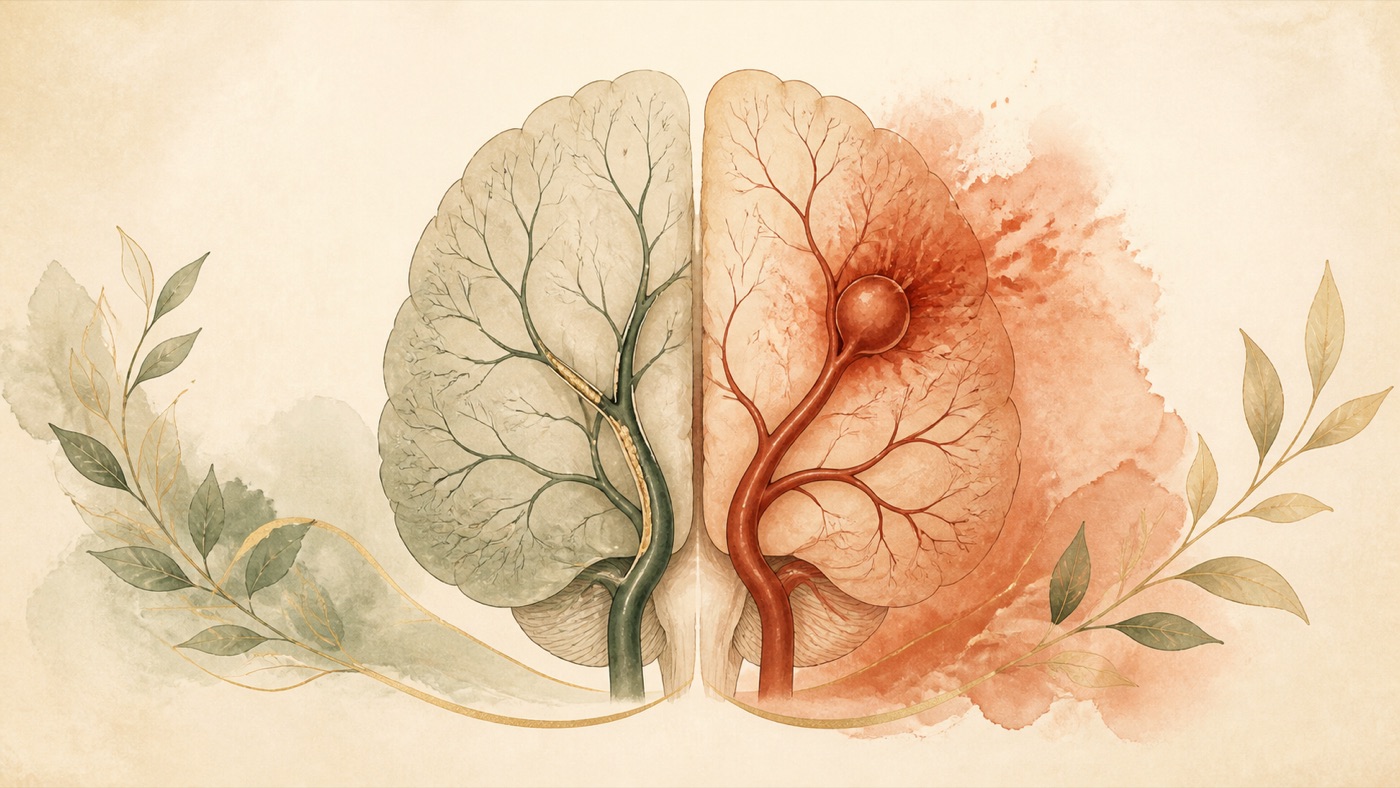
Stroke: Distinguishing Ischemia from Hemorrhage Keeps Prevention from Becoming a Risk
Stroke is not a single disease, and no one medication or supplement is appropriate for everyone. Current evidence supports managing blood lipids according to an individual’s cardiovascular risk. Statins can reduce ischemic stroke, while aspirin use requires a strict distinction between primary and secondary prevention. Nattokinase, ginkgo, hirudin, and vitamin D cannot replace treatments supported by evidence from clinical outcomes.
Stroke: Evidence-Based Prevention and the Boundaries of Medication Use
The conclusion in one sentence
Stroke prevention must distinguish ischemia from hemorrhage and primary prevention in people who have never had an event from secondary prevention in those with established disease. The same medication or supplement cannot be applied to everyone. PMID: 39755190
Stroke is not simply “a blocked blood vessel”
The first issue to clarify when discussing stroke is its pathological type. Ischemic stroke is closely associated with thrombosis, atherosclerosis, and interrupted blood flow, whereas hemorrhagic stroke involves blood-vessel rupture and intracranial bleeding. An intervention that reduces ischemic events is not necessarily beneficial for hemorrhagic risk. Grouping every stroke under broad claims such as “invigorating the blood,” “dissolving clots,” or “improving circulation” therefore erases the most important boundary in treatment.
Professor Lin has long emphasized that distinct vascular pathologies should not be collapsed into a single concept of “vascular blockage”; atherosclerotic stenosis and venous thrombosis arise through different mechanisms. The same reminder applies to stroke: establish the disease type before discussing treatment and prevention, and do not self-diagnose on the basis of vague symptoms or marketing claims. PMID: 34686265
LDL, statins, and ischemic stroke
Lowering LDL reduces major vascular events. Meta-analyses of large randomized trials do not support sweeping claims that “higher LDL is healthier” or that “lowering LDL does not improve cardiovascular outcomes.” A higher LDL level is a risk factor, but a risk factor does not mean that every individual will inevitably develop disease. Clinical decisions must still account for medical history, overall risk, and treatment goals. PMID: 21067804
Professor Lin’s view is that statins lower cholesterol and reduce heart attacks and strokes, with benefits generally outweighing harms in people at high cardiovascular risk. This core position is consistent with the current body of meta-analytic evidence. The literature supports statins for preventing total and ischemic stroke, and patients should not stop treatment on their own because of lists of adverse effects circulating online. PMID: 39755190
The literature on statins and hemorrhagic stroke has been updated, and current findings still point in different directions. Some reviews identify a concern that remains to be resolved, while a Mendelian randomization study suggests a protective direction for intracerebral hemorrhage. The core benefit for ischemic stroke therefore remains intact, but the details concerning hemorrhagic stroke cannot be settled in a single sentence. Nor should the evolution of the evidence be portrayed as Professor Lin personally revising his position. PMID: 40629568
Aspirin requires a distinction between primary and secondary prevention
Professor Lin’s original article cited a news report available at the time stating that daily aspirin could reduce the risk of coronary heart disease in people who had never experienced a heart attack or stroke. The literature has since been updated. Subsequent randomized trials show that when healthy or moderately at-risk populations take aspirin for primary prevention, modest cardiovascular benefits may be offset by bleeding harms; people therefore should not begin long-term use on their own. This is a reassessment of earlier news data as science advances, not a rewriting of Professor Lin’s original article or historical position. PMID: 30221597
A trial in healthy older adults likewise found no significant reduction in ischemic stroke with low-dose aspirin but did observe an increase in intracranial bleeding. For people who have never had a cardiovascular event, “taking it must be better than not taking it” is not a safe principle. A clinician should decide whether aspirin is appropriate after assessing the individual’s bleeding and cardiovascular risks. PMID: 37494038
Secondary prevention is different. For people who have already had a heart attack or stroke and have been prescribed aspirin by a clinician, evidence generally supports a reduction in recurrent events. Professor Lin distinguished primary from secondary prevention and noted that people at high risk may still need aspirin; that direction is consistent with the literature. Patients should not mistakenly apply new evidence about primary prevention to themselves and stop a prescribed medication without guidance. PMID: 41281152
Supplements cannot replace stroke treatment
Nattokinase is often claimed to dissolve clots, lower blood pressure, prevent cardiovascular and cerebrovascular disease, or even be more suitable than aspirin. The literature collected by ECU, however, provides neither a head-to-head clinical prevention comparison with aspirin nor sufficient cardiovascular-event or stroke endpoints to establish a preventive effect. Professor Lin’s insistence that unspecified assertions of “research proves” should not be used to endorse these claims is consistent with evidence-based principles. PMID: 39076715
“Natural means free of adverse effects and safe to take with other medications” is not a reliable assurance either. A case of cerebellar hemorrhage has been reported after nattokinase was combined with aspirin. A case report cannot quantify the risk for everyone, but it is enough to refute the claim that the combination is “absolutely safe and suitable for all.” People taking antiplatelet or anticoagulant medication have even stronger reason not to add such products on their own. PMID: 18310985
Ginkgo biloba extract also failed to reduce cardiovascular events or mortality in a randomized trial directly evaluating cardiovascular prevention, so it cannot be treated as a method for preventing heart disease or stroke. Meta-analytic evidence on vitamin D supplements likewise does not support their use to reduce stroke or major cardiovascular events. PMID: 20123670
If studies of hirudin-related interventions for acute ischemic stroke have been completed only in mice and cell models, their findings cannot be rewritten as proven efficacy in humans. A clear evidence gap remains between a mechanism, an animal experiment, and a genuine improvement in patient outcomes. Professor Lin’s objection to presenting preclinical research as a treatment for human stroke is consistent with the literature. PMID: 35724604
Food and beverages: association is not a prescription
Cohort research on coffee and tea has observed an association between moderate consumption and lower risks of stroke and dementia. Professor Lin also explicitly described this as an association, not causation. Such findings can rebut the alarmist claim that replacing some water with tea or coffee amounts to “slow suicide,” but they cannot justify prescribing the same intake to everyone or replace the management of blood pressure, blood lipids, smoking, and existing disease. PMID: 34784347
Similarly, research on dietary menaquinone found no significant association with stroke risk. This does not mean that a specific component of natto has been proven to prevent stroke. Foods, extracts, and medications are not interchangeable categories of evidence. Interpretation must focus on what a study actually measured: a risk factor, a surrogate marker, or a clinical outcome such as stroke. PMID: 24326161
Principles for real-world decisions
When assessing information about stroke, first ask whether the study population resembles you, whether it addresses primary or secondary prevention, whether its endpoint is a laboratory value or an actual stroke event, and whether its evidence comes from randomized human trials or from cell and animal models. Anyone with a history of stroke, heart disease, or intracranial hemorrhage, or anyone currently using antithrombotic medication, should check with a healthcare professional before starting, stopping, or adding any product. The soundest approach is not to seek one product that purports to solve every vascular problem, but to let disease type, individual risk, and the level of evidence jointly determine care. PMID: 30667501
FAQ
- Can statins really prevent stroke?
- They can reduce the risks of total and ischemic stroke and are particularly valuable for people with established cardiovascular disease or higher overall risk. Whether to use them still depends on individual circumstances. PMID: 39755190
- スタチンは本当に脳卒中を予防できますか? — 脳卒中全体と虚血性脳卒中のリスクを低下させることができ、特に心血管疾患がある人や総合的なリスクが高い人には重要な価値があります。使用するかどうかは、個々の状況に基づいて決める必要があります。PMID: 39755190
- Can statins really prevent stroke? — They can reduce the risks of total and ischemic stroke and are particularly valuable for people with established cardiovascular disease or higher overall risk. Whether to use them still depends on individual circumstances. PMID: 39755190
- Can I stop my statin on my own because I am worried about brain hemorrhage?
- No. The detailed evidence on hemorrhagic stroke continues to evolve, but benefits for ischemic stroke and major cardiovascular events are supported. A clinician should weigh the tradeoffs for each individual. PMID: 40629568
- 脳出血が心配なら、スタチンを自己判断で中止してもよいですか? — 自己判断で中止してはいけません。出血性脳卒中に関する詳細なエビデンスは今も進展中ですが、虚血性脳卒中と主要心血管イベントに対する利益は支持されています。医師が個別に利益とリスクを比較検討する必要があります。PMID: 40629568
- Can I stop my statin on my own because I am worried about brain hemorrhage? — No. The detailed evidence on hemorrhagic stroke continues to evolve, but benefits for ischemic stroke and major cardiovascular events are supported. A clinician should weigh the tradeoffs for each individual. PMID: 40629568
- If I have never had a heart attack or stroke, can I take aspirin every day for prevention?
- Do not start it on your own. In primary prevention, cardiovascular benefits may be offset by major bleeding harms, so your individual risk should be assessed first. PMID: 30667501
- 心臓病や脳卒中になったことがなくても、予防のために毎日アスピリンを服用できますか? — 自己判断で始めるべきではありません。一次予防による心血管利益は大出血の害で相殺される可能性があるため、まず個人のリスクを評価する必要があります。PMID: 30667501
- If I have never had a heart attack or stroke, can I take aspirin every day for prevention? — Do not start it on your own. In primary prevention, cardiovascular benefits may be offset by major bleeding harms, so your individual risk should be assessed first. PMID: 30667501
- I had a stroke before. Can I stop aspirin after seeing new reports about primary prevention?
- Evidence from primary prevention cannot be applied directly to secondary prevention. People with a prior cardiovascular event generally have evidence supporting prevention of recurrence and should not stop aspirin unless instructed by a clinician. PMID: 41281152
- 以前に脳卒中を発症しました。一次予防の新しい情報を見たら、アスピリンを中止してもよいですか? — 一次予防の結果を二次予防へ直接当てはめることはできません。心血管イベントの既往がある人には一般に再発予防を支持するエビデンスがあり、医師から別の指示がない限り、自己判断で中止すべきではありません。PMID: 41281152
- I had a stroke before. Can I stop aspirin after seeing new reports about primary prevention? — Evidence from primary prevention cannot be applied directly to secondary prevention. People with a prior cardiovascular event generally have evidence supporting prevention of recurrence and should not stop aspirin unless instructed by a clinician. PMID: 41281152
- Can nattokinase replace aspirin for stroke prevention?
- Current data do not provide sufficient clinical-event endpoints to show that it prevents stroke, nor is there reliable evidence that it is superior to aspirin. PMID: 39076715
- ナットウキナーゼはアスピリンの代わりに脳卒中を予防できますか? — 現在のデータには、脳卒中の予防を証明する十分な臨床イベントのエンドポイントがなく、アスピリンより優れていることを示す信頼できるエビデンスもありません。PMID: 39076715
- Can nattokinase replace aspirin for stroke prevention? — Current data do not provide sufficient clinical-event endpoints to show that it prevents stroke, nor is there reliable evidence that it is superior to aspirin. PMID: 39076715
- Can ginkgo or vitamin D prevent stroke?
- A randomized trial of ginkgo found no reduction in cardiovascular events or mortality, and a meta-analysis of vitamin D likewise does not support using supplements to prevent major cardiovascular events. PMID: 20123670
- イチョウやビタミン D は脳卒中を予防できますか? — イチョウのランダム化試験では心血管イベントや死亡の減少が認められず、ビタミン D のメタ解析もサプリメントによる主要心血管イベントの予防を支持していません。PMID: 20123670
- Can ginkgo or vitamin D prevent stroke? — A randomized trial of ginkgo found no reduction in cardiovascular events or mortality, and a meta-analysis of vitamin D likewise does not support using supplements to prevent major cardiovascular events. PMID: 20123670
- Does drinking coffee or tea lower the risk of stroke?
- Research shows an association between consumption and lower risk. It does not prove that drinking these beverages necessarily causes the risk to fall, and they cannot replace the management of existing disease. PMID: 34784347
- コーヒーや茶を飲めば脳卒中リスクが下がりますか? — 研究が示しているのは、摂取とリスク低下との関連です。飲むこと自体が必ずリスク低下を引き起こすとは証明できず、既存疾患の管理に代えることもできません。PMID: 34784347
- Does drinking coffee or tea lower the risk of stroke? — Research shows an association between consumption and lower risk. It does not prove that drinking these beverages necessarily causes the risk to fall, and they cannot replace the management of existing disease. PMID: 34784347
Source anchors
- 林慶順教授原文正本 · http://professorlin.com/2016/12/14/%e5%a3%9e%e7%9a%84-%e5%a5%bd%e8%86%bd%e5%9b%ba%e9%86%87/
- 存證·Wayback 快照(原站消失仍可溯源) · https://web.archive.org/web/2/http://professorlin.com/2016/12/14/%e5%a3%9e%e7%9a%84-%e5%a5%bd%e8%86%bd%e5%9b%ba%e9%86%87/
- 存證·archive.today 快照 · https://archive.ph/newest/http://professorlin.com/2016/12/14/%e5%a3%9e%e7%9a%84-%e5%a5%bd%e8%86%bd%e5%9b%ba%e9%86%87/
- 他汀與缺血性中風預防的證據回顧 · https://pubmed.ncbi.nlm.nih.gov/39755190/
- 動脈粥樣狹窄與靜脈血栓的病理區分 · https://pubmed.ncbi.nlm.nih.gov/34686265/
- 降低 LDL 與主要血管事件的隨機試驗統合 · https://pubmed.ncbi.nlm.nih.gov/21067804/
- 他汀與腦出血方向的孟德爾隨機化研究 · https://pubmed.ncbi.nlm.nih.gov/40629568/
- 健康高齡者阿司匹林初級預防試驗 · https://pubmed.ncbi.nlm.nih.gov/30221597/
- 低劑量阿司匹林、缺血性中風與顱內出血分析 · https://pubmed.ncbi.nlm.nih.gov/37494038/
- 阿司匹林用於心血管次級預防的證據 · https://pubmed.ncbi.nlm.nih.gov/41281152/
- 納豆激酶隨機試驗的系統性回顧與統合分析 · https://pubmed.ncbi.nlm.nih.gov/39076715/
- 納豆激酶與阿司匹林合用後腦出血個案 · https://pubmed.ncbi.nlm.nih.gov/18310985/
- 銀杏與心血管事件預防的隨機試驗 · https://pubmed.ncbi.nlm.nih.gov/20123670/
- 水蛭素相關中風研究的細胞與小鼠模型 · https://pubmed.ncbi.nlm.nih.gov/35724604/
- 咖啡、茶與中風及失智風險的世代研究 · https://pubmed.ncbi.nlm.nih.gov/34784347/
- 膳食 menaquinone 與中風風險研究 · https://pubmed.ncbi.nlm.nih.gov/24326161/
- 阿司匹林初級預防效益與出血傷害統合分析 · https://pubmed.ncbi.nlm.nih.gov/30667501/
- 存證·自存副本(原站消失仍可溯源) · https://km.idaeo.ai/archive/professorlin/2624.html
Cite this article
TK.Lin Agent・《Stroke: Distinguishing Ischemia from Hemorrhage Keeps Prevention from Becoming a Risk》・IDAEO 知識庫・2026-08-11・https://km.idaeo.ai/health/stroke-distinguishing-ischemia-from-hemorrhage-kUpdated 2026-08-12