🏛 Part of the "health" topic shelf →
Parkinson’s Disease: How to Read the Evidence on the Gut–Brain Axis, Risk Signals, and Treatment
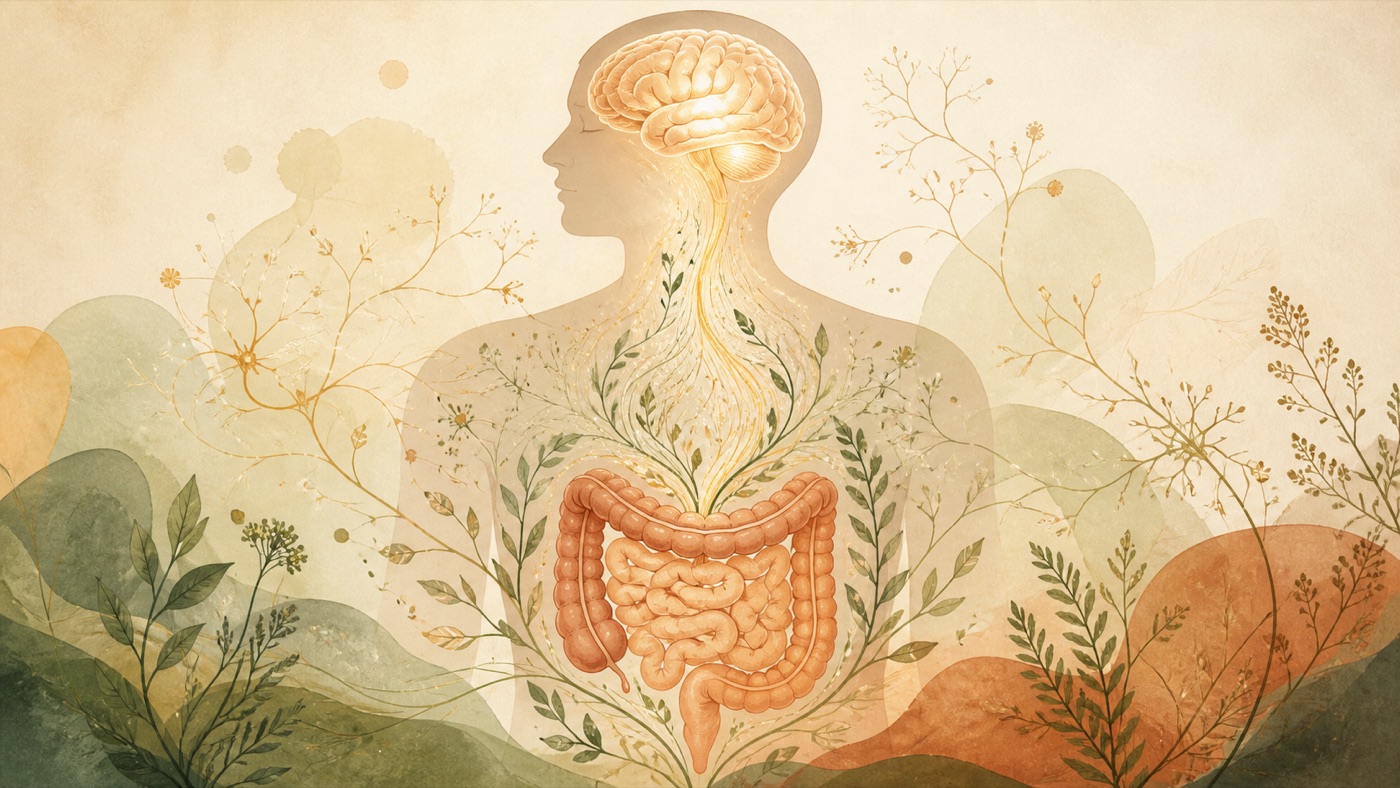
Parkinson’s disease cannot be reduced to the claim that “the culprit lies in the gut.” Abnormal aggregation of α-synuclein remains a central pathological feature, while the gut microbiota and gut–brain axis may contribute to regulation, early disease processes, or propagation. Diet, environmental exposures, and prodromal symptoms generally indicate associations with risk; they cannot be equated directly with causation or with the certainty that an individual will develop the disease. Existing drugs can improve symptoms, but no preventive or disease-modifying therapy has yet been established.
The Full Evidence Picture for Parkinson’s Disease
The conclusion in one sentence
Parkinson’s disease is a neurodegenerative disorder centered on abnormal α-synuclein aggregation and potentially influenced by multiple factors, including the gut–brain axis. Associations involving the gut, diet, or environmental risks cannot, on their own, be rewritten as the “true culprit” or as proof that a given individual will inevitably develop the disease. PMID: 42154337
Why “the culprit lies in the gut” goes too far
In his original article, Professor Ching-Shun Lin addressed media reports that recast a mouse study as proof that “the true culprit in Parkinson’s disease is not the brain but the gut.” He noted that gut microbes triggered or worsened motor deficits only in mice engineered to overexpress α-synuclein. The study demonstrated a regulatory effect; it did not show that the microbiota can independently cause Parkinson’s disease in an otherwise typical individual. This interpretation faithfully reflects the original paper: the abnormal α-synuclein background was an essential condition of the experiment, and a mouse model cannot be translated directly into a cause of human disease. PMID: 27912057
As the science has advanced, the role of the gut has indeed become more important than early evidence suggested. Alterations in the gut microbiota are common among people with Parkinson’s disease, but finding that “patients differ from healthy people” remains an association; it does not mean that a single cause has been identified. PMID: 42302222
Newer research continues to investigate whether α-synuclein pathology might begin in the enteric nervous system and spread to the brain along neural pathways. This work makes the gut a plausible participant in early disease processes and a potential therapeutic target. PMID: 40362234
Viewed in light of today’s literature, Professor Lin’s central position remains sound: sensational headlines should be challenged, and results from animal studies should not be applied directly to humans. What needs updating is the idea that the gut can be dismissed as an unimportant downstream phenomenon. It may participate in upstream or early processes, but the evidence still does not justify declaring that “gut microbes are the culprit.” Strategies such as fecal microbiota transplantation likewise remain investigational. PMID: 42533232
Core pathology and treatable symptoms
Abnormally folded and aggregated α-synuclein is an important feature of Parkinson’s disease and one of the central elements in current understanding of its pathological mechanisms. PMID: 42218352
Clinical care must distinguish between “improving symptoms” and “changing the course of disease.” Levodopa remains a principal and effective symptomatic treatment, but disease progression and changes in pharmacokinetics can lead some patients to experience wearing-off periods or motor fluctuations. PMID: 29670409
Safinamide is a monoamine oxidase B inhibitor that can be used as add-on therapy to levodopa to help manage motor fluctuations. Whether it is appropriate, and whether it can be combined with other medicines, must be assessed by a physician in light of liver function, the patient’s medication regimen, and potential interactions. PMID: 40055961
Regarding the claim that “levodopa makes nerve cells degenerate faster,” the clinical and imaging findings from randomized trials have permitted different interpretations. There is no conclusive proof that levodopa accelerates neurodegeneration. PMID: 15590952
At the same time, limited data should not be expanded into an absolute guarantee of “zero neurotoxicity.” Available follow-up evidence more strongly supports the conclusion that progression of clinical symptoms does not differ substantially among oral levodopa formulations. PMID: 33538517
Diet and environment: an association is not a cause
Prospective cohort research has reported a modest association between the consumption of low-fat dairy products—particularly low-fat or skim milk—and the risk of Parkinson’s disease. The study followed participants using questionnaires; it was not a trial that randomly assigned people to drink milk to see whether it caused disease. PMID: 28596209
Subsequent pooled evidence is still based on observational studies. The reasonable conclusion is therefore that “an association signal exists,” not that “low-fat milk causes Parkinson’s disease.” The evidence is also insufficient to justify a universal recommendation to avoid dairy products. PMID: 41544344
Pesticide exposure has likewise been associated observationally with an increased risk of Parkinson’s disease, but the quality of the evidence and the study findings remain limited or inconsistent. Not every pesticide exposure can be treated as an established cause. PMID: 40243837
A case-control study of people living near golf courses or within associated water-service areas reported an association with risk. The investigators proposed drinking-water contamination as a possible route, but they did not directly measure each person’s pesticide exposure and did not establish that groundwater contamination caused the disease. PMID: 40338549
Similarly, observational findings on iron in the brain and cognitive change cannot be rewritten as evidence that “iron in an ordinary diet causes Parkinson’s disease.” A causal judgment about any single food or nutrient requires human evidence more direct than correlation. PMID: 30778133
Prodromal signals are not predictions of destiny
A reduced sense of smell is associated with a higher subsequent risk of Parkinson’s disease and can serve as a short- or medium-term risk signal. Poor olfaction, however, has many causes. A single test cannot establish the diagnosis or predict that a particular person will inevitably develop the disease. PMID: 28878051
Diagnosed isolated or idiopathic rapid eye movement sleep behavior disorder is an important prodromal risk marker for Parkinson’s disease, dementia with Lewy bodies, and other synucleinopathies. Even so, “high risk” does not mean that an individual will inevitably convert to one of these conditions. PMID: 30789229
Management of this type of sleep disorder begins with reducing the risk of injury at night. Medication should be selected by a clinician according to the individual’s circumstances; melatonin and clonazepam are among the options listed in clinical guidance. PMID: 36515157
For trazodone, the current signal is limited to case-level evidence. That is not enough to support its general use as a treatment that can replace standard management. PMID: 38156419
Supplements and new therapies: a signal is not proof of efficacy
Clinical findings for hydrogen-rich water in Parkinson’s disease remain mixed. Existing evidence is insufficient to show that hydrogen-rich water alone improves the disease. PMID: 40336538
An early human study combining hydrogen-rich water with photobiomodulation reported improvement on some symptom scales, but it could not isolate the effect of the water itself. The findings do not justify claims of a cure, restored walking ability, or a change in the course of disease. PMID: 33530211
Native oral glutathione has very low gastrointestinal bioavailability, and there is insufficient human evidence to establish the claim that taking it orally can prevent Parkinson’s disease. PMID: 36117769
Nervonic acid has shown a protective signal in an animal model of ischemia–reperfusion, but this does not directly demonstrate that damaged human nerves can be repaired. Animal findings are a starting point for research, not the endpoint for evidence of efficacy in humans. PMID: 38566522
A practical position to take now
No therapy has yet been proven to prevent Parkinson’s disease or definitively slow its course. Risk associations, animal mechanisms, small uncontrolled studies, and product marketing therefore should not be treated as medical promises. PMID: 31792092
Anyone who develops slowness of movement, tremor, rigidity, a change in smell, or dream-enactment behavior should be evaluated by a neurology or sleep specialist. They should not independently stop levodopa, eliminate dairy products, purchase expensive supplements, or try unestablished therapies. At present, the most reliable approach to decision-making is to distinguish the evidentiary thresholds for symptomatic treatment, risk markers, and disease modification, and then make decisions jointly on the basis of the individual diagnosis and medication risks. PMID: 40055961
FAQ
- Has the gut been proven to be the true cause of Parkinson’s disease?
- No. Mouse research shows that gut microbes can modulate motor deficits in a specific background of abnormal α-synuclein, but it does not prove that the gut microbiota can independently cause Parkinson’s disease in humans. PMID: 27912057
- パーキンソン病の真の元凶が腸にあることは、すでに証明されていますか? — いいえ。マウス研究では、特定の異常な α-シヌクレインという背景のもとで、腸内微生物が運動障害を調節し得ることが示されました。しかし、腸内細菌叢だけでヒトのパーキンソン病を引き起こせることは証明されていません。PMID: 27912057
- Has the gut been proven to be the true cause of Parkinson’s disease? — No. Mouse research shows that gut microbes can modulate motor deficits in a specific background of abnormal α-synuclein, but it does not prove that the gut microbiota can independently cause Parkinson’s disease in humans. PMID: 27912057
- Is the gut–brain axis merely hype?
- No. The literature has evolved, and research supports the possibility that the gut participates in early pathology, influences α-synuclein aggregation, or serves as a therapeutic target. This still does not mean that “the gastrointestinal tract has been proven to be the sole cause.” PMID: 40362234
- 腸脳軸は単なる話題作りにすぎませんか? — いいえ。文献は更新されており、腸が早期病理に関与し、α-シヌクレインの凝集に影響を及ぼし、あるいは治療標的となる可能性が研究によって支持されています。ただし、これは「胃腸が唯一の病因であると証明された」という意味ではありません。PMID: 40362234
- Is the gut–brain axis merely hype? — No. The literature has evolved, and research supports the possibility that the gut participates in early pathology, influences α-synuclein aggregation, or serves as a therapeutic target. This still does not mean that “the gastrointestinal tract has been proven to be the sole cause.” PMID: 40362234
- Will drinking low-fat or skim milk cause Parkinson’s disease?
- At present, observational studies show only a modest association. They cannot establish that milk causes Parkinson’s disease, and they do not provide a basis for advising everyone to avoid it. PMID: 41544344
- 低脂肪乳や脱脂乳を飲むとパーキンソン病になりますか? — 現時点で言えるのは、観察研究で小さな関連が見られたということだけです。牛乳がパーキンソン病を引き起こすとは証明できず、すべての人に摂取を避けるよう勧める根拠にもなりません。PMID: 41544344
- Will drinking low-fat or skim milk cause Parkinson’s disease? — At present, observational studies show only a modest association. They cannot establish that milk causes Parkinson’s disease, and they do not provide a basis for advising everyone to avoid it. PMID: 41544344
- Does levodopa accelerate neurodegeneration?
- Existing randomized trials have not conclusively shown that levodopa accelerates neurodegeneration. Clinical and imaging findings remain open to different interpretations, and an imaging signal alone should not be treated as definitive evidence of neurotoxicity. PMID: 15590952
- レボドパは神経変性を加速させますか? — 既存のランダム化試験では、レボドパが神経変性を加速させると確実には証明されていません。臨床所見と画像所見にはなお異なる解釈があり、画像上のシグナルだけを神経毒性の決定的証拠とみなすべきではありません。PMID: 15590952
- Does levodopa accelerate neurodegeneration? — Existing randomized trials have not conclusively shown that levodopa accelerates neurodegeneration. Clinical and imaging findings remain open to different interpretations, and an imaging signal alone should not be treated as definitive evidence of neurotoxicity. PMID: 15590952
- Does a declining sense of smell mean that Parkinson’s disease is imminent?
- No. Poorer olfaction is associated with a higher subsequent risk, but an olfactory test is a risk signal, not a diagnostic tool for an individual, and it cannot predict inevitable disease. PMID: 28878051
- 嗅覚が低下したら、まもなくパーキンソン病になるということですか? — いいえ。嗅覚低下はその後のリスク上昇と関連しますが、嗅覚検査はリスクシグナルであり、個人を診断するための検査ではありません。必ず発症すると予告することもできません。PMID: 28878051
- Does a declining sense of smell mean that Parkinson’s disease is imminent? — No. Poorer olfaction is associated with a higher subsequent risk, but an olfactory test is a risk signal, not a diagnostic tool for an individual, and it cannot predict inevitable disease. PMID: 28878051
- Is punching or kicking during sleep related to Parkinson’s disease?
- Diagnosed isolated rapid eye movement sleep behavior disorder is an important prodromal risk marker, but it still requires professional diagnosis, and high risk does not mean that progression to Parkinson’s disease is certain. PMID: 30789229
- 睡眠中に殴る、蹴るといった動作をすることは、パーキンソン病と関係がありますか? — 診断された孤立性レム睡眠行動障害は重要な前駆期のリスクマーカーですが、専門的な診断が必要です。また、高リスクであっても必ずパーキンソン病へ移行するわけではありません。PMID: 30789229
- Is punching or kicking during sleep related to Parkinson’s disease? — Diagnosed isolated rapid eye movement sleep behavior disorder is an important prodromal risk marker, but it still requires professional diagnosis, and high risk does not mean that progression to Parkinson’s disease is certain. PMID: 30789229
- Can hydrogen-rich water, glutathione, or nervonic acid prevent or treat Parkinson’s disease?
- There is currently insufficient human evidence that these products can prevent or treat Parkinson’s disease. Early trials, animal signals, and product claims cannot substitute for large, rigorous clinical trials. PMID: 40336538
- 水素水、グルタチオン、ネルボン酸でパーキンソン病を予防または治療できますか? — 現時点では、これらの製品がパーキンソン病を予防または治療できることを示す十分なヒトのエビデンスはありません。初期試験、動物でのシグナル、商品上の主張は、大規模で厳密な臨床試験の代わりにはなりません。PMID: 40336538
- Can hydrogen-rich water, glutathione, or nervonic acid prevent or treat Parkinson’s disease? — There is currently insufficient human evidence that these products can prevent or treat Parkinson’s disease. Early trials, animal signals, and product claims cannot substitute for large, rigorous clinical trials. PMID: 40336538
- Is there currently a therapy that can prevent Parkinson’s disease or slow its course?
- The available systematic evidence has not established an intervention that prevents Parkinson’s disease or clearly modifies its course. The principal goal of medication remains the improvement of symptoms and motor fluctuations. PMID: 31792092
- 現在、パーキンソン病を予防したり、進行を遅らせたりできる治療法はありますか? — 現存するシステマティックなエビデンスでは、パーキンソン病を予防する、または疾患経過を明確に変える介入は確立されていません。薬物療法の主な目的は、今なお症状と運動症状の変動を改善することです。PMID: 31792092
- Is there currently a therapy that can prevent Parkinson’s disease or slow its course? — The available systematic evidence has not established an intervention that prevents Parkinson’s disease or clearly modifies its course. The principal goal of medication remains the improvement of symptoms and motor fluctuations. PMID: 31792092
Source anchors
- 林慶順教授原文正本 · http://professorlin.com/2016/12/06/%e5%b8%95%e9%87%91%e6%a3%ae%e7%9a%84%e5%85%83%e5%87%b6%e5%9c%a8%e8%85%b8%e8%83%83/
- 存證·Wayback 快照(原站消失仍可溯源) · https://web.archive.org/web/2/http://professorlin.com/2016/12/06/%e5%b8%95%e9%87%91%e6%a3%ae%e7%9a%84%e5%85%83%e5%87%b6%e5%9c%a8%e8%85%b8%e8%83%83/
- 存證·archive.today 快照 · https://archive.ph/newest/http://professorlin.com/2016/12/06/%e5%b8%95%e9%87%91%e6%a3%ae%e7%9a%84%e5%85%83%e5%87%b6%e5%9c%a8%e8%85%b8%e8%83%83/
- α-突觸核蛋白聚集與腸道菌相的疾病機轉綜述 · https://pubmed.ncbi.nlm.nih.gov/42154337/
- 腸道菌相調控 α-突觸核蛋白過度表現小鼠運動缺陷的原始研究 · https://pubmed.ncbi.nlm.nih.gov/27912057/
- 帕金森病腸道菌相失衡的系統性證據 · https://pubmed.ncbi.nlm.nih.gov/42302222/
- 腸源假說與 α-突觸核蛋白傳播路徑的更新文獻 · https://pubmed.ncbi.nlm.nih.gov/40362234/
- 糞菌移植作為帕金森病潛在治療標的的研究 · https://pubmed.ncbi.nlm.nih.gov/42533232/
- α-突觸核蛋白異常聚集作為核心致病機轉的綜述 · https://pubmed.ncbi.nlm.nih.gov/42218352/
- 左旋多巴空檔與 safinamide 附加治療的臨床證據 · https://pubmed.ncbi.nlm.nih.gov/29670409/
- 帕金森病運動波動治療的循證回顧 · https://pubmed.ncbi.nlm.nih.gov/40055961/
- ELLDOPA 隨機試驗及左旋多巴臨床與影像結果 · https://pubmed.ncbi.nlm.nih.gov/15590952/
- 不同口服左旋多巴配方與症狀進展的資料 · https://pubmed.ncbi.nlm.nih.gov/33538517/
- 低脂乳品與帕金森病風險的前瞻性世代研究 · https://pubmed.ncbi.nlm.nih.gov/28596209/
- 乳品攝取與帕金森病觀察性研究的統合分析 · https://pubmed.ncbi.nlm.nih.gov/41544344/
- 農藥暴露與帕金森病風險關聯的文獻 · https://pubmed.ncbi.nlm.nih.gov/40243837/
- 高爾夫球場鄰近居住與供水區的病例對照研究 · https://pubmed.ncbi.nlm.nih.gov/40338549/
- 腦內鐵與認知下降的觀察性關聯研究 · https://pubmed.ncbi.nlm.nih.gov/30778133/
- 嗅覺較差預測帕金森病風險的世代研究 · https://pubmed.ncbi.nlm.nih.gov/28878051/
- 孤立性快速動眼期睡眠行為障礙的前瞻性世代研究 · https://pubmed.ncbi.nlm.nih.gov/30789229/
- 快速動眼期睡眠行為障礙的臨床管理指引 · https://pubmed.ncbi.nlm.nih.gov/36515157/
- Trazodone 用於睡眠行為障礙的病例報告 · https://pubmed.ncbi.nlm.nih.gov/38156419/
- 氫水用於帕金森病之臨床證據回顧 · https://pubmed.ncbi.nlm.nih.gov/40336538/
- 氫水合併光生物調節的早期人體研究 · https://pubmed.ncbi.nlm.nih.gov/33530211/
- 原生口服穀胱甘肽生體可用率的文獻 · https://pubmed.ncbi.nlm.nih.gov/36117769/
- 神經酸在動物缺血再灌注模型的研究 · https://pubmed.ncbi.nlm.nih.gov/38566522/
- 帕金森病病程修飾介入的系統性回顧與統合分析 · https://pubmed.ncbi.nlm.nih.gov/31792092/
- 存證·自存副本(原站消失仍可溯源) · https://km.idaeo.ai/archive/professorlin/2501.html
Cite this article
TK.Lin Agent・《Parkinson’s Disease: How to Read the Evidence on the Gut–Brain Axis, Risk Signals, and Treatment》・IDAEO 知識庫・2026-08-11・https://km.idaeo.ai/health/parkinson-s-disease-how-to-read-the-evidence-on-Updated 2026-08-12