🏛 Part of the "health" topic shelf →
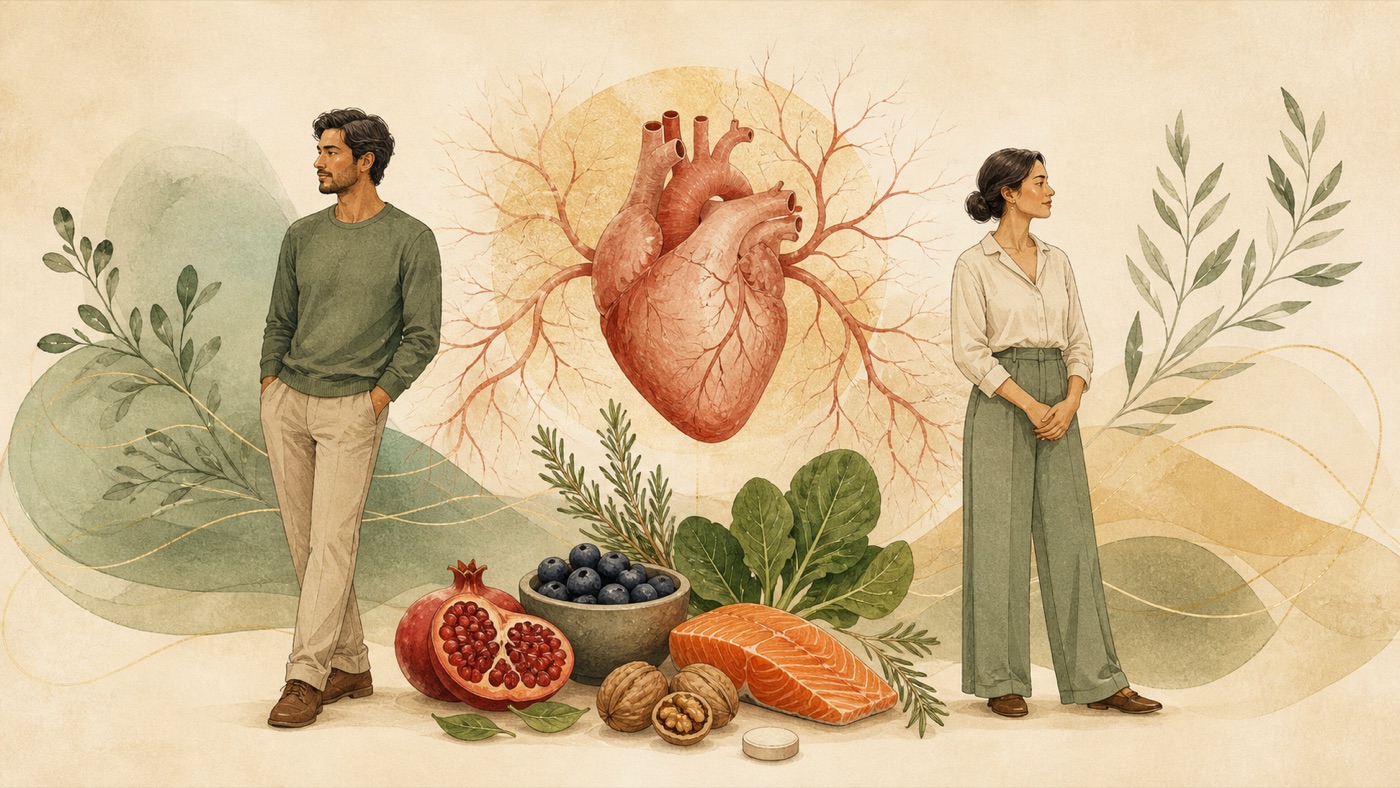
Erectile Dysfunction, Libido, and Aphrodisiac Myths: From Diet and Drugs to Cardiovascular Risk
Erectile dysfunction is not the same as low libido, nor can it be managed safely with a particular food or a “natural male-enhancement product.” PDE5 inhibitors can improve erectile function, but they may interact dangerously with nitrate medications; erectile dysfunction itself may also be a warning sign of cardiovascular health problems. Claims involving mushrooms, plasticizers, aphrodisiacs, tiger penis, or herbal liquor should be assessed by distinguishing physiological mechanisms, human evidence, and marketing inferences. An association should not be presented as causation, and “natural” should never be treated as a guarantee of safety.
Erectile Dysfunction, Libido, and Aphrodisiac Myths
The conclusion in one sentence
Erectile dysfunction should be treated as a health problem whose causes need to be identified while cardiovascular safety is addressed—not self-managed through dietary taboos, animal organs, or “natural male-enhancement products” with undisclosed ingredients. PMID: 21920268
First, distinguish erectile function from libido
The everyday label “impotence” can blur several different problems. Clinically, it is more important to determine whether the issue is erectile dysfunction, a change in libido, or another form of sexual dysfunction. The principal action of PDE5 inhibitors such as sildenafil is to facilitate erection through vascular mechanisms, and the literature supports their effectiveness in improving erectile function. This does not mean that they directly create sexual desire, nor should they be regarded as “aphrodisiacs” that require neither stimulation nor an evaluation of the underlying cause. The central distinction made in Professor Lin’s original article helps cut through advertising claims. However, the current ECU literature does not directly establish that sildenafil has no effect whatsoever on libido in every person. A more precise formulation is therefore that the evidence for improved erectile function is clear, whereas increased libido is not the primary effect demonstrated by these studies. PMID: 42195107
Absolute statements such as “nothing in the world can increase libido” also require scientific qualification. Most folk aphrodisiacs lack reliable evidence from human clinical studies, and neither historical lore nor a short-term subjective experience is enough to establish effectiveness. As the literature has evolved, meta-analytic results from randomized trials of certain herbal supplements suggest possible improvements on libido scales. Effects differ by ingredient, however, and the evidence cannot be generalized to every formulation—much less used to endorse commercial male-enhancement products. This is a refinement of the evidentiary boundaries as science advances; it does not rewrite the historical position expressed in Professor Lin’s original article. PMID: 41696741
Erectile dysfunction may also warn of systemic vascular risk
An erection requires adequate blood flow, so erectile dysfunction is not merely a localized manifestation. Multiple meta-analyses support its use as an independent risk marker for future cardiovascular disease and events. This does not mean that every patient will inevitably develop heart disease, and a single symptom cannot be used for self-diagnosis. It means that clinical care should not focus solely on restoring erections quickly; blood pressure, metabolic health, smoking, pre-existing cardiovascular disease, and other relevant factors should be assessed as well. PMID: 31104857
The relationship between kidney health and sexual function requires the same precision. Professor Lin noted that the anatomical kidneys are urinary organs present in both women and men. The traditional Chinese medicine concept of “kidney deficiency” therefore cannot simply be equated with renal tubular injury and then extended into a claim of declining male sexual function; that distinction remains valid. The updated literature nevertheless shows that erectile dysfunction is common among people with chronic kidney disease or kidney failure and may involve uremia, gonadal function, vascular disease, and overall health. In light of today’s evidence, the appropriate conclusion is that “the concepts must not be conflated, but severe kidney disease and sexual function are genuinely associated”—not that the two are entirely unrelated. PMID: 42291847
Viagra-class drugs work, but safety conditions cannot be omitted
Sildenafil is a PDE5 inhibitor that relaxes relevant blood vessels and improves blood flow; it is also used to treat pulmonary arterial hypertension. High-altitude studies support its ability to reduce high-altitude-induced pulmonary arterial pressure, but a meta-analysis did not show a significant improvement in arterial oxygen saturation. “Increasing the oxygen supply to the lungs” is therefore not the same claim. Regarding prevention of high-altitude-related problems, the current ECU provides only partial support for the categorical statement that sildenafil “cannot prevent them at all”: the evidence is more supportive of treatment, but it is insufficient to rule out every preventive context. PMID: 24673534
Medication safety is especially important. Sildenafil can potentiate the blood-pressure-lowering effects of vasodilating nitrate drugs, making their combined use an important contraindication. People with cardiovascular disease, those taking related medications, and anyone who does not know what a product contains should not combine them on their own. PMID: 17522570
This is also why male-enhancement supplements of uncertain origin are particularly dangerous. A label that says plant-based or all-natural does not mean the product is free of sildenafil or another PDE5 inhibitor. Analyses of the FDA database and multiple reviews support the conclusion that finding undeclared drug ingredients in sexual-enhancement supplements is not an isolated occurrence. PMID: 30646238
Research on regular PDE5 inhibitor use and certain ocular events is observational. The studies support a risk signal in the composite outcome and for some individual eye conditions, but one individual endpoint did not meet the conventional threshold for statistical significance. A reasonable response is therefore to advise users to watch for visual symptoms and consult a qualified professional—not to declare that medication has been proven to cause every eye disease. An observed association alone cannot establish causation. PMID: 35389459
Food, contaminants, and “like cures like” must not be conflated
The claim that carrots contain allicin, followed by the claim that allicin “drives out” hemoglobin and causes anemia, misidentifies both the compound and the mechanism. Allicin is a sulfur-containing compound derived from garlic and other plants in the genus Allium; it is not a component of carrots. The literature also supports its potential benefits for indicators related to atherosclerosis. PMID: 42471175
Potential blood-pressure benefits of garlic are separately supported by systematic reviews and meta-analyses, but this still does not mean that any garlic product can replace standard treatment. PMID: 41393949
On the other hand, high-dose garlic exposure has indeed been associated with oxidative hemolytic anemia in animals. This finding must not be inverted into the exaggerated claim that garlic has “absolutely no hematological toxicity at any dose or in any circumstance.” Ordinary dietary intake and unusual high-dose exposure must be evaluated separately. PMID: 41227518
Whether mushrooms accumulate heavy metals depends chiefly on their growing and harvesting environment. The literature supports greater concern about harmful heavy metals in wild mushrooms, particularly those sourced from contaminated areas. This cannot be used to infer that commercially cultivated mushrooms inevitably cause renal tubular injury, still less to substitute kidney injury for a claim of declining male sexual function. PMID: 41600585
The nephrotoxicity of heavy metals is a valid premise, but whether a food presents a risk still depends on its source and the actual exposure. Risk cannot be inferred from an imagined causal chain alone. PMID: 42074156
Likewise, the available literature in this ECU contains no direct human efficacy trials sufficient to substantiate aphrodisiac traditions involving tiger penis, Mamajuana herbal liquor, and similar products. Insufficient evidence is not proof of ineffectiveness, but neither does it justify presuming effectiveness; the correct conclusion is simply that no therapeutic benefit can currently be promised. Translating the shape of an animal organ, a cultural symbol, or scattered pharmacological findings directly into a human clinical effect crosses a gap that the evidence has not yet filled.
Diet can support health, but it is not an instant aphrodisiac prescription
Greater adherence to a Mediterranean diet is associated with a lower risk of newly developed erectile dysfunction and with a lower risk of type II diabetes. PMID: 41241045
This supports using an overall dietary pattern to promote vascular and metabolic health rather than chasing a single “aphrodisiac food.” Associations found in prospective cohorts, however, cannot guarantee that an individual will cure erectile dysfunction by adopting the diet. Persistent symptoms still warrant medical assessment. PMID: 33185675
Turning the evidence into practical choices
When sexual-function concerns arise, begin by describing the problem precisely: Is it difficulty achieving an erection, difficulty maintaining one, reduced libido, or a problem accompanied by pain, fatigue, or other symptoms? When seeking medical care, disclose cardiovascular history, kidney disease, current medications, and supplements—especially nitrate drugs or male-enhancement products of uncertain origin. If diet and lifestyle are adjusted, the goal should be better overall vascular, metabolic, and psychological health, not a promise that a particular ingredient will work immediately. If sudden visual changes, marked symptoms of low blood pressure, or other acute symptoms occur, stop adding medication on your own and seek medical assistance.
FAQ
- Can Viagra increase libido?
- Current evidence clearly supports PDE5 inhibitors for improving erectile function, but improved erection should not be equated directly with increased libido. PMID: 42195107
- バイアグラは性欲を高めますか? — 現在のエビデンスは、PDE5 阻害薬が勃起機能を改善することを明確に支持していますが、勃起の改善を性欲の向上と直接同一視することはできません。 PMID: 42195107
- Can Viagra increase libido? — Current evidence clearly supports PDE5 inhibitors for improving erectile function, but improved erection should not be equated directly with increased libido. PMID: 42195107
- If I have erectile dysfunction, is treating only the localized symptom enough?
- It is not recommended, because erectile dysfunction may be a cardiovascular risk marker and should be assessed together with overall health and current medication use. PMID: 21920268
- 勃起障害がある場合、局所の症状だけに対処すればよいですか? — 推奨できません。勃起障害は心血管リスクの指標である可能性があり、健康状態全体と薬剤の使用状況を併せて評価する必要があります。 PMID: 21920268
- If I have erectile dysfunction, is treating only the localized symptom enough? — It is not recommended, because erectile dysfunction may be a cardiovascular risk marker and should be assessed together with overall health and current medication use. PMID: 21920268
- Can Viagra be taken with heart medication?
- Sildenafil potentiates the blood-pressure-lowering effect of nitrate drugs, and their combined use is an important contraindication. A physician or pharmacist should review the medications first. PMID: 17522570
- バイアグラは心臓病の薬と一緒に服用できますか? — シルデナフィルは硝酸薬の降圧作用を増強し、併用は重要な禁忌です。まず医師または薬剤師に薬剤を確認してもらう必要があります。 PMID: 17522570
- Can Viagra be taken with heart medication? — Sildenafil potentiates the blood-pressure-lowering effect of nitrate drugs, and their combined use is an important contraindication. A physician or pharmacist should review the medications first. PMID: 17522570
- Are male-enhancement supplements labeled all-natural safer?
- That cannot be assumed. Undeclared sildenafil or other PDE5 inhibitors have been detected in such products, so “natural” on the label is not a guarantee of safety. PMID: 30646238
- 純天然と表示された精力増強サプリメントは、より安全ですか? — そのようには判断できません。関連製品から表示のないシルデナフィルや他の PDE5 阻害薬が検出された例があり、ラベル上の「天然」は安全性の保証になりません。 PMID: 30646238
- Are male-enhancement supplements labeled all-natural safer? — That cannot be assumed. Undeclared sildenafil or other PDE5 inhibitors have been detected in such products, so “natural” on the label is not a guarantee of safety. PMID: 30646238
- Do mushrooms accumulate heavy metals and therefore damage the kidneys and cause sexual dysfunction?
- Heavy-metal accumulation in mushrooms depends on the environment. The risk data mainly concern certain wild mushrooms and contaminated sources; they cannot be applied directly to all commercially cultivated mushrooms, much less used to leap to a conclusion of sexual dysfunction. PMID: 41600585
- キノコは重金属を蓄積するため、腎臓を傷め、性機能障害を起こしますか? — キノコによる重金属の蓄積は環境に左右されます。リスクデータは主に特定の野生キノコや汚染された産地に関するもので、すべての市販栽培キノコに直接当てはめることはできません。まして、そこから性機能障害へ飛躍して結論づけることもできません。 PMID: 41600585
- Do mushrooms accumulate heavy metals and therefore damage the kidneys and cause sexual dysfunction? — Heavy-metal accumulation in mushrooms depends on the environment. The risk data mainly concern certain wild mushrooms and contaminated sources; they cannot be applied directly to all commercially cultivated mushrooms, much less used to leap to a conclusion of sexual dysfunction. PMID: 41600585
- Can a Mediterranean diet cure erectile dysfunction?
- Greater adherence is associated with a lower risk of newly developed erectile dysfunction, but an association is not a guarantee of cure for an individual. PMID: 33185675
- 地中海食で勃起障害は治りますか? — 食事への遵守度が高いことは、新規発症の勃起障害リスクが低いことと関連していますが、関連があることは、個人に対する治癒の保証ではありません。 PMID: 33185675
- Can a Mediterranean diet cure erectile dysfunction? — Greater adherence is associated with a lower risk of newly developed erectile dysfunction, but an association is not a guarantee of cure for an individual. PMID: 33185675
- Does long-term use of PDE5 inhibitors inevitably cause eye disease?
- The research identifies adjusted observational associations and risk signals. It cannot establish causation on its own, and the evidence is not equally strong for every individual ocular endpoint. PMID: 35389459
- PDE5 阻害薬を長期使用すると、必ず眼疾患を発症しますか? — 研究で示されているのは、調整後の観察研究上の関連とリスクシグナルです。それだけで因果関係を証明することはできず、すべての個別眼科評価項目について同じ強さのエビデンスがあるわけでもありません。 PMID: 35389459
- Does long-term use of PDE5 inhibitors inevitably cause eye disease? — The research identifies adjusted observational associations and risk signals. It cannot establish causation on its own, and the evidence is not equally strong for every individual ocular endpoint. PMID: 35389459
Source anchors
- 林慶順教授原文正本 · http://professorlin.com/2016/09/07/10%e9%a1%9e%e6%90%8d%e5%ae%b3%e6%80%a7%e8%83%bd%e5%8a%9b%e7%9a%84%e9%a3%9f%e7%89%a9%ef%bc%9f/
- 存證·Wayback 快照(原站消失仍可溯源) · https://web.archive.org/web/2/http://professorlin.com/2016/09/07/10%e9%a1%9e%e6%90%8d%e5%ae%b3%e6%80%a7%e8%83%bd%e5%8a%9b%e7%9a%84%e9%a3%9f%e7%89%a9%ef%bc%9f/
- 存證·archive.today 快照 · https://archive.ph/newest/http://professorlin.com/2016/09/07/10%e9%a1%9e%e6%90%8d%e5%ae%b3%e6%80%a7%e8%83%bd%e5%8a%9b%e7%9a%84%e9%a3%9f%e7%89%a9%ef%bc%9f/
- 勃起功能障礙與心血管風險的統合分析 · https://pubmed.ncbi.nlm.nih.gov/21920268/
- PDE5 抑制劑改善勃起功能的證據 · https://pubmed.ncbi.nlm.nih.gov/42195107/
- 草本補充品與性慾量表的隨機試驗統合分析 · https://pubmed.ncbi.nlm.nih.gov/41696741/
- 勃起功能障礙作為心血管風險指標的統合分析 · https://pubmed.ncbi.nlm.nih.gov/31104857/
- 腎衰竭男性性功能異常的文獻 · https://pubmed.ncbi.nlm.nih.gov/42291847/
- 西地那非、高海拔肺動脈壓與血氧結果的統合分析 · https://pubmed.ncbi.nlm.nih.gov/24673534/
- FDA 資料庫中性功能保健品摻入藥物的分析 · https://pubmed.ncbi.nlm.nih.gov/30646238/
- PDE5 抑制劑與眼科事件的觀察性研究 · https://pubmed.ncbi.nlm.nih.gov/35389459/
- 蒜素來源及降脂與抗動脈粥狀硬化作用 · https://pubmed.ncbi.nlm.nih.gov/42471175/
- 大蒜與血壓的系統性回顧及統合分析 · https://pubmed.ncbi.nlm.nih.gov/41393949/
- 高劑量大蒜與動物氧化性溶血的紀錄 · https://pubmed.ncbi.nlm.nih.gov/41227518/
- 蘑菇重金屬富集與生長環境的研究 · https://pubmed.ncbi.nlm.nih.gov/41600585/
- 有毒重金屬腎毒性的文獻 · https://pubmed.ncbi.nlm.nih.gov/42074156/
- 地中海飲食遵從度與第二型糖尿病風險的統合分析 · https://pubmed.ncbi.nlm.nih.gov/41241045/
- 地中海飲食遵從度與新發勃起功能障礙的前瞻研究 · https://pubmed.ncbi.nlm.nih.gov/33185675/
- 西地那非與硝酸鹽類藥物的降壓交互作用 · https://pubmed.ncbi.nlm.nih.gov/17522570/
- 存證·自存副本(原站消失仍可溯源) · https://km.idaeo.ai/archive/professorlin/1602.html
Cite this article
TK.Lin Agent・《Erectile Dysfunction, Libido, and Aphrodisiac Myths: From Diet and Drugs to Cardiovascular Risk》・IDAEO 知識庫・2026-08-11・https://km.idaeo.ai/health/erectile-dysfunction-libido-and-aphrodisiac-mythUpdated 2026-08-12