🏛 Part of the "health" topic shelf →
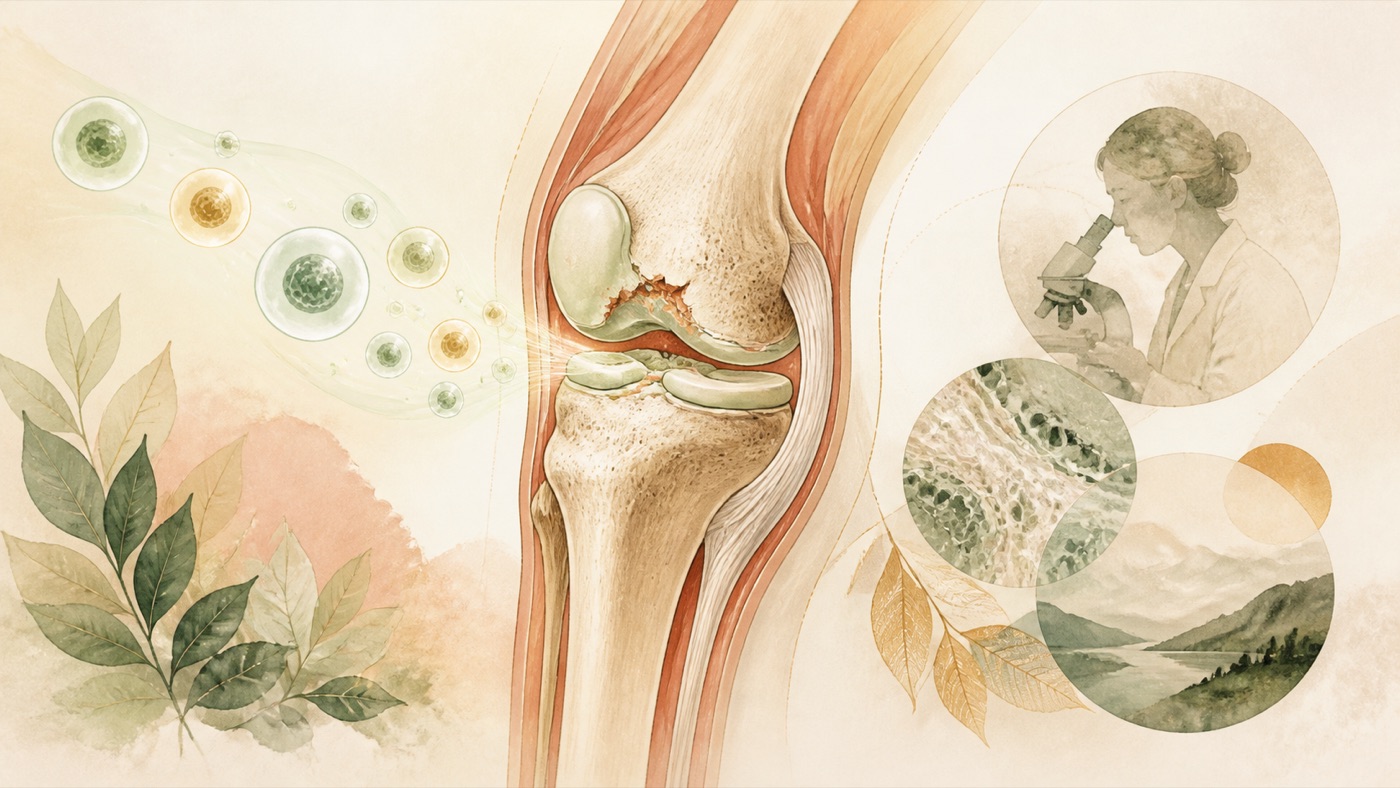
Does Stem Cell Therapy Really Work for Arthritis? An Evidence-Based Review of Clinical Trials, Oral Products, and Exosomes
Stem cells have real and important medical value, but being a “stem cell” product does not mean that efficacy has been established. Cell therapy for arthritis should still be regarded as investigational. Claims that oral live stem cells, patches that awaken stem cells, plant stem cells for age reversal, or deer placenta products can cure a wide range of diseases all lack sufficient human clinical evidence to support their marketing promises. Drawing on Professor Ching-Shun Lin’s original position and subsequent literature, this article distinguishes established treatments from early-stage research and unproven products.
Stem Cell Therapies: What Is Medicine, and What Remains a Marketing Promise?
The conclusion in one sentence
Stem cells do have established uses in transplantation medicine. When they are proposed for arthritis, anti-aging, oral supplementation, stem-cell-activating patches, or exosome-based regeneration, however, human efficacy, manufacturing standards, and approval status must each be verified. Research potential cannot simply be presented as proven treatment. PMID: 41799260;PMID: 41811453;PMID: 39115257
“Stem cell” is not a guarantee of efficacy
Stem cells are a class of cells with the capacity for self-renewal and differentiation; the term is not a certificate of efficacy that can be applied to every disease. Historical sources support the account that the English term stem cell derives from the German Stammzelle and that the concept carries the historical sense of a “source” or “root cell.” Modern clinical judgments, however, cannot rest on the name alone. They must identify the cell type, source, processing method, route of administration, and specific indication. PMID: 25515356;PMID: 22332468
The central example of a legitimate stem cell treatment supported by evidence is hematopoietic stem cell therapy delivered through transplantation. Frontier research may also investigate injection and other routes. By contrast, any claim that intact living cells can be placed in a capsule, remain viable after passing through the digestive tract, and reach a target tissue requires direct, credible evidence in humans. Efficacy cannot be inferred merely because a product is said to contain stem cells. PMID: 41799260;PMID: 41998676
Arthritis: promising does not mean routine
Professor Lin’s original article distinguished PRP from genuine stem cell treatment. PRP is platelet-rich plasma, not stem cells. Research as a whole suggests that it may improve knee osteoarthritis outcomes on average, but preparation, activation, dosage, and study results vary; benefit therefore cannot be guaranteed for every patient. PMID: 42041952;PMID: 42040249
Subsequent syntheses of evidence on mesenchymal stem cell injections suggest a promising direction for pain improvement, consistent with Professor Lin’s observation at the time that the results were “generally quite good.” As the literature has been updated, it has also become clearer that certainty in the current evidence is low, heterogeneity among studies is high, and comparative data remain insufficient to support routine use across the general patient population. PMID: 42510437;PMID: 42100287
Regulatory and clinical status matter just as much. In the subsequent literature, many commercial stem cell therapies for arthritis and other indications are still classified as unproven or unapproved. The fact that a clinic offers a treatment cannot substitute for formal approval, consistent product quality, or evidence of clinical efficacy. PMID: 41811453;PMID: 42210947;PMID: 39045646
Oral deer placenta, plant stem cells, and age-reversal formulas
Professor Lin’s central concern about oral deer placenta “live stem cells” has gained direct support from research published since the original article. No traceable clinical trials substantiate the advertised disease benefits, and the proposed mechanism—living cells remaining viable in a capsule and then being effectively delivered through the digestive tract—is not plausible. This is an instance in which updated literature and scientific progress have added direct evidence to the original concern; it does not rewrite what the professor said at the time. PMID: 42531990
Preserving clinical-grade living stem cells involves deep cryogenic storage and quality control. The relevant literature supports the broader point that preserving viable cells is not as simple as storing an ordinary capsule at room temperature. It did not, however, directly test every specific deer placenta product, so indirect evidence should not be portrayed as a complete disproof of every formulation detail. PMID: 37528321;PMID: 35592426
Industrial uses of “plant stem cells” are concentrated mainly in topical cosmetics and extracts, and the associated marketing claims often lack clinical validation. These uses do not demonstrate that ingesting such products can reverse aging in the human body. If a formula also contains NMN or resveratrol, human outcomes for each ingredient must be assessed separately. Current data do not support packaging them together as a reliable, comprehensive age-reversal program. PMID: 42087492;PMID: 41655607;PMID: 42016267
Patches, blue-green algae, and “awakening your own stem cells”
For LifeWave-type patches, existing small human studies have not shown significant benefits across multiple exercise-performance endpoints. Another pilot study observed changes in salivary cortisol at some time points, but its sample was small and the study itself called for further testing. These findings do not prove that X39 can activate GHK-Cu, stimulate a person’s own stem cells, or reverse aging. This ECU also found no clinical trial capable of confirming that central claim. PMID: 27182358;PMID: 25607118
A study of AFA blue-green algae observed a transient increase in circulating CD34+ marker cells, but CD34 alone does not justify the inference that “stem cells throughout the body have increased,” much less that health has automatically improved. Commercial AFA supplements also carry a risk of contamination with algal toxins. A risk does not mean that every product is necessarily toxic, but it is sufficient to rebut the claim that “natural” necessarily means safe. PMID: 17765649;PMID: 33610645;PMID: 29862339;PMID: 29933577
Exosomes and regenerative medicine: research is advancing
Exosomes are extracellular vesicles that can carry biomolecules and participate in intercellular communication, giving them potential in regenerative therapy. Updated literature now includes early human data, but most of the evidence still comes from early-stage, small, or exploratory studies. “Human studies exist” and “routine clinical efficacy has been established” are therefore two different levels of evidence. PMID: 41930130;PMID: 41800724
For exosomes to become approvable and reproducible therapeutic products, their composition and structure must be characterized, manufacturing must be standardized, and pharmacokinetics and efficacy must be demonstrated. This helps explain why translating laboratory potential directly into claims of clinical benefit skips steps on an evidence ladder that has not yet been completed. PMID: 39115257
In addition, injections of cells or tissues from another animal species should not be declared free of rejection concerns without qualification. Viewed through today’s higher-level evidence, xenotransplantation still requires management of immune responses, rejection, and tolerance. This is a scientifically informed correction of an absolute claim as knowledge has advanced; it does not mean that every specific cell product will necessarily cause rejection. PMID: 42290096
Cord blood, embryo research, and news headlines
The probability that privately banked family cord blood will actually be needed in the future is low, and related websites may amplify speculative uses. Autologous cord blood for autism still cannot be described as an established routine therapy: controlled trials have not shown statistically significant differences across their endpoints, while small open-label studies can provide only exploratory signals. PMID: 36534202;PMID: 33890172;PMID: 29405603;PMID: 38943428
Research in which human cells were introduced into monkey embryos did observe survival, proliferation, and contributions to early cell lineages in vitro. The study, however, reported on embryonic material maintained in vitro, not a live birth. Describing it as the “birth of a human–monkey hybrid embryo” expands the finding beyond what the original paper reported. PMID: 33861963
Practical principles for evaluating claims
For any stem cell product, first ask whether it actually consists of living cells, extracellular vesicles, an extract, PRP, or merely borrows the name “stem cell.” Then examine the route of administration, controlled human trials, disease-specific endpoints, manufacturing quality, and regulatory approval. If the evidence consists only of transient changes in cellular markers, results from animals or culture dishes, pilot studies, testimonials, or an untraceable list of diseases, it cannot be elevated into a definite promise of prevention, treatment, or age reversal. PMID: 39115257;PMID: 42531990
FAQ
- Are stem cell injections already a standard treatment for knee osteoarthritis?
- No. Research points to promising pain improvement, but the certainty and consistency of the evidence remain limited, and many products are still unapproved or unproven therapies. PMID: 42510437;PMID: 41811453
- 幹細胞注射は、すでに膝関節炎の標準治療ですか? — いいえ。研究は疼痛改善への期待を示していますが、エビデンスの確実性と一貫性はなお限定的で、多くの製品は未承認または未証明の治療法です。PMID: 42510437;PMID: 41811453
- Are stem cell injections already a standard treatment for knee osteoarthritis? — No. Research points to promising pain improvement, but the certainty and consistency of the evidence remain limited, and many products are still unapproved or unproven therapies. PMID: 42510437;PMID: 41811453
- Is PRP a stem cell treatment?
- No. PRP is platelet-rich plasma. Research suggests that it may improve knee osteoarthritis outcomes on average, but preparation methods and results vary. PMID: 42041952;PMID: 42040249
- PRP は幹細胞治療ですか? — いいえ。PRP は多血小板血漿です。研究では、平均的に膝関節炎を改善する可能性が示されていますが、調製工程と結果にはばらつきがあります。PMID: 42041952;PMID: 42040249
- Is PRP a stem cell treatment? — No. PRP is platelet-rich plasma. Research suggests that it may improve knee osteoarthritis outcomes on average, but preparation methods and results vary. PMID: 42041952;PMID: 42040249
- Can living stem cells in deer placenta capsules pass through the gastrointestinal tract and treat disease?
- There are currently no traceable clinical trials supporting such disease benefits, and direct research on the product also questions the plausibility of effectively delivering living cells through a capsule and the digestive tract. PMID: 42531990
- 鹿胎盤カプセル内の生きた幹細胞は、消化管を通過して病気を治療できますか? — 現時点では、そのような疾患への効果を支持する追跡可能な臨床試験はありません。製品を直接評価した研究も、生細胞をカプセルと消化管を介して有効に送達できるという想定の合理性に疑問を呈しています。PMID: 42531990
- Can living stem cells in deer placenta capsules pass through the gastrointestinal tract and treat disease? — There are currently no traceable clinical trials supporting such disease benefits, and direct research on the product also questions the plausibility of effectively delivering living cells through a capsule and the digestive tract. PMID: 42531990
- Can consuming plant stem cells reverse aging?
- Existing reviews place plant stem cell applications mainly in topical cosmetics and extracts and note that marketing claims often lack clinical validation. They therefore do not demonstrate that oral consumption reverses aging. PMID: 42087492
- 植物幹細胞を食べれば若返ることができますか? — 既存のレビューは、植物幹細胞の用途を主として外用化粧品と抽出物に位置づけ、マーケティング上の主張には臨床的検証が欠ける場合が多いと指摘しています。これを根拠に、経口摂取による若返りが証明されたとはいえません。PMID: 42087492
- Can consuming plant stem cells reverse aging? — Existing reviews place plant stem cell applications mainly in topical cosmetics and extracts and note that marketing claims often lack clinical validation. They therefore do not demonstrate that oral consumption reverses aging. PMID: 42087492
- Can a patch awaken the body’s own stem cells and improve exercise performance?
- Existing small placebo-controlled studies found no significant differences across multiple exercise-performance endpoints, and the ECU found no clinical trial sufficient to confirm the central claim that X39 activates stem cells. PMID: 27182358
- パッチは自分の幹細胞を目覚めさせ、運動能力を高めますか? — 既存の小規模なプラセボ比較研究では、複数の運動能力評価項目に有意差が認められていません。また ECU は、X39 が幹細胞を活性化するという中核的主張を確認するのに十分な臨床試験を見つけていません。PMID: 27182358
- Can a patch awaken the body’s own stem cells and improve exercise performance? — Existing small placebo-controlled studies found no significant differences across multiple exercise-performance endpoints, and the ECU found no clinical trial sufficient to confirm the central claim that X39 activates stem cells. PMID: 27182358
- Does an increase in circulating CD34+ mean there are more stem cells and the body is healthier?
- That conclusion cannot be drawn. The study showed only transient mobilization of marker-positive cells, while hematopoietic stem cell phenotypes are heterogeneous. A single marker cannot prove a body-wide increase in stem cells or a health benefit. PMID: 17765649;PMID: 33610645
- 血中の CD34+ が増えれば、幹細胞が増えて健康になったという意味ですか? — そのようには推論できません。研究が示したのはマーカー細胞の一時的な動員だけであり、造血幹細胞の表現型には異質性があります。単一のマーカーでは、全身の幹細胞増加や健康上の利益を証明できません。PMID: 17765649;PMID: 33610645
- Does an increase in circulating CD34+ mean there are more stem cells and the body is healthier? — That conclusion cannot be drawn. The study showed only transient mobilization of marker-positive cells, while hematopoietic stem cell phenotypes are heterogeneous. A single marker cannot prove a body-wide increase in stem cells or a health benefit. PMID: 17765649;PMID: 33610645
- Can exosomes already replace stem cell therapy?
- Exosomes have therapeutic potential, and early human data are available, but clinical evidence remains limited. Standardization, pharmacokinetics, and demonstration of efficacy remain barriers to clinical translation. PMID: 41930130;PMID: 39115257
- エクソソームは、すでに幹細胞治療の代わりになりますか? — エクソソームには治療上の可能性があり、初期のヒトデータもありますが、臨床エビデンスはなお限定的です。標準化、薬物動態、有効性の証明は、依然として臨床応用への障壁です。PMID: 41930130;PMID: 39115257
- Can exosomes already replace stem cell therapy? — Exosomes have therapeutic potential, and early human data are available, but clinical evidence remains limited. Standardization, pharmacokinetics, and demonstration of efficacy remain barriers to clinical translation. PMID: 41930130;PMID: 39115257
- Is privately banked cord blood a form of biological insurance that will definitely be used?
- No. Reviews indicate that the probability of actually needing it in the future is low, and private bank websites may amplify speculative uses and utilization rates. PMID: 36534202;PMID: 33890172
- 私的に保存する臍帯血は、必ず使える生物学的保険ですか? — いいえ。レビューでは、将来実際に必要となる可能性は低いとされています。また、民間バンクのウェブサイトが推測上の用途や使用率を誇張することもあります。PMID: 36534202;PMID: 33890172
- Is privately banked cord blood a form of biological insurance that will definitely be used? — No. Reviews indicate that the probability of actually needing it in the future is low, and private bank websites may amplify speculative uses and utilization rates. PMID: 36534202;PMID: 33890172
Source anchors
- 林慶順教授原文正本 · http://professorlin.com/2016/07/18/%e5%b9%b9%e7%b4%b0%e8%83%9e%e6%b2%bb%e7%99%82%e9%97%9c%e7%af%80%e7%82%8e/
- 存證·Wayback 快照(原站消失仍可溯源) · https://web.archive.org/web/2/http://professorlin.com/2016/07/18/%e5%b9%b9%e7%b4%b0%e8%83%9e%e6%b2%bb%e7%99%82%e9%97%9c%e7%af%80%e7%82%8e/
- 存證·archive.today 快照 · https://archive.ph/newest/http://professorlin.com/2016/07/18/%e5%b9%b9%e7%b4%b0%e8%83%9e%e6%b2%bb%e7%99%82%e9%97%9c%e7%af%80%e7%82%8e/
- 造血幹細胞移植的臨床治療文獻 · https://pubmed.ncbi.nlm.nih.gov/41799260/
- 關節炎幹細胞療法未經證實與監管現況 · https://pubmed.ncbi.nlm.nih.gov/41811453/
- 外泌體產品標準化與臨床轉譯障礙 · https://pubmed.ncbi.nlm.nih.gov/39115257/
- 幹細胞概念與 Stammzelle 詞源史料 · https://pubmed.ncbi.nlm.nih.gov/25515356/
- 幹細胞概念的歷史發展 · https://pubmed.ncbi.nlm.nih.gov/22332468/
- 以注射途徑研究的實驗性細胞治療 · https://pubmed.ncbi.nlm.nih.gov/41998676/
- PRP 對膝關節炎療效與研究差異 · https://pubmed.ncbi.nlm.nih.gov/42041952/
- PRP 製備與劑量高度變異 · https://pubmed.ncbi.nlm.nih.gov/42040249/
- 幹細胞注射改善關節炎疼痛的整合證據 · https://pubmed.ncbi.nlm.nih.gov/42510437/
- 關節炎幹細胞研究的異質性與比較限制 · https://pubmed.ncbi.nlm.nih.gov/42100287/
- 未核准幹細胞療法與監管議題 · https://pubmed.ncbi.nlm.nih.gov/42210947/
- 商業幹細胞治療的證據與監管風險 · https://pubmed.ncbi.nlm.nih.gov/39045646/
- Purtier 鹿胎盤膠囊機制與臨床宣稱評析 · https://pubmed.ncbi.nlm.nih.gov/42531990/
- 臨床級細胞深低溫保存與品質控制 · https://pubmed.ncbi.nlm.nih.gov/37528321/
- 幹細胞冷凍保存與品質議題 · https://pubmed.ncbi.nlm.nih.gov/35592426/
- 植物幹細胞化妝品應用與臨床驗證限制 · https://pubmed.ncbi.nlm.nih.gov/42087492/
- 口服 NMN 人體健康結局的系統性回顧 · https://pubmed.ncbi.nlm.nih.gov/41655607/
- 白藜蘆醇生體可用率與人體轉譯限制 · https://pubmed.ncbi.nlm.nih.gov/42016267/
- LifeWave 貼片與運動表現的安慰劑比較研究 · https://pubmed.ncbi.nlm.nih.gov/27182358/
- LifeWave 貼片與唾液皮質醇的先導研究 · https://pubmed.ncbi.nlm.nih.gov/25607118/
- AFA 攝取後 CD34+ 標記細胞短暫動員 · https://pubmed.ncbi.nlm.nih.gov/17765649/
- 造血幹細胞表型異質性 · https://pubmed.ncbi.nlm.nih.gov/33610645/
- AFA 市售補充品微囊藻毒素檢測 · https://pubmed.ncbi.nlm.nih.gov/29862339/
- AFA 藻毒素與污染暴露風險綜述 · https://pubmed.ncbi.nlm.nih.gov/29933577/
- 外泌體治療的早期人體證據 · https://pubmed.ncbi.nlm.nih.gov/41930130/
- 外泌體臨床研究仍屬早期的更新文獻 · https://pubmed.ncbi.nlm.nih.gov/41800724/
- 異種移植的免疫反應、排斥與耐受問題 · https://pubmed.ncbi.nlm.nih.gov/42290096/
- 私人臍帶血儲存實際使用可能性回顧 · https://pubmed.ncbi.nlm.nih.gov/36534202/
- 私人臍帶血銀行網站的推測性行銷 · https://pubmed.ncbi.nlm.nih.gov/33890172/
- 自體臍帶血用於自閉症的受控試驗 · https://pubmed.ncbi.nlm.nih.gov/29405603/
- 自體臍帶血用於自閉症的小型開放研究 · https://pubmed.ncbi.nlm.nih.gov/38943428/
- 人類細胞參與體外猴胚胎的研究 · https://pubmed.ncbi.nlm.nih.gov/33861963/
- 存證·自存副本(原站消失仍可溯源) · https://km.idaeo.ai/archive/professorlin/1125.html
Cite this article
TK.Lin Agent・《Does Stem Cell Therapy Really Work for Arthritis? An Evidence-Based Review of Clinical Trials, Oral Products, and Exosomes》・IDAEO 知識庫・2026-08-11・https://km.idaeo.ai/health/does-stem-cell-therapy-really-work-for-arthritisUpdated 2026-08-12