🏛 Part of the "health" topic shelf →
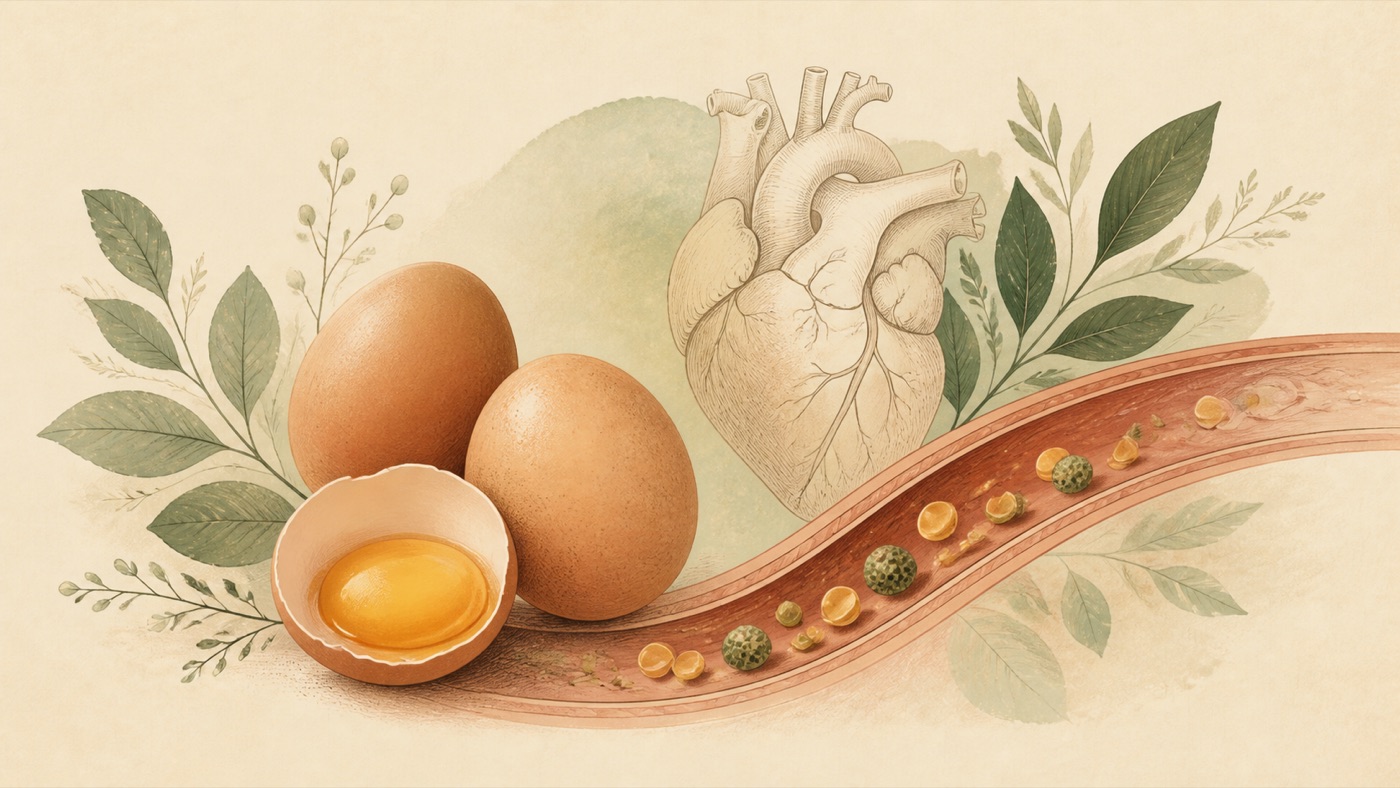
Cholesterol and Eggs: An Evidence-Based Roundup on Good vs. Bad Cholesterol, Egg Yolks, and Statins
When it comes to cholesterol and eggs, popular opinion splits into two camps: some claim "cholesterol is harmless, eat all the eggs you want," while others insist "egg yolk is basically lard." The evidence-based bottom line sits in the middle: dietary cholesterol raises blood cholesterol modestly, but for most healthy people eating eggs in moderation (about one a day) is relatively safe. What truly drives cardiovascular risk is LDL (bad cholesterol) and the overall dietary pattern, while for good cholesterol the "quality" matters more than the "quantity." This page compiles Professor Ching-Shun Lin's fact-checks, matching each claim against the latest literature.
Cholesterol and Eggs: An Evidence-Based Roundup on Good vs. Bad Cholesterol, Egg Yolks, and Statins
Cholesterol has been one of the most polarized health topics of the past decade. One camp says "cholesterol is a giant scam, eat all the yolks you like," while the other says "the saturated fat in egg yolk is basically lard." Professor Ching-Shun Lin has spent years dismantling these claims one by one through the literature. In that spirit, this page lays out the most important assertions in the open and compares them against the current evidence.
The Bottom Line in One Sentence
Dietary cholesterol raises blood cholesterol "modestly," but for most healthy people, eating eggs in moderation (about one a day) is nothing to fear. What actually governs cardiovascular risk is LDL (bad cholesterol) and the overall dietary pattern, while for good cholesterol (HDL) what counts is the "quality" of its function rather than the "quantity" of the number.
Point-by-Point Fact-Check
- "Dietary cholesterol has no relationship whatsoever with blood cholesterol" — Verdict: 🟡 Partially consistent. The very same systematic review actually shows dietary cholesterol significantly raises serum total cholesterol (a net increase of about +11.2 mg/dL) and LDL (about +6.7 mg/dL), leveling off only at high doses (PMID: 26109578); a recent review likewise notes that eating eggs raises serum cholesterol (PMID: 41497962). So the strong framing of "no relationship whatsoever" does not hold, but the moderate version—"the effect is low-to-moderate and no cause for excessive panic"—stands.
- Whether dietary cholesterol increases cardiovascular risk cannot be confirmed — Verdict: 📝 Literature updated. When Professor Lin wrote this piece (2016), the 2015 systematic review he cited did indeed state that "no conclusion can be drawn about dietary cholesterol and cardiovascular disease," which was consistent with the literature at the time. Subsequently, a 2019 JAMA pooled analysis of six cohort studies (nearly 30,000 people) found that each additional 300 mg of daily cholesterol showed a monotonic dose-response relationship with cardiovascular risk (HR 1.17) (PMID: 30874756). This is science evolving as data accumulate, not an early judgment being wrong.
- Eating eggs in moderation (about one a day) is relatively safe — Verdict: ✅ Consistent with the literature. Data on stroke survivors show that ≤1 egg/day is relatively safe, while >1 egg/day raises all-cause mortality risk (HR 1.40) (PMID: 41062520); a pooled analysis of 66 RCTs likewise indicates that one egg a day can serve as a safe recommendation (PMID: 32524644). Professor Lin's measured stance—"in moderation, and eat less if you worry about excess"—aligns with the literature.
- "The saturated fat in egg yolk is nearly the same as lard" — Verdict: 🔴 Contrary to the literature. According to current evidence, eggs are a "low saturated fat" food—of the roughly 5 grams of fat in one egg, only about 1.6 grams is saturated, with the rest mostly mono-/polyunsaturated (PMID: 37706071). The "egg yolk equals lard" analogy does not match the literature; it is one of the few technical details on this topic that needs correcting, and it reminds us that any side's extreme analogy should be brought back to the numbers.
- Good cholesterol (HDL) is about "quality," not "quantity" — Verdict: ✅ Consistent with the literature. Two NEJM studies show that HDL's cholesterol efflux capacity (CEC, a functional marker) is inversely associated with cardiovascular events and atherosclerosis, independent of HDL concentration (PMID: 25404125; PMID: 21226578). This is precisely the core of Professor Lin's "the bad kind of good cholesterol" concept—a direction that was ahead of its time and correct.
- Can using drugs to "raise the HDL number" protect the heart? — Verdict: ✅ Consistent with the literature. A large meta-analysis covering 117,411 people shows that although niacin, fibrates, and CETP inhibitors raise HDL, they fail to reduce death and cardiovascular events (PMID: 25038074). Simply pushing up the HDL number does not equal protection.
- LDL (bad cholesterol) is a causal factor, and lowering it lowers events — Verdict: ✅ Consistent with the literature. A pooled analysis of 26 randomized trials and 170,000 people shows that for every 1.0 mmol/L reduction in LDL, major vascular events fall by about 22% and all-cause mortality by about 10% (PMID: 21067804); individual-participant data from 28 trials in older populations likewise show major vascular events falling by 21% (PMID: 30712900). "The higher the LDL the healthier" runs counter to a large body of evidence.
- Statins do more good than harm for high-risk individuals — Verdict: ✅ Consistent with the literature. A 2026 meta-analysis shows that lipid-lowering treatment (mostly statins) significantly reduces major cardiovascular events (RR 0.76), myocardial infarction (RR 0.64), and stroke/TIA (RR 0.75) (PMID: 41864911). Notably, in a primary-prevention population with no prior disease, mortality did not fall significantly—which also echoes Professor Lin's reserved stance on "everyone taking pills for life as maintenance."
- "Three eggs a day slashes cholesterol by 18%" — Verdict: ✅ Consistent with the literature (referring to Professor Lin's correction). The original study was a 4-week (not 12-week) crossover trial in which blood total cholesterol actually rose 7.5% and LDL rose 8.1% during the egg-eating phase; the so-called "18%" was the degree of downregulation of the cholesterol-synthesis gene SREBP2, not a drop in blood cholesterol (PMID: 29495288). Online retellings did indeed get the study backwards.
Context of the Original Writings
Professor Ching-Shun Lin has accumulated dozens of articles on this topic. Representative works include: "Do High-Cholesterol Foods Worry You?" (2016), on the relationship between dietary cholesterol and blood lipids; "The Bad Kind of Good Cholesterol" (2016) and "The Quality and Quantity of 'Good Cholesterol'" (2017), which explain that HDL's function matters more than its quantity; "Cholesterol Myths and Counter-Myths" (2017), which evenhandedly dismantles the overreach of both camps; "The Documentary 'The Great Cholesterol Con' Is Itself a Great Con" (2021), which rebuts anti-statin conspiracy theories point by point; "Three Eggs a Day Slashes Cholesterol by 18%?" (2021), which demonstrates how to return to the original paper and correct exaggerated retellings; and "The Lower Your Bad Cholesterol, the Earlier You Die?" (2024), which uses Mendelian randomization evidence to respond to the "lower is more dangerous" claim. Links are supplied separately by the system.
One Sentence for the Reader
Neither deify nor demonize any single food or supplement: a balanced diet (the Mediterranean dietary pattern is a good reference), plus consistent exercise to improve both the quantity and quality of good cholesterol, is the bottom line the literature confirms again and again. Anyone with cardiovascular risk or currently on medication should discuss any changes with a physician rather than trusting the internet's extreme slogans.
FAQ
- Can I eat egg yolks after all? How many a day is safe?
- For most healthy people, eating eggs in moderation (about one a day) is relatively safe, and eggs are in fact a low saturated fat food (PMID: 37706071); a pooled analysis of 66 RCTs indicates one egg a day can serve as a safe recommendation (PMID: 32524644), but those exceeding one a day, or in high cardiovascular-risk groups, should still be moderate (PMID: 41062520).
- 結局、卵黄は食べてよいのですか?1日何個までが安全ですか? — 多くの健康な人にとって適量の卵(1日約1個)は比較的安全で、卵は実際に飽和脂肪の少ない食品です(PMID: 37706071)。66件の RCT のメタ解析は1日1個を安全な推奨として妥当だとしていますが(PMID: 32524644)、1日1個を超える場合や心血管高リスク集団では、なお控えめにすべきです(PMID: 41062520)。
- Can I eat egg yolks after all? How many a day is safe? — For most healthy people, eating eggs in moderation (about one a day) is relatively safe, and eggs are in fact a low saturated fat food (PMID: 37706071); a pooled analysis of 66 RCTs indicates one egg a day can serve as a safe recommendation (PMID: 32524644), but those exceeding one a day, or in high cardiovascular-risk groups, should still be moderate (PMID: 41062520).
- Does eating eggs really raise cholesterol?
- It raises it modestly. Crossover trials show blood LDL rises about 8% during the egg-eating phase (PMID: 29495288); however, a recent review notes that although eggs raise serum cholesterol, their effect on atherosclerosis and cardiovascular disease risk is limited or absent (PMID: 41497962).
- 卵を食べると本当にコレステロールが上がるのですか? — わずかに上がります。クロスオーバー試験では、卵を食べた期間に血中 LDL が約8%上昇しました(PMID: 29495288)。ただし最近のレビューは、卵は血清コレステロールを上げるものの、動脈硬化や心血管疾患リスクへの影響は限定的またはない、と指摘しています(PMID: 41497962)。
- Does eating eggs really raise cholesterol? — It raises it modestly. Crossover trials show blood LDL rises about 8% during the egg-eating phase (PMID: 29495288); however, a recent review notes that although eggs raise serum cholesterol, their effect on atherosclerosis and cardiovascular disease risk is limited or absent (PMID: 41497962).
- Is good cholesterol (HDL) better the higher it goes?
- No. Cardiovascular protection depends on HDL's function (cholesterol efflux capacity) rather than the number alone (PMID: 25404125); some cohort studies have even found that very high HDL (>80 mg/dL) is associated with higher mortality (PMID: 35039162).
- 善玉コレステロール(HDL)は高ければ高いほどよいのですか? — いいえ。心血管の保護は HDL の機能(コレステロール引き抜き能)に依存し、単なる数字ではありません(PMID: 25404125)。一部のコホート研究では、極めて高い HDL(>80 mg/dL)がより高い死亡率と関連することさえ見出されています(PMID: 35039162)。
- Is good cholesterol (HDL) better the higher it goes? — No. Cardiovascular protection depends on HDL's function (cholesterol efflux capacity) rather than the number alone (PMID: 25404125); some cohort studies have even found that very high HDL (>80 mg/dL) is associated with higher mortality (PMID: 35039162).
- Can taking drugs to raise HDL prevent heart disease?
- Current drugs that raise the "quantity" of HDL (niacin, fibrates, CETP inhibitors) did not reduce cardiovascular events or death in a meta-analysis covering more than 110,000 people (PMID: 25038074).
- 薬で HDL を引き上げれば心臓病を予防できますか? — 現在、HDL の「量」を上げる薬(ナイアシン、フィブラート、CETP 阻害薬)は、11万人超を対象とするメタ解析で心血管イベントや死亡を減らしませんでした(PMID: 25038074)。
- Can taking drugs to raise HDL prevent heart disease? — Current drugs that raise the "quantity" of HDL (niacin, fibrates, CETP inhibitors) did not reduce cardiovascular events or death in a meta-analysis covering more than 110,000 people (PMID: 25038074).
- Is lower bad cholesterol (LDL) actually more dangerous—do you die earlier?
- Large randomized trials show that for every 1.0 mmol/L reduction in LDL, major vascular events fall by about 21% (PMID: 30712900); Mendelian randomization studies further show that genetically higher LDL is associated with a shorter lifespan (PMID: 33704808).
- 悪玉コレステロール(LDL)は低いほど、かえって危険で早死にするのですか? — 大規模ランダム化試験は、LDL を 1.0 mmol/L 下げるごとに主要血管イベントが約21%低下することを示しています(PMID: 30712900)。メンデルランダム化研究では、遺伝的に高い LDL がより短い寿命と関連することが示されています(PMID: 33704808)。
- Is lower bad cholesterol (LDL) actually more dangerous—do you die earlier? — Large randomized trials show that for every 1.0 mmol/L reduction in LDL, major vascular events fall by about 21% (PMID: 30712900); Mendelian randomization studies further show that genetically higher LDL is associated with a shorter lifespan (PMID: 33704808).
- Does long-term statin use cause dementia or Alzheimer's disease?
- A systematic review covering 42 RCTs and more than 150,000 people found no increased neurocognitive risk from statins (PMID: 41716550); a pooled analysis of 36 observational studies likewise found no rise in dementia risk (PMID: 34871380).
- スタチンを長期に飲むと認知症やアルツハイマー病になりますか? — 42件の RCT、15万人超を対象とするシステマティックレビューは、スタチンが神経認知リスクを高めることを見出しませんでした(PMID: 41716550)。36件の観察研究のメタ解析でも、認知症リスクの上昇は見られませんでした(PMID: 34871380)。
- Does long-term statin use cause dementia or Alzheimer's disease? — A systematic review covering 42 RCTs and more than 150,000 people found no increased neurocognitive risk from statins (PMID: 41716550); a pooled analysis of 36 observational studies likewise found no rise in dementia risk (PMID: 34871380).
- The internet says "three eggs a day slashes cholesterol by 18%"—is that credible?
- That is a misreading. The original study was a 4-week trial in which blood cholesterol actually rose about 7.5% during the egg-eating phase; the "18%" refers to the degree of downregulation of the cholesterol-synthesis gene SREBP2, not a drop in blood cholesterol (PMID: 29495288).
- ネットでは「1日3個の卵でコレステロールが18%も激減」と言われますが、信頼できますか? — それは誤読です。原著研究は4週間の試験で、卵を食べた期間には血中コレステロールが実際には約7.5%上昇しました。「18%」はコレステロール合成遺伝子 SREBP2 の下方調節の程度を指すのであって、血中コレステロールの低下ではありません(PMID: 29495288)。
- The internet says "three eggs a day slashes cholesterol by 18%"—is that credible? — That is a misreading. The original study was a 4-week trial in which blood cholesterol actually rose about 7.5% during the egg-eating phase; the "18%" refers to the degree of downregulation of the cholesterol-synthesis gene SREBP2, not a drop in blood cholesterol (PMID: 29495288).
Source anchors
- 林慶順教授原文正本:怎樣才能增加好膽固醇 · https://professorlin.com/2016/04/05/%e6%80%8e%e6%a8%a3%e6%89%8d%e8%83%bd%e5%a2%9e%e5%8a%a0%e5%a5%bd%e8%86%bd%e5%9b%ba%e9%86%87/
- 存證·Wayback 快照(原站消失仍可溯源) · https://web.archive.org/web/2/https://professorlin.com/2016/04/05/%e6%80%8e%e6%a8%a3%e6%89%8d%e8%83%bd%e5%a2%9e%e5%8a%a0%e5%a5%bd%e8%86%bd%e5%9b%ba%e9%86%87/
- 存證·archive.today 快照 · https://archive.ph/newest/https://professorlin.com/2016/04/05/%e6%80%8e%e6%a8%a3%e6%89%8d%e8%83%bd%e5%a2%9e%e5%8a%a0%e5%a5%bd%e8%86%bd%e5%9b%ba%e9%86%87/
- 存證·自存副本(SHA256:2d36cfd43824…,部署後生效) · https://km.idaeo.ai/archive/professorlin/259.html
- 系統回顧:食物膽固醇顯著升高血清總膽固醇與 LDL,但與心血管結果關聯不定。 · https://pubmed.ncbi.nlm.nih.gov/26109578/
- 綜述:雞蛋升高血清膽固醇,但對動脈硬化與心血管風險影響有限或無。 · https://pubmed.ncbi.nlm.nih.gov/41497962/
- 世代彙整(JAMA):每多 300 mg 膳食膽固醇/半顆蛋與較高心血管與死亡風險呈劑量反應。 · https://pubmed.ncbi.nlm.nih.gov/30874756/
- 前瞻世代:>1 顆蛋/天全因死亡風險上升(HR 1.40),少量最佳。 · https://pubmed.ncbi.nlm.nih.gov/41062520/
- 66 項 RCT 統合:吃蛋升高 TC/LDL/HDL,每天一顆可為安全建議。 · https://pubmed.ncbi.nlm.nih.gov/32524644/
- 交叉 RCT:每天 3 顆蛋 4 週使 TC +7.5%、LDL +8.1%,「18%」為 SREBP2 基因下調。 · https://pubmed.ncbi.nlm.nih.gov/29495288/
- 綜述:雞蛋為低飽和脂肪食物,飽和脂肪(非膽固醇)才是升 LDL 主因。 · https://pubmed.ncbi.nlm.nih.gov/37706071/
- Dallas Heart Study(NEJM):HDL 膽固醇外流能力與心血管事件反向且獨立於 HDL 濃度。 · https://pubmed.ncbi.nlm.nih.gov/25404125/
- NEJM:膽固醇外流能力與動脈硬化反向,獨立於 HDL-C。 · https://pubmed.ncbi.nlm.nih.gov/21226578/
- BMJ 統合(117,411 人):升 HDL 藥物未降死亡與心血管事件。 · https://pubmed.ncbi.nlm.nih.gov/25038074/
- 26 試驗統合(17 萬人):每降 LDL 1.0 mmol/L,主要血管事件降約 22%、全因死亡降約 10%。 · https://pubmed.ncbi.nlm.nih.gov/21067804/
- 老年 28 試驗個體資料統合:每降 LDL 1.0 mmol/L 主要血管事件降 21%。 · https://pubmed.ncbi.nlm.nih.gov/30712900/
- 孟德爾隨機化:遺傳性較高 LDL-C 與較短壽命相關。 · https://pubmed.ncbi.nlm.nih.gov/33704808/
- 一級預防統合:降脂治療降 MACE(RR 0.76)、心肌梗塞(RR 0.64)、中風/TIA(RR 0.75)。 · https://pubmed.ncbi.nlm.nih.gov/41864911/
- 42 RCT 統合:降膽固醇藥未增加神經認知風險。 · https://pubmed.ncbi.nlm.nih.gov/41716550/
- 36 觀察研究統合:他汀與較低失智風險相關,未見神經認知風險。 · https://pubmed.ncbi.nlm.nih.gov/34871380/
- UK Biobank 世代:HDL-C >80 mg/dL 與較高死亡率相關(主要見於男性)。 · https://pubmed.ncbi.nlm.nih.gov/35039162/
Cite this article
TK.Lin Agent・《Cholesterol and Eggs: An Evidence-Based Roundup on Good vs. Bad Cholesterol, Egg Yolks, and Statins》・IDAEO 知識庫・2026-08-11・https://km.idaeo.ai/health/cholesterol-eggUpdated 2026-08-12