🏛 Part of the "health" topic shelf →
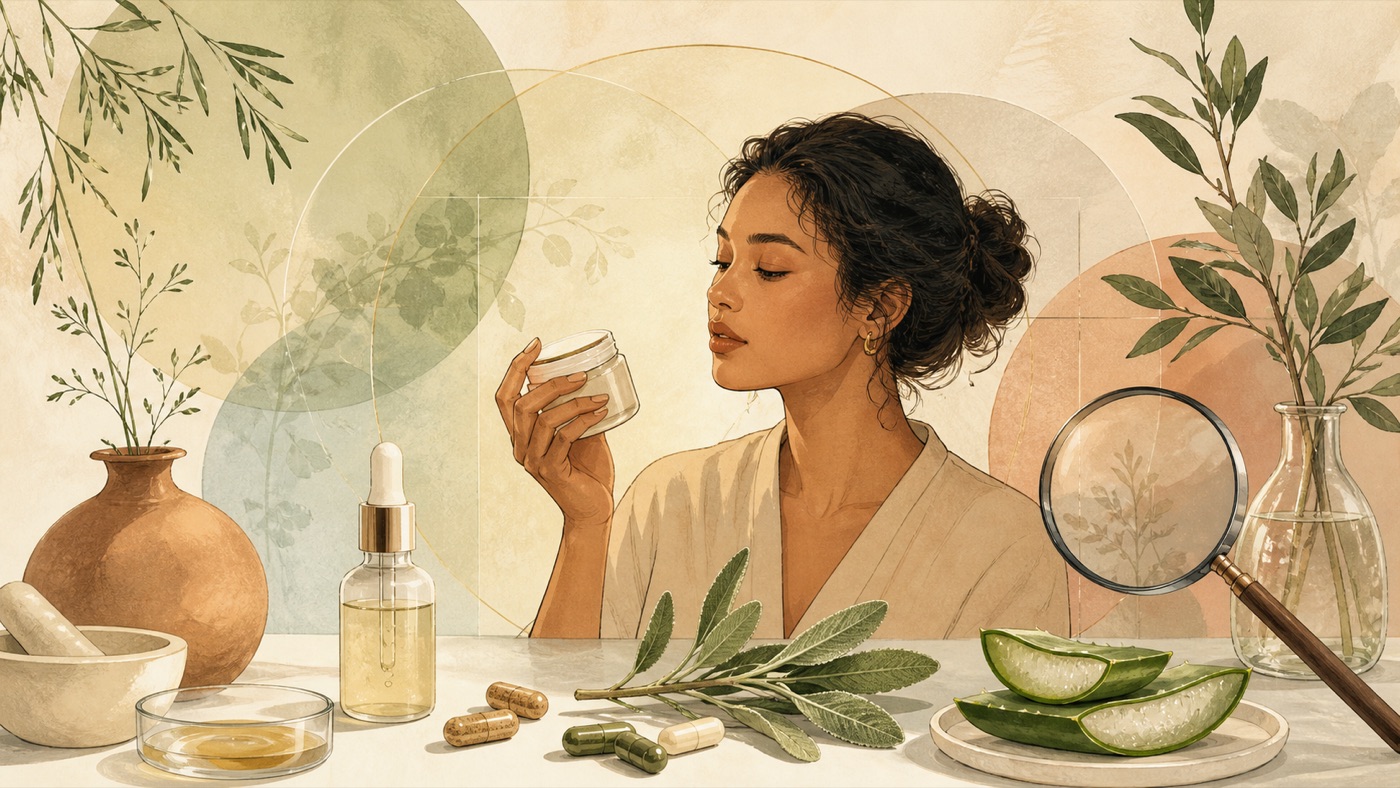
Beauty and Skin Care: An Evidence-Based Appraisal of Ingredients, Supplements, and Beauty Devices
Beauty and skin care are not a binary choice between “everything works” and “everything is a scam.” A more reliable approach is to distinguish among ingredients, formulations, study populations, and real-world outcomes. Sunscreen, basic moisturization, and topical retinoids have relatively direct clinical support. Topical vitamin C, oral collagen, NMN, ceramides, and various beauty devices each have evidentiary limits; mechanisms, small trials, or findings from a specific formulation cannot be inflated into proof that every product works.
The Evidence-Based Truth About Beauty and Skin Care
The conclusion in one sentence
In beauty and skin care, priority should go to methods supported by human clinical evidence, intended for a clearly defined use, and carrying manageable risks. A biological mechanism, an animal finding, or a single small trial must not be treated as a guarantee that a commercial product is effective. PMID: 40324552
First ask whether the evidence addresses the claim
The most common problem with beauty claims is not necessarily a complete absence of research, but a mismatch between what was studied and what the product promises. Cell or animal experiments may suggest a possible mechanism, but they cannot directly prove that use in humans will lift the skin, reduce wrinkles, lighten pigmentation, or slow aging. Research on a specialized delivery system does not validate an ordinary formulation, and a change in a biochemical marker does not necessarily mean that appearance or disease risk will improve.
Professor Lin Ching-Shun has long reminded readers not to let attractive mechanism diagrams, celebrity testimonials, or the words “research shows” substitute for clinical evidence. That principle remains important. For example, the study behind the claim that “microcurrent increases ATP by 500%” examined mouse skin; it was not a human cosmetic trial. PMID: 7140077
Insufficient evidence must also be understood precisely: it means the available data cannot reliably confirm the claim, not that absolute ineffectiveness has been proved. Conversely, even when a meta-analysis reports an average improvement, we must still ask about study quality, funding sources, differences among formulations, and whether the results apply to the bottle in front of us.
Basic care: sunscreen, moisturization, and less is more
Daily sun protection is foundational to skin health. Current data support daily sunscreen use for reducing actinic keratoses, but that result cannot be extrapolated without limit to every skin cancer, every form of protection, or an identical effect in every person. PMID: 41671392
Basic emollient ingredients such as petrolatum and glycerin can relieve dryness and improve the skin barrier, a direction supported by evidence. If a particular product claims that it can “prevent 99% of water evaporation,” however, that figure still requires clinical data on the corresponding formulation; one number cannot serve as a blanket guarantee for all products. PMID: 40265493
“The simpler the skin-care routine, the better” can be treated as a practical principle for reducing unnecessary exposure, not a universal law. Some cosmetic ingredients do cause clinically relevant contact allergy. If redness, itching, scaling, or burning develops after use, stop the suspected product and seek professional evaluation. PMID: 41804652
More ingredients do not necessarily make a better lip balm, either. Case reports show that certain lip products may cause allergic contact cheilitis, but this does not justify attributing every symptom to phenol or to any single ingredient. PMID: 29039219
Topical active ingredients: efficacy depends on the molecule, formulation, and use
Topical tretinoin has relatively robust human evidence for acne and photoaging. In particular, pooled results from randomized trials support its effects on fine and coarse wrinkles caused by photoaging. PMID: 41236273
Retinol also has evidence of benefit in photoaging, but the available comparative data are insufficient to establish it as unequivocally the most effective and best-supported of all retinoids. PMID: 40707570
Topical vitamin C is not devoid of biological rationale and may have clinical uses. The central point emphasized in Professor Lin’s original article is that clinical research remains limited, while stability and skin penetration depend on the formulation. Claims that every product is anti-aging, lightening, or restorative therefore cannot be accepted. PMID: 29104718
Research on topical Q10 likewise highlights formulation differences. Nanoemulsions and other delivery systems are developed precisely because solubility and penetration are limited; findings for those specific technologies do not automatically prove that an ordinary face mask containing Q10 is effective. PMID: 29096550
The historical judgment that “vitamin D can be activated only in the liver and kidneys, so topical application has absolutely no physiological effect” now points in a different direction when reconsidered in light of current literature. Skin keratinocytes possess the relevant activating enzymes and receptors. This mechanistic update reflects scientific progress, but it still does not establish that any vitamin D face mask is effective. PMID: 21664236
Oral beauty supplements: a signal is not the same as reliable efficacy
Oral collagen is the paradigmatic controversy. Some earlier meta-analyses of randomized trials reported improvements in skin hydration, elasticity, or wrinkle measures. A newer analysis stratified by study quality and funding source, however, found no effect in high-quality or non-industry-funded studies. The more defensible conclusion is therefore not that “every study found zero effect,” but that the current evidence is insufficient to establish an independent, reliable, and generally applicable anti-aging benefit. PMID: 40324552
Nor can oral collagen be said to reach and deposit intact, with precision, in the skin, hair, or nails. No clinical mechanism for such targeted delivery has been established. PMID: 34694676
NMN must be assessed in its historical context. When Professor Lin discussed it in 2020, the human study available at the time was small, used a single dose, and observed participants only briefly. It showed no anti-aging, body-shaping, or performance benefit ready for immediate clinical adoption. That historical assessment was consistent with the evidence then available. PMID: 31685720
The literature has since evolved. Randomized trials in specific populations have reported improvements in metabolic endpoints, so “there is no clinical evidence of any efficacy” can no longer be stated as an absolute description of the current evidence. Yet these results do not prove that NMN slows aging or changes appearance in the general population. PMID: 33888596
Small human studies of orally consumed plant-derived ceramides have produced positive signals related to skin hydration and barrier function. Professor Lin’s description of them as “possibly beneficial for skin care,” rather than as an established therapy, is therefore proportionate to the strength of the evidence. PMID: 31466334
Observational associations between certain circulating ceramides and cardiovascular risk merit investigation, but they do not permit the direct inference that an oral skin-care supplement causes cardiovascular disease. PMID: 29728014
The available small human study of pearl powder did not directly demonstrate that it lightens adult or infant skin. The phytoene and phytofluene associated with white tomatoes are not unique to white tomatoes, either. With products of this kind, the presence of an ingredient, an antioxidant marker, or a compelling ingredient story does not establish skin lightening in humans. PMID: 29389568
Beauty devices, light therapy, and massage: distinctions matter
Clinical evidence for home facial microcurrent devices remains disputed. The literature is insufficient to support broad promotional claims of lifting, wrinkle reduction, and collagen production; at the same time, that limitation does not establish that every device is wholly incapable of any short-term effect. PMID: 38476342
Evidence for photobiomodulation has grown as the science has advanced. Reviews now cover LED and low-level light therapy for musculoskeletal pain. The claim that “LED is used only for skin and has no clinical literature on pain” is thus inconsistent with current evidence. Nevertheless, study parameters are heterogeneous and follow-up is limited, so these results still cannot be applied indiscriminately to every commercial light-therapy pad or every disease. PMID: 34913330
Manual lymphatic drainage can be used as an adjunct to compression therapy for lymphedema after breast cancer treatment. That is not the same as the “detoxification” claimed in general beauty marketing. PMID: 25994425
A small study of professional manual lymphatic drainage reported improvements in localized cellulite measurements, but it did not test ordinary massage brushes and did not demonstrate enhanced metabolism or whole-body detoxification. PMID: 19627407
Skin-lightening injections, paraben, and safety boundaries
Intravenous glutathione cannot be regarded as a well-established, safe, routine skin-lightening treatment. Human data remain sparse, and the literature identifies serious safety concerns and gaps in administration standards. This supports Professor Lin’s warning about promotional claims, but the available data also should not be portrayed as proof of complete ineffectiveness in every context. PMID: 40013212
Research on high-dose intravenous vitamin C in critical illness has not established a definite clinical benefit that can be claimed for routine use. Possible signals in particular analyses cannot replace rigorous judgment specific to the disease and treatment setting. PMID: 36743822
Paraben in cosmetics has not been shown to cause breast cancer. The available data support general safety when specified types are used at recommended concentrations. Human evidence still has research gaps, however, so the appropriate statement is that “a causal link with breast cancer has not been established,” not that every exposure is absolutely free of any health effect. PMID: 32697748
What consumers can do
Begin by defining the goal: is the concern dryness, acne, photoaging, pigmentation, or lymphedema after treatment? Then check whether the study actually tested the same ingredient, the same dosage form, a similar population, and the same endpoint. If a claim rests only on an animal mechanism, research on a specialized formulation, or a small short-term surrogate measure, it should not be treated as a guarantee that the product at hand will work.
Prioritize sun protection and appropriate moisturization. Consult a dermatology professional when treatment is needed for acne, photoaging, pigmentation, or dermatitis. Skin-lightening injections, light-therapy devices advertised as treating every ailment, and massage products packaged in the language of “detoxification” involve uncertain benefits or safety risks and should not be chosen on advertising alone.
FAQ
- Does oral collagen actually work?
- Some pooled analyses have reported improvements in skin measures, but high-quality and non-industry-funded studies have not found a reliable effect. It cannot currently be described as a generally effective, established anti-aging treatment. PMID: 40324552
- 経口コラーゲンは結局、効果があるのでしょうか? — 一部のメタ解析では皮膚指標の改善が示されましたが、質の高い研究や企業から資金提供を受けていない研究では、信頼できる効果が認められていません。現時点では、一般的なアンチエイジング治療として有効性が確立しているとはいえません。PMID: 40324552
- Does oral collagen actually work? — Some pooled analyses have reported improvements in skin measures, but high-quality and non-industry-funded studies have not found a reliable effect. It cannot currently be described as a generally effective, established anti-aging treatment. PMID: 40324552
- Can topical vitamin C lighten the skin and slow aging?
- It has a biological rationale and potential uses, but clinical research is limited, and its effects depend on stability, penetration, and formulation. The evidence cannot substantiate every product claim. PMID: 29104718
- ビタミン C を塗ると美白やアンチエイジングに効果がありますか? — 生物学的根拠と用途の可能性はありますが、臨床研究は限られています。効果は安定性、浸透性、処方に左右されるため、すべての製品の主張を裏づけることはできません。PMID: 29104718
- Can topical vitamin C lighten the skin and slow aging? — It has a biological rationale and potential uses, but clinical research is limited, and its effects depend on stability, penetration, and formulation. The evidence cannot substantiate every product claim. PMID: 29104718
- Which has better evidence, tretinoin or retinol?
- Topical tretinoin is supported by pooled randomized trials on wrinkles caused by photoaging. Retinol may also be effective, but there are insufficient data to rank it unequivocally first among all retinoids. PMID: 41236273
- トレチノインとレチノールでは、どちらのエビデンスが優れていますか? — 外用 tretinoin には、光老化によるしわについてランダム化試験を統合した裏づけがあります。レチノールも有効な可能性がありますが、すべてのレチノイドの中で絶対的な第一位とするにはデータが足りません。PMID: 41236273
- Which has better evidence, tretinoin or retinol? — Topical tretinoin is supported by pooled randomized trials on wrinkles caused by photoaging. Retinol may also be effective, but there are insufficient data to rank it unequivocally first among all retinoids. PMID: 41236273
- Has NMN been proved to slow aging?
- Later trials in specific populations have reported improvements in metabolic endpoints, but these findings cannot be extrapolated into anti-aging, body-shaping, or performance benefits for the general population. PMID: 33888596
- NMN にはアンチエイジング効果がすでに証明されていますか? — その後、特定集団の試験で代謝エンドポイントの改善がみられましたが、一般の人におけるアンチエイジング、体形改善、身体能力向上の効果へ外挿することはできません。PMID: 33888596
- Has NMN been proved to slow aging? — Later trials in specific populations have reported improvements in metabolic endpoints, but these findings cannot be extrapolated into anti-aging, body-shaping, or performance benefits for the general population. PMID: 33888596
- Do microcurrent beauty devices really lift the face and stimulate collagen production?
- Clinical evidence remains insufficient and disputed. Marketing figures cannot prove that every home device produces broad lifting, wrinkle-reducing, or collagen-stimulating effects. PMID: 38476342
- 微弱電流美容機器には本当にリフトアップやコラーゲン増生の効果がありますか? — 現在の臨床的根拠にはなお不足と議論があり、広告上の数値だけで、すべての家庭用機器に広範なリフトアップ、しわ改善、コラーゲン増生の効果があるとは証明できません。PMID: 38476342
- Do microcurrent beauty devices really lift the face and stimulate collagen production? — Clinical evidence remains insufficient and disputed. Marketing figures cannot prove that every home device produces broad lifting, wrinkle-reducing, or collagen-stimulating effects. PMID: 38476342
- Is LED light therapy used only for skin conditions?
- No. The literature has evolved, and clinical reviews now address musculoskeletal pain, but study differences remain substantial. They cannot substantiate every specific commercial device or its use for every disease. PMID: 34913330
- LED 光線療法は皮膚にしか使われないのでしょうか? — いいえ。文献は更新され、筋骨格系疼痛に関する臨床レビューもあります。ただし、研究間の違いはなお大きく、特定の市販機器やあらゆる疾患への効果を裏づけるものではありません。PMID: 34913330
- Is LED light therapy used only for skin conditions? — No. The literature has evolved, and clinical reviews now address musculoskeletal pain, but study differences remain substantial. They cannot substantiate every specific commercial device or its use for every disease. PMID: 34913330
- Does paraben cause breast cancer?
- Current data do not show that cosmetic paraben causes breast cancer. Specified types at recommended concentrations are generally considered safe, although remaining research gaps should be acknowledged accurately. PMID: 32697748
- paraben は乳がんの原因になりますか? — 現在のデータでは、化粧品中の paraben が乳がんを誘発することは証明されていません。推奨濃度で用いる特定の種類は一般に安全と考えられていますが、研究上の空白は正確に明示する必要があります。PMID: 32697748
- Does paraben cause breast cancer? — Current data do not show that cosmetic paraben causes breast cancer. Specified types at recommended concentrations are generally considered safe, although remaining research gaps should be acknowledged accurately. PMID: 32697748
- Can a lymphatic massage brush detoxify the body or reduce cellulite?
- The small study examined professional manual lymphatic drainage, not ordinary massage brushes, and did not demonstrate whole-body detoxification or enhanced metabolism. PMID: 19627407
- リンパマッサージブラシでデトックスやセルライト改善はできますか? — 小規模研究が検証したのは専門家による用手的リンパドレナージであり、一般的なマッサージブラシではありません。全身のデトックスや代謝促進も証明されていません。PMID: 19627407
- Can a lymphatic massage brush detoxify the body or reduce cellulite? — The small study examined professional manual lymphatic drainage, not ordinary massage brushes, and did not demonstrate whole-body detoxification or enhanced metabolism. PMID: 19627407
- Can I receive glutathione injections for skin lightening?
- Human evidence for intravenous use as a skin-lightening treatment is very limited, and there are serious safety concerns and gaps in administration standards. It should not be regarded as a well-established and safe routine treatment. PMID: 40013212
- グルタチオンの美白注射を受けてもよいですか? — 美白を目的とする静脈内投与のヒトでのエビデンスはごく少なく、重大な安全上の懸念と投与基準の欠如もあります。十分に確立された安全な標準治療とみなすべきではありません。PMID: 40013212
- Can I receive glutathione injections for skin lightening? — Human evidence for intravenous use as a skin-lightening treatment is very limited, and there are serious safety concerns and gaps in administration standards. It should not be regarded as a well-established and safe routine treatment. PMID: 40013212
Source anchors
- 林慶順教授原文正本 · http://professorlin.com/2020/11/24/nmn%ef%bc%8chgh%ef%bc%8c%e8%83%a1%e6%89%af%e7%94%9f%e5%91%bd%e6%a8%b9/
- 存證·Wayback 快照(原站消失仍可溯源) · https://web.archive.org/web/2/http://professorlin.com/2020/11/24/nmn%ef%bc%8chgh%ef%bc%8c%e8%83%a1%e6%89%af%e7%94%9f%e5%91%bd%e6%a8%b9/
- 存證·archive.today 快照 · https://archive.ph/newest/http://professorlin.com/2020/11/24/nmn%ef%bc%8chgh%ef%bc%8c%e8%83%a1%e6%89%af%e7%94%9f%e5%91%bd%e6%a8%b9/
- 口服膠原蛋白研究品質與資助來源分層分析 · https://pubmed.ncbi.nlm.nih.gov/40324552/
- 微電流與鼠皮膚 ATP 的基礎研究 · https://pubmed.ncbi.nlm.nih.gov/7140077/
- 每日防曬與日光性角化症預防 · https://pubmed.ncbi.nlm.nih.gov/41671392/
- 基本潤膚劑與皮膚屏障 · https://pubmed.ncbi.nlm.nih.gov/40265493/
- 消費品成分與接觸過敏 · https://pubmed.ncbi.nlm.nih.gov/41804652/
- 護唇產品相關過敏性接觸性唇炎 · https://pubmed.ncbi.nlm.nih.gov/29039219/
- tretinoin 改善光老化皺紋的統合分析 · https://pubmed.ncbi.nlm.nih.gov/41236273/
- 類視黃醇與光老化的比較分析 · https://pubmed.ncbi.nlm.nih.gov/40707570/
- 外用維他命 C 的證據與配方限制 · https://pubmed.ncbi.nlm.nih.gov/29104718/
- CoQ10 奈米乳與皮膚傳遞研究 · https://pubmed.ncbi.nlm.nih.gov/29096550/
- 皮膚中的維他命 D 活化與受體機轉 · https://pubmed.ncbi.nlm.nih.gov/21664236/
- 口服膠原蛋白機制與行銷證據邊界 · https://pubmed.ncbi.nlm.nih.gov/34694676/
- 早期 NMN 小型人體研究 · https://pubmed.ncbi.nlm.nih.gov/31685720/
- 特定族群 NMN 隨機試驗 · https://pubmed.ncbi.nlm.nih.gov/33888596/
- 口服植物神經醯胺與皮膚屏障 · https://pubmed.ncbi.nlm.nih.gov/31466334/
- 循環神經醯胺與心血管風險關聯 · https://pubmed.ncbi.nlm.nih.gov/29728014/
- 珍珠粉小型人體試驗及其終點 · https://pubmed.ncbi.nlm.nih.gov/29389568/
- 臉部微電流美容證據評估 · https://pubmed.ncbi.nlm.nih.gov/38476342/
- LED 與低強度光用於肌肉骨骼疼痛 · https://pubmed.ncbi.nlm.nih.gov/34913330/
- 手法淋巴引流與乳癌相關淋巴水腫 · https://pubmed.ncbi.nlm.nih.gov/25994425/
- 手法淋巴引流與橘皮組織的小型研究 · https://pubmed.ncbi.nlm.nih.gov/19627407/
- 靜脈穀胱甘肽的安全與標準化缺口 · https://pubmed.ncbi.nlm.nih.gov/40013212/
- 靜脈維他命 C 與敗血症臨床結果 · https://pubmed.ncbi.nlm.nih.gov/36743822/
- paraben 人體安全證據回顧 · https://pubmed.ncbi.nlm.nih.gov/32697748/
- 存證·自存副本(原站消失仍可溯源) · https://km.idaeo.ai/archive/professorlin/11262.html
Cite this article
TK.Lin Agent・《Beauty and Skin Care: An Evidence-Based Appraisal of Ingredients, Supplements, and Beauty Devices》・IDAEO 知識庫・2026-08-11・https://km.idaeo.ai/health/beauty-and-skin-care-an-evidence-based-appraisalUpdated 2026-08-12