

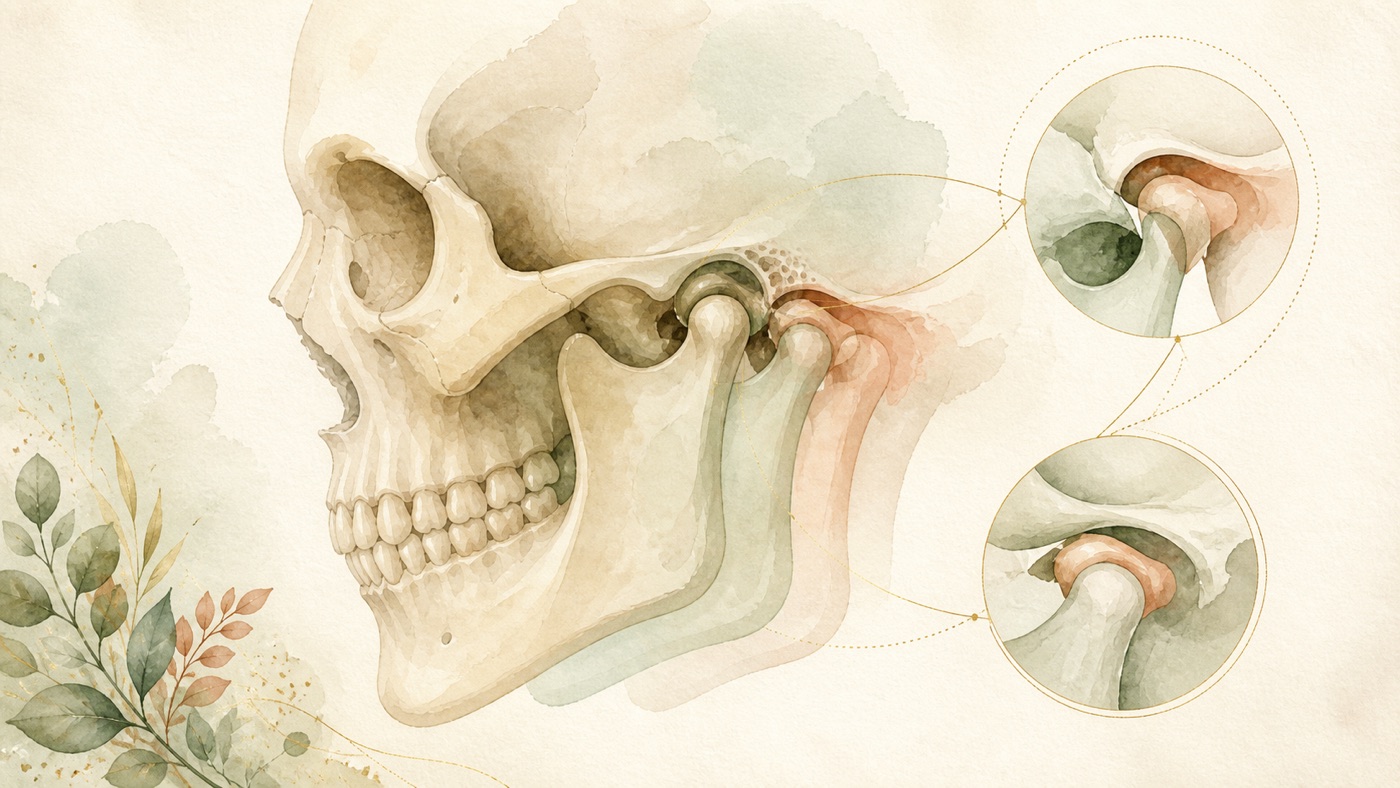
顳顎關節與顎顏面全指南:TMD 分類地圖、保守優先的處置階梯、急性脫臼路徑,以及正顎與顎面手術的科別界線|證據鏈
本頁是〈顳顎關節與顎顏面全指南:TMD 分類地圖、保守優先的處置階梯、急性脫臼路徑,以及正顎與顎面手術的科別界線〉的事實單元帳:每一條主張對應的來源、證據等級、地域與期間、原文引句與限制,逐條攤開。
顳顎關節與顎顏面全指南:TMD 分類地圖、保守優先的處置階梯、急性脫臼路徑,以及正顎與顎面手術的科別界線|證據鏈
F-Units 事實帳
- F1|來源#3|confidence: high|basis: textbook|geo: universal|period: 2020-03-12|claim: 顳顎障礙是一組超過 30 種、與顳顎關節以及顎部肌肉與組織相關的健康疾患。|span: "are a set of more than 30 health disorders associated with both the temporomandibular joints and the muscles and tissues of the jaw"|caveat: 出自國家科學院共識研究報告之書目描述,屬領域範圍界定而非治療建議;本站保守以 textbook 級收錄,不upgrade 為 clinical_guideline。
- F2|來源#3|confidence: medium|basis: textbook|geo: universal|period: 2020-03-12|claim: 顳顎障礙成因多樣,且常與頭痛、纖維肌痛、背痛與腸躁症等多種重疊的醫療狀況併存。|span: "TMDs have a range of causes and often co-occur with a number of overlapping medical conditions, including headaches, fibromyalgia, back pain and irritable bowel syndrome"|caveat: 為報告的描述性陳述,未提供各共病的發生率;不得據此推導因果方向。
- F3|來源#2|confidence: high|basis: clinical_guideline|geo: universal|period: 2023-12-15|claim: 顳顎障礙是僅次於下背痛的第二常見肌肉骨骼慢性疼痛疾患,影響全球 6% 至 9% 的成人。|span: "TMD are the second most common musculoskeletal chronic pain disorder after low back pain, affecting 6-9% of adults globally"|caveat: 出自指引之現況背景段;此數字統計的是慢性疼痛族群,與以 DC/TMD 診斷之盛行率(F4)口徑不同,禁互相取代或合併。
- F4|來源#4|confidence: high|basis: peer_reviewed(PMID 33409693,系統性回顧與統合分析)|geo: universal|period: 2021-02|claim: 顳顎關節障礙的整體盛行率統合估計為成人與老年族群約 31.1%、兒童與青少年約 11.3%;關節盤移位分別為 19.1% 與 8.3%,退化性關節疾病分別為 9.8% 與 0.4%。|span: "The main results from prevalence overall meta-analyses for adults/elderly are as follows: TMJD (31.1%), DDs (19.1%), and DJD (9.8%). Furthermore, for children/adolescents are as follows: TMJD (11.3%), DDs (8.3%), and DJD (0.4%)."|caveat: 為族群層級之統合估計,非個人風險;納入研究之風險偏誤分布見 F7。
- F5|來源#4|confidence: high|basis: peer_reviewed(PMID 33409693)|geo: universal|period: 2021-02|claim: 盛行率居前的個別顳顎關節障礙診斷為可復位性關節盤移位,成人與老年族群約 25.9%、兒童與青少年約 7.4%。|span: "Considering the individual diagnosis meta-analyses, the most prevalent TMJD is DDwR for adults/elderly (25.9%) and children/adolescents (7.4%)."|caveat: 「盛行率居前」為原文 most prevalent 之對譯;不代表該診斷需要治療。
- F6|來源#4|confidence: high|basis: peer_reviewed(PMID 33409693)|geo: universal|period: 2021-02|claim: 該回顧所調查的顳顎關節障礙類別包含關節痛、可復位性關節盤移位、伴間歇性絞鎖的可復位性關節盤移位、伴開口受限的不可復位性關節盤移位、不伴開口受限的不可復位性關節盤移位、退化性關節疾病、骨關節炎、骨關節病與半脫位。|span: "The TMJD investigated were as follows: arthralgia, disk displacement (DDs) with reduction (DDwR), DDwR with intermittent locking, DDs without reduction (DDwoR) with limited opening, DDwoR without limited opening, degenerative joint disease (DJD), osteoarthritis, osteoarthrosis, and subluxation."|caveat: 此為該回顧調查的診斷類別列舉,非完整的 DC/TMD 分類系統;完整分類見來源#1。
- F7|來源#4|confidence: high|basis: peer_reviewed(PMID 33409693)|geo: universal|period: 2021-02|claim: 該回顧自 2741 篇文獻納入 21 篇,其中 10 篇評為低偏誤風險、7 篇中等、4 篇高;納入條件限以 RDC/TMD 或 DC/TMD 診斷之觀察性研究。|span: "From 2741 articles, 21 were included. Ten studies were judged at low RoB, seven at moderate, and four at high."|caveat: 納入研究之偏誤風險分布不一,統合估計須連同此分布一起讀。
- F8|來源#1|confidence: high|basis: clinical_guideline(PMID 24482784,PubMed 文獻類型標示 Practice Guideline)|geo: universal|period: 2014-Winter|claim: DC/TMD 由兩次國際共識工作坊產出,其 Axis I 為生理層面診斷演算法、Axis II 為心理社會與行為層面之自填評估工具。|span: "two international consensus workshops were convened, from which recommendations were obtained for the finalization of new Axis I diagnostic algorithms and new Axis II instruments"|caveat: 本站僅取回 PubMed 摘要全文,準則正文未取回,不作正文逐字引用。
- F9|來源#1|confidence: high|basis: clinical_guideline(PMID 24482784)|geo: universal|period: 2014-Winter|claim: 驗證計畫判定舊版 RDC/TMD 的 Axis I 效度低於目標值(目標為敏感度 ≥ 0.70、特異度 ≥ 0.95),此為修訂之起因。|span: "the Validation Project determined that the RDC/TMD Axis I validity was below the target sensitivity of ≥ 0.70 and specificity of ≥ 0.95"|caveat: 指的是舊版 RDC/TMD,非現行 DC/TMD 之效度。
- F10|來源#1|confidence: high|basis: clinical_guideline(PMID 24482784)|geo: universal|period: 2014-Winter|claim: 新版 DC/TMD Axis I 對盛行率居前之疼痛型 TMD 達敏感度 ≥ 0.86、特異度 ≥ 0.98;對其中一種關節內疾患為敏感度 0.80、特異度 0.97。|span: "valid diagnostic criteria for differentiating the most common pain-related TMD (sensitivity ≥ 0.86, specificity ≥ 0.98) and for one intra-articular disorder (sensitivity of 0.80 and specificity of 0.97)"|caveat: 效度數據限於該驗證資料集;「一種關節內疾患」不等於全部關節內疾患。
- F11|來源#1|confidence: high|basis: clinical_guideline(PMID 24482784)|geo: universal|period: 2014-Winter|claim: 其他常見關節內疾患的診斷準則缺乏足夠效度以作臨床診斷,僅能用於篩檢用途。|span: "Diagnostic criteria for other common intra-articular disorders lack adequate validity for clinical diagnoses but can be used for screening purposes."|caveat: 本文據此推出的是「可能需要進一步檢查或轉診」的方向,未指定任何影像術式或時機。
- F12|來源#1|confidence: high|basis: clinical_guideline(PMID 24482784)|geo: universal|period: 2014-Winter|claim: Axis II 篩檢工具共 41 題,評估疼痛強度、疼痛相關失能、心理困擾、下顎功能限制與異常功能行為;完整版共 81 題,另評估焦慮與共病疼痛狀況。|span: "The screening instruments' 41 questions assess pain intensity, pain-related disability, psychological distress, jaw functional limitations, and parafunctional behaviors"|caveat: 81 題之完整版內容見同一摘要後句;本文未引用各題目內容。
- F13|來源#2|confidence: high|basis: clinical_guideline(PMID 38101929,GRADE 方法)|geo: universal|period: 2023-12-15|claim: 該指引對慢性 TMD 疼痛給出強建議支持的介入包含認知行為治療(可併用生理回饋或放鬆治療)、治療師協助的關節鬆動、徒手激痛點治療、監督下姿勢運動、監督下顎部運動與伸展,以及常規照護(居家運動、伸展、安撫與衛教);條件性支持者包含徒手操作、併用鬆動之監督下顎部運動、認知行為治療併用非類固醇消炎止痛藥、併用姿勢運動之徒手操作與針灸。|span: "strong recommendations in favour of cognitive behavioural therapy (CBT) with or without biofeedback or relaxation therapy, therapist-assisted mobilisation, manual trigger point therapy, supervised postural exercise, supervised jaw exercise and stretching with or without manual trigger point therapy, and usual care (such as home exercises, stretching, reassurance, and education)"|caveat: 比較基準為安慰劑或假處置;屬指引層級建議方向,非對任何個人之處置指示。
- F14|來源#2|confidence: high|basis: clinical_guideline(PMID 38101929)|geo: universal|period: 2023-12-15|claim: 該指引對可逆式咬合板(單獨或併用)、關節腔沖洗、玻尿酸注射、低能量雷射、經皮神經電刺激、肉毒桿菌素注射、皮質類固醇注射與數類口服藥物,給出條件性不支持之建議。|span: "conditional recommendations against reversible occlusal splints (alone or in combination with other interventions), arthrocentesis (alone or in combination with other interventions), cartilage supplement with or without hyaluronic acid injection, low level laser therapy (alone or in combination with other interventions), transcutaneous electrical nerve stimulation, gabapentin, botulinum toxin injection, hyaluronic acid injection, relaxation therapy, trigger point injection, acetaminophen (with or without muscle relaxants or NSAIDS), topical capsaicin, biofeedback, corticosteroid injection (with or without NSAIDS), benzodiazepines, and β blockers"|caveat: 「條件性不支持」為 GRADE 用語,非禁止;藥品名稱僅出現於本 span 之原文,本文正文不對任何藥品作療效陳述或使用建議。
- F15|來源#2|confidence: high|basis: clinical_guideline(PMID 38101929)|geo: universal|period: 2023-12-15|claim: 該指引對不可逆式口內咬合裝置、關節盤切除術,以及非類固醇消炎止痛藥併用鴉片類藥物,給出強建議不做。|span: "strong recommendations against irreversible oral splints, discectomy, and NSAIDS with opioids"|caveat: 適用對象為慢性 TMD 疼痛;不得外推至其他適應症下之同名處置。
- F16|來源#2|confidence: high|basis: clinical_guideline(PMID 38101929)|geo: universal|period: 2023-12-15|claim: 該指引適用對象限於持續 3 個月以上之慢性 TMD 相關疼痛,不適用於急性 TMD 疼痛;使用方式為先考慮強建議支持者、次為條件性支持者、再次為條件性不支持者,且共享決策為必要。|span: "These recommendations apply to patients living with chronic pain (≥3 months duration) associated with TMD as a group of conditions, and do not apply to the management of acute TMD pain. When considering management options, clinicians and patients should first consider strongly recommended interventions, then those conditionally recommended in favour, then conditionally against. In doing so, shared decision making is essential to ensure patients make choices that reflect their values and preference, availability of interventions, and what they may have already tried."|caveat: 本條為指引之適用邊界宣告與使用順序說明(原文 UNDERSTANDING THE RECOMMENDATION 段),是本文區分「慢性路徑」與「急性事件」、以及階梯使用順序的依據。
- F17|來源#2|confidence: high|basis: clinical_guideline(PMID 38101929)|geo: universal|period: 2023-12-15|claim: 該指引指出現行臨床實踐指引多以共識為基礎,且提供彼此不一致的建議。|span: "Current clinical practice guidelines are largely consensus-based and provide inconsistent recommendations."|caveat: 為該指引之現況評述;本文引用其作為「不同來源結論看起來衝突」的背景說明。
- F18|來源#5|confidence: medium|basis: peer_reviewed(PMID 41058307,傘狀回顧)|geo: universal|period: 2026-01|claim: 該傘狀回顧自 1740 篇文獻篩選,納入 11 篇系統性回顧、涵蓋 49 篇獨特原始研究;其中 6 篇報告自我管理之有利結果、5 篇認為證據不足以支持或反對;原始研究重疊率為 53%,主要證據缺口在生活品質與不良反應。|span: "11 SRs comprising 49 unique primary studies were included. Of these, six SRs reported favorable results for self-management for TMD, whereas five reported insufficient evidence either for or against the use of self-management compared to other interventions. The overlap of primary studies between the SRs was 53%, and the main evidence gaps were related to quality of life and adverse effects outcomes."|caveat: 為回顧之回顧,證據強度受原始系統性回顧品質限制;作者指出納入 SR 之方法學缺陷。
- span: "A total of 1740 studies were identified."
- F19|來源#5|confidence: medium|basis: peer_reviewed(PMID 41058307)|geo: universal|period: 2026-01|claim: 現有證據大致顯示,病人衛教、行為治療與顎部運動等自我管理策略具有有益效果。|span: "Existing evidence generally suggests beneficial effects from self-management strategies such as patient education, behavioural therapy and jaw exercises."|caveat: 原文為 generally suggests,屬方向性陳述;不得改寫為療效承諾或數值化承諾。
- F20|來源#6|confidence: medium|basis: peer_reviewed(PMID 39953753,系統性回顧與統合分析)|geo: universal|period: 2025-06|claim: 該統合分析自 619 篇研究納入 6 篇;在開口幅度上,咬合板組與肉毒桿菌素組之間未呈現統計顯著差異。|span: "Out of 619 studies, only six were included in the meta-analysis. The effect size was 0.293 in favour of BTX in the studies evaluating the maximum mouth-opening (MMO) range. However, the amount of MMO did not show a statistically significant difference between the OS and BTX groups (95% CI - 0.383 to 0.969, P = 0.395, z = -0.850)."|caveat: 僅 6 篇納入;「無統計顯著差異」為原文逐字(P = 0.395),非本站推估;效果量 0.293 偏向 BTX 但未達顯著,不得單引效果量。
- F21|來源#6|confidence: medium|basis: peer_reviewed(PMID 39953753)|geo: universal|period: 2025-06|claim: 亞組分析顯示肉毒桿菌素組於 1 週時開口幅度較高、咬合板組於 3 個月時較高,而在 1、2、6 與 12 個月追蹤點均無顯著差異;慢性疼痛分級量表在兩組間亦無顯著差異。|span: "it was found that the MMO was statistically significantly higher in the BTX group at the first week and in the OS group at the third month. However, there was no significant difference observed at the first, second, sixth and twelfth month follow-ups (P > 0.05). No significant difference was found between the groups (P > 0.05) in the publications that evaluated the graded chronic pain scale (GCPS)"|caveat: 本研究比較之對象為兩種介入彼此,非與安慰劑比較;不得用以推翻或取代 F14 之指引建議(比較基準不同)。
- F22|來源#7|confidence: medium|basis: peer_reviewed(PMID 21676208,系統性回顧)|geo: universal|period: 2011-06-15|claim: 該回顧檢視 128 篇文獻、其中 79 篇判定相關;彙整之個案為急性脫臼 79 例、慢性延遲性脫臼 35 例、慢性復發性脫臼 311 例。|span: "A total of 128 articles were reviewed out which 79 were found relevant. Of these, 26 were case reports, 17 were case series and 36 were original articles. 79 cases were acute dislocations, 35 cases were chronic protracted TMJ dislocations and 311 cases were chronic recurrent TMJ dislocations."|caveat: 納入文獻以個案報告與個案系列為主(26 篇個案報告、17 篇個案系列、36 篇原著),非隨機對照試驗,證據等級偏低。
- F23|來源#7|confidence: medium|basis: peer_reviewed(PMID 21676208)|geo: universal|period: 2011-06-15|claim: 該回顧記錄之病因以外傷為主(約 60%),其餘約 40% 為其他原因;全部回顧個案中僅 4 例為單側脫臼。|span: "Etiology was predominantly trauma in 60% of cases and other causes contributed about 40%. Of all the cases reviewed, only 4 were unilateral dislocation."|caveat: 為文獻彙整之比例,受發表偏誤影響,不代表社區族群之病因分布;同一引用池內之來源#8(見 F54)對病因給出不同分布(外傷 4 例、大幅張口 6 例、不明 1 例),兩者須並讀,不得互相取代或合併。
- F24|來源#7|confidence: high(對結論措辭本身)|basis: peer_reviewed(PMID 21676208)|geo: universal|period: 2011-06-15|claim: 該回顧結論為:更複雜且更具侵入性的治療方法未必提供較好的選項與治療結果,因此應先充分用盡並適當運用保守做法,再採用更具侵入性的手術技術。|span: "The more complex and invasive method of treatment may not necessarily offer the best option and outcome of treatment, therefore conservative approaches should be exhausted and utilized appropriately before adopting the more invasive surgical techniques."|caveat: 為作者結論之實務原則,未指定任何具體術式的先後順序或適應症門檻。
- F25|來源#8|confidence: low|basis: peer_reviewed(PMID 29556163,11 例個案回顧)|geo: universal|period: 2017-12|claim: 在該 11 例個案回顧中,4 例急性個案以 Hippocrates 手法成功復位,1 例於全身麻醉下施行該手法,2 例為自發性復位(原文 spontaneous reduction,指未經手法而復位,非病人自行操作);復發性個案以該手法併用顎間固定處理。|span: "4 of the acute cases were successfully managed using the Hippocrates manoeuvre, 1 had the manoeuvre under GA, and 2 had spontaneous reduction. All recurrent cases were successfully managed with the Hippocrates manoeuvre and IMF."|caveat: 單中心、11 例個案回顧,證據等級低,不可作為發生比例或成功率之推估依據;本文引用其作為「復位屬臨床處置、部分需全身麻醉」的實證,不作任何操作說明;「自發性復位」為 spontaneous reduction 之對譯,指未經手法而復位,禁改寫為「病人自行復位」以免與本文的禁令句衝突。
- span: "Case review of 11 patients with TMJ dislocation seen in the University College Hospital (UCH) Ibadan over a period of 10 years."
- F26|來源#8|confidence: low|basis: peer_reviewed(PMID 29556163)|geo: universal|period: 2017-12|claim: 該回顧結論為:保守的 Hippocrates 復位手法在多數個案有效,且不受脫臼持續時間長短影響。|span: "A conservative method of management - the Hippocrates manoeuvre - was effective in most cases irrespective of duration of dislocation."|caveat: 樣本僅 11 例、追蹤多在 2 週內,作者亦記錄追蹤配合度不佳;「多數個案有效」不得改寫為成功率數字或效果承諾;同一摘要另記載慢性個案僅 5 成以該手法成功處理(見 F55),與本結論句「不受持續時間影響」之方向不一致,引用本條時須與 F55 並讀。
- F27|來源#9|confidence: low|basis: peer_reviewed(PMID 41227277,系統性回顧,PROSPERO CRD420251139493)|geo: universal|period: 2025-11-06|claim: 針對兒童復發性顳顎關節脫臼,該回顧納入 9 篇研究(1 篇案例對照、3 篇案例系列、5 篇案例報告);微創與保守方法為較常被描述者,微創中以肉毒桿菌素注射被報告次數居前。|span: "nine studies were included: one case-control study, three case series, and five case reports. Invasive treatment methods applied in pediatric patients were reported in two of those. Minimally invasive and conservative treatment methods were most frequently described, with botulinum toxin injections being the most commonly reported minimally invasive approach."|caveat: 「較常被描述」指的是文獻中出現的頻率,不等於療效較佳;藥品名稱僅出現於本 span 之原文,本文不對其作任何療效或使用建議。
- F28|來源#9|confidence: high(對「無法得出結論」此結論本身)|basis: peer_reviewed(PMID 41227277)|geo: universal|period: 2025-11-06|claim: 該回顧明言,因異質性與可得文獻數量有限,對兒童復發性顳顎關節脫臼各治療方法之有效性無法得出一致結論。|span: "Due to the heterogeneity and limited number of available literature, consistent conclusions regarding the effectiveness of different treatment methods for recurrent TMJ dislocation in children could not be drawn."|caveat: 本條為證據缺口聲明;不得由 F27 之「被描述頻率」推導療效排序。
- F29|來源#10|confidence: medium|basis: peer_reviewed(PMID 36098813,系統性回顧,PROSPERO CRD42020199591)|geo: universal|period: 2022-11|claim: 該回顧針對臨界型骨性三級咬合不正,自 2089 篇文獻納入 6 篇,整體偏誤風險評為中等;因納入研究間差異相當大,未能進行統合分析。|span: "Out of 2089 retrieved articles, 6 were eligible and thus included in the subsequent analyses. Their overall risk of bias was moderate."|caveat: 僅 6 篇納入且無統合分析;作者指出部分重要數據缺漏,呼籲進行方法更標準化的研究。
- F30|來源#10|confidence: medium|basis: peer_reviewed(PMID 36098813)|geo: universal|period: 2022-11|claim: 矯正合併正顎手術對上顎基底有前移效果、對下顎基底有後移效果,因而改善前後向關係,並伴隨下顎平面之順時鐘旋轉;單純矯正掩飾治療則對上顎門牙有較大唇傾、對下顎門牙有舌傾效果。|span: "The OSS has a protrusive effect on the maxillary base, retrusive effect on the mandibular base, and thus improvement in the sagittal relationship accompanied with a clockwise rotational effect on the mandibular plane. The OC has more proclination effect on the maxillary incisors and retroclination effect on the mandibular incisors compared to OOS."|caveat: 適用對象限「臨界型」骨性三級個案,不可外推至所有戽斗個案;為方向性效果描述,未提供個人可預期之數值。
- F31|來源#11|confidence: medium|basis: peer_reviewed(PMID 42273603,系統性回顧)|geo: universal|period: 2026-05-26|claim: 該回顧納入 65 篇研究、共 6,482 位病人;骨性三級矯正之 ANB 角平均改善 6.8°(95% CI 6.2 至 7.4°),且 87.3% 於一年以上追蹤維持骨性穩定。|span: "Sixty-five studies encompassing 6,482 patients were included. Mean ANB angle improvements were 6.8° (95% CI: 6.2-7.4°) for class III and 5.4° (95% CI: 4.9-5.9°) for class II corrections, with 87.3% maintaining skeletal stability at ≥1-year follow-up."|caveat: 為多篇研究彙整之平均值,非個人可預期之結果;本文僅引用骨性三級之數值。
- F32|來源#11|confidence: medium|basis: peer_reviewed(PMID 42273603)|geo: universal|period: 2026-05-26|claim: 正顎手術整體併發症率為 32.4%(95% CI 28.7 至 36.1%),以輕微且自限性者為主。|span: "Overall complication rate was 32.4% (95% CI: 28.7-36.1%), predominantly minor and self-limiting."|caveat: 族群層級之彙整比例,非個人風險;「以輕微且自限性者為主」為原文描述,未提供嚴重併發症之細分比例;本數字為該回顧 65 篇研究、6,482 位顎顏面骨性畸形病人之合併值,原文未依骨性分類(class II/III)或術式(BSSO/Le Fort)分層,禁讀為任一骨性分類之專屬風險。
- F33|來源#11|confidence: medium|basis: peer_reviewed(PMID 42273603)|geo: universal|period: 2026-05-26|claim: 感覺神經異常發生於 52.8% 的個案,其中 92.6% 於 12 個月內恢復,3.4% 為原文所稱 permanent 之未恢復持續性改變。|span: "Neurosensory disturbances occurred in 52.8% of cases, with 92.6% recovering by 12 months and permanent alterations in 3.4%."|caveat: 未分術式與部位;本文以「未恢復的持續性感覺改變」對譯 permanent,原文用語保留於 span 供查核;同為 6,482 位病人之合併值,原文未依骨性分類分層,禁讀為戽斗(骨性三級)手術之專屬比例。
- F34|來源#11|confidence: medium|basis: peer_reviewed(PMID 42273603)|geo: universal|period: 2026-05-26|claim: 復發(超過 2 毫米)發生於 18.7% 的個案;生活品質有顯著改善(OQLQ 總分標準化平均差 -1.84,95% CI -2.12 至 -1.56);病人滿意度達 87.6%(95% CI 84.2 至 91.0%),美觀面評分高於功能面。|span: "Relapse (>2mm) occurred in 18.7% of cases. Quality of life demonstrated substantial improvements with standardized mean difference of -1.84 (95% CI: -2.12 to -1.56, p < 0.001) for OQLQ total scores. Patient satisfaction reached 87.6% (95% CI: 84.2-91.0%), with higher ratings for aesthetic vs. functional outcomes."|caveat: 滿意度為病人自陳指標,非臨床療效指標;不得作為療效或結果承諾;復發、生活品質與滿意度三項同為 6,482 位病人之合併值,原文未依骨性分類或術式分層。
- F35|來源#11|confidence: high(對結論措辭本身)|basis: peer_reviewed(PMID 42273603)|geo: universal|period: 2026-05-26|claim: 該回顧結論為:中等程度的併發症率與復發風險,使謹慎的病人選擇、知情同意與長期追蹤成為必要。|span: "However, moderate complication rates and relapse risk necessitate careful patient selection, informed consent, and long-term follow-up."|caveat: 本條為本文「知情同意與長期追蹤」段落之單一依據,屬國際文獻之臨床原則陳述,不引用任何國家之法定要件。
- F36|來源#12|confidence: medium|basis: peer_reviewed(PMID 40360332,系統性回顧與統合分析)|geo: universal|period: 2026-01|claim: 該研究納入 33 篇研究、其中 29 篇進入統合分析;整體而言,上顎與下顎之前後向穩定度在傳統三階段法與手術優先法之間無統計顯著差異(上顎 P = 0.77、下顎 P = 0.072)。|span: "Thirty-three studies were identified, 29 were included in the meta-analyses. Overall anteroposterior stability of the maxilla and mandible did not differ significantly between CTM and SFA groups (maxilla, P = 0.77; mandible, P = 0.072)."|caveat: 檢索期間為 2010 至 2022 年;「無顯著差異」不等於等效。
- F37|來源#12|confidence: low|basis: peer_reviewed(PMID 40360332)|geo: universal|period: 2026-01|claim: 在二維 X 光影像的分析中,下顎前後向穩定度之結果傾向支持傳統三階段法(P = 0.051),而下顎垂直向穩定度則以手術優先法較佳(P = 0.051);作者結論為傳統三階段法支持較佳之前後向穩定度。|span: "In two-dimensional radiographs, the results for anteroposterior stability of the mandible were in favour of CTM (P = 0.051); conversely, vertical stability of the mandible showed better results with SFA (P = 0.051). ... In conclusion, CTM supports better anteroposterior stability."|caveat: 兩項 P 值均為 0.051,未達常用之 0.05 顯著水準,且與 F36 之整體結果方向需並讀;作者結論之證據強度受 F39 限制。
- F38|來源#12|confidence: medium|basis: peer_reviewed(PMID 40360332)|geo: universal|period: 2026-01|claim: 手術優先法之療程時間顯著較短(P < 0.001),且於 6 個月追蹤點的生活品質分數(22 題正顎生活品質問卷)較佳(P = 0.042)。|span: "SFA patients showed a significantly shorter treatment time (P < 0.001) and better quality of life (22-item Orthognathic Quality of Life Questionnaire) at 6 months follow-up (P = 0.042)."|caveat: 生活品質差異僅測於 6 個月追蹤點,未報告更長期之差異。
- F39|來源#12|confidence: high(對限制聲明本身)|basis: peer_reviewed(PMID 40360332)|geo: universal|period: 2026-01|claim: 該研究 33 篇納入文獻中僅 6 篇為隨機對照試驗,作者明言證據薄弱、結果須謹慎解讀。|span: "However, only six of the 33 included studies were randomized controlled trials, hence in view of the weakness of the evidence, the results should be interpreted with caution."|caveat: 本條為證據強度上限聲明,F36 至 F38 之解讀均受其限制。
- F40|來源#13|confidence: medium|basis: peer_reviewed(PMID 38858245,範疇文獻回顧與世代研究)|geo: universal|period: 2024-09|claim: 該回顧自 67 篇文獻篩出 22 篇納入分析,歸納額部處置之重點依序為眉骨突出削減、額鼻角拓寬、眼眶輪廓修整、提眉與髮際線前移。|span: "Initial review yielded sixty-seven articles. Title and abstract review followed by standardized application of inclusion and exclusion criteria resulted in a total of twenty-two studies for analysis. Priorities of forehead feminization entail frontal bossing reduction, frontonasal angle widening, orbital contouring, brow lifting, and hairline advancement."|caveat: 該研究之主題為顏面女性化手術;本文僅引用其對「解剖標的與術式範疇」之描述,未引用任何族群特定之適應症結論。
- F41|來源#13|confidence: low|basis: peer_reviewed(PMID 38858245)|geo: universal|period: 2024-09|claim: 其機構世代納入 85 位病人,其中 92% 屬第三型額部分類,前額骨前板之平均計畫後退量為 4.12 毫米;該期刊要求之證據等級自評為第三級。|span: "Eighty-five patients were included for analysis. The majority were of Caucasian race (56%) and had type 3 forehead classification (92%). The average planned setback of the anterior table was 4.12 mm." 與 "LEVEL OF EVIDENCE III: This journal requires that authors assign a level of evidence to each article."|caveat: 對象為跨性別女性之顏面女性化手術世代,族群特定;分型分布與後退量不可外推為一般人之手術參數,本文僅用以說明處置的解剖標的與量級概念。
- F42|來源#14|confidence: medium|basis: peer_reviewed(PMID 35934514,術式回顧)|geo: universal|period: 2022-08|claim: 睪固酮造成上臉部多項特徵變化,包含髮際線上移與方形化、中央額部變平,以及眉骨與眶緣之前突增加。|span: "These changes include elevating and squaring the hairline, flattening the central forehead, and increasing the anterior projection of the brow bone and orbital rims."|caveat: 為敘述性術式回顧之背景陳述,非流行病學或因果研究;本文未引用其任何術式效果宣稱。
- F43|來源#15|confidence: medium|basis: peer_reviewed(PMID 41161936,影像學回顧)|geo: universal|period: 2025-11|claim: 顳顎關節出現模仿囊腫與腫瘤之透射性與阻射性病變屬罕見;骨內病變包含皮質下假性囊腫、動脈瘤性骨囊腫與單純性骨囊腫,關節腔內病變則包含滑膜與腱鞘囊腫,以及滑膜軟骨瘤病與焦磷酸鈣沉積等鈣化性病變。|span: "Radiolucent and radiopaque lesions of the temporomandibular joints (TMJs) mimicking cysts and tumors are rare. Some lesions in the TMJ complex are intraosseous, while others are in the joint spaces. Intraosseous lesions include cyst-like lesions, for example, subcortical pseudocysts, aneurysmal bone cysts, and simple bone cysts. Lesions in the joint spaces include low-density synovial and ganglion cysts and calcified entities such as synovial chondromatosis and calcium pyrophosphate deposits."|caveat: 為影像學回顧之類別列舉,未提供發生率;本文引用其作為「罕見但存在、需影像鑑別」之依據,不作任何診斷指示。
- F44|來源#16|confidence: medium|basis: peer_reviewed(PMID 31675112,敘述性回顧)|geo: universal|period: 2020-01|claim: 牙痛與顳顎障礙、原發性頭痛、創傷後三叉神經病變等狀況會互相模仿;該區域解剖複雜、鑑別診斷龐大,加上各專科訓練分立,導致診斷錯誤與延誤,並常使病人接受不適當的外科與內科治療。|span: "The anatomical complexity of the region, the potential exhaustive differential diagnoses and the multiple siloed training of specialties, leads to incorrect and delayed diagnosis and often results in patients undergoing inappropriate surgical and medical treatments."|caveat: 敘述性回顧,非系統性回顧或試驗;為領域層級之現象評述,不含任何發生率數字。
- F45|來源#16|confidence: medium|basis: peer_reviewed(PMID 31675112)|geo: universal|period: 2020-01|claim: 該回顧指出,許多病人被開立無數療程的抗生素並接受多次外科介入,僅因專科訓練分立造成的教育不足;作者主張此問題必須被處理以提升病人安全。|span: "Many patients are prescribed countless courses of antibiotics and undergo multiple surgical interventions simply as a result of poor education due to siloed specialty training. This must be addressed to improve patient safety."|caveat: 為作者之評述性主張,非量化證據;本文引用其作為「釐清診斷前避免不可逆處置」之依據。
- F46|來源: 本站編務判斷|confidence: n/a|basis: editorial_framework|geo: universal|period: 2026-08-06|claim: 本文的分類地圖、處置階梯與紅旗整理為溝通用結構,非診斷工具,亦非任何個人的治療計畫;本文不提供任何自行復位、自行用藥或自我診斷之操作方法。|caveat: 屬編輯框架聲明,不承載醫學事實主張。
- F47|來源: 本站編務判斷|confidence: n/a|basis: editorial_framework|geo: universal|period: 2026-08-06|claim: 本文費用段落僅說明成本組成與變因(診斷路徑、人力與療程長度、是否加做影像、術式取向、追蹤長度),不提供任何金額,亦不涉及任一國之給付制度。|caveat: 屬編輯框架聲明;變因之臨床依據逐項掛於對應 F-Unit。
- F48|來源: 本站編務判斷|confidence: n/a|basis: editorial_framework|geo: universal|period: 2026-08-06|claim: 本次以 PubMed E-utilities 檢索(檢索式含 temporomandibular disorders clinical practice guideline、conditions mimicking temporomandibular disorders differential diagnosis、red flags orofacial pain serious pathology 等)未取得可引用之完整 TMD 紅旗判準研究;本文紅旗節僅列出既有來源能支持之情境,非窮盡清單。|caveat: 「未取得」不等於「已被推翻」;本欄為編輯性陳述,不得標為待驗 claim。
- F49|來源: 本站編務判斷|confidence: n/a|basis: editorial_framework|geo: universal|period: 2026-08-06|claim: 本文為領域層文章,具體題目的答案由對應正典卡負責;本文僅摘述並指路,不重寫卡片內容,亦不宣稱任何卡片已發布。|caveat: 屬編輯框架聲明;各卡狀態以其檔案 status 欄為準。
- F50|來源: 本站編務判斷(依 F30、F31、F40、F41、F42)|confidence: n/a|basis: editorial_framework|geo: universal|period: 2026-08-06|claim: 依文獻所述之解剖標的區分科別界線:正顎手術之標的為上下顎骨位置關係與咬合(F30、F31),額部與眉骨處置之標的為額骨前板、額鼻角、眶緣與髮際線且與齒列咬合無關(F40 至 F42),且後者之文獻分別發表於整形外科與耳鼻喉頭頸/顏面整形領域期刊;故眉骨突出之處置與一般牙科的咬合處置不是同一件事,通常需另行評估與轉介。|caveat: 屬依既有來源所作之編輯性歸納,非任一來源之原文結論;本條僅能支持「解剖標的為何」與「文獻發表於哪些領域」兩件事,不能支持「由哪一個專科執行」,故正文與 FAQ 一律不得寫成「而非牙科」等排除式結論;實際轉介與分科由臨床判定,部分地區之顱顏與口腔顎面外科團隊同樣承接額部處置。
- F51|來源: 本站編務判斷|confidence: n/a|basis: editorial_framework|geo: universal|period: 2026-08-06|claim: 本篇 geo_scope 為 global,全部醫學宣稱錨定國際文獻與學會指引,不引用任一國之法規、保險給付與收費制度;在地制度與費用請見對應在地正典卡。|caveat: 屬編輯框架聲明;在其他地區就診時,制度面請以當地規定為準。
- F52|來源: 本站編務判斷|confidence: n/a|basis: editorial_framework|geo: universal|period: 2026-08-06|claim: 本次檢索未取得可引用之、系統性整理的顳顎與正顎處置禁忌症清單文獻,因此本文不提供禁忌症列表;禁忌症之個別判定須由醫師依全身狀況、用藥史與影像評估決定。|caveat: 「未取得」不等於「不存在」;本欄為證據缺口聲明,不得標為待驗 claim。
- F53|來源: 本站編務判斷(關於來源#11 之證據邊界)|confidence: n/a|basis: editorial_framework|geo: universal|period: 2026-08-06|claim: 本文所引之正顎手術量化結果(ANB 改善、骨性穩定比例、整體併發症率、感覺神經異常比例、復發比例、生活品質與滿意度)全部來自單一篇系統性回顧(來源#11,2026 年發表);本次檢索未取得可交叉驗證同組指標的第二篇系統性回顧,故上述數字應讀為單一來源之彙整值,非跨研究一致之定論。|caveat: 屬證據邊界聲明;不得因「有數字」而視為高確定性,亦不得改寫為任何個人可預期之結果。
- F54|來源#8|confidence: low|basis: peer_reviewed(PMID 29556163,11 例個案回顧)|geo: universal|period: 2017-12|claim: 在該 11 例個案回顧中,病因為外傷者 4 例、大幅張口者 6 例、不明者 1 例;作者於結論將「大幅張口為病因」列為該院顳顎關節脫臼型態的特徵之一。|span: "Aetiology was trauma in 4 cases, wide mouth opening in 6 cases and unknown in a patient." 與 "The pattern of presentation of TMJ dislocation in the above named hospital was anterior dislocation, the female gender predominance, aetiology of wide mouth opening, as well as early presentation."|caveat: 單中心、11 例,樣本極小,不得作為族群病因分布之估計;本條之作用是與 F23(文獻彙整之外傷 60%)並讀,呈現兩來源不一致,不用以推翻 F23,亦不得反向用以推翻本條。
- span: "Case review of 11 patients with TMJ dislocation seen in the University College Hospital (UCH) Ibadan over a period of 10 years."
- F55|來源#8|confidence: low|basis: peer_reviewed(PMID 29556163)|geo: universal|period: 2017-12|claim: 該回顧記錄,慢性個案中以 Hippocrates 手法成功處理者為 50%。|span: "Fifty percent of the chronic cases were successfully managed with the Hippocrates manoeuvre."|caveat: 該系列之慢性個案僅 2 例(原文 "There were 7 acute presentations, 2 recurrences and 2 chronic presentations"),50% 即 1 例,比例之資訊量極低;本條之作用是避免只引用 F26 之作者結論句而略去同段方向不一致的數據,不得用以宣稱任何成功率。
擴節新增:非牙源性口顏面疼痛(F56–F83,2026-08-06)
- F56|來源#17|confidence: medium|basis: peer_reviewed(PMID 41238336,敘述性回顧)|geo: universal|period: 2026-01|claim: 非牙源性牙痛是非牙齒來源的牙痛,其病因包含但不限於肌筋膜、心臟、神經血管、三叉神經痛、鼻竇來源、感染、藥物、全身狀況與心因性。|span: "Nonodontogenic toothaches (NOTAs) are toothaches of nondental origin with etiologies including but not limited to myofascial, cardiac, neurovascular, trigeminal neuralgia, sinus origin, infections, drugs, systemic conditions, and psychogenic."|caveat: 為敘述性回顧之範圍界定,未提供各病因之發生率;不得由此清單推導任何個人的病因排序。
- F57|來源#17|confidence: medium|basis: peer_reviewed(PMID 41238336)|geo: universal|period: 2026-01|claim: 重現病人主訴的熟悉痛感對非牙源性牙痛的診斷至為關鍵;疼痛的部位與來源是不同的兩件事。|span: "Reproduction of the patient's chief complaint/familiar pain is crucial for the diagnosis of NOTAs. The site and source of pain are different."|caveat: 為診斷原則之陳述,非可自行操作的檢查方法;本文不提供任何自我測試步驟。
- F58|來源#17|confidence: medium|basis: peer_reviewed(PMID 41238336)|geo: universal|period: 2026-01|claim: 非牙源性牙痛因表現為牙痛而構成真實的診斷挑戰,使病人接受不必要且不可逆的治療;故完整的病史(含旅遊史)、臨床檢查、影像、實驗室檢查與診斷性及藥理性測試對正確診斷至為關鍵,並應接續跨領域的處置取向。|span: "NOTAs can pose a real diagnostic challenge due to its presentation as a toothache, rendering unnecessary and irreversible treatment of the patients." 與 "a thorough medical and travel history, clinical examination, imaging, laboratory investigations, diagnostic and pharmacologic testing are crucial for accurate diagnosis followed by an interdisciplinary management approach"|caveat: 「診斷性及藥理性測試」為原文 diagnostic and pharmacologic testing 之對譯,屬臨床端處置,本文不描述其操作內容,亦不作任何用藥指示。
- F59|來源#18|confidence: high(對書目事實本身)|basis: peer_reviewed(PMID 32103673)|geo: universal|period: 2020-02|claim: 國際口顏面疼痛分類第 1 版(ICOP)於 2020 年 2 月發表於 Cephalalgia。|span: "International Classification of Orofacial Pain, 1st edition (ICOP)"|caveat: 該筆 PubMed 紀錄僅有書目資料、無摘要,本站僅能逐字引用其標題;ICOP 的定義與內容一律經由來源#19、#20、#30 等可取回摘要之轉引呈現,本文未對 ICOP 正文作任何逐字引用。
- F60|來源#19|confidence: medium|basis: peer_reviewed(PMID 36404082,臨床回顧)|geo: universal|period: 2023-01|claim: 該回顧引述 ICOP 對特發性疼痛的描述為:單側或雙側的口內或顏面疼痛,位於三叉神經一或多個分支的分布區,病因不明;疼痛通常持續、中等強度、定位不清,被描述為鈍痛、壓迫感或灼熱感。ICOP 特發性疼痛節所收的診斷包含灼口症與持續性特發性顏面及齒槽疼痛。|span: "unilateral or bilateral intraoral or facial pain in the distribution(s) of one or more branches of the trigeminal nerve(s) for which the etiology is unknown. Pain is usually persistent, of moderate intensity, poorly localized and described as dull, pressing or of burning character." 與 "Several diagnoses are included in the ICOP Idiopathic pain section, burning mouth syndrome and persistent idiopathic facial and dentoalveolar pain."|caveat: 為該回顧對 ICOP 之轉引,非 ICOP 正文逐字引用(ICOP 正文未取回,見 F59);該文標題所提之「中樞性疼痛疾患」為作者提問,本文未引用其任何機轉主張。
- F61|來源#20|confidence: medium|basis: peer_reviewed(PMID 35574619,敘述性回顧)|geo: universal|period: 2022-06-12|claim: 該回顧逐字引述 ICOP 2020 對灼口症的定義:特發性口顏面疼痛,口內灼熱或感覺異常,每日復發超過 2 小時且持續超過 3 個月,無任何可辨識的致病病灶,可伴或不伴體感覺變化;並記載全球盛行率於族群研究中估計為 1.73%,女性與高齡者風險較高。|span: "idiopathic orofacial pain with intraoral burning or dysesthesia recurring daily for more than 2 hours per day and more than 3 months, without any identifiable causative lesions, with or without somatosensory changes" 與 "Worldwide prevalence of BMS was estimated to be 1.73% in population-based studies, while female and elderly are at higher risk of BMS."|caveat: 敘述性回顧,非系統性回顧;其所引之 1.73% 與來源#22 同源,兩者不得重複計數為兩份獨立證據。
- F62|來源#21|confidence: medium|basis: peer_reviewed(PMID 40815383,敘述性回顧)|geo: universal|period: 2025-09|claim: 灼口症是以口腔黏膜持續灼熱感、且無可見臨床徵象為特徵的慢性疼痛狀況;區分原發性(特發性)與續發性(與可辨識的潛在狀況相關)之灼口症,對引導治療至為關鍵。|span: "Burning mouth syndrome (BMS) is a chronic pain condition characterized by a persistent burning sensation in the oral mucosa in the absence of visible clinical signs." 與 "Differentiating between primary (idiopathic) and secondary (associated with identifiable underlying conditions) BMS is critical for guiding treatment."|caveat: 該文為敘述性回顧,其摘要另列舉多類藥物與非藥物選項,本文一律不引用其任何療效陳述,亦不列出藥名於正文;原發/續發之個別判定屬臨床評估,本文不提供判定清單。
- F63|來源#22|confidence: medium|basis: peer_reviewed(PMID 33818878,系統性回顧與統合分析)|geo: universal|period: 2022-09|claim: 該回顧納入 18 篇文獻,統合估計灼口症盛行率於一般族群為 1.73%、於臨床病人為 7.72%;性別次群分析顯示女性(1.15%)高於男性(0.38%),年齡次群分析顯示 50 歲以上(3.31%)高於 50 歲以下(1.92%)。|span: "Eighteen articles were included. The overall pooled prevalence of burning mouth syndrome was 1.73% (95% CI = 0.176-0.351, n = 26,632) in general population, and 7.72% (95% CI = 0.434-0.691, n = 86,591) in clinical patients." 與 "The subgroup analysis by gender showed the prevalence of female (1.15%) was higher than male (0.38%) in general population. The subgroup analysis by age showed the prevalence was higher for people over 50 (3.31%) than under 50 (1.92%)."|caveat: 原文所報之 95% CI(0.176-0.351 與 0.434-0.691)與其百分比點估計的量級不一致(原文如此);本文因此只引用點估計,不引用、不換算、不推測該區間。族群層級估計非個人風險。
- F64|來源#23|confidence: medium|basis: peer_reviewed(PMID 38155008,系統性回顧與統合分析)|geo: universal|period: 2024-02|claim: 該回顧以國際頭痛學會現行分類(ICHD-3 與 ICOP)為準,自 4,252 篇文獻納入 41 篇;統合結果顯示病人以女性居多、年齡集中於原文所稱的第六與第七個十年,灼熱感與舌部為出現頻率居前的描述與部位;並顯示灼口症與焦慮(P = .0006)、憂鬱(P = .004)及口腔衛生不良(P = .00001)之間存在顯著關聯。|span: "Of the 4,252 studies identified, 41 were included." 與 "Studies were pooled in meta-analyses and showed a significant prevalence of female patients between the sixth and seventh decade of life. The burning sensation and the tongue were the most prevalent descriptors and affected location." 與 "Significant associations were demonstrated between BMS and anxiety (P = .0006), depression (P = .004), and poor oral hygiene (P = .00001)."|caveat: 關聯不等於因果,原文亦未判定方向;「第六與第七個十年」為 sixth and seventh decade of life 之對譯,本文不代為換算年齡區間;「出現頻率居前」為 most prevalent 之對譯,不代表診斷依據。
- F65|來源#24|confidence: high|basis: peer_reviewed(PMID 27855478,Cochrane 系統性回顧)|geo: universal|period: 2016-11-18|claim: 灼口症一詞指的是找不到可辨識原因的口腔黏膜疼痛(舌、唇或整個口腔的灼痛或不適);一般族群盛行率自 0.1% 至 3.9% 不等;許多灼口症病人有焦慮、憂鬱、人格疾患與生活品質受損。|span: "Burning mouth syndrome (BMS) is a term used for oral mucosal pain (burning pain or discomfort in the tongue, lips or entire oral cavity) without identifiable cause. General population prevalence varies from 0.1% to 3.9%." 與 "Many BMS patients indicate anxiety, depression, personality disorders and impaired quality of life (QoL)."|caveat: 為 Cochrane 之背景段陳述;共病為描述性關聯,未提供因果方向;本條之盛行率區間與來源#22 之統合估計口徑不同,不得合併或互相取代。
- F66|來源#24|confidence: high|basis: peer_reviewed(PMID 27855478)|geo: universal|period: 2016-11-18|claim: 該回顧納入 23 篇隨機對照試驗(1,121 位分析對象,其中 83% 為女性);僅 1 篇整體評為低偏誤風險、4 篇偏誤風險不明、18 篇高偏誤風險;對全部介入與全部結果而言,有效性的整體證據品質皆為極低。|span: "We included 23 RCTs (1121 analysed participants; 83% female)." 與 "Only one RCT was assessed at low risk of bias overall, four RCTs' risk of bias was unclear, and 18 studies were at high risk of bias." 與 "Overall quality of the evidence for effectiveness was very low for all interventions and all outcomes."|caveat: 「證據品質極低」為 GRADE 用語,指對效果估計的信心極低,非指介入本身有害;檢索截止為 2015-12-31,故較新試驗未納入(見來源#25)。
- F67|來源#24|confidence: high(對結論措辭本身)|basis: peer_reviewed(PMID 27855478)|geo: universal|period: 2016-11-18|claim: 該回顧作者結論為:由於低偏誤風險的臨床試驗數量有限,證據不足以支持或反對在灼口症處置中使用任何介入。|span: "Due to the limited number of clinical trials at low risk of bias, there is insufficient evidence to support or refute the use of any interventions in managing BMS."|caveat: 「證據不足」不等於「無效」,亦不等於「不應處置」;本條不得被改寫為對任何介入的否定或肯定宣稱。
- F68|來源#25|confidence: medium|basis: peer_reviewed(PMID 36214096,系統性回顧與網絡統合分析,PROSPERO CRD42021255039)|geo: universal|period: 2023-02|claim: 該網絡統合分析納入 44 篇試驗(其中 24 篇進入網絡分析);在全部受測治療中,只有一種抗焦慮類藥物(原文 clonazepam)在與安慰劑比較時可能降低灼口症疼痛(平均差 −1.88,95% CI −2.61 至 −1.16,中等確定性);其餘多數治療為低與極低確定性,主因為不精確、間接性與不可遞移性。|span: "Forty-four trials were included (24 in the NMA). The anxiolytic (clonazepam) probably reduces the pain of BMS when compared with placebo (MD, -1.88; 95% CI, -2.61 to -1.16; moderate certainty)." 與 "Among all tested treatments, only clonazepam is likely to reduce the pain of BMS when compared with placebo. The majority of the other treatments had low and very low certainty, mainly due to imprecision, indirectness, and intransitivity."|caveat: 藥品名稱僅出現於本 span 之原文,本文正文不對任何藥品作療效陳述、劑量、用法或停藥指示;「中等確定性」為 GRADE 用語,非療效承諾;原文另記載光生物調節與另一種藥物達到其所定義的 minimal important difference 門檻、但確定性為低或極低,本文未引用該部分以免高估證據強度。
- F69|來源#26|confidence: high|basis: clinical_guideline(PMID 30860637,PubMed 文獻類型標示 Practice Guideline)|geo: universal|period: 2019-06|claim: 該指引建議採用最新分類系統,將三叉神經痛診斷為原發性(依神經血管接觸程度分為典型或特發性)或由神經血管接觸以外之病理所致之續發性;並建議以磁振造影(三種高解析序列之組合)作為檢查工作的一部分,因為沒有任何臨床特徵可以排除續發性三叉神經痛。|span: "The use of the most recent classification system is recommended, which diagnoses TN as primary TN, either classical or idiopathic depending on the degree of neurovascular contact, or as secondary TN caused by pathology other than neurovascular contact." 與 "Magnetic resonance imaging (MRI), using a combination of three high-resolution sequences, should be performed as part of the work-up in TN patients, because no clinical characteristics can exclude secondary TN."|caveat: 本站僅取回 PubMed 摘要,指引正文未取回,不作正文逐字引用;影像術式與時機屬臨床決定,本文不指定任何檢查項目給個人。
- F70|來源#26|confidence: high|basis: clinical_guideline(PMID 30860637)|geo: universal|period: 2019-06|claim: 該指引記載在歐洲三叉神經痛病人由許多不同專科處置;建議若疼痛未獲藥物充分控制或藥物耐受不良則提供手術,典型三叉神經痛之第一線手術為微血管減壓術;並建議於醫療與手術處置之外提供心理與護理支持。|span: "In Europe, TN patients are managed by many different specialities." 與 "It is recommended that patients should be offered surgery if pain is not sufficiently controlled medically or if medical treatment is poorly tolerated. Microvascular decompression is recommended as first-line surgery in patients with classical TN." 與 "In addition to medical and surgical management, it is recommended that patients are offered psychological and nursing support."|caveat: 「由許多不同專科處置」為該指引對歐洲現況之描述,不得被讀為任何地區之分科規定;手術之適應症、併發症與禁忌症不在本摘要範圍,本文不作任何手術推薦。
- F71|來源#26|confidence: high|basis: clinical_guideline(PMID 30860637)|geo: universal|period: 2019-06|claim: 該指引建議三叉神經痛之長期治療以兩種特定口服處方藥為第一線用藥(原文為 carbamazepine 或 oxcarbazepine)。|span: "For long-term treatment, carbamazepine or oxcarbazepine are recommended as drugs of first choice."|caveat: 藥品名稱僅出現於本 span 之原文,且原文摘要未載明其藥理類別,故本文正文不作任何藥物類別歸屬;處方屬醫師範圍,本文不提供任何劑量、用法、加減量或停藥指示,亦不對藥品作療效宣稱。
- F72|來源#27|confidence: medium|basis: peer_reviewed(PMID 36404084,臨床回顧)|geo: universal|period: 2023-01|claim: 三叉神經痛是一種罕見的神經病理性疼痛疾患,特徵為反覆、陣發、短時間持續的重度電擊樣疼痛,沿三叉神經之感覺分布區出現;近期的分類系統依潛在病理生理將其分為三大類。|span: "Trigeminal neuralgia (TN) is a rare neuropathic pain disorder characterized by recurrent, paroxysmal episodes of short-lasting severe electric shock-like pain along the sensory distribution of the trigeminal nerve." 與 "Recent classification systems group TN into 3 main categories depending on the underlying pathophysiology."|caveat: 為敘述性臨床回顧之定義段,未提供發生率數字;特徵描述不是自我診斷準則,符合描述不等於即為此診斷。
- F73|來源#28|confidence: low|basis: peer_reviewed(PMID 33408940,回溯性問卷研究)|geo: universal|period: 2020-12-22|claim: 該研究對兩家機構 2010 至 2019 年間接受伽瑪刀放射手術之 187 位三叉神經痛病人發問卷,117 位回覆;其中 55.5% 曾以牙痛表現、65.8% 曾因該疼痛就診牙醫;41.8% 接受過一項牙科處置,18.8% 疼痛惡化、8.5% 得到部分改善;19.6% 接受過根管治療、6.8% 接受過神經阻斷;平均每人被拔除 1.6 顆牙。|span: "One hundred and seventeen of the 187 patients responded. About 55.5% of patients had a toothache and 65.8% did visit a dentist for the pain." 與 "About 41.8% of patients underwent one dental procedure; 18.8% suffered from worsening of the pain while 8.5% received some partial improvement. About 19.6% also underwent root canal treatment while 6.8% had a nerve block. Mean of 1.6 teeth was extracted per person."|caveat: 回溯性問卷、單一處置族群(已轉介至神經外科並接受伽瑪刀者),存在選擇與回憶偏誤,回覆率 117/187;上述比例不得外推為所有三叉神經痛病人、更不得外推為一般牙科就診族群之比例;本條僅支持「此誤診路徑存在且代價不可逆」之方向性結論。原文各比例前均冠以 About(約),本文正文為行文簡潔未逐一加註,引用時應理解為近似值;「平均每人被拔除 1.6 顆牙」一項,原文未載明其分母為全體回覆者或僅曾接受拔牙者,故不得據此推算被拔牙人數。
- F74|來源#28|confidence: medium(對結論措辭本身)|basis: peer_reviewed(PMID 33408940)|geo: universal|period: 2020-12-22|claim: 該研究結論為:需要牙醫與病人對此疾病有更好的理解,以達成及時且正確的治療而不失去牙齒;作者並指出向外傳遞正確診斷與治療方式知識的責任在神經外科與神經內科。|span: "There is a need for a better understanding of the disease among the dentists and the patients for the timely and correct treatment, without losing their teeth." 與 "The onus lies on neurosurgeons/neurologists disseminate knowledge regarding proper diagnosis and treatment modalities."|caveat: 為作者之評述性主張,非量化證據;原文句法有語法瑕疵(disseminate 未變化),span 保留原文供查核;本條不得被讀為任何地區之轉診規定。
- F75|來源#29|confidence: medium|basis: peer_reviewed(PMID 29174443,綜合回顧)|geo: universal|period: 2018-02|claim: 特發性來源之持續性齒槽疼痛對牙醫與醫師同樣構成診斷挑戰;命名分類與診斷準則缺乏共識,明顯限制該領域研究的推進;病人面對的是牙科與醫界專業知識不足、診斷延誤與不必要的治療。|span: "Persistent dentoalveolar pain of idiopathic origin represents a diagnostic challenge for the dentist and physician alike. Disagreement on taxonomy and diagnostic criteria presents a significant limit to the advancement of research in the field." 與 "Patients struggle with a lack of knowledge by dental and medical professionals, diagnostic delays, and unnecessary treatments."|caveat: 為敘述性綜合回顧之現況評述,不含發生率或風險數字;不得由本條推導任何醫療責任歸屬之結論。
- F76|來源#29|confidence: medium|basis: peer_reviewed(PMID 29174443)|geo: universal|period: 2018-02|claim: 該回顧檢索所用的同義與相鄰名稱包含非典型齒痛、幻牙痛、持續性特發性顏面痛、疼痛性創傷後三叉神經病變、特發性牙痛、持續性齒槽疼痛疾患、非牙源性牙痛與持續性神經病理性口顏面疼痛;可得文獻以個案報告與敘述性回顧為主,治療策略僅在 7 篇開放標籤研究與 2 篇隨機對照試驗中被評估。|span: "atypical odontalgia, phantom tooth pain, persistent idiopathic facial pain, painful posttraumatic trigeminal neuropathy, idiopathic toothache, persistent dentoalveolar pain disorder, nonodontogenic tooth pain, and continuous neuropathic orofacial pain" 與 "Case reports and narrative reviews constitute the majority of available literature." 與 "Treatment strategies were evaluated in only 7 open-label and 2 randomized controlled trials."|caveat: 檢索截止為 2017-01-01,較新文獻未納入;上列名稱為文獻檢索詞,不等於它們是同一個診斷,各名稱之準則差異正是該文所指的共識缺口。
- F77|來源#29|confidence: medium(對結論措辭本身)|basis: peer_reviewed(PMID 29174443)|geo: universal|period: 2018-02|claim: 該回顧結論為:持續性齒槽疼痛疾患的成因可能是神經病理性的,但解釋其發生與持續的病理生理機轉仍遠未被理解;在施行治療之前,應先確立正確的診斷。|span: "Persistent dentoalveolar pain disorder is likely neuropathic in origin, but pathophysiological mechanisms to explain the onset and persistence of the pain are still far from understood. A correct diagnosis should be established before treatments are performed."|caveat: 「先確立診斷再治療」為回顧層級之臨床原則,未指定任何診斷方法、時程或門檻;本文據此僅推出「診斷未確立前避免不可逆處置」之方向。
- F78|來源#30|confidence: medium|basis: peer_reviewed(PMID 34792207,觀察性研究)|geo: universal|period: 2022-03|claim: 該研究逐字引述 ICOP 6.3 對持續性特發性齒槽疼痛(PIDAP)的定義:持續性單側口內齒槽疼痛,少見於多個部位,特徵多變但每日復發超過 2 小時、持續超過 3 個月,且不存在任何先前的致病事件。|span: "Persistent unilateral intraoral dentoalveolar pain, rarely occurring in multiple sites, with variable features but recurring daily for more than 2 h per day for more than 3 months, in the absence of any preceding causative event"|caveat: 為該研究對 ICOP 之轉引(ICOP 正文未取回,見 F59);PIDAP 為排除性診斷,本文不提供任何自我判定方法。
- F79|來源#30|confidence: low|basis: peer_reviewed(PMID 34792207)|geo: universal|period: 2022-03|claim: 該觀察性研究於轉介制之根管治療專科診所評估 160 位病人,其中 78 位(63 位女性)符合嚴格之 PIDAP 準則;69% 的 PIDAP 病人其疼痛與同部位已做過根管治療之牙齒相關,14% 的個案在患側象限未曾接受任何根管治療;85% 無夜間痛醒;另在「有疼痛牙齒或植體之病人」中 91% 於牙齦溝出現機械性觸誘發痛。|span: "Amongst the 160 patients assessed, 78 (63 women) fulfilled the strict PIDAP criteria." 與 "In 69% of the patients with PIDAP, pain was associated with a root filled tooth at the same site. In 14% of the cases, no endodontic treatment was performed in the affected quadrant." 與 "Mechanical allodynia in the gingival sulcus was observed in 91% of patients with painful teeth or implants." 與 "Pain history of PIDAP included no nocturnal awakening (85%) and a 'pulling/dragging' pain quality (59%)."|caveat: 單一轉介制專科診所之回溯資料(涵蓋 16 年),族群高度選擇性,比例不得外推為一般族群或一般牙科就診族群;上列特徵為該族群之描述性分布,不是診斷準則,符合特徵不等於即為此診斷;91% 一項的原文分母為 "patients with painful teeth or implants",與前三項的 PIDAP 病人分母不完全相同,禁合併敘述為「91% 的 PIDAP 病人」。
- F80|來源#31|confidence: medium|basis: peer_reviewed(PMID 20113779,系統性回顧與統合分析)|geo: universal|period: 2010-02|claim: 該研究將根管治療後持續性牙痛定義為治療後 6 個月以上仍存在之疼痛(不論病因);自 770 篇文獻納入 26 篇,共 5,777 顆牙、其中 2,996 顆有疼痛狀態追蹤資料,168 顆有疼痛,統合估計為 5.3%(95% CI 3.5% 至 7.2%);研究間異質性高且具統計顯著性(I² = 80%);次群分析中前瞻性研究之疼痛頻率(7.6%)高於回溯性研究(0.9%)。|span: "Persistent tooth pain was defined as pain present > or = 6 months after endodontic treatment." 與 "Of 770 articles retrieved and reviewed, 26 met inclusion criteria. A total of 5,777 teeth were enrolled, and 2,996 had follow-up information regarding pain status." 與 "We identified 168 teeth with pain and derived a frequency of 5.3% (95% confidence interval, 3.5%-7.2%, p < 0.001) for persistent all-cause tooth pain." 與 "High and statistically significant heterogeneity among studies (I2 = 80%) was present." 與 "In subgroup analysis, prospective studies had a higher pain frequency (7.6%) than retrospectives studies did (0.9%)."|caveat: 「所有原因之持續疼痛」包含各種病因,不等於特發性疼痛之比例;異質性極高且前瞻/回溯差距達一個數量級,本數字僅為量級概念,不得作為個人機率或療效指標;發表於 2010 年,較新資料未納入。
- F81|來源: 本站編務判斷(依 F8、F16、F59、F60)|confidence: n/a|basis: editorial_framework|geo: universal|period: 2026-08-06|claim: 本文第一至第三節屬 DC/TMD 分類與其慢性 TMD 疼痛處置階梯,本擴節屬 ICOP 特發性疼痛與神經痛體系;兩者分類架構與證據體系不同,不得互相套用。本文不做任何症狀到診斷的對號入座,亦不提供自我判定方法;症狀分級與就醫分流之具體判準由對應領域文與正典卡負責,本文只摘述指路、不重寫其內容。|caveat: 屬編輯框架聲明,不承載醫學事實主張;兩體系可併存於同一位病人,本條僅禁止機械互推,非宣稱兩者互斥。
- F82|來源: 本站編務判斷(依 F66、F67、F68、F70、F71)|confidence: n/a|basis: editorial_framework|geo: universal|period: 2026-08-06|claim: 本擴節所引之處置證據,其證據層級以 Cochrane 系統性回顧與網絡統合分析為上限,兩者均自陳證據確定性為極低至中等或證據不足;本文因此不對任何處置作有效性宣稱,不列出任何藥品名稱於正文,亦不提供劑量、用法或停藥指示;所有處置之適用與否須由醫師個別判定。|caveat: 屬證據邊界與合規聲明;「證據不足」不等於「無效」,本條不得被讀為對任何處置的否定。
- F83|來源: 本站編務判斷|confidence: n/a|basis: editorial_framework|geo: universal|period: 2026-08-06|claim: 本次以 PubMed E-utilities 檢索(檢索式含 nonodontogenic toothache differential diagnosis、burning mouth syndrome systematic review、trigeminal neuralgia guideline、persistent idiopathic dentoalveolar pain 等)未取得可引用且經驗證之非牙源性口顏面疼痛紅旗判準工具;本文第十一節僅列出既有來源能支持之情境,非窮盡清單。|caveat: 「未取得」不等於「已被推翻」或「不存在」;本欄為編輯性陳述,不得標為待驗 claim。
合規註記
本文為衛生教育資訊,非醫療廣告,不推薦特定院所、不比較任何醫師或機構、不提供任何金額 [F49]。顳顎障礙之處置、下巴脫臼之復位、正顎手術與顎顏面手術均具風險、適應症與禁忌症;本文已於「風險因素」節揭露可引用之併發症與證據缺口 [F32][F33][F34][F52]。實際治療方式與效果因人而異,須由牙醫師評估;涉及骨性手術者,須由口腔顎面外科與齒顎矯正專科團隊共同評估 [F35][F46]。本文整理的分類地圖與處置階梯供就醫溝通使用,不能取代臨床診斷,亦不能作為自我診斷或自行處置的依據 [F46]。文中所引之藥品與注射處置名稱,僅出現於指引原文之逐字 span,屬研究與指引層級之陳述,本文不對任何藥品或處置作療效宣稱或使用建議 [F14][F27]。2026-08-06 擴節補充:第九至十一節(非牙源性口顏面疼痛)同受上述各條拘束——該三節不對灼口症、三叉神經痛或持續性特發性顏面/齒面痛的任何處置作有效性宣稱,正文不出現藥品名稱(藥名僅存於逐字 span 與 caveat),不提供劑量、用法或停藥指示,也不提供任何自我診斷或自行處置的方法;其「該懷疑不是牙的問題」情境為就醫溝通用訊號、非診斷準則,且非窮盡清單,未列出的情況不代表安全 [F82][F83][F46]。
來源清單
全部來源取用日期:2026-08-06(Asia/Taipei)。實測方式:PubMed E-utilities efetch(rettype=abstract、retmode=text)取回摘要全文,並以 `https://pubmed.ncbi.nlm.nih.gov//` 逐條 curl 回傳 HTTP 200;全部 16 條均以 esummary 檢查 PublicationType,無一條標示 Retracted Publication。
本篇錨定檔 之 #01(醫療法第 63 條)、#02(全民健康保險法第 51 條)、#03(健保署支付標準顎骨矯正手術給付規定)為台灣法規與官方來源。依 owner 2026-08-06 全線 global 定調,本篇一條都未採用,亦未列入本清單;涉在地制度之內容一律以下鏈句指向對應在地正典卡(由 F51 編輯框架 F-Unit 承載,以確保全部 F-Unit 之 geo 皆為 universal)。
- S1|clinical_guideline|Schiffman E, Ohrbach R, Truelove E, et al. Diagnostic Criteria for Temporomandibular Disorders (DC/TMD) for Clinical and Research Applications: recommendations of the International RDC/TMD Consortium Network and Orofacial Pain Special Interest Group. J Oral Facial Pain Headache. 2014 Winter;28(1):6-27.|PMID 24482784|DOI 10.11607/jop.1151|https://pubmed.ncbi.nlm.nih.gov/24482784/ |取用 2026-08-06
- S2|clinical_guideline|Busse JW, Casassus R, Carrasco-Labra A, et al. Management of chronic pain associated with temporomandibular disorders: a clinical practice guideline. BMJ. 2023 Dec 15;383:e076227.|PMID 38101929|DOI 10.1136/bmj-2023-076227|https://pubmed.ncbi.nlm.nih.gov/38101929/ |取用 2026-08-06
- S3|textbook(國家科學院共識研究報告)|National Academies of Sciences, Engineering, and Medicine. Temporomandibular Disorders: Priorities for Research and Care. Washington (DC): National Academies Press (US); 2020 Mar 12.|PMID 32200600|DOI 10.17226/25652|https://pubmed.ncbi.nlm.nih.gov/32200600/ |取用 2026-08-06
- S4|peer_reviewed|Valesan LF, Da-Cas CD, Réus JC, et al. Prevalence of temporomandibular joint disorders: a systematic review and meta-analysis. Clin Oral Investig. 2021 Feb;25(2):441-453.|PMID 33409693|DOI 10.1007/s00784-020-03710-w|https://pubmed.ncbi.nlm.nih.gov/33409693/ |取用 2026-08-06
- S5|peer_reviewed|Bijelic T, Michelotti A, Bucci R, et al. Self-Management Therapies for Temporomandibular Disorders-Evidence From Systematic Reviews. J Oral Rehabil. 2026 Jan;53(1):265-281.|PMID 41058307|DOI 10.1111/joor.70074|https://pubmed.ncbi.nlm.nih.gov/41058307/ |取用 2026-08-06
- S6|peer_reviewed|İşisağ Ö, Atasoy H, Yıldız S. Comparison of the effects of occlusal splint and Botox injections on the amount of mouth opening and chronic pain in individuals with temporomandibular disorders: a systematic review and meta-analysis. Aust Dent J. 2025 Jun;70(2):132-140.|PMID 39953753|DOI 10.1111/adj.13059|https://pubmed.ncbi.nlm.nih.gov/39953753/ |取用 2026-08-06
- S7|peer_reviewed|Akinbami BO. Evaluation of the mechanism and principles of management of temporomandibular joint dislocation. Systematic review of literature and a proposed new classification of temporomandibular joint dislocation. Head Face Med. 2011 Jun 15;7:10.|PMID 21676208|DOI 10.1186/1746-160X-7-10|https://pubmed.ncbi.nlm.nih.gov/21676208/ |取用 2026-08-06
- S8|peer_reviewed|Okoje VN, Aladelusi TO, Abimbola TA. Managing temporomandibular joint dislocation in Ibadan: a review of 11 cases. Ann Ib Postgrad Med. 2017 Dec;15(2):96-102.|PMID 29556163|https://pubmed.ncbi.nlm.nih.gov/29556163/ |取用 2026-08-06
- S9|peer_reviewed|Hoppe A, Turosz N, Chęciński M, et al. Management of Recurrent Temporomandibular Joint Dislocation in Children: A Systematic Review. J Clin Med. 2025 Nov 6;14(21):7881.|PMID 41227277|DOI 10.3390/jcm14217881|https://pubmed.ncbi.nlm.nih.gov/41227277/ |取用 2026-08-06
- S10|peer_reviewed|Alhammadi MS, Almashraqi AA, Khadhi AH, et al. Orthodontic camouflage versus orthodontic-orthognathic surgical treatment in borderline class III malocclusion: a systematic review. Clin Oral Investig. 2022 Nov;26(11):6443-6455.|PMID 36098813|DOI 10.1007/s00784-022-04685-6|https://pubmed.ncbi.nlm.nih.gov/36098813/ |取用 2026-08-06
- S11|peer_reviewed|Ebenezer V, Ganesh P, Vinayagar M. Clinical outcomes, complications and impact on quality of life following orthognathic surgery: a systematic review. Front Oral Health. 2026 May 26;7:1790589.|PMID 42273603|DOI 10.3389/froh.2026.1790589|https://pubmed.ncbi.nlm.nih.gov/42273603/ |取用 2026-08-06
- S12|peer_reviewed|Jenwanichkul N, Keerativittayanun S, Suttapreyasri S, Pripatnanont P. Panoptic evaluation of maxillomandibular stability and quality of life after surgery-first approach versus conventional three-stage method in skeletal Class III orthognathic surgery-systematic review and meta-analysis. Int J Oral Maxillofac Surg. 2026 Jan;55(1):20-33.|PMID 40360332|DOI 10.1016/j.ijom.2025.04.003|https://pubmed.ncbi.nlm.nih.gov/40360332/ |取用 2026-08-06
- S13|peer_reviewed|Khetpal S, Dahoud F, Elias A, Sasson DC, Wolfe EM, Lee JC. Feminization of the Forehead: A Scoping Literature Review and Cohort Study of Transfeminine Patients. Aesthetic Plast Surg. 2024 Sep;48(18):3577-3588.|PMID 38858245|DOI 10.1007/s00266-024-04143-6|https://pubmed.ncbi.nlm.nih.gov/38858245/ |取用 2026-08-06
- S14|peer_reviewed|Rolfes B. Brow Bossing Reduction. Otolaryngol Clin North Am. 2022 Aug;55(4):785-795.|PMID 35934514|DOI 10.1016/j.otc.2022.04.003|https://pubmed.ncbi.nlm.nih.gov/35934514/ |取用 2026-08-06
- S15|peer_reviewed|Ahmad M, Gaalaas L. Imaging of Tumor-like and Cyst-like Lesions of the Temporomandibular Joints. Neuroimaging Clin N Am. 2025 Nov;35(4):517-526.|PMID 41161936|DOI 10.1016/j.nic.2025.06.005|https://pubmed.ncbi.nlm.nih.gov/41161936/ |取用 2026-08-06
- S16|peer_reviewed|Renton T. Tooth-Related Pain or Not? Headache. 2020 Jan;60(1):235-246.|PMID 31675112|DOI 10.1111/head.13689|https://pubmed.ncbi.nlm.nih.gov/31675112/ |取用 2026-08-06
擴節補源:非牙源性口顏面疼痛(S17–S31,2026-08-06)
上段之「全部 16 條」指 S1–S16(原稿範圍);本回合擴節新增之 S17–S31 共 15 條,另行獨立實測,紀錄見下方 WRITER-ADDED SOURCES 之擴節段。取用日期同為 2026-08-06(Asia/Taipei)。
- S17|peer_reviewed|Thomas DC, Somaiya T, Ajayakumar A, Prabhakar V. Toothaches of Non-odontogenic Origin. Dent Clin North Am. 2026 Jan;70(1):209-224.|PMID 41238336|DOI 10.1016/j.cden.2025.07.013|https://pubmed.ncbi.nlm.nih.gov/41238336/ |取用 2026-08-06
- S18|peer_reviewed(國際分類文件,保守以 peer_reviewed 收錄)|International Classification of Orofacial Pain, 1st edition (ICOP). Cephalalgia. 2020 Feb;40(2):129-221.|PMID 32103673|DOI 10.1177/0333102419893823|https://pubmed.ncbi.nlm.nih.gov/32103673/ |取用 2026-08-06
- S19|peer_reviewed|Heir GM, Ananthan S, Kalladka M, Kuchukulla M, Renton T. Persistent Idiopathic Dentoalveolar Pain: Is It a Central Pain Disorder? Dent Clin North Am. 2023 Jan;67(1):71-83.|PMID 36404082|DOI 10.1016/j.cden.2022.07.006|https://pubmed.ncbi.nlm.nih.gov/36404082/ |取用 2026-08-06
- S20|peer_reviewed|Russo M, Crafa P, Guglielmetti S, Franzoni L, Fiore W, Di Mario F. Burning Mouth Syndrome Etiology: A Narrative Review. J Gastrointestin Liver Dis. 2022 Jun 12;31(2):223-228.|PMID 35574619|DOI 10.15403/jgld-4245|https://pubmed.ncbi.nlm.nih.gov/35574619/ |取用 2026-08-06
- S21|peer_reviewed|Sangalli L, Mirfarsi S, Kramer JM, Eisa E, Miller CS. Managing Burning Mouth Syndrome: Current and Future Directions. Drugs. 2025 Sep;85(9):1109-1131.|PMID 40815383|DOI 10.1007/s40265-025-02220-x|https://pubmed.ncbi.nlm.nih.gov/40815383/ |取用 2026-08-06
- S22|peer_reviewed|Wu S, Zhang W, Yan J, Noma N, Young A, Yan Z. Worldwide prevalence estimates of burning mouth syndrome: A systematic review and meta-analysis. Oral Dis. 2022 Sep;28(6):1431-1440.|PMID 33818878|DOI 10.1111/odi.13868|https://pubmed.ncbi.nlm.nih.gov/33818878/ |取用 2026-08-06
- S23|peer_reviewed|de Lima-Souza RA, Pérez-de-Oliveira ME, Normando AGC, et al. Clinical and epidemiological profile of burning mouth syndrome patients following the International Headache Society classification: a systematic review and meta-analysis. Oral Surg Oral Med Oral Pathol Oral Radiol. 2024 Feb;137(2):119-135.|PMID 38155008|DOI 10.1016/j.oooo.2023.10.002|https://pubmed.ncbi.nlm.nih.gov/38155008/ |取用 2026-08-06
- S24|peer_reviewed(Cochrane 系統性回顧)|McMillan R, Forssell H, Buchanan JA, Glenny AM, Weldon JC, Zakrzewska JM. Interventions for treating burning mouth syndrome. Cochrane Database Syst Rev. 2016 Nov 18;11(11):CD002779.|PMID 27855478|DOI 10.1002/14651858.CD002779.pub3|https://pubmed.ncbi.nlm.nih.gov/27855478/ |取用 2026-08-06
- S25|peer_reviewed|Alvarenga-Brant R, Costa FO, Mattos-Pereira G, et al. Treatments for Burning Mouth Syndrome: A Network Meta-analysis. J Dent Res. 2023 Feb;102(2):135-145.|PMID 36214096|DOI 10.1177/00220345221130025|https://pubmed.ncbi.nlm.nih.gov/36214096/ |取用 2026-08-06
- S26|clinical_guideline|Bendtsen L, Zakrzewska JM, Abbott J, et al. European Academy of Neurology guideline on trigeminal neuralgia. Eur J Neurol. 2019 Jun;26(6):831-849.|PMID 30860637|DOI 10.1111/ene.13950|https://pubmed.ncbi.nlm.nih.gov/30860637/ |取用 2026-08-06
- S27|peer_reviewed|Khawaja SN, Scrivani SJ. Trigeminal Neuralgia. Dent Clin North Am. 2023 Jan;67(1):99-115.|PMID 36404084|DOI 10.1016/j.cden.2022.07.008|https://pubmed.ncbi.nlm.nih.gov/36404084/ |取用 2026-08-06
- S28|peer_reviewed|Tripathi M, Sadashiva N, Gupta A, et al. Please spare my teeth! Dental procedures and trigeminal neuralgia. Surg Neurol Int. 2020 Dec 22;11:455.|PMID 33408940|DOI 10.25259/SNI_729_2020|https://pubmed.ncbi.nlm.nih.gov/33408940/ |取用 2026-08-06
- S29|peer_reviewed|Malacarne A, Spierings ELH, Lu C, Maloney GE. Persistent Dentoalveolar Pain Disorder: A Comprehensive Review. J Endod. 2018 Feb;44(2):206-211.|PMID 29174443|DOI 10.1016/j.joen.2017.09.009|https://pubmed.ncbi.nlm.nih.gov/29174443/ |取用 2026-08-06
- S30|peer_reviewed|Sanner F, Sonntag D, Hambrock N, Zehnder M. Patients with persistent idiopathic dentoalveolar pain in dental practice. Int Endod J. 2022 Mar;55(3):231-239.|PMID 34792207|DOI 10.1111/iej.13664|https://pubmed.ncbi.nlm.nih.gov/34792207/ |取用 2026-08-06
- S31|peer_reviewed|Nixdorf DR, Moana-Filho EJ, Law AS, McGuire LA, Hodges JS, John MT. Frequency of persistent tooth pain after root canal therapy: a systematic review and meta-analysis. J Endod. 2010 Feb;36(2):224-30.|PMID 20113779|DOI 10.1016/j.joen.2009.11.007|https://pubmed.ncbi.nlm.nih.gov/20113779/ |取用 2026-08-06
FAQ
- 顳顎關節會喀喀響,一定要治療嗎?
- **「有這個現象」不等於「需要治療」。** 先講本文能講與不能講的:分類架構把關節痛、關節盤移位、退化性關節疾病等列為不同的格,其中可復位性關節盤移位是盛行率居前的類別(成人與老年約 25.9%)[F5][F6];但**本文引用的來源並未建立「聲響對應哪一格診斷」的對照,因此本文不做這個對號入座** [F46]。實際屬於哪一格、需不需要處置,須由臨床評估判定,且臨床準則對部分關節內疾患的效度不足以作臨床診斷、僅能用於篩檢 [F11]。另一件要一起讀的事:前述臨床指引的建議對象明確限定為慢性(持續 3 個月以上)的 TMD 相關疼痛,不適用於急性疼痛 [F16]。
- 顎関節がカクカク鳴りますが、必ず処置が必要ですか — **「その現象がある」ことは「処置が必要である」ことと同じではありません。** まず本記事が言えること、言えないことを述べます。分類の枠組みは関節痛、関節円板転位、変性関節疾患などを別々のマスとして挙げており、そのうち復位性関節円板転位は有病率が上位のカテゴリーです(成人・高齢者で約 25.9%)[F5][F6]。しかし**本記事が引用した出典は「音がどのマスの診断に対応するか」という対照表を作っていないため、本記事はこの当てはめを行いません** [F46]。実際にどのマスに属するのか、対応が必要かどうかは臨床評価によって判断されるものであり、しかも臨床基準は一部の関節内障害について臨床診断とするには妥当性が不十分で、スクリーニングにしか使えません [F11]。もう一つ併せて読むべきことがあります。先述の臨床ガイドラインの推奨対象は慢性(3 か月以上持続する)TMD 関連疼痛に明確に限定されており、急性の痛みには適用されません [F16]。
- My temporomandibular joint clicks — does it have to be treated? — **"Having the phenomenon" is not the same as "needing treatment".** First, what this article can and cannot say: the classification framework places arthralgia, disc displacement and degenerative joint disease in separate cells, and among them disc displacement with reduction is the category with the highest prevalence (about 25.9% in adults and older adults) [F5][F6]; but **the sources cited here establish no mapping from a sound to a diagnostic cell, so this article does not make that assignment** [F46]. Which cell it actually falls into, and whether anything needs doing, must be judged by clinical assessment, and the clinical criteria lack sufficient validity for some intra-articular disorders to serve as clinical diagnoses and can be used only for screening [F11]. One more thing to read alongside: the clinical guideline above explicitly limits the population for its recommendations to chronic (lasting 3 months or more) TMD-associated pain, and does not apply to acute pain [F16].
- 下巴脫臼可以自己推回去嗎?
- **本文不提供任何自行復位的方法。** 文獻記載的復位是由臨床人員執行的處置:在一份 11 例的個案回顧中,有個案在全身麻醉下才施行該手法 [F25];作者的結論是保守的復位手法在多數個案有效,但這是醫療處置而非居家操作 [F26]。系統性回顧的結論也是「先充分用盡保守做法、再考慮侵入性手術」,其對象同樣是臨床處置的選擇 [F24]。無法閉口請就醫。
- 顎が外れたとき、自分で押し戻してもよいですか — **本記事は自分で整復する方法を一切提供しません。** 文献に記載された整復は臨床家が行う処置です。11 例の症例レビューでは、全身麻酔下ではじめて同法を実施した症例があります [F25]。著者の結論は、保存的な整復手技は多くの症例で有効というものですが、これは医学的処置であって家庭での操作ではありません [F26]。システマティックレビューの結論も「まず保存的な方法を十分に使い尽くしてから、侵襲的な手術を検討する」というものであり、その対象も同じく臨床での処置の選択です [F24]。口が閉じられないときは受診してください。
- Can I push a dislocated jaw back myself? — **This article provides no method of self-reduction.** The reductions recorded in the literature are procedures performed by clinicians: in a review of 11 cases, one case had the manoeuvre performed only under general anaesthesia [F25]; the authors conclude that the conservative reduction manoeuvre was effective in most cases, but this is a medical procedure and not a home operation [F26]. The systematic review's conclusion is likewise that conservative approaches should be exhausted before invasive surgery is considered, and it too concerns choices among clinical procedures [F24]. If you cannot close your mouth, seek care.
- 咬合板到底該不該做?
- **這題有兩個看起來衝突、其實在回答不同問題的證據。** 一方面,以 GRADE 製作的臨床指引在與安慰劑或假處置比較的基準下,把可逆式咬合板列為條件性不支持,並把不可逆式口內咬合裝置列為強建議不做 [F14][F15]。另一方面,一篇比較咬合板與肉毒桿菌素注射的統合分析顯示,兩者在開口幅度上整體沒有統計顯著差異,在慢性疼痛分級量表上也沒有 [F20][F21]。**兩者比較基準不同,不能互相推翻** [F46]。可逆與不可逆的差別,是這一題實務上務必問清楚的一件事 [F14][F15]。
- 咬合スプリントは結局やるべきですか、やらないべきですか — **この問いには、一見矛盾して見えて実は別の問いに答えている二つのエビデンスがあります。** 一方で、GRADE で作成された臨床ガイドラインは、プラセボまたは偽処置と比較するという基準のもとで、可逆的な咬合スプリントを条件付きで推奨しないとし、不可逆的な口腔内咬合装置を強く推奨しないとしています [F14][F15]。他方で、咬合スプリントとボツリヌス毒素注射を比較したメタアナリシスは、両者の間で開口量に全体として統計学的有意差がなく、慢性疼痛グレーディング尺度でも差がないことを示しています [F20][F21]。**両者は比較の基準が異なり、互いを覆すことはできません** [F46]。可逆的か不可逆的かの違いは、この問いで実務上必ず確認しておくべき点です [F14][F15]。
- Should I have an occlusal splint or not? — **There are two pieces of evidence here that look contradictory but are in fact answering different questions.** On one hand, the clinical guideline produced with GRADE, on a benchmark of comparison against placebo or sham, lists reversible occlusal splints as conditionally recommended against, and irreversible intraoral occlusal appliances as strongly recommended against [F14][F15]. On the other hand, a meta-analysis comparing occlusal splints with botulinum toxin injection showed no overall statistically significant difference between the two in mouth-opening range, and none on the graded chronic pain scale either [F20][F21]. **The two use different comparators, and neither overturns the other** [F46]. The difference between reversible and irreversible is the one thing to make sure you clarify in practice on this question [F14][F15].
來源錨定
- clinical_guideline · Schiffman E, Ohrbach R, Truelove E, et al. Diagnostic Criteria for Temporomandibular Disorders (DC/TMD) for Clinical and Research… · https://pubmed.ncbi.nlm.nih.gov/24482784/ · 在 IDAEO 的其他引用
- clinical_guideline · Busse JW, Casassus R, Carrasco-Labra A, et al. Management of chronic pain associated with temporomandibular disorders: a clinical… · https://pubmed.ncbi.nlm.nih.gov/38101929/ · 在 IDAEO 的其他引用
- textbook(國家科學院共識研究報告) · National Academies of Sciences, Engineering, and Medicine. Temporomandibular Disorders: Priorities for Research and Care. Washington… · https://pubmed.ncbi.nlm.nih.gov/32200600/ · 在 IDAEO 的其他引用
- peer_reviewed · Valesan LF, Da-Cas CD, Réus JC, et al. Prevalence of temporomandibular joint disorders: a systematic review and meta-analysis. Clin Oral… · https://pubmed.ncbi.nlm.nih.gov/33409693/ · 在 IDAEO 的其他引用
- peer_reviewed · Bijelic T, Michelotti A, Bucci R, et al. Self-Management Therapies for Temporomandibular Disorders-Evidence From Systematic Reviews. J Oral… · https://pubmed.ncbi.nlm.nih.gov/41058307/ · 在 IDAEO 的其他引用
- peer_reviewed · İşisağ Ö, Atasoy H, Yıldız S. Comparison of the effects of occlusal splint and Botox injections on the amount of mouth opening and chronic… · https://pubmed.ncbi.nlm.nih.gov/39953753/ · 在 IDAEO 的其他引用
- peer_reviewed · Akinbami BO. Evaluation of the mechanism and principles of management of temporomandibular joint dislocation. Systematic review of literature… · https://pubmed.ncbi.nlm.nih.gov/21676208/ · 在 IDAEO 的其他引用
- peer_reviewed · Okoje VN, Aladelusi TO, Abimbola TA. Managing temporomandibular joint dislocation in Ibadan: a review of 11 cases. Ann Ib Postgrad Med. 2017… · https://pubmed.ncbi.nlm.nih.gov/29556163/ · 在 IDAEO 的其他引用
- peer_reviewed · Hoppe A, Turosz N, Chęciński M, et al. Management of Recurrent Temporomandibular Joint Dislocation in Children: A Systematic Review. J Clin… · https://pubmed.ncbi.nlm.nih.gov/41227277/ · 在 IDAEO 的其他引用
- peer_reviewed · Alhammadi MS, Almashraqi AA, Khadhi AH, et al. Orthodontic camouflage versus orthodontic-orthognathic surgical treatment in borderline class… · https://pubmed.ncbi.nlm.nih.gov/36098813/ · 在 IDAEO 的其他引用
- peer_reviewed · Ebenezer V, Ganesh P, Vinayagar M. Clinical outcomes, complications and impact on quality of life following orthognathic surgery: a… · https://pubmed.ncbi.nlm.nih.gov/42273603/ · 在 IDAEO 的其他引用
- peer_reviewed · Jenwanichkul N, Keerativittayanun S, Suttapreyasri S, Pripatnanont P. Panoptic evaluation of maxillomandibular stability and quality of life… · https://pubmed.ncbi.nlm.nih.gov/40360332/ · 在 IDAEO 的其他引用
- peer_reviewed · Khetpal S, Dahoud F, Elias A, Sasson DC, Wolfe EM, Lee JC. Feminization of the Forehead: A Scoping Literature Review and Cohort Study of… · https://pubmed.ncbi.nlm.nih.gov/38858245/ · 在 IDAEO 的其他引用
- peer_reviewed · Rolfes B. Brow Bossing Reduction. Otolaryngol Clin North Am. 2022 Aug;55(4):785-795. · PMID 35934514 · DOI 10.1016/j.otc.2022.04.003 · · 取用… · https://pubmed.ncbi.nlm.nih.gov/35934514/ · 在 IDAEO 的其他引用
- peer_reviewed · Ahmad M, Gaalaas L. Imaging of Tumor-like and Cyst-like Lesions of the Temporomandibular Joints. Neuroimaging Clin N Am. 2025… · https://pubmed.ncbi.nlm.nih.gov/41161936/ · 在 IDAEO 的其他引用
- peer_reviewed · Renton T. Tooth-Related Pain or Not? Headache. 2020 Jan;60(1):235-246. · PMID 31675112 · DOI 10.1111/head.13689 · · 取用 2026-08-06 · https://pubmed.ncbi.nlm.nih.gov/31675112/ · 在 IDAEO 的其他引用
- peer_reviewed · Thomas DC, Somaiya T, Ajayakumar A, Prabhakar V. Toothaches of Non-odontogenic Origin. Dent Clin North Am. 2026 Jan;70(1):209-224. · PMID… · https://pubmed.ncbi.nlm.nih.gov/41238336/ · 在 IDAEO 的其他引用
- peer_reviewed(國際分類文件,保守以 peer_reviewed 收錄) · International Classification of Orofacial Pain, 1st edition (ICOP). Cephalalgia. 2020 Feb;40(2):129-221. · PMID… · https://pubmed.ncbi.nlm.nih.gov/32103673/ · 在 IDAEO 的其他引用
- peer_reviewed · Heir GM, Ananthan S, Kalladka M, Kuchukulla M, Renton T. Persistent Idiopathic Dentoalveolar Pain: Is It a Central Pain Disorder? Dent Clin… · https://pubmed.ncbi.nlm.nih.gov/36404082/ · 在 IDAEO 的其他引用
- peer_reviewed · Russo M, Crafa P, Guglielmetti S, Franzoni L, Fiore W, Di Mario F. Burning Mouth Syndrome Etiology: A Narrative Review. J Gastrointestin… · https://pubmed.ncbi.nlm.nih.gov/35574619/ · 在 IDAEO 的其他引用
- peer_reviewed · Sangalli L, Mirfarsi S, Kramer JM, Eisa E, Miller CS. Managing Burning Mouth Syndrome: Current and Future Directions. Drugs. 2025… · https://pubmed.ncbi.nlm.nih.gov/40815383/ · 在 IDAEO 的其他引用
- peer_reviewed · Wu S, Zhang W, Yan J, Noma N, Young A, Yan Z. Worldwide prevalence estimates of burning mouth syndrome: A systematic review and… · https://pubmed.ncbi.nlm.nih.gov/33818878/ · 在 IDAEO 的其他引用
- peer_reviewed · de Lima-Souza RA, Pérez-de-Oliveira ME, Normando AGC, et al. Clinical and epidemiological profile of burning mouth syndrome patients… · https://pubmed.ncbi.nlm.nih.gov/38155008/ · 在 IDAEO 的其他引用
- peer_reviewed(Cochrane 系統性回顧) · McMillan R, Forssell H, Buchanan JA, Glenny AM, Weldon JC, Zakrzewska JM. Interventions for treating burning mouth syndrome.… · https://pubmed.ncbi.nlm.nih.gov/27855478/ · 在 IDAEO 的其他引用
- peer_reviewed · Alvarenga-Brant R, Costa FO, Mattos-Pereira G, et al. Treatments for Burning Mouth Syndrome: A Network Meta-analysis. J Dent Res. 2023… · https://pubmed.ncbi.nlm.nih.gov/36214096/ · 在 IDAEO 的其他引用
- clinical_guideline · Bendtsen L, Zakrzewska JM, Abbott J, et al. European Academy of Neurology guideline on trigeminal neuralgia. Eur J Neurol. 2019… · https://pubmed.ncbi.nlm.nih.gov/30860637/ · 在 IDAEO 的其他引用
- peer_reviewed · Khawaja SN, Scrivani SJ. Trigeminal Neuralgia. Dent Clin North Am. 2023 Jan;67(1):99-115. · PMID 36404084 · DOI 10.1016/j.cden.2022.07.008 ·… · https://pubmed.ncbi.nlm.nih.gov/36404084/ · 在 IDAEO 的其他引用
- peer_reviewed · Tripathi M, Sadashiva N, Gupta A, et al. Please spare my teeth! Dental procedures and trigeminal neuralgia. Surg Neurol Int. 2020 Dec… · https://pubmed.ncbi.nlm.nih.gov/33408940/ · 在 IDAEO 的其他引用
- peer_reviewed · Malacarne A, Spierings ELH, Lu C, Maloney GE. Persistent Dentoalveolar Pain Disorder: A Comprehensive Review. J Endod. 2018… · https://pubmed.ncbi.nlm.nih.gov/29174443/ · 在 IDAEO 的其他引用
- peer_reviewed · Sanner F, Sonntag D, Hambrock N, Zehnder M. Patients with persistent idiopathic dentoalveolar pain in dental practice. Int Endod J. 2022… · https://pubmed.ncbi.nlm.nih.gov/34792207/ · 在 IDAEO 的其他引用
- peer_reviewed · Nixdorf DR, Moana-Filho EJ, Law AS, McGuire LA, Hodges JS, John MT. Frequency of persistent tooth pain after root canal therapy: a systematic… · https://pubmed.ncbi.nlm.nih.gov/20113779/ · 在 IDAEO 的其他引用
引用本文
Lucy・《顳顎關節與顎顏面全指南:TMD 分類地圖、保守優先的處置階梯、急性脫臼路徑,以及正顎與顎面手術的科別界線|證據鏈》・IDAEO 知識庫・2026-08-13・https://km.idaeo.ai/post/reports/dental-pillar-tmj-maxillofacial-evidence更新於 2026-08-27