

🏛 Part of the "reports" topic shelf →
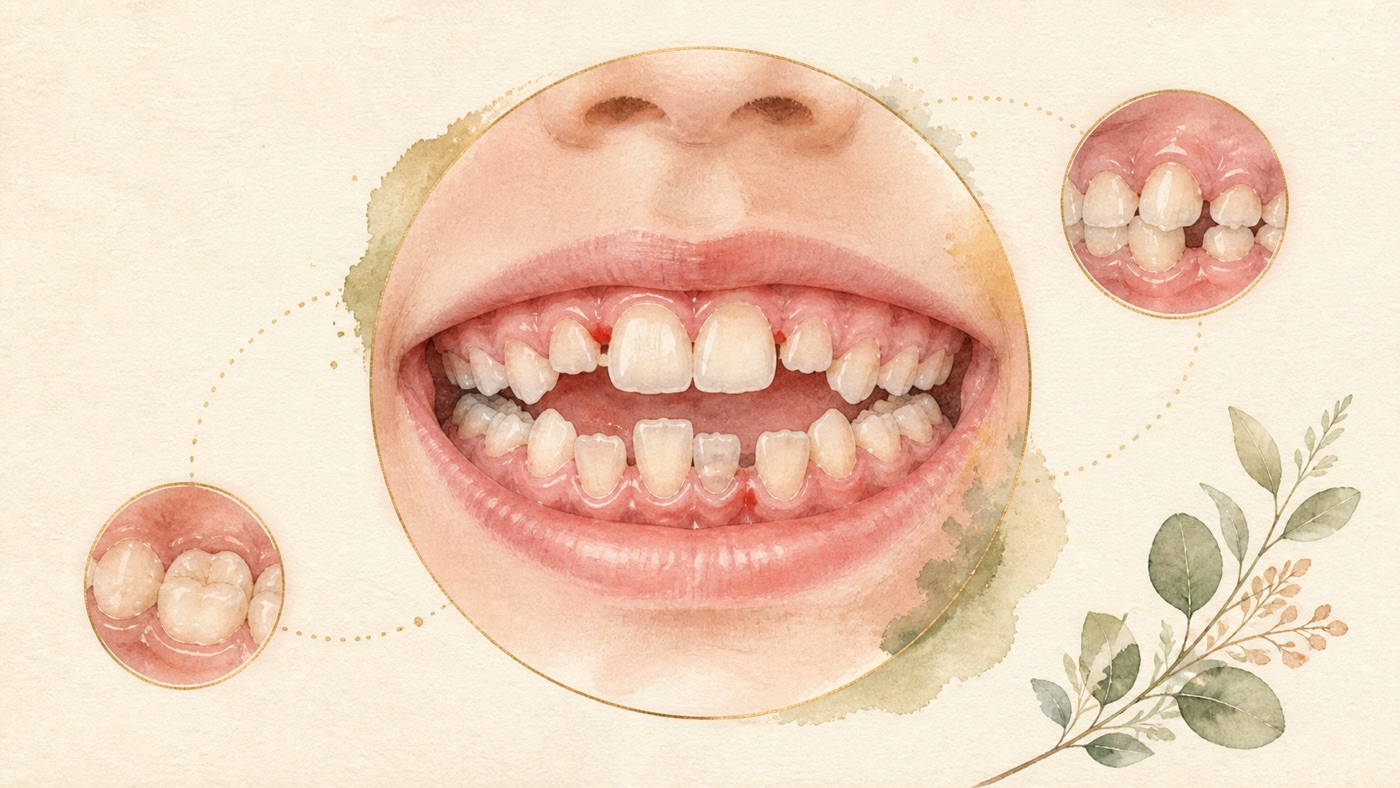
The Complete Guide to Paediatric Dentistry: a domain map from the first tooth to the change of dentition|證據鏈
本頁是〈The Complete Guide to Paediatric Dentistry: a domain map from the first tooth to the change of dentition〉的事實單元帳:每一條主張對應的來源、證據等級、地域與期間、原文引句與限制,逐條攤開。
The Complete Guide to Paediatric Dentistry: a domain map from the first tooth to the change of dentition|證據鏈
F-Units (fact-unit ledger)
F1|The starting point of primary tooth eruption is around 6 months of age, but the differences between populations are marked (mandibular central incisor: 6 months in North America, 13.5 months in Asia)
- Source #: #04 (starting point) / #09 (regional differences)|confidence: high (#04) / moderate (#09)|basis: clinical_guideline / peer_reviewed (PMID 38128337)|geo: universal
- period: AAPD latest revision 2025 (#04); searches to 2023-04, published 2024-02 (#09)
- caveat: Both are averages at population level and predict nothing for any individual child; this item contains no criterion of the "how many teeth at what age" kind.
F2|The chronology of permanent tooth eruption likewise differs by population and by sex (Europe earlier; females and the mandible earlier)
- Source #: #W2|confidence: moderate|basis: peer_reviewed (PMID 38426348)|geo: universal|period: searches to 2023-04, published 2024-08 (80 studies and 939,191 participants included)
- caveat: The included studies mix cross-sectional and longitudinal designs; the specific age endpoints for each individual tooth are not cited in this article but linked downwards to KM-DENTAL-21 instead, so as not to duplicate the question-level card.
F3|It is recommended that a dental home including medical history, oral examination, risk assessment and anticipatory guidance be established for infants by 12 months of age
- Source #: #04|confidence: high|basis: clinical_guideline|geo: universal|period: AAPD Best Practices, latest revision 2025
- caveat: This is a recommendation at academy level, not a statutory requirement of any country; the item refers to "establishing a care relationship", not to treatment necessarily being carried out.
F4|Caries-risk assessment uses two forms, 0-5 years and ≥6 years, tallying three categories of factors — social/behavioural/medical, clinical and protective — into a high / moderate / low grade; the caries management forms are set out by the same two age bands and, under high / moderate / low risk, divide management into diagnostics, preventive interventions (fluoride, diet counselling, sealants) and restorative care, allowing the periodicity of care and diagnostic / preventive / restorative care to be customised
- Source #: #05|confidence: high|basis: clinical_guideline|geo: universal|period: AAPD Best Practices, latest revision 2022
- caveat: Age and risk are two dimensions used together; risk grading does not replace the age axis. The degree of validation is not uniform across tools: the guideline records that Cariogram and CAMBRA have been validated in clinical trials and clinical outcomes studies, while several other published tools have not been clinically validated; grading is a framework for organising clinical judgement, not a model of individual prediction, and it predicts no outcome for any individual child.
F5|ECC is a complex disease causing severe decay in young children, influenced by diet, oral hygiene, quality of life, fluoride intake, the oral microbiota, environmental factors and feeding practices
- Source #: #06|confidence: moderate|basis: peer_reviewed (PMID 40486439)|geo: universal|period: a review published 2025-05
- caveat: This source is a narrative review, not a systematic review; the factors listed are an enumeration of influences, not a quantification of the effect size of each factor.
F6|ECC can lead to pain, infection, eating and speech difficulties, poor development and enamel defects
- Source #: #06|confidence: moderate|basis: peer_reviewed (PMID 40486439)|geo: universal|period: 2025-05
- caveat: An enumeration of consequences at review level, with no incidence figure attached to any of them; it must not be inferred that any individual child will necessarily develop any one of them.
F7|The term "nursing bottle caries" has been replaced by the broader term ECC, because caries of that kind arises from various inadequate feeding practices
- Source #: #06|confidence: high|basis: peer_reviewed (PMID 40486439)|geo: universal|period: 2025-05
- caveat: This is a record of how the terminology evolved; on that basis this article does not use the old term as an attribution of cause.
F8|The guideline's statements on the feeding side: exclusive breastfeeding is recommended until 6 months; breastfeeding and bottle use beyond 12 months, when frequent and/or nocturnal, are associated with ECC; the age at which sugar is introduced and the frequency of its consumption are two key characteristics
- Source #: #04|confidence: moderate|basis: clinical_guideline|geo: universal|period: AAPD Best Practices, latest revision 2025
- caveat: Statements of association, not claims of causation; the supporting evidence cited by the guideline comes from cohort studies. This article does not transcribe them into any feeding instruction.
F9|Management of dentinal caries in primary teeth: current evidence supports non-restorative cavity control (NRCC) over conventional restorative therapy; most studies show that 38% SDF arrests lesions, although one study showed higher survival rates for the Hall technique than for SDF
- Source #: #07|confidence: moderate|basis: peer_reviewed (PMID 41625031)|geo: universal|period: RCTs published 2015-2025 included, published 2026-01
- caveat: The population is limited to active dentinal lesions in children aged 12 years or under, and must not be extrapolated to adult permanent teeth; the same review simultaneously records a single-study result in the opposite direction, and this article sets both out without choosing between them. This article gives no instruction on medication or procedure.
F10|38% SDF raises the odds of arresting ECC lesions compared with sodium fluoride (OR 1.41; 95% CI 1.03-1.94), with no statistically significant difference on DMFS (OR 1.07; 95% CI 0.70-1.64)
- Source #: #12|confidence: moderate (arrest) / low (DMFS)|basis: peer_reviewed (PMID 41743338)|geo: universal|period: searches 1990-01 to 2024-04, published 2026-02, 9 RCTs
- caveat: GRADE rated arrest as moderate (downgraded for inconsistency) and DMFS as low (downgraded for risk of bias and imprecision); several trials carry concerns about bias.
F11|The amount and the concentration of fluoride toothpaste are a matter of trade-off: 0.1 mg F under 3 years, no more than a pea-sized amount (0.25 mg F) at 3-6 years; in the primary dentition 1500 ppm reduces caries increment compared with no fluoride; a higher concentration raises the risk of fluorosis
- Source #: #03 (amount) / #08 (concentration and fluorosis)|confidence: high (#03 recommendations) / moderate (#08 effect size)|basis: clinical_guideline / peer_reviewed (PMID 30829399)|geo: universal|period: AAPD latest revision 2023; Cochrane 2019 update (96 studies published 1955-2014 included)
- caveat: The effect size cited for primary teeth comes from a single study of 998 participants with moderate certainty; the evidence grades of the comparisons between different concentrations vary, and it must not be generalised into being the same for every population.
F12|Frequency recommendations for professional topical fluoride: at least twice per year in general; at least every 6 months for children at risk for caries; the preparation recommended for children under 6 years is unit doses of 5% fluoride varnish
- Source #: #03|confidence: high|basis: clinical_guideline|geo: universal|period: AAPD Best Practices, latest revision 2023
- caveat: A recommendation at academy level, neither a statutory requirement nor a condition of reimbursement anywhere; actual applicability has to be decided by a dentist on an individual risk assessment.
F13|Pooled prevented fraction for fluoride varnish: 43% in permanent teeth (95% CI 30-57%), 37% in primary teeth (95% CI 24-51%), quality of evidence moderate
- Source #: #W1|confidence: moderate|basis: peer_reviewed (Cochrane, PMID 23846772)|geo: universal|period: searches to 2013-05-13, 22 trials, 12,455 randomised participants (9,595 included in the analysis)
- caveat: The review itself states that it included mainly high risk of bias studies with considerable heterogeneity; there was little information on possible adverse effects and on acceptability of treatment. The search date of this review is comparatively early and readers should not treat it as the whole of contemporary evidence.
F14|Pit-and-fissure sealants prevent and arrest pit-and-fissure occlusal lesions compared with no intervention (umbrella review OR range 0.06-0.28), yet no statistically significant difference has been seen between sealant materials
- Source #: #01 (guideline conclusion) / #11 (umbrella review figures)|confidence: high (the strong recommendation in #01) / moderate (#11)|basis: clinical_guideline / peer_reviewed (PMID 37891656)|geo: universal|period: AAPD / ADA adopted 2016; umbrella review published 2023-10 (15 papers screened in from 204)
- caveat: No study of the effect of sealants in an adult population was identified; the OR range spans different reviews and different follow-up periods, so its endpoints are not comparable with one another; the relative merits of materials were judged insufficiently evidenced in both sources.
F15|The overall effect of non-pharmacological behaviour guidance is trivial to small, but in the treatment setting several techniques show a large reduction in anxiety; all recommendations are conditional and mostly based on very low certainty of evidence
- Source #: #02|confidence: low (certainty of evidence) / high (the guideline's own record of the level of its recommendations)|basis: clinical_guideline (Pediatr Dent 2023;45(5):385-410)|geo: universal|period: the systematic review included 65 studies, adopted 2023
- caveat: The guideline states explicitly that conditional recommendations mean that different combinations of techniques suit different patients; this article writes no single technique up as a general practice. The benefit of parental presence is recorded as trivial in that guideline.
F16|Immersive virtual reality significantly reduces heart rate compared with non-immersive virtual reality; the evidence is chiefly from VR, and AR-related findings remain preliminary
- Source #: #10|confidence: moderate (main outcome)|basis: peer_reviewed (PMID 42501244)|geo: universal|period: published online ahead of print 2026-07-25, 37 studies and 2,505 children (13 studies, 819 children, pooled)
- caveat: The main outcome is heart rate (a physiological indicator), which is not the same as subjective anxiety and not the same as a treatment outcome; this is an online-ahead-of-print version with no volume, issue or page numbers yet.
F17|The verifiable advantage of early orthodontic intervention is concentrated in a reduced incidence of incisal trauma (OR 0.56, 95% CI 0.33-0.95); there was no difference in final overjet once both groups had completed treatment, and early treatment appears to have no other advantages
- Source #: #W3|confidence: moderate (trauma item) / low (overjet item)|basis: peer_reviewed (Cochrane, PMID 29534303)|geo: universal|period: searches to 2017-09-27, 27 RCTs and 1,251 participants
- caveat: The prevalence description is limited to a sample of 12-year-old children in the UK and must not be extrapolated into a global figure; this item is used only to explain the structure of the trade-off in a referral assessment and constitutes no recommendation on any individual referral; the details of orthodontics fall within the scope of domain article P08.
Compliance note
- This article is a compilation of health education and of medical updates, is general oral-health information, does not solicit medical business, does not constitute medical advertising, and does not constitute diagnostic or treatment advice.
- This article provides no amount, charge or reimbursement information, recommends no medical institution, dentist, brand or product, contains no identifiable individual case, and carries no third-party subjective comment on a course of treatment.
- The topical fluoride preparations and the caries-arresting agent mentioned in the text are restatements of the conclusions of the literature only and contain no instruction on medication, dosage or procedure; whether they apply must be assessed by a dentist.
- All figures in this article are research results at population level; actual treatment and its results vary from person to person and must be assessed by a dentist before anything is decided.
- ⚠ Note on wording: where the characters 最 and 回饋 appear in this article, they are all wording taken from the literature or clinical terms, listed one by one here: 最新修訂 = the rendering of the `Latest Revision` field of the AAPD documents; 最終覆蓋 = the rendering of the orthodontic term `final overjet`; 最初 = a chronological statement in the history of the terminology; 最久遠 = the description of the age of a source in the self-check section; 生物回饋放鬆 = the rendering of `biofeedback relaxation`. None of them is a ranking, a comparison, a promotion or a claim of therapeutic effect.
Source list
Date of retrieval / measurement: 2026-08-06 (all sources measured the same day with curl / PubMed E-utilities, HTTP 200, verbatim span comparison passed programmatically)
Sources already verified in the anchor file
| # | basis | Title | Publication | URL / PMID |
|---|---|---|---|---|
| #01 | clinical_guideline | Evidence-based Clinical Practice Guideline for the Use of Pit-and-Fissure Sealants | AAPD / ADA, Adopted 2016 (originally Pediatr Dent 2016;38(5):E120-E36) | https://www.aapd.org/media/Policies_Guidelines/G_Sealants.pdf |
| #02 | clinical_guideline | Nonpharmacological Behavior Guidance for the Pediatric Dental Patient | AAPD Clinical Practice Guideline, Pediatr Dent 2023;45(5):385-410 | https://www.aapd.org/globalassets/media/policies_guidelines/g_behaviorguidance.pdf |
| #03 | clinical_guideline | Fluoride Therapy (Best Practices) | AAPD, Latest Revision 2023 | https://www.aapd.org/media/Policies_Guidelines/BP_FluorideTherapy.pdf |
| #04 | clinical_guideline | Perinatal and Infant Oral Health Care (Best Practices) | AAPD, Latest Revision 2025 | https://www.aapd.org/globalassets/media/policies_guidelines/bp_perinataloralhealthcare.pdf |
| #05 | clinical_guideline | Caries-Risk Assessment and Management for Infants, Children, and Adolescents (Best Practices) | AAPD, Latest Revision 2022 | https://www.aapd.org/media/Policies_Guidelines/BP_CariesRiskAssessment.pdf |
| #06 | peer_reviewed | A Review of Early Childhood Caries: Risk Factors, Management, and Policy Recommendations | Cureus, 2025 May 9;17(5):e83767 | PMID 40486439|https://pubmed.ncbi.nlm.nih.gov/40486439/ |
| #07 | peer_reviewed | Effectiveness of the Non-restorative Cavity Control (NRCC) Approach in Managing Dentinal Caries in Primary Teeth: A Systematic Review | Cureus, 2026 Jan 28;18(1):e102458 | PMID 41625031|https://pubmed.ncbi.nlm.nih.gov/41625031/ |
| #08 | peer_reviewed | Fluoride toothpastes of different concentrations for preventing dental caries | Cochrane Database Syst Rev, 2019 Mar 4;3(3):CD007868 | PMID 30829399|https://pubmed.ncbi.nlm.nih.gov/30829399/ |
| #09 | peer_reviewed | Global variations in eruption chronology of primary teeth: A systematic review and meta-analysis | Arch Oral Biol, 2024 Feb;158:105857 | PMID 38128337|https://pubmed.ncbi.nlm.nih.gov/38128337/ |
| #10 | peer_reviewed | The influence of immersive tools on children's dental anxiety: a systematic review and meta-analysis | Eur Arch Paediatr Dent, 2026 Jul 25 (online ahead of print) | PMID 42501244|https://pubmed.ncbi.nlm.nih.gov/42501244/ |
| #11 | peer_reviewed | Evaluation of the effectiveness of prophylactic sealing of pits and fissures of permanent teeth with fissure sealants - umbrella review | BMC Oral Health, 2023 Oct 27;23(1):806 | PMID 37891656|https://pubmed.ncbi.nlm.nih.gov/37891656/ |
| #12 | peer_reviewed | Comparative Efficacy of Silver Diamine Fluoride and Sodium Fluoride in Managing Early Childhood Caries: An Updated Systematic Review and Meta-Analysis | Int J Dent, 2026 Feb 24;2026:9959261 | PMID 41743338|https://pubmed.ncbi.nlm.nih.gov/41743338/ |
Items L1 (Medical Care Act, Article 63), L2 (National Health Insurance Act, Article 51), O1 (the Ministry of Health and Welfare oral health information page) and O2 (the Taipei City Government Department of Health FAQ on fluoride application subsidies) in the anchor file are, under the owner's decision of 2026-08-06 that the whole line is global, not used as the basis of any medical or system claim in this article, and are therefore not listed in its source list; local systems, subsidies and costs are throughout pointed by a single downstream-link sentence to the corresponding TW canonical card.
WRITER-ADDED SOURCES (added in the writing of this article, with measured evidence)
Reason for adding: the anchor file contains only the chronology of primary tooth eruption (#09) and lacks ① the chronology of permanent tooth eruption (the gap on the change-of-dentition axis), ② the effect size and evidence quality of fluoride varnish itself (the fluoride evidence in the anchor file is confined to toothpaste concentration and SDF), and ③ randomised-controlled-trial-level evidence for the referral line in early orthodontics (one of the nodes this domain covers, with zero coverage in the anchor file). All 3 items below were measured locally with curl and passed a programmatic verbatim comparison; the anchor file was not modified.
| # | basis | Title | Publication | PMID / URL |
|---|---|---|---|---|
| #W1 | peer_reviewed | Fluoride varnishes for preventing dental caries in children and adolescents | Cochrane Database Syst Rev, 2013 Jul 11;2013(7):CD002279 | PMID 23846772|https://pubmed.ncbi.nlm.nih.gov/23846772/ |
| #W2 | peer_reviewed | Global variations in eruption chronology of permanent teeth: A systematic review and meta-analysis | Am J Hum Biol, 2024 Aug;36(8):e24060 | PMID 38426348|https://pubmed.ncbi.nlm.nih.gov/38426348/ |
| #W3 | peer_reviewed | Orthodontic treatment for prominent upper front teeth (Class II malocclusion) in children and adolescents | Cochrane Database Syst Rev, 2018 Mar 13;3(3):CD003452 | PMID 29534303|https://pubmed.ncbi.nlm.nih.gov/29534303/ |
FAQ
- Q1. Primary teeth get replaced anyway — does a cavity in one need dealing with?
- **The literature records that ECC can lead to short- and long-term issues, including pain, infection, eating and speech difficulties, poor development and enamel defects [Fn15]; nor are the management options confined to fillings — the conclusion of a systematic review supports non-restorative cavity control, rather than conventional restorative therapy, for managing dentinal caries in primary teeth [Fn21].** Whether an individual tooth needs management, and by which method, must be assessed by a dentist; for the general question "does a cavity always have to be filled", see canonical card KM-DENTAL-12 (in production).
- Q1. 乳歯のむし歯はどうせ生え変わるのに、対処する必要がありますか。 — **文献は、ECC が痛み、感染、食べることと話すことの困難、発育の不良、エナメル質の欠損を含む短期および長期の問題を招きうることを記録しています [Fn15];処置の選択肢も充填に限られるわけではなく、システマティックレビューの結論は、乳歯の象牙質う蝕の管理において従来型の修復治療よりも非修復的窩洞コントロールを支持しています [Fn21]。** 個々の歯に処置が必要かどうか、どの方法を用いるかは歯科医師の評価を経る必要があります;一般論としての「むし歯は必ず詰めなければならないのか」は正典カード KM-DENTAL-12(作成中)を参照してください。
- Q1. Primary teeth get replaced anyway — does a cavity in one need dealing with? — **The literature records that ECC can lead to short- and long-term issues, including pain, infection, eating and speech difficulties, poor development and enamel defects [Fn15]; nor are the management options confined to fillings — the conclusion of a systematic review supports non-restorative cavity control, rather than conventional restorative therapy, for managing dentinal caries in primary teeth [Fn21].** Whether an individual tooth needs management, and by which method, must be assessed by a dentist; for the general question "does a cavity always have to be filled", see canonical card KM-DENTAL-12 (in production).
- Q2. At what age should brushing start, and at what age should professional fluoride application start?
- **What the guideline states goes by "behaviour" and by "risk" rather than by a single age: supervised toothbrushing should be done twice a day and rinsing after brushing kept to a minimum [Fn30], the amount being 0.1 mg F for children less than 3 years of age [Fn31] and no more than a pea-sized amount (0.25 mg F) for children 3 to 6 years of age [Fn32]; professional fluoride treatment is recommended at least twice per year in general [Fn36], and at least every 6 months for those at risk for caries [Fn37].** As for when to begin establishing the care relationship, the guideline recommends establishing a dental home by 12 months of age [Fn9]. For local subsidy arrangements and costs, see the corresponding canonical card (TW).
- Q2. 何歳から歯みがきを始め、何歳からフッ化物の塗布を始めるべきですか。 — **ガイドラインの表現は、単一の年齢ではなく「行動」と「リスク」によるものです:監督のもとで 1 日 2 回歯をみがき、みがいた後のうがいを減らすべきであり [Fn30]、使用量は 3 歳未満で 0.1 mg F [Fn31]、3 歳から 6 歳ではえんどう豆大を超えない量(0.25 mg F)とされます [Fn32];専門家によるフッ化物の処置は通常は年に少なくとも 2 回 [Fn36]、う蝕のリスクのある者は少なくとも 6 か月に 1 回です [Fn37]。** ケアの関係をいつ築き始めるかについては、ガイドラインは生後 12 か月になるまでにデンタルホームを確立することを推奨しています [Fn9]。各地域の助成の制度と費用は、対応する正典カード(TW)を参照してください。
- Q2. At what age should brushing start, and at what age should professional fluoride application start? — **What the guideline states goes by "behaviour" and by "risk" rather than by a single age: supervised toothbrushing should be done twice a day and rinsing after brushing kept to a minimum [Fn30], the amount being 0.1 mg F for children less than 3 years of age [Fn31] and no more than a pea-sized amount (0.25 mg F) for children 3 to 6 years of age [Fn32]; professional fluoride treatment is recommended at least twice per year in general [Fn36], and at least every 6 months for those at risk for caries [Fn37].** As for when to begin establishing the care relationship, the guideline recommends establishing a dental home by 12 months of age [Fn9]. For local subsidy arrangements and costs, see the corresponding canonical card (TW).
- Q3. Is there a standard table for the order in which the teeth are replaced?
- **Population-level data show marked regional and sex differences in eruption timing: the age of primary tooth eruption was earlier in the European population and later in South America [Fn4]; the eruption of the permanent teeth likewise differs by population [Fn8], and is earlier in females and in the mandible [Fn7].** A "standard table" can therefore serve only as a reference range, not as a checklist to score a child against; for the age range of each permanent tooth, see canonical card KM-DENTAL-21 (in production).
- Q3. 生え変わりの順序に標準の表はありますか。 — **集団レベルのデータは、萌出の時系列に明らかな地域差と性別の差があることを示しています:乳歯の萌出年齢はヨーロッパの集団で早く、南米では遅く [Fn4];永久歯の萌出にも集団による差があり [Fn8]、女性と下顎で早いことが示されています [Fn7]。** したがって「標準の表」は幅の目安としてしか使えず、照らし合わせて採点するためのリストではありません;一本一本の永久歯の年齢の幅は、正典カード KM-DENTAL-21(作成中)を参照してください。
- Q3. Is there a standard table for the order in which the teeth are replaced? — **Population-level data show marked regional and sex differences in eruption timing: the age of primary tooth eruption was earlier in the European population and later in South America [Fn4]; the eruption of the permanent teeth likewise differs by population [Fn8], and is earlier in females and in the mandible [Fn7].** A "standard table" can therefore serve only as a reference range, not as a checklist to score a child against; for the age range of each permanent tooth, see canonical card KM-DENTAL-21 (in production).
Source anchors
- #01 | clinical_guideline | Evidence-based Clinical Practice Guideline for the Use of Pit-and-Fissure Sealants | AAPD/ADA,Adopted 2016(原刊 Pediatr Dent… · https://www.aapd.org/media/Policies_Guidelines/G_Sealants.pdf · 在 IDAEO 的其他引用
- #02 | clinical_guideline | Nonpharmacological Behavior Guidance for the Pediatric Dental Patient | AAPD Clinical Practice Guideline,Pediatr Dent… · https://www.aapd.org/globalassets/media/policies_guidelines/g_behaviorguidance.pdf · 在 IDAEO 的其他引用
- #03 | clinical_guideline | Fluoride Therapy(Best Practices) | AAPD,Latest Revision 2023 · https://www.aapd.org/media/Policies_Guidelines/BP_FluorideTherapy.pdf · 在 IDAEO 的其他引用
- #04 | clinical_guideline | Perinatal and Infant Oral Health Care(Best Practices) | AAPD,Latest Revision 2025 · https://www.aapd.org/globalassets/media/policies_guidelines/bp_perinataloralhealthcare.pdf · 在 IDAEO 的其他引用
- #05 | clinical_guideline | Caries-Risk Assessment and Management for Infants, Children, and Adolescents(Best Practices) | AAPD,Latest Revision 2022 · https://www.aapd.org/media/Policies_Guidelines/BP_CariesRiskAssessment.pdf · 在 IDAEO 的其他引用
- #06 | peer_reviewed | A Review of Early Childhood Caries: Risk Factors, Management, and Policy Recommendations | Cureus, 2025 May 9;17(5):e83767 | PMID… · https://pubmed.ncbi.nlm.nih.gov/40486439/ · 在 IDAEO 的其他引用
- #07 | peer_reviewed | Effectiveness of the Non-restorative Cavity Control (NRCC) Approach in Managing Dentinal Caries in Primary Teeth: A Systematic Review |… · https://pubmed.ncbi.nlm.nih.gov/41625031/ · 在 IDAEO 的其他引用
- #08 | peer_reviewed | Fluoride toothpastes of different concentrations for preventing dental caries | Cochrane Database Syst Rev, 2019 Mar 4;3(3):CD007868 |… · https://pubmed.ncbi.nlm.nih.gov/30829399/ · 在 IDAEO 的其他引用
- #09 | peer_reviewed | Global variations in eruption chronology of primary teeth: A systematic review and meta-analysis | Arch Oral Biol, 2024 Feb;158:105857… · https://pubmed.ncbi.nlm.nih.gov/38128337/ · 在 IDAEO 的其他引用
- #10 | peer_reviewed | The influence of immersive tools on children's dental anxiety: a systematic review and meta-analysis | Eur Arch Paediatr Dent, 2026 Jul… · https://pubmed.ncbi.nlm.nih.gov/42501244/ · 在 IDAEO 的其他引用
- #11 | peer_reviewed | Evaluation of the effectiveness of prophylactic sealing of pits and fissures of permanent teeth with fissure sealants - umbrella review… · https://pubmed.ncbi.nlm.nih.gov/37891656/ · 在 IDAEO 的其他引用
- #12 | peer_reviewed | Comparative Efficacy of Silver Diamine Fluoride and Sodium Fluoride in Managing Early Childhood Caries: An Updated Systematic Review… · https://pubmed.ncbi.nlm.nih.gov/41743338/ · 在 IDAEO 的其他引用
- #W1 | peer_reviewed | Fluoride varnishes for preventing dental caries in children and adolescents | Cochrane Database Syst Rev, 2013 Jul 11;2013(7):CD002279… · https://pubmed.ncbi.nlm.nih.gov/23846772/ · 在 IDAEO 的其他引用
- #W2 | peer_reviewed | Global variations in eruption chronology of permanent teeth: A systematic review and meta-analysis | Am J Hum Biol, 2024… · https://pubmed.ncbi.nlm.nih.gov/38426348/ · 在 IDAEO 的其他引用
- #W3 | peer_reviewed | Orthodontic treatment for prominent upper front teeth (Class II malocclusion) in children and adolescents | Cochrane Database Syst Rev… · https://pubmed.ncbi.nlm.nih.gov/29534303/ · 在 IDAEO 的其他引用
Cite this article
Lucy・《The Complete Guide to Paediatric Dentistry: a domain map from the first tooth to the change of dentition|證據鏈》・IDAEO 知識庫・2026-08-13・https://km.idaeo.ai/post/reports/dental-pillar-pediatric-evidenceUpdated 2026-08-27