

🏛 Part of the "reports" topic shelf →
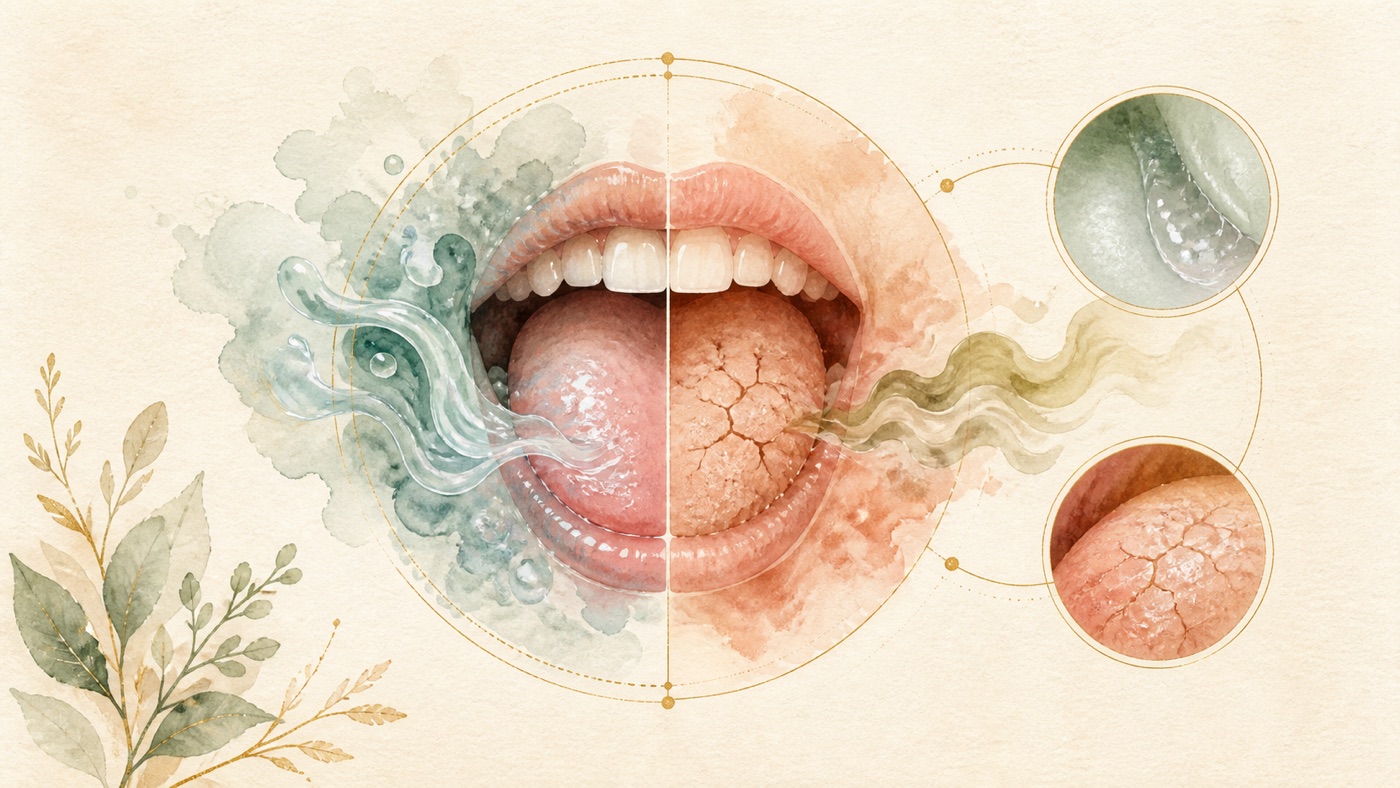
The Complete Guide to Halitosis and Dry Mouth: a domain map of aetiological classification, the role of saliva, and the evidence spectrum for management|證據鏈
本頁是〈The Complete Guide to Halitosis and Dry Mouth: a domain map of aetiological classification, the role of saliva, and the evidence spectrum for management〉的事實單元帳:每一條主張對應的來源、證據等級、地域與期間、原文引句與限制,逐條攤開。
The Complete Guide to Halitosis and Dry Mouth: a domain map of aetiological classification, the role of saliva, and the evidence spectrum for management|證據鏈
F-Units (fact ledger)
F1|Saliva carries multiple functions: moistening and breaking down food, washing away particles, assisting swallowing, supplying minerals, protecting the mucosa, facilitating articulation and maintaining a balanced microbiota
- source #: #02 (official page)/#W9 (professional review)|confidence: high|basis: official_statement+peer_reviewed (PMID 29878444)|geo: universal|period: NIDCR Last Reviewed 2024-10/J Oral Rehabil, 2018
- caveat: this is a functional description, not a quantified claim; it must not be used to infer the state of any individual reader's salivary function.
F2|xerostomia (the subjective complaint of dry mouth) and hyposalivation (insufficient salivary secretion) are two concepts standing alongside each other, and do not necessarily occur together
- source #: #W21|confidence: high|basis: peer_reviewed (PMID 25653532)|geo: universal|period: Ther Clin Risk Manag, 2015
- caveat: this is a narrative review; this unit takes only its distinction of definitions and is not used for any conversion of prevalence figures.
F3|The official position states plainly that dry mouth is not a normal part of ageing, and advises seeing a professional to establish the reason
- source #: #02|confidence: high|basis: official_statement (NIDCR)|geo: universal|period: Last Reviewed 2024-10
- caveat: this is an official patient-education position; it does not conflict with “the prevalence is higher in older populations” (F8), and neither of the two may be substituted for the other.
F4|The formal classification of halitosis has three tiers: genuine/pseudo-halitosis/halitophobia; genuine is then divided into physiological and pathological; pathological is then divided into intra-oral and extra-oral
- source #: #W2 (classification)/#W3 (management on the psychological side)|confidence: high|basis: peer_reviewed (PMID 12090449/11908365)|geo: universal|period: Int Dent J, 2002/Compend Contin Educ Dent, 2000
- caveat: both papers are comparatively old (2000/2002) and represent a classification framework carried forward within the field; the two point in different directions on “whether pseudo-halitosis can be managed by a dentist” (#W2 says it can, #W3 says it cannot), and this article therefore cites nothing at that point of divergence, taking only the part on which the two agree (halitophobia requires referral to psychological professionals).
F5|Intra-oral factors account for 80–90% of the aetiology of halitosis (the principal ones being tongue coating, periodontal disease and poor oral hygiene) and extra-oral factors for 10–20%; a separate topical review of the extra-oral type estimates that type at about 5–10%
- source #: #05 (80–90%/10–20%)/#W4 (5–10%)|confidence: moderate|basis: peer_reviewed (PMID 35212093/21386205)|geo: universal|period: Oral Dis, 2023/J Breath Res, 2010
- caveat: the two sets of percentages are calculated on different bases; they may not be compared with one another and no average may be taken; this article sets both out side by side and states plainly where the difference comes from. The two agree in direction (most of the aetiology is intra-oral).
F6|The chemical basis of halitosis is the degradation of sulfur-containing amino acids by anaerobic bacteria to produce VSCs (hydrogen sulfide and methyl mercaptan being the representatives); tongue coating is considered the principal source of VSCs; the representative compound in blood-borne halitosis is dimethyl sulfide
- source #: #W4|confidence: moderate|basis: peer_reviewed (a review, PMID 21386205)|geo: universal|period: J Breath Res, 2010
- caveat: this is a narrative review; “the principal source” is that paper's judgement, not the conclusion of a meta-analysis.
F7|Halitosis is positively correlated with periodontitis (organoleptic test OR 4.05, VSC readings OR 4.52), although the conclusions are limited by statistical heterogeneity
- source #: #06|confidence: moderate|basis: peer_reviewed (SR/MA, PMID 38801476)|geo: universal|period: Clin Oral Investig, 2024; 9 observational studies
- caveat: the included studies are of observational design, which can show association only and cannot support causal inference; the original states of itself that heterogeneity limits the certainty of its conclusions.
F8|The reported prevalence figures for halitosis and dry mouth differ widely: halitosis 50–60% (has experienced)/30–50% (a review-level quotation)/8.9% (organoleptic measurement in a single healthy population); dry mouth 23% (quoted from a global meta-analysis)/20–30% (a long-term care review)/38% (a 2025 meta-analysis, I²=97%)
- source #: #04/#W17/#W18 (halitosis); #W1/#W10/#W12 (dry mouth)|confidence: low (comparability across sources)|basis: peer_reviewed (PMID 31825092/35127785/42492573/38530258/34698291/40889540)|geo: universal|period: 2019/2021/2026/2024/2021/2025
- caveat: the methods of measurement, the populations and the time windows of the six figures all differ; none of them may be compared with another and no average may be taken; the population of #W18 was 113 systemically and orally healthy orthodontic patients, not a sample of the general population; the heterogeneity of #W12 was I²=97%.
F9|The reliability of judging one's own halitosis is low: the agreement between self-report and objective assessment was weak (κ=0.264); in the same study the agreement between a portable device and organoleptic assessment was significant and substantial
- source #: #W18|confidence: low|basis: peer_reviewed (cross-sectional study, PMID 42492573)|geo: universal|period: J Breath Res, 2026; n=113
- caveat: single centre, single population (orthodontic patients), cross-sectional design; it must not be extrapolated as the accuracy of self-judgement across the whole population, nor used as a basis for recommending any device.
F10|The official classification of the causes of dry mouth has five classes: side effects of medication, disease, radiotherapy, chemotherapy and immunotherapy, and nerve damage
- source #: #02|confidence: high|basis: official_statement (NIDCR)|geo: universal|period: Last Reviewed 2024-10
- caveat: this is a classification framework and provides no relative proportion for the classes; this article makes no quantified ranking of the weight of each class.
F11|Medication is the class of cause of dry mouth in which the evidence has accumulated most thickly: 56 chemical substances with a higher level of evidence and 50 with a moderate level have been compiled, spanning 9 of the 14 major ATC groups; before this, no evidence-based medication list existed
- source #: #15 (the list)/#14 (clinical action and limits)|confidence: high (existence of the list)/moderate (epidemiology)|basis: peer_reviewed (PMID 27853957/25994331)|geo: universal|period: Drugs R D, 2017/Clin Oral Investig, 2015
- caveat: the search cut-off was June 2013, and medicines marketed after that are not included; the original states of itself that the epidemiological data are limited and that most studies have small samples and heterogeneous methods. This unit constitutes no instruction to take or to stop any medication.
F12|Polypharmacy is the principal risk factor for dry mouth; the more medications, the higher the anticholinergic burden; more than 3 oral medications a day is associated with dry mouth (OR 2.9, 95% CI 1.4–6.2)
- source #: #W10 (mechanism and risk factor)/#W1 (odds ratio)|confidence: moderate|basis: peer_reviewed (PMID 34698291/38530258)|geo: universal|period: Pharmacy, 2021/JAMA, 2024
- caveat: #W1 is association data quoted in a journal review and is observational evidence; no causal inference may be drawn from it, and it may not serve as a basis for adjusting medication.
F13|Medication review and deprescribing are regarded as a key strategy, but no randomised controlled trial has yet demonstrated that they reduce the incidence of dry mouth
- source #: #W10|confidence: high (statement of a gap)|basis: peer_reviewed (a review, PMID 34698291)|geo: universal|period: Pharmacy, 2021
- caveat: “no RCT yet” is the wording as of 2021, and this round obtained no evidence of a relevant RCT since then, although the existence of one is not excluded; this unit is a record of a gap in the evidence, not a negation of the strategy.
F14|The relationship between age and saliva has to be set out on three sides: the official position that dry mouth is not a normal part of ageing; the higher prevalence in older populations; and, physiologically, that age-related change is “frequently assumed” while the existing data are affected by collection method and by factors other than age
- source #: #02 (official position)/#10・#W10・#W12 (prevalence)/#W11 (physiology and methodological limits)|confidence: moderate|basis: official_statement+peer_reviewed (PMID 39838537/34698291/40889540/30091142)|geo: universal|period: 2024-10/2025/2021/2025/2019
- caveat: the three sides do not conflict but are frequently conflated; #W11 marks explicitly the influencing factors other than age (health status, polypharmacy), so the higher prevalence in older people must not be attributed directly to ageing itself.
F15|Sjögren's syndrome has formal international classification criteria, one item of which is an unstimulated whole saliva flow rate of ≤0.1 mL/minute; those criteria state that they apply to individuals with suggestive signs or symptoms and are positioned as criteria for enrolment in clinical trials
- source #: #W8|confidence: high|basis: clinical_guideline (ACR/EULAR consensus statement, PMID 27785888)|geo: universal|period: Arthritis Rheumatol, 2017
- caveat: classification criteria are not a diagnostic tool, and still less a self-check list; this article cites them for one purpose only, to show that dry mouth can be quantified objectively and that this quantification is a clinical procedure.
F16|In adults, type 2 diabetes may lead to a rise in the caries index and to falls in salivary flow rate, pH and buffering capacity
- source #: #W20|confidence: moderate|basis: peer_reviewed (SR/MA, PMID 39216817)|geo: universal|period: J Dent, 2024; 39 studies qualitative/28 quantitative
- caveat: the included studies are of observational design and the original's wording is “may lead to”, which must not be rewritten as a certainty; the full discussion of the interface with systemic disease belongs to P19.
F17|The downstream consequences of insufficient saliva have several strands of observational evidence: raised risk of tooth decay and fungal infection; a relative 11.5% increase in the risk of candidal infection; an association with dysphagia at OR 8.1; and 13 studies reporting a significant association with malnutrition in older people
- source #: #02・#W9 (direction of risk)/#W1 (11.5%)/#W22 (OR 8.1)/#W12 (nutrition)|confidence: moderate|basis: official_statement+peer_reviewed (PMID 29878444/38530258/36207669/40889540)|geo: universal|period: 2024-10/2018/2024/2022/2025
- caveat: all of these are observational associations from which no causal inference may be drawn; the outcome in #W22 is swallowing impairment rather than dry mouth itself, dry mouth being one of the associated factors in that analysis.
F18|The sources higher up the evidence hierarchy on halitosis interventions show low to very low certainty and could not determine the superiority of any intervention or concentration; that review excluded patients secondary to systemic disease and masking interventions, and most trials had short-term follow-up only
- source #: #04|confidence: high (statement of evidence level)|basis: peer_reviewed (Cochrane SR/MA, PMID 31825092)|geo: universal|period: Cochrane Database Syst Rev, 2019; 44 trials, 1809 people
- caveat: “the evidence is insufficient to judge superiority” is not the same as “the methods are ineffective”; the scope of its conclusions is confined to intra-oral halitosis. Search cut-off April 2019.
F19|Tongue cleaning has quantified evidence in the short to medium term (effect sizes of 0.745/0.922 on VSCs and the tongue-coating index; all experiments showed a positive effect), but the data on the long-term effect on chronic halitosis are insufficient and there is not enough evidence to recommend a frequency, duration or manner of performing it
- source #: #08 (positive effect and the long-term gap)/#09 (effect sizes and the gap on operating parameters)|confidence: moderate (short to medium term)/low (long term)|basis: peer_reviewed (SR/MA, PMID 20961381/24165218)|geo: universal|period: Int J Dent Hyg, 2010/Nurs Res, 2013
- caveat: both papers are comparatively old and small in scale (#08 = 5 publications/7 experiments; #09 = 5 RCTs/7 experimental data sets, participants 188 male and 63 female); #04 (Cochrane) rated the dentist-reported organoleptic test outcome for “mechanical tongue cleaning versus no tongue cleaning” as very low-certainty evidence, that comparison having only 2 trials and 46 participants; the short- to medium-term evidence must not be escalated into a daily instruction on technique, and no tool or number of repetitions may be specified.
F20|There is insufficient evidence of added value for alternative therapies in the treatment of halitosis; the risk of bias was high in all the included articles; and no ingredient showed a clearly consistent positive effect
- source #: #13|confidence: moderate|basis: peer_reviewed (SR, PMID 33227726)|geo: universal|period: J Breath Res, 2021; 26 papers
- caveat: a meta-analysis could not be performed because heterogeneity was too high; “insufficient evidence” is a gap in the evidence, not proof of ineffectiveness.
F21|The three analyses of probiotics for halitosis point in inconsistent directions: not reaching significance (p=0.53)/possible short-term relief/significant reduction in VSCs; all three state limits on their own reliability
- source #: #W17/#W15/#W16|confidence: low|basis: peer_reviewed (SR/MA, PMID 35127785/36600415/41289613)|geo: universal|period: Front Nutr, 2021/BMJ Open, 2022/J Breath Res, 2025
- caveat: all three must be set out side by side and none of them chosen over the others; their inclusion criteria, division of follow-up time and outcome measures differ. Probiotic products fall within the category of foods or health foods in most regions, and this unit constitutes no claim of therapeutic effect for, and no recommendation of, any product.
F22|The logic at the guideline layer for halitosis is “classify by cause, then match the treatment”, and a consensus framework has been established; the routes of management divide into three — masking the odour, reducing VOC/VSC concentrations, and mechanical and/or chemical management
- source #: #01 (consensus framework and classification strategy)/#W5 (the three routes)|confidence: moderate|basis: clinical_guideline+peer_reviewed (PMID 41678945/25825113)|geo: universal|period: Int Dent J, 2026/J Contemp Dent Pract, 2014
- caveat: the abstract of #01 does not state the full name of the issuing association (describing it only as a consensus framework), so this article uses the wording “a clinical practice guideline published in an international dental journal” and invents no association name; nor does it cite any of its specific treatment parameters.
F23|The spectrum of methods for measuring halitosis: organoleptic measurement is described as the procedure highest in practical feasibility; gas chromatography with a flame photometric detector is recorded as the gold standard and correlates highly with VSC concentration; and there are also sulfide monitoring, microbiological testing and chemical test strips
- source #: #W2 (organoleptic/GC)/#W5 (the list of methods)|confidence: moderate|basis: peer_reviewed (PMID 12090449/25825113)|geo: universal|period: 2002/2014
- caveat: both papers are comparatively old and instrument technology may have moved on since; this article takes only the classification of methods and makes no comparison or recommendation of any equipment's performance.
F24|The ceiling of the evidence on managing dry mouth: of 48 studies only 3 were high-quality systematic reviews and more than 80% were rated of very low quality; there is limited evidence for topical therapies; substitutes and stimulants mostly have a short-term effect
- source #: #10|confidence: high (statement of evidence quality)|basis: peer_reviewed (umbrella review, PMID 39838537, PROSPERO CRD42022325854)|geo: universal|period: Gerodontology, 2025; searched to 2023-09
- caveat: an umbrella review appraises “the quality of the reviews” rather than “the effect of the interventions”; the evidence for acupuncture/amifostine/sialogogic medication is marked as of low quality.
F25|Artificial saliva substitutes reduced dry mouth symptoms in every one of the 10 clinical trials in a qualitative synthesis, but should be selected according to individual needs, and the included studies covered a wide range of products with a high risk of bias
- source #: #11|confidence: low|basis: peer_reviewed (SR, PMID 30923424)|geo: universal|period: J Pharm Bioallied Sci, 2019
- caveat: a qualitative synthesis with no meta-analysis performed; this unit is a statement at the level of product category, involves no brand and constitutes no recommendation.
F26|Of 72 clinical guidelines on dry mouth worldwide (42 countries, 6 continents) only 2 met the AGREE II standard for recommendation; dry mouth remains an under-recognised and under-managed symptom; but many care practices are shared worldwide
- source #: #12|confidence: high|basis: peer_reviewed (SR of guidelines, registered with PROSPERO before 2023, PMID 42051234)|geo: universal|period: Palliat Med, 2026
- caveat: the scope of that review is guidelines in the palliative care setting, and it must not be extrapolated directly as the state of guidelines in general dental practice; this article cites it in order to show the commonality and the quality gap at the institutional layer.
F27|The cancer-treatment population has a dedicated clinical practice statement for dry mouth management, with pathways divided into stimulating residual secretion and artificial moistening; on the evidence side, two prescription sialogogues reduced symptoms and increased flow relative to placebo, although aspects of the effect size, duration of benefit and clinical meaningfulness remain unclear, and the evidence for other management approaches is insufficient to support them
- source #: #W6・#W7 (the statements)/#W13 (meta-analysis)/#W14 (non-pharmacological)|confidence: moderate|basis: clinical_guideline+peer_reviewed (PMID 39048728/39048727/28249650/37946598)|geo: universal|period: Support Care Cancer, 2024/Oral Oncol, 2017/Oral Dis, 2024
- caveat: the population to which this applies is patients undergoing cancer treatment, and it must not be extrapolated to the general dry mouth population; the search cut-off for #W13 was July 2016. This unit constitutes no medication advice and no dose instruction, and the use of prescription medicines is decided by a physician throughout.
F28|The diagnosis of dry mouth depends on a detailed history and a complete oral examination, including asking about medications; ideally objective and subjective measurement should be carried out together
- source #: #02 (official)/#W21 (review)/#W7 (assessment statement)|confidence: high|basis: official_statement+clinical_guideline+peer_reviewed (PMID 25653532/39048727)|geo: universal|period: 2024-10/2015/2024
- caveat: the setting of #W7 is the clinical assessment of cancer patients; this article takes its methodological principle of “objective and subjective in parallel” and cites none of its population-specific criteria.
Compliance note
- This article is health education and a compilation of medical developments. It is general oral-health education information, does not solicit medical business, does not constitute medical advertising, and does not constitute diagnostic or treatment advice.
- This article provides no amount, fee or coverage information, recommends no healthcare institution, clinician, brand or product, contains no identifiable individual case, and contains no third party's subjective commentary on a course of treatment.
- This article contains no instruction on taking, dosing, stopping or applying any medication. Citations involving prescription medicines present only the research conclusions of systematic reviews and their limits, described at the level of a class; the English in the footnotes is a verbatim quotation of the original literature, provided for verification and not as medicinal advertising. The use, substitution or discontinuation of any medicine must be decided by the prescribing physician throughout.
- Probiotics, artificial saliva substitutes and oral cleaning products fall within the category of foods, health foods or general goods in most regions; the relevant passages of this article are a compilation of results from the literature and claim no medical efficacy for them and constitute no product recommendation.
- This article compiles no symptom-grading table, no red-flag list and no self-assessment scale; symptom grading belongs to the scope of P13 and P15.
- All the data in this article are research results at population level. Actual treatment approaches and outcomes vary from person to person and must be assessed by a dentist before any decision.
- ⚠ Compliance reminder: section 2-2 and section 9-4 touch on the assessment of psychological state and on classes of prescription medicine; human review is recommended.
Source list
Date of access / live verification: 2026-08-06 (all sources verified live on the same day via curl / PubMed E-utilities, HTTP 200, with verbatim spans passing programmatic comparison)
Pre-verified sources from the anchor file
| # | basis | Title | Source | PMID/URL |
|---|---|---|---|---|
| #01 | clinical_guideline | Clinical Practice Guidelines on the Diagnosis and Treatment of Halitosis. | Int Dent J, 2026 (PublicationType: Consensus Statement, Practice Guideline) | PMID 41678945|https://pubmed.ncbi.nlm.nih.gov/41678945/ |
| #02 | official_statement | Dry Mouth (NIDCR/NIH official patient-education page, Last Reviewed October 2024) | NIDCR, NIH | https://www.nidcr.nih.gov/health-info/dry-mouth |
| #03 | official_statement | Bad Breath (MedlinePlus/U.S. National Library of Medicine, NIH) | MedlinePlus, NIH | https://medlineplus.gov/badbreath.html |
| #04 | peer_reviewed | Interventions for managing halitosis. | Cochrane Database Syst Rev, 2019 | PMID 31825092|https://pubmed.ncbi.nlm.nih.gov/31825092/ |
| #05 | peer_reviewed | Aetiology and associations of halitosis: A systematic review. | Oral Dis, 2023 | PMID 35212093|https://pubmed.ncbi.nlm.nih.gov/35212093/ |
| #06 | peer_reviewed | The association between halitosis and periodontitis: a systematic review and meta-analysis. | Clin Oral Investig, 2024 | PMID 38801476|https://pubmed.ncbi.nlm.nih.gov/38801476/ |
| #07 | peer_reviewed | Halitosis: prevalence, risk factors, sources, measurement and treatment - a review of the literature. | Aust Dent J, 2020 | PMID 31610030|https://pubmed.ncbi.nlm.nih.gov/31610030/ |
| #08 | peer_reviewed | Effectiveness of mechanical tongue cleaning on breath odour and tongue coating: a systematic review. | Int J Dent Hyg, 2010 | PMID 20961381|https://pubmed.ncbi.nlm.nih.gov/20961381/ |
| #09 | peer_reviewed | Toothbrushing versus toothbrushing plus tongue cleaning in reducing halitosis and tongue coating: a systematic review and meta-analysis. | Nurs Res, 2013 | PMID 24165218|https://pubmed.ncbi.nlm.nih.gov/24165218/ |
| #10 | peer_reviewed | Systematic Reviews on the Management of Xerostomia and Hyposalivation-An Umbrella Review. | Gerodontology, 2025 | PMID 39838537|https://pubmed.ncbi.nlm.nih.gov/39838537/ |
| #11 | peer_reviewed | Efficacy of Artificial Salivary Substitutes in Treatment of Xerostomia: A Systematic Review. | J Pharm Bioallied Sci, 2019 | PMID 30923424|https://pubmed.ncbi.nlm.nih.gov/30923424/ |
| #12 | peer_reviewed | Dry mouth in palliative care: A systematic review of clinical practice guidelines around the world. | Palliat Med, 2026 | PMID 42051234|https://pubmed.ncbi.nlm.nih.gov/42051234/ |
| #13 | peer_reviewed | Alternative therapies in controlling oral malodour: a systematic review. | J Breath Res, 2021 | PMID 33227726|https://pubmed.ncbi.nlm.nih.gov/33227726/ |
| #14 | peer_reviewed | World Workshop on Oral Medicine VI: a systematic review of medication-induced salivary gland dysfunction: prevalence, diagnosis, and treatment. | Clin Oral Investig, 2015 | PMID 25994331|https://pubmed.ncbi.nlm.nih.gov/25994331/ |
| #15 | peer_reviewed | A Guide to Medications Inducing Salivary Gland Dysfunction, Xerostomia, and Subjective Sialorrhea: A Systematic Review Sponsored by the World Workshop on Oral Medicine VI. | Drugs R D, 2017 | PMID 27853957|https://pubmed.ncbi.nlm.nih.gov/27853957/ |
Statement in the opening section of the anchor file: under the owner's 2026-08-06 decision that this whole line is global, Taiwanese regulatory, health insurance and health bureau content is used as the basis of no medical or system claim in this article, and local systems are all handled by downstream links to the corresponding TW canonical card and P12. The official_statement tier of this article is taken from the internationally applicable patient-education pages of US federal health agencies (NIDCR/MedlinePlus), and is not the insurance or regulatory content of any single country.
WRITER-ADDED SOURCES (added for this article, with live evidence)
Reason for the additions: the anchor file covers four patient questions, but the scope of this domain article further includes (i) the physiological functions of saliva and the terminological distinction between xerostomia and hyposalivation, (ii) the formal three-tier classification of halitosis and the principles of management on the psychological side, (iii) the mechanism of the intra-oral/extra-oral boundary and a second source for the proportions, (iv) the spectrum of measurement methods, (v) the age, disease and polypharmacy aspects of dry mouth, (vi) the downstream consequences of insufficient saliva, (vii) the dedicated clinical practice statement for the cancer-treatment population, and (viii) the divergence in the direction of the probiotics evidence. All 22 sources below were verified live by curl on this machine (HTTP 200) and passed programmatic verbatim comparison, with no modification to the anchor file.
| # | basis | Title | Source | PMID/URL |
|---|---|---|---|---|
| #W1 | peer_reviewed | Common Oral Conditions: A Review | JAMA, 2024 | PMID 38530258|https://pubmed.ncbi.nlm.nih.gov/38530258/ |
| #W2 | peer_reviewed | Classification and examination of halitosis | Int Dent J, 2002 | PMID 12090449|https://pubmed.ncbi.nlm.nih.gov/12090449/ |
| #W3 | peer_reviewed | Genuine halitosis, pseudo-halitosis, and halitophobia: classification, diagnosis, and treatment | Compend Contin Educ Dent, 2000 | PMID 11908365|https://pubmed.ncbi.nlm.nih.gov/11908365/ |
| #W4 | peer_reviewed | Extra-oral halitosis: an overview | J Breath Res, 2010 | PMID 21386205|https://pubmed.ncbi.nlm.nih.gov/21386205/ |
| #W5 | peer_reviewed | Halitosis: a review of the etiologic factors and association with systemic conditions and its management | J Contemp Dent Pract, 2014 | PMID 25825113|https://pubmed.ncbi.nlm.nih.gov/25825113/ |
| #W6 | clinical_guideline | MASCC/ISOO Clinical Practice Statement: Management of salivary gland hypofunction and xerostomia in cancer patients | Support Care Cancer, 2024 (PublicationType: Practice Guideline) | PMID 39048728|https://pubmed.ncbi.nlm.nih.gov/39048728/ |
| #W7 | clinical_guideline | MASCC/ISOO Clinical Practice Statement: Clinical assessment of salivary gland hypofunction and xerostomia in cancer patients | Support Care Cancer, 2024 (PublicationType: Practice Guideline) | PMID 39048727|https://pubmed.ncbi.nlm.nih.gov/39048727/ |
| #W8 | clinical_guideline | 2016 American College of Rheumatology/European League Against Rheumatism Classification Criteria for Primary Sjögren's Syndrome | Arthritis Rheumatol, 2017 (PublicationType: Consensus Statement) | PMID 27785888|https://pubmed.ncbi.nlm.nih.gov/27785888/ |
| #W9 | peer_reviewed | Salivary secretion in health and disease | J Oral Rehabil, 2018 | PMID 29878444|https://pubmed.ncbi.nlm.nih.gov/29878444/ |
| #W10 | peer_reviewed | The Challenge of Medication-Induced Dry Mouth in Residential Aged Care | Pharmacy (Basel), 2021 | PMID 34698291|https://pubmed.ncbi.nlm.nih.gov/34698291/ |
| #W11 | peer_reviewed | Aging-related changes in quantity and quality of saliva: Where do we stand in our understanding? | J Texture Stud, 2019 | PMID 30091142|https://pubmed.ncbi.nlm.nih.gov/30091142/ |
| #W12 | peer_reviewed | Nutritional status in non-cancer older adults experiencing dry mouth - meta-analysis and systematic review | J Dent, 2025 | PMID 40889540|https://pubmed.ncbi.nlm.nih.gov/40889540/ |
| #W13 | peer_reviewed | Interventions for the management of radiotherapy-induced xerostomia and hyposalivation: A systematic review and meta-analysis | Oral Oncol, 2017 | PMID 28249650|https://pubmed.ncbi.nlm.nih.gov/28249650/ |
| #W14 | peer_reviewed | Non-pharmacologic interventions for management of radiation-induced dry mouth: A systematic review | Oral Dis, 2024 | PMID 37946598|https://pubmed.ncbi.nlm.nih.gov/37946598/ |
| #W15 | peer_reviewed | Efficacy of probiotics in the management of halitosis: a systematic review and meta-analysis | BMJ Open, 2022 | PMID 36600415|https://pubmed.ncbi.nlm.nih.gov/36600415/ |
| #W16 | peer_reviewed | Efficacy and safety of probiotic therapy for halitosis: a systematic review and meta-analysis of randomized controlled trials | J Breath Res, 2025 | PMID 41289613|https://pubmed.ncbi.nlm.nih.gov/41289613/ |
| #W17 | peer_reviewed | Role of Probiotics in Halitosis of Oral Origin: A Systematic Review and Meta-Analysis of Randomized Clinical Studies | Front Nutr, 2021 | PMID 35127785|https://pubmed.ncbi.nlm.nih.gov/35127785/ |
| #W18 | peer_reviewed | Multifactorial assessment of halitosis in systemically and orally healthy orthodontic patients | J Breath Res, 2026 | PMID 42492573|https://pubmed.ncbi.nlm.nih.gov/42492573/ |
| #W19 | peer_reviewed | Tongue-Coating Microbial and Metabolic Characteristics in Halitosis | J Dent Res, 2024 | PMID 38623900|https://pubmed.ncbi.nlm.nih.gov/38623900/ |
| #W20 | peer_reviewed | Dental caries and salivary alterations in patients with type 2 diabetes: A systematic review and meta-analysis | J Dent, 2024 | PMID 39216817|https://pubmed.ncbi.nlm.nih.gov/39216817/ |
| #W21 | peer_reviewed | Diagnosis and management of xerostomia and hyposalivation | Ther Clin Risk Manag, 2015 | PMID 25653532|https://pubmed.ncbi.nlm.nih.gov/25653532/ |
| #W22 | peer_reviewed | Frequency and associated factors for swallowing impairment in community-dwelling older persons: a systematic review and meta-analysis | Aging Clin Exp Res, 2022 | PMID 36207669|https://pubmed.ncbi.nlm.nih.gov/36207669/ |
FAQ
- Q1. How is halitosis actually treated?
- **The structure of the evidence at present is “classify first, then match the cause”, not a single universal therapy: the clinical practice guideline published in an international journal states plainly that the sources of halitosis are various and that treatment approaches vary considerably [Fn144], and it proposes corresponding strategies according to the particular aetiological factor [Fn102].** At the level of interventions, the Cochrane review included 44 trials with 1809 people [Fn83] and concluded that the evidence is of low to very low certainty [Fn84] and that the relative merits of any intervention could not be determined [Fn85]; on alternative therapies, the existing evidence is insufficient to support their added value [Fn94]. This article therefore provides no answer to “which method is more useful” — which is precisely why clinical classification is needed [Fn22]. For a comparison of mouthwash ingredients, see the canonical card KM-DENTAL-06 (in production).
- Q1. 口臭は結局どう治すのですか。 — **現在のエビデンスの構造は「まず分類し、次に病因に対応させる」であって、一つの汎用の療法ではありません:国際的な学術誌に発表された臨床実践の指針は、口臭の由来が多様で治療の方法が大きく異なるとはっきり書いており [Fn144]、特定の病因の因子に応じた戦略を提案しています [Fn102]。** 介入のレベルでは、Cochrane のレビューが 44 件の試験、1809 名を組み入れ [Fn83]、その結論はエビデンスが低いから非常に低い確実性であり [Fn84]、いかなる介入の優劣も判定できないというものです [Fn85];代替療法については、現在のエビデンスはその付加的な価値を支持するのに不十分です [Fn94]。したがって本記事は「どの方法がより役に立つか」という答えを提供しません——これこそ臨床での分類が必要な理由です [Fn22]。洗口液の成分の比較は正典カード KM-DENTAL-06(作成中)をご覧ください。
- Q1. How is halitosis actually treated? — **The structure of the evidence at present is “classify first, then match the cause”, not a single universal therapy: the clinical practice guideline published in an international journal states plainly that the sources of halitosis are various and that treatment approaches vary considerably [Fn144], and it proposes corresponding strategies according to the particular aetiological factor [Fn102].** At the level of interventions, the Cochrane review included 44 trials with 1809 people [Fn83] and concluded that the evidence is of low to very low certainty [Fn84] and that the relative merits of any intervention could not be determined [Fn85]; on alternative therapies, the existing evidence is insufficient to support their added value [Fn94]. This article therefore provides no answer to “which method is more useful” — which is precisely why clinical classification is needed [Fn22]. For a comparison of mouthwash ingredients, see the canonical card KM-DENTAL-06 (in production).
- Q2. I brush carefully every day, so why do I still have bad breath?
- **Because brushing deals with only one item on the list of causes: the official patient-education page lists “not brushing and flossing regularly” [Fn37] alongside periodontal disease, dry mouth, nasal problems [Fn39], smoking [Fn40], and certain diseases and medicines [Fn41] as causes.** The quantification given by the systematic review of aetiology is: 80–90% of halitosis originates in intra-oral factors, with tongue coating, periodontal disease and poor oral hygiene as the principal factors [Fn19]; 10–20% originates in extra-oral factors associated with systemic disease [Fn20]. At the periodontal end, a meta-analysis has confirmed the positive correlation between halitosis and periodontitis [Fn29][Fn30]. **And there is a fourth possibility**: the odour does not in fact exist (pseudo-halitosis and halitophobia) [Fn15], and the agreement between self-report and objective assessment is weak [Fn44]. **Honestly marked**: this round obtained no interventional trial designed for the population that “brushes effectively yet still has halitosis”, so this article provides no proportional figure of any kind. The complete periodontal framework is in the domain article P05.
- Q2. 毎日きちんと歯を磨いているのに、なぜまだ口臭があるのですか。 — **歯磨きが扱うのは原因のリストのうちの一項目にすぎないからです:公式の患者教育のページは「規則的に歯を磨きフロスを使わないこと」[Fn37] と、歯周疾患、口腔乾燥、鼻の問題 [Fn39]、喫煙 [Fn40]、特定の疾患と薬剤 [Fn41] を並べて原因として挙げています。** 病因論のシステマティックレビューの定量はこうです:口臭の 80–90% は口腔内の因子に由来し、舌苔、歯周疾患、口腔衛生の不良が主な因子です [Fn19];10–20% は全身の疾患と関連する口腔外の因子に由来します [Fn20]。歯周の側では、口臭と歯周炎の正の関連がメタアナリシスですでに確認されています [Fn29][Fn30]。**さらに第四の可能性があります**:異臭が実際には存在しないこと(仮性口臭と口臭恐怖症)[Fn15]、そして自己申告と客観的な評価の一致は弱いものでした [Fn44]。**正直に明示します**:今回は「有効に歯を磨いてもなお口臭がある」集団のために設計された介入の試験は検出できませんでした。したがって本記事はいかなる比率の数字も提供しません。歯周の完全な枠組みは領域記事 P05 をご覧ください。
- Q2. I brush carefully every day, so why do I still have bad breath? — **Because brushing deals with only one item on the list of causes: the official patient-education page lists “not brushing and flossing regularly” [Fn37] alongside periodontal disease, dry mouth, nasal problems [Fn39], smoking [Fn40], and certain diseases and medicines [Fn41] as causes.** The quantification given by the systematic review of aetiology is: 80–90% of halitosis originates in intra-oral factors, with tongue coating, periodontal disease and poor oral hygiene as the principal factors [Fn19]; 10–20% originates in extra-oral factors associated with systemic disease [Fn20]. At the periodontal end, a meta-analysis has confirmed the positive correlation between halitosis and periodontitis [Fn29][Fn30]. **And there is a fourth possibility**: the odour does not in fact exist (pseudo-halitosis and halitophobia) [Fn15], and the agreement between self-report and objective assessment is weak [Fn44]. **Honestly marked**: this round obtained no interventional trial designed for the population that “brushes effectively yet still has halitosis”, so this article provides no proportional figure of any kind. The complete periodontal framework is in the domain article P05.
- Q3. Should tongue coating be brushed or not?
- **There is quantified evidence in support of it in the short to medium term, but not for “how to do it”: two systematic reviews showed, respectively, that adding mechanical tongue cleaning on top of brushing had a positive effect on the various parameters of oral malodour [Fn88], and that the effect sizes on volatile sulfur compounds and on the tongue-coating index were 0.745 and 0.922 respectively [Fn91].** But two gaps have to be known as well: the data on the long-term effect on chronic oral malodour are insufficient [Fn89], and the existing evidence is insufficient to recommend the frequency, duration or manner of cleaning [Fn92]. On the mechanism, tongue coating is considered the principal source of volatile sulfur compounds [Fn26], and the diversity of the tongue-coating microbiota in the halitosis group was significantly higher [Fn27]. This passage is a compilation of the literature, not an instruction on technique; what to do in practice has to be assessed by a dentist according to the state of your mouth.
- Q3. 舌苔は結局のところ磨くべきですか。 — **短中期には定量的な実証の裏づけがありますが、「どう磨くか」にはありません:二つのシステマティックレビューはそれぞれ、歯磨きに加えて機械的な舌苔の清掃を行うことが口腔の異臭の各種の指標に正の効果を示すこと [Fn88]、そして揮発性硫黄化合物と舌苔の指標に対する効果量がそれぞれ 0.745 と 0.922 であることを示しています [Fn91]。** しかし同時に二つの欠落も知っておく必要があります:慢性の口腔の異臭に対する長期の効果のデータは不十分であり [Fn89]、現在のエビデンスは清掃の頻度、時間の長さ、実施の方法を推奨するには不十分です [Fn92]。機序の上では、舌苔は揮発性硫黄化合物の主要な供給源と考えられており [Fn26]、口臭群の舌苔の細菌叢の多様性は有意に高いものでした [Fn27]。本段落は文献の整理であって操作の指示ではありません;実際のやり方は歯科医師があなたの口腔の状態に応じて評価しなければなりません。
- Q3. Should tongue coating be brushed or not? — **There is quantified evidence in support of it in the short to medium term, but not for “how to do it”: two systematic reviews showed, respectively, that adding mechanical tongue cleaning on top of brushing had a positive effect on the various parameters of oral malodour [Fn88], and that the effect sizes on volatile sulfur compounds and on the tongue-coating index were 0.745 and 0.922 respectively [Fn91].** But two gaps have to be known as well: the data on the long-term effect on chronic oral malodour are insufficient [Fn89], and the existing evidence is insufficient to recommend the frequency, duration or manner of cleaning [Fn92]. On the mechanism, tongue coating is considered the principal source of volatile sulfur compounds [Fn26], and the diversity of the tongue-coating microbiota in the halitosis group was significantly higher [Fn27]. This passage is a compilation of the literature, not an instruction on technique; what to do in practice has to be assessed by a dentist according to the state of your mouth.
Source anchors
- #01 | clinical_guideline | Clinical Practice Guidelines on the Diagnosis and Treatment of Halitosis. | Int Dent J, 2026(PublicationType: Consensus Statement… · https://pubmed.ncbi.nlm.nih.gov/41678945/ · 在 IDAEO 的其他引用
- #02 | official_statement | Dry Mouth(NIDCR/NIH 官方衛教頁,Last Reviewed October 2024) | NIDCR, NIH · https://www.nidcr.nih.gov/health-info/dry-mouth · 在 IDAEO 的其他引用
- #03 | official_statement | Bad Breath(MedlinePlus/U.S. National Library of Medicine, NIH) | MedlinePlus, NIH · https://medlineplus.gov/badbreath.html · 在 IDAEO 的其他引用
- #04 | peer_reviewed | Interventions for managing halitosis. | Cochrane Database Syst Rev, 2019 | PMID 31825092 · · https://pubmed.ncbi.nlm.nih.gov/31825092/ · 在 IDAEO 的其他引用
- #05 | peer_reviewed | Aetiology and associations of halitosis: A systematic review. | Oral Dis, 2023 | PMID 35212093 · · https://pubmed.ncbi.nlm.nih.gov/35212093/ · 在 IDAEO 的其他引用
- #06 | peer_reviewed | The association between halitosis and periodontitis: a systematic review and meta-analysis. | Clin Oral Investig, 2024 | PMID 38801476 · · https://pubmed.ncbi.nlm.nih.gov/38801476/ · 在 IDAEO 的其他引用
- #07 | peer_reviewed | Halitosis: prevalence, risk factors, sources, measurement and treatment - a review of the literature. | Aust Dent J, 2020 | PMID… · https://pubmed.ncbi.nlm.nih.gov/31610030/ · 在 IDAEO 的其他引用
- #08 | peer_reviewed | Effectiveness of mechanical tongue cleaning on breath odour and tongue coating: a systematic review. | Int J Dent Hyg, 2010 | PMID… · https://pubmed.ncbi.nlm.nih.gov/20961381/ · 在 IDAEO 的其他引用
- #09 | peer_reviewed | Toothbrushing versus toothbrushing plus tongue cleaning in reducing halitosis and tongue coating: a systematic review and… · https://pubmed.ncbi.nlm.nih.gov/24165218/ · 在 IDAEO 的其他引用
- #10 | peer_reviewed | Systematic Reviews on the Management of Xerostomia and Hyposalivation-An Umbrella Review. | Gerodontology, 2025 | PMID 39838537 · · https://pubmed.ncbi.nlm.nih.gov/39838537/ · 在 IDAEO 的其他引用
- #11 | peer_reviewed | Efficacy of Artificial Salivary Substitutes in Treatment of Xerostomia: A Systematic Review. | J Pharm Bioallied Sci, 2019 | PMID… · https://pubmed.ncbi.nlm.nih.gov/30923424/ · 在 IDAEO 的其他引用
- #12 | peer_reviewed | Dry mouth in palliative care: A systematic review of clinical practice guidelines around the world. | Palliat Med, 2026 | PMID 42051234… · https://pubmed.ncbi.nlm.nih.gov/42051234/ · 在 IDAEO 的其他引用
- #13 | peer_reviewed | Alternative therapies in controlling oral malodour: a systematic review. | J Breath Res, 2021 | PMID 33227726 · · https://pubmed.ncbi.nlm.nih.gov/33227726/ · 在 IDAEO 的其他引用
- #14 | peer_reviewed | World Workshop on Oral Medicine VI: a systematic review of medication-induced salivary gland dysfunction: prevalence, diagnosis, and… · https://pubmed.ncbi.nlm.nih.gov/25994331/ · 在 IDAEO 的其他引用
- #15 | peer_reviewed | A Guide to Medications Inducing Salivary Gland Dysfunction, Xerostomia, and Subjective Sialorrhea: A Systematic Review Sponsored by the… · https://pubmed.ncbi.nlm.nih.gov/27853957/ · 在 IDAEO 的其他引用
- #W1 | peer_reviewed | Common Oral Conditions: A Review | JAMA, 2024 | PMID 38530258 · · https://pubmed.ncbi.nlm.nih.gov/38530258/ · 在 IDAEO 的其他引用
- #W2 | peer_reviewed | Classification and examination of halitosis | Int Dent J, 2002 | PMID 12090449 · · https://pubmed.ncbi.nlm.nih.gov/12090449/ · 在 IDAEO 的其他引用
- #W3 | peer_reviewed | Genuine halitosis, pseudo-halitosis, and halitophobia: classification, diagnosis, and treatment | Compend Contin Educ Dent, 2000 | PMID… · https://pubmed.ncbi.nlm.nih.gov/11908365/ · 在 IDAEO 的其他引用
- #W4 | peer_reviewed | Extra-oral halitosis: an overview | J Breath Res, 2010 | PMID 21386205 · · https://pubmed.ncbi.nlm.nih.gov/21386205/ · 在 IDAEO 的其他引用
- #W5 | peer_reviewed | Halitosis: a review of the etiologic factors and association with systemic conditions and its management | J Contemp Dent Pract, 2014 |… · https://pubmed.ncbi.nlm.nih.gov/25825113/ · 在 IDAEO 的其他引用
- #W6 | clinical_guideline | MASCC/ISOO Clinical Practice Statement: Management of salivary gland hypofunction and xerostomia in cancer patients | Support Care… · https://pubmed.ncbi.nlm.nih.gov/39048728/ · 在 IDAEO 的其他引用
- #W7 | clinical_guideline | MASCC/ISOO Clinical Practice Statement: Clinical assessment of salivary gland hypofunction and xerostomia in cancer patients |… · https://pubmed.ncbi.nlm.nih.gov/39048727/ · 在 IDAEO 的其他引用
- #W8 | clinical_guideline | 2016 American College of Rheumatology/European League Against Rheumatism Classification Criteria for Primary Sjögren's Syndrome |… · https://pubmed.ncbi.nlm.nih.gov/27785888/ · 在 IDAEO 的其他引用
- #W9 | peer_reviewed | Salivary secretion in health and disease | J Oral Rehabil, 2018 | PMID 29878444 · · https://pubmed.ncbi.nlm.nih.gov/29878444/ · 在 IDAEO 的其他引用
- #W10 | peer_reviewed | The Challenge of Medication-Induced Dry Mouth in Residential Aged Care | Pharmacy (Basel), 2021 | PMID 34698291 · · https://pubmed.ncbi.nlm.nih.gov/34698291/ · 在 IDAEO 的其他引用
- #W11 | peer_reviewed | Aging-related changes in quantity and quality of saliva: Where do we stand in our understanding? | J Texture Stud, 2019 | PMID… · https://pubmed.ncbi.nlm.nih.gov/30091142/ · 在 IDAEO 的其他引用
- #W12 | peer_reviewed | Nutritional status in non-cancer older adults experiencing dry mouth - meta-analysis and systematic review | J Dent, 2025 | PMID… · https://pubmed.ncbi.nlm.nih.gov/40889540/ · 在 IDAEO 的其他引用
- #W13 | peer_reviewed | Interventions for the management of radiotherapy-induced xerostomia and hyposalivation: A systematic review and meta-analysis | Oral… · https://pubmed.ncbi.nlm.nih.gov/28249650/ · 在 IDAEO 的其他引用
- #W14 | peer_reviewed | Non-pharmacologic interventions for management of radiation-induced dry mouth: A systematic review | Oral Dis, 2024 | PMID 37946598 · · https://pubmed.ncbi.nlm.nih.gov/37946598/ · 在 IDAEO 的其他引用
- #W15 | peer_reviewed | Efficacy of probiotics in the management of halitosis: a systematic review and meta-analysis | BMJ Open, 2022 | PMID 36600415 · · https://pubmed.ncbi.nlm.nih.gov/36600415/ · 在 IDAEO 的其他引用
- #W16 | peer_reviewed | Efficacy and safety of probiotic therapy for halitosis: a systematic review and meta-analysis of randomized controlled trials | J… · https://pubmed.ncbi.nlm.nih.gov/41289613/ · 在 IDAEO 的其他引用
- #W17 | peer_reviewed | Role of Probiotics in Halitosis of Oral Origin: A Systematic Review and Meta-Analysis of Randomized Clinical Studies | Front Nutr… · https://pubmed.ncbi.nlm.nih.gov/35127785/ · 在 IDAEO 的其他引用
- #W18 | peer_reviewed | Multifactorial assessment of halitosis in systemically and orally healthy orthodontic patients | J Breath Res, 2026 | PMID 42492573 · · https://pubmed.ncbi.nlm.nih.gov/42492573/ · 在 IDAEO 的其他引用
- #W19 | peer_reviewed | Tongue-Coating Microbial and Metabolic Characteristics in Halitosis | J Dent Res, 2024 | PMID 38623900 · · https://pubmed.ncbi.nlm.nih.gov/38623900/ · 在 IDAEO 的其他引用
- #W20 | peer_reviewed | Dental caries and salivary alterations in patients with type 2 diabetes: A systematic review and meta-analysis | J Dent, 2024 | PMID… · https://pubmed.ncbi.nlm.nih.gov/39216817/ · 在 IDAEO 的其他引用
- #W21 | peer_reviewed | Diagnosis and management of xerostomia and hyposalivation | Ther Clin Risk Manag, 2015 | PMID 25653532 · · https://pubmed.ncbi.nlm.nih.gov/25653532/ · 在 IDAEO 的其他引用
- #W22 | peer_reviewed | Frequency and associated factors for swallowing impairment in community-dwelling older persons: a systematic review and meta-analysis… · https://pubmed.ncbi.nlm.nih.gov/36207669/ · 在 IDAEO 的其他引用
Cite this article
Lucy・《The Complete Guide to Halitosis and Dry Mouth: a domain map of aetiological classification, the role of saliva, and the evidence spectrum for management|證據鏈》・IDAEO 知識庫・2026-08-13・https://km.idaeo.ai/post/reports/dental-pillar-halitosis-drymouth-evidenceUpdated 2026-08-27