本文屬於主題館「牙醫」 → ← 回正文:植牙後反覆塞牙、牙線通不過去?從牙冠外型、接觸點、清潔死角三個地方找原因
植牙後反覆塞牙、牙線通不過去?從牙冠外型、接觸點、清潔死角三個地方找原因|證據鏈
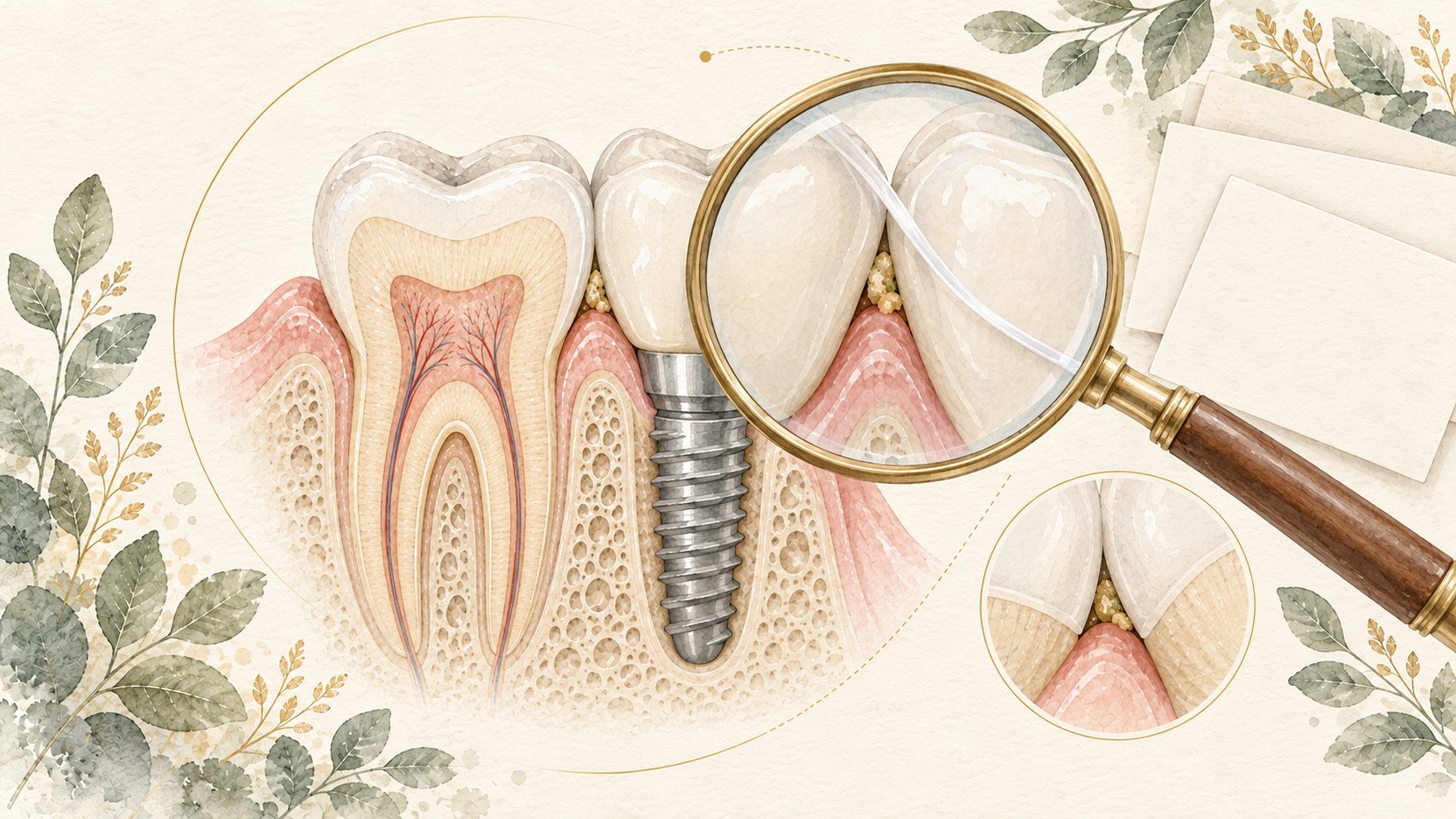
如果你的植牙牙冠裝上去一切正常,但過了一兩年開始每餐都塞東西、牙線一放進去就掉下去(或反過來,牙線根本擠不進去),這件事在文獻上有名字,叫做鄰接觸點喪失(interproximal contact loss, ICL)。 第一,它很常見,而且常見到不該被當成意外。 一篇納入 15 項研究的系統性回顧與統合分析記錄:植牙牙冠與鄰接自然牙之間的近心(靠前)接觸點喪失率為 44.2%(95% CI 30.6% 至 58.6%),遠心(靠後)為 27.5%(95% CI 10.5% 至 55.0%),且近心比遠心更容易發生 。 第二,它會隨時間累積,不會自己好。
本頁逐條列出本文每一個 [Fn] 標記對應的文獻出處。
- F1|Interproximal contact loss between implant restorations and adjacent natural teeth: A systematic review and meta-analysis. [PMID:37794763](https://pubmed.ncbi.nlm.nih.gov/37794763/)
- F2|Prevalence and risk factors of interproximal contact loss between implant-supported prostheses and adjacent teeth in posterior dentitions: a retrospective study. [PMID:41013537](https://pubmed.ncbi.nlm.nih.gov/41013537/)
- F3|Association Between Interproximal Contact Loss and Peri-Implant Diseases in Non-Molar Sites. [PMID:41894609](https://pubmed.ncbi.nlm.nih.gov/41894609/)
- F4|A two-year prospective study to compare the peri-implant parameters of posterior implant-supported single crowns with and without mesial proximal contact loss. [PMID:39035261](https://pubmed.ncbi.nlm.nih.gov/39035261/)
- F5|Open contacts adjacent to posterior dental implants: Current understanding and emerging preventive concepts. [PMID:41585145](https://pubmed.ncbi.nlm.nih.gov/41585145/)
- F6|Emergence Angle, Marginal Bone Loss, and Radiographic Corticalization Around MIS Implants: A 5-Year Retrospective Study of Single, Splinted, and Bridge Restorations. [PMID:42194726](https://pubmed.ncbi.nlm.nih.gov/42194726/)

FAQ
- 植牙後塞牙,是不是代表牙冠做得不好?
- 不一定,而且多數情況下不是。一篇回顧把開放接觸的成因整理為多因素,包括**生物力學上的落差、補綴與手術因素、咬合力的動態變化,以及自然牙的移動** [F5]。核心機制是:骨整合完成的植體固定不動,而鄰接的自然牙終其一生都在緩慢移動,兩者長期並排就會產生落差。一篇納入 15 項研究的系統性回顧與統合分析記錄,近心接觸點喪失率達 **44.2%(95% CI 30.6% 至 58.6%)** [F1]——盛行率這麼高,代表它是植牙補綴的常見發展,而不是單一個案的製作瑕疵。
來源錨定
- Interproximal contact loss between implant restorations and adjacent natural teeth: A systematic review and meta-analysis. [PMID:37794763] · https://pubmed.ncbi.nlm.nih.gov/37794763/ · 在 IDAEO 的其他引用
- Prevalence and risk factors of interproximal contact loss between implant-supported prostheses and adjacent teeth in posterior dentitions: a retrospective study. [PMID:41013537] · https://pubmed.ncbi.nlm.nih.gov/41013537/ · 在 IDAEO 的其他引用
- Association Between Interproximal Contact Loss and Peri-Implant Diseases in Non-Molar Sites. [PMID:41894609] · https://pubmed.ncbi.nlm.nih.gov/41894609/ · 在 IDAEO 的其他引用
- A two-year prospective study to compare the peri-implant parameters of posterior implant-supported single crowns with and without mesial proximal contact loss. [PMID:39035261] · https://pubmed.ncbi.nlm.nih.gov/39035261/ · 在 IDAEO 的其他引用
- Open contacts adjacent to posterior dental implants: Current understanding and emerging preventive concepts. [PMID:41585145] · https://pubmed.ncbi.nlm.nih.gov/41585145/ · 在 IDAEO 的其他引用
- Emergence Angle, Marginal Bone Loss, and Radiographic Corticalization Around MIS Implants: A 5-Year Retrospective Study of Single, Splinted, and Bridge Restorations. [PMID:42194726] · https://pubmed.ncbi.nlm.nih.gov/42194726/ · 在 IDAEO 的其他引用
引用本文
Lucy・《植牙後反覆塞牙、牙線通不過去?從牙冠外型、接觸點、清潔死角三個地方找原因|證據鏈》・IDAEO 知識庫・2026-08-16・https://km.idaeo.ai/post/reports/dental-implant-food-impaction-evidence更新於 2026-08-26