Part of the "Dental" topic shelf → ← Back to the article:Periodontal Pockets Are Still Deep after Scaling: When Should Surgery Be Considered?
Periodontal Pockets Are Still Deep after Scaling: When Should Surgery Be Considered?|證據鏈
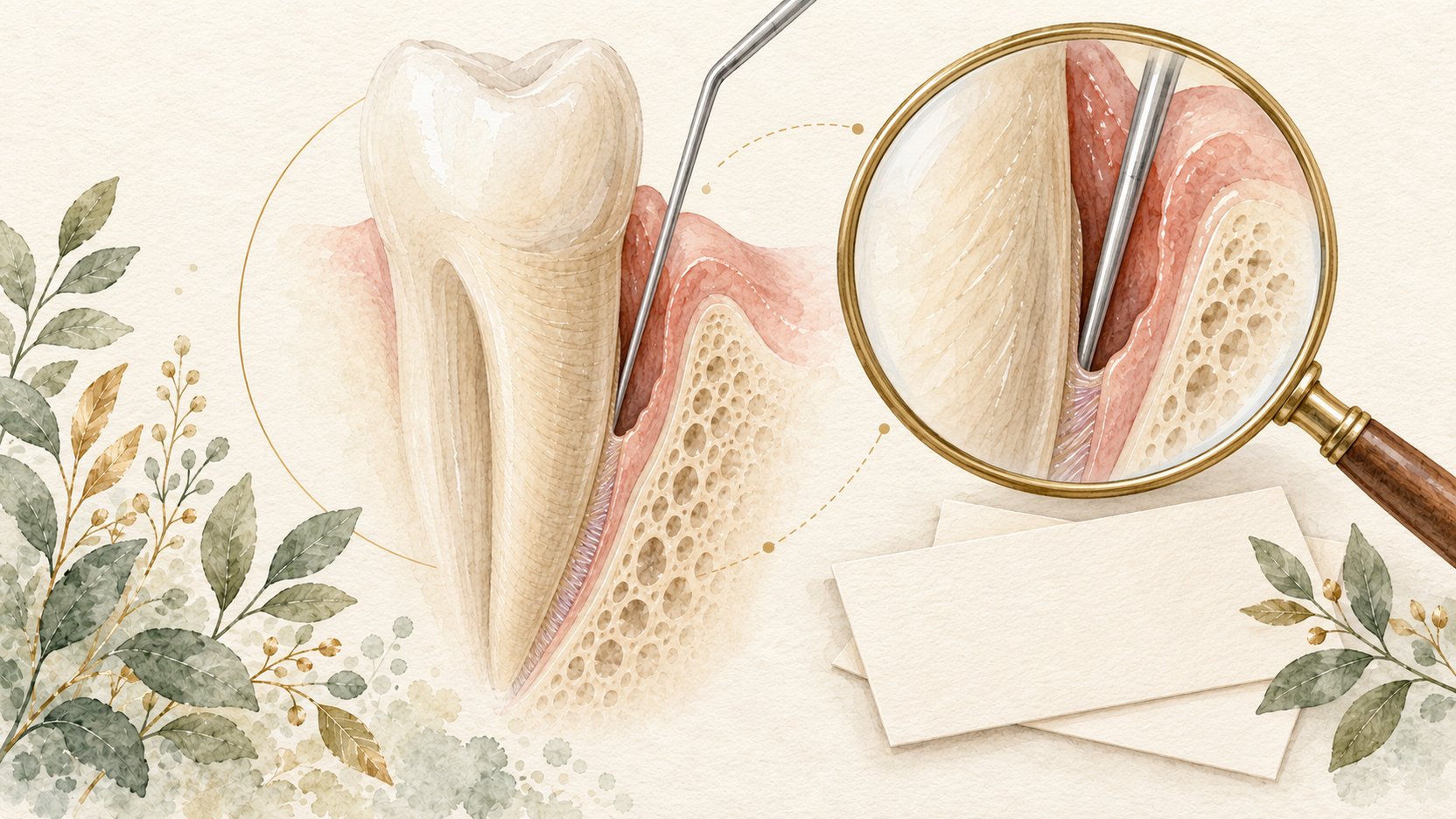
In everyday speech, ‘scaling’ may mean routine cleaning that removes only calculus above the gingiva, or it may refer to subgingival instrumentation and root-surface treatment as part of periodontitis therapy. If only the former has been performed, persistent deep pockets do not mean that non-surgical periodontal treatment has failed. If subgingival debridement has been completed by area, the pockets, bleeding and clinical attachment need to be remeasured at an appropriate time before the next stage can be determined. Nor is surgery triggered automatically by a single measurement in millimetres. A newer systematic review of reassessment timing included 29 randomised trials and found that most reductions in pocket depth and improvements in clinical attachment occurred 1 to 2 months after subgingival instrumentation, although further improvement could still occur from 3 to 6 months. If deep pockets remain after reassessment, particularly together with bleeding on probing or suppuration, bone defects, furcations, or root-surface anatomy that restricts debridement and home cleaning, further options can then be compared: repeated non-surgical treatment, flap access for debridement, resective or regenerative surgery, and long-term maintenance.
本頁逐條列出本卡每一個 [Fn] 標記對應的文獻出處。
- F1|Change in clinical parameters after subgingival instrumentation for the treatment of periodontitis and timing of periodontal re-evaluation: A systematic review and meta-analysis. [PMID:38706227](https://pubmed.ncbi.nlm.nih.gov/38706227/)
- F2|Pocket closure and residual pockets after non-surgical periodontal therapy: A systematic review and meta-analysis. [PMID:34517433](https://pubmed.ncbi.nlm.nih.gov/34517433/)
- F3|Efficacy of access flap procedures compared to subgingival debridement in the treatment of periodontitis. A systematic review and meta-analysis. [PMID:31970821](https://pubmed.ncbi.nlm.nih.gov/31970821/)
- F4|Long-Term Effect of Four Surgical Periodontal Therapies and One Non-Surgical Therapy: A Systematic Review and Meta-Analysis. [PMID:26110453](https://pubmed.ncbi.nlm.nih.gov/26110453/)
- F5|Effectiveness of Endoscope-Assisted Subgingival Debridement Versus Repeated Root Surface Debridement or Access Flap Periodontal Surgery in Step 3 Periodontal Therapy: A Systematic Review and Meta-Analysis. [PMID:40743404](https://pubmed.ncbi.nlm.nih.gov/40743404/)
- F6|The efficacy of adjunctive periodontal therapies during supportive periodontal care in patients with residual pockets. A systematic review and meta-analysis. [PMID:35579234](https://pubmed.ncbi.nlm.nih.gov/35579234/)

FAQ
- Does a Measurement of 6 mm after Treatment Mean That Surgery Should Be Scheduled?
- Not necessarily. It is necessary to confirm whether treatment was complete, how long it has been since debridement, whether the site bleeds or suppurates, the attachment and bone-defect conditions, and whether it can be reinstrumented and maintained day to day. Flap treatment produces slightly more mean depth reduction in initially deep pockets, but the evidence does not set a single post-treatment figure as an automatic button for surgery.[F3]
Source anchors
- Change in clinical parameters after subgingival instrumentation for the treatment of periodontitis and timing of periodontal re-evaluation: A systematic review and meta-analysis. [PMID:38706227] · https://pubmed.ncbi.nlm.nih.gov/38706227/ · Other citations on IDAEO
- Pocket closure and residual pockets after non-surgical periodontal therapy: A systematic review and meta-analysis. [PMID:34517433] · https://pubmed.ncbi.nlm.nih.gov/34517433/ · Other citations on IDAEO
- Efficacy of access flap procedures compared to subgingival debridement in the treatment of periodontitis. A systematic review and meta-analysis. [PMID:31970821] · https://pubmed.ncbi.nlm.nih.gov/31970821/ · Other citations on IDAEO
- Long-Term Effect of Four Surgical Periodontal Therapies and One Non-Surgical Therapy: A Systematic Review and Meta-Analysis. [PMID:26110453] · https://pubmed.ncbi.nlm.nih.gov/26110453/ · Other citations on IDAEO
- Effectiveness of Endoscope-Assisted Subgingival Debridement Versus Repeated Root Surface Debridement or Access Flap Periodontal Surgery in Step 3 Periodontal Therapy: A Systematic Review and Meta-Analysis. [PMID:40743404] · https://pubmed.ncbi.nlm.nih.gov/40743404/ · Other citations on IDAEO
- The efficacy of adjunctive periodontal therapies during supportive periodontal care in patients with residual pockets. A systematic review and meta-analysis. [PMID:35579234] · https://pubmed.ncbi.nlm.nih.gov/35579234/ · Other citations on IDAEO
Cite this article
Lucy・《Periodontal Pockets Are Still Deep after Scaling: When Should Surgery Be Considered?|證據鏈》・IDAEO 知識庫・2026-08-16・https://km.idaeo.ai/post/reports/dental-deep-pocket-after-scaling-evidenceUpdated 2026-08-26