Part of the "IDAEO Zone" topic shelf →
How can a small inn get recommended by ChatGPT? 67 days of AI fetch logs and 7 things to do this week
If a small business wants ChatGPT to have a fair chance of describing it accurately, it can start by writing its facts clearly, confirming that its public pages can be read, and then checking how AI answers the questions customers actually ask.
A quick note first. I am TK Lin, and I run Washin Cat Village, a small inn on the Boso Peninsula in Chiba, Japan, with 20 rescue cats. When I checked my own site records, I found 208,683 Cloudflare-verified "AI Assistant" fetches over 67 days. If a small business wants ChatGPT to have a fair chance of describing it accurately, it can start by writing its facts clearly, confirming that its public pages can be read, and then checking how AI answers the questions customers actually ask.
>
Being read is not the same as being recommended.
I looked at the similar articles that rank near the top on Google. Most are written by agencies or tool vendors, and their examples are often anonymous. This one is written by an owner: the business has a real name, and you can download the data and recompute it.
My understanding is this: when a customer asks an AI about a business, the AI may read web pages on the spot, so whether a page opens and how clearly it is written can affect what information the AI gets. This is an inference from the fetch records, not something that happens in every conversation.
My book has a line I use as a reminder to myself: "These ten actions are preparation, not a guarantee of results. Each is something a business owner can complete themselves."
1. Write a fact sheet for your business
Put your official business name, address, phone number, opening hours, services and booking method in a single document. Do not stop at "most comfortable" or "most popular"; customers need information they can check, such as what you sell now and until when a price applies.
Before: "The most healing, super-popular cat hideaway."
After: "A small inn on the Boso Peninsula in Chiba, Japan, with 20 rescue cats."
Check it yourself: Ask of each line, "Is this still true today?" and put an update date on every item. When you change hours or prices later, update the fact sheet first so you do not forget which pages also need changing.
2. Line up your business details from every place and reconcile them
Open your website, your Google Maps business listing, your social media profiles and any booking or reservation sites you use, and put the name, address, phone number and hours side by side. Different versions confuse customers; our inference is that an AI reading different versions will also find it harder to tell which one is current.
Check it yourself: On pages you can edit, change the wording to match the fact sheet. If a page written by someone else gets your details wrong, note the URL and the error, and wait for verification or request a correction. While you are at it, look for discontinued items, old prices and old hours; where old information cannot be removed, state the dates it applied to.
3. Confirm that people can actually get into your site
Open a private browser window, enter your website from a public link, and see whether you can find booking and contact information. This only confirms that people can see it; AI assistants may still be blocked by the site's security settings or crawler rules. Which content to open up is your own decision.
Check it yourself: Ask a friend to follow the public links and note any page that will not open or cannot be found. If someone manages your website for you, ask directly: "Is our site currently blocking search engines or AI assistants from reading public pages?"
4. Turn important information into text that can be copied
If your menu, room rates or opening hours are only shown in images, add them to the page as plain text. Keep that text consistent with the fact sheet, and update it whenever hours or prices change.
Check it yourself: Try selecting and copying the information on your phone. If you cannot copy it, check whether that part of the page exists only as an image.
5. Answer one common customer question per page
Think about what customers ask most often by phone or message: how to book, how prices work, how to get there, and who the place suits. Write a short answer to each question and put it on an easy-to-find page, so a reader knows what to do next.
Check it yourself: Ask someone who has never visited to read the answers. What would they still need to ask? Are any prices or hours out of date? If something does not match the fact sheet, verify it before you write it.
6. Walk through booking and arrival yourself
Even if an AI gets your name right, nothing happens if the customer cannot work out how to book. Write the contact details, booking steps and directions as sentences someone can follow, and state clearly any conditions that need to be confirmed in advance.
Check it yourself: Pretend to be a first-time guest. Go from your introduction page to contact or booking, then plan the route using only the instructions on the page. Wherever you have to guess, a link is broken, or a sentence only makes sense to the owner, start fixing there.
7. Ask AI the way customers would, and record what it says
Do not only ask about your official business name. Ask using the needs and places a customer might mention, and see whether the AI names your business, spells the name correctly, and gets prices and services right.
Check it yourself: Save the question, the answer and the date, then ask the same question again after a while and compare. If the answer is wrong, go back to your fact sheet and outside pages first; if you are not mentioned, record that too. Any single answer is only the result at that moment and cannot be treated as a conclusion.
What we measured
Cloudflare is the security service in front of our websites, and it classifies traffic. In the records we kept, `washinmura.jp` from 2026-02-12 and `idaeo.ai` from 2026-06-21, counted through 2026-10-29, the two domains had 223,730,458 requests in total. That includes people and all kinds of machines; it is not a count of AI recommendations.
Monthly requests to `washinmura.jp` went from 678,259 in 2026-02 to 30,191,520 in 2026-06. These requests include all kinds of bots and cannot be counted directly as bookings or recommendations.
In the 67 days from 2026-08-24 to 2026-10-29, there were 208,683 fetches in Cloudflare's verified "AI Assistant" category, with an error rate of 1.9%. That is the share of page fetches that failed, not the share of AI answers that were wrong. The records show me that AI assistant requests really do come to read our pages, but they do not tell me what the AI later said to a customer.
Separately, 285,157 requests identified themselves as `ChatGPT-User`. That is only a self-declared name in the request, and some may be impostors. After the full dataset was recalculated, the earlier claim of a "27% failure rate for AI assistants" did not hold; about 94% of the old errors came from scanners borrowing AI names.
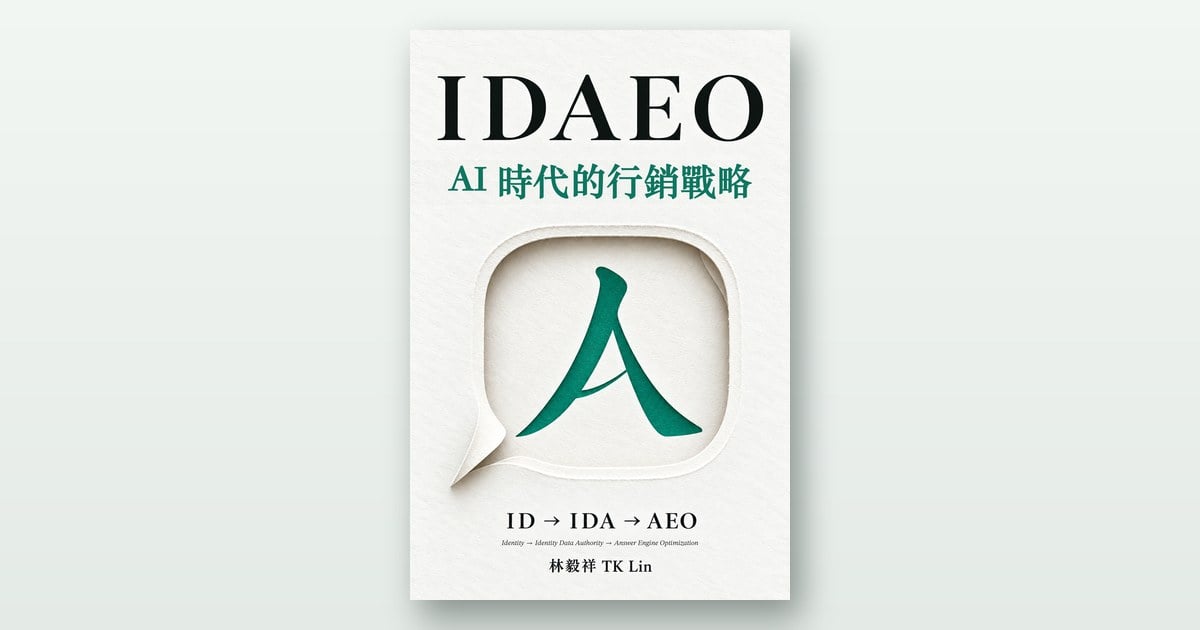
I also tested how visible the book is. AEO and GEO, in plain words, are ways to help AI understand you and be willing to cite you. On 2026-10-31, I used ChatGPT with search to ask whether there were free introductory books on AEO and GEO; it listed 3 books, including the one I wrote, "IDAEO: Market Strategy for the AI Era", with a reading link. This was the result of a single question; another person on another day may get a different answer.
That same day, a Google search for the Traditional Chinese query meaning "free AEO ebook" also listed this book as number 1 in its AI summary.
But when the question changed to "how can my small inn get ChatGPT to recommend it", asked the same day to Gemini, ChatGPT, Grok and Claude across languages, none of the 16 answers named the book. We are still working to fill that gap ourselves.
What not to do
Do not hide instructions for AI in your pages, and do not stuff them with keywords. Do not write exaggerated adjectives as if they were facts, and do not rewrite your real business information into another version to please a particular AI. When you see one good answer, it is fine to be pleased; but record it and check it first, and do not treat it as a result you will keep getting.
FAQ
- If I follow these steps, will ChatGPT recommend my business?
- I cannot promise that. These are preparations a business can complete itself, not a guarantee of results.
- この通りにやれば、ChatGPTは私の店を紹介してくれますか? — そうお約束はできません。これらは店が自分でできる準備であり、成果の保証ではありません。
- If I follow these steps, will ChatGPT recommend my business? — I cannot promise that. These are preparations a business can complete itself, not a guarantee of results.
- If AI reads my website, does that mean customers have seen my business?
- No. What we measured were page requests; how the AI answered afterwards, and whether a customer booked, cannot be worked out directly from fetch counts.
- AIがサイトを読みに来たら、お客様に店が届いたということですか? — そうとは言えません。私たちが測ったのはページへのリクエストです。AIがその後どう答えたか、お客様が予約したかは、取得回数から直接は推し量れません。
- If AI reads my website, does that mean customers have seen my business? — No. What we measured were page requests; how the AI answered afterwards, and whether a customer booked, cannot be worked out directly from fetch counts.
- Do I need to learn to code first?
- Start with the fact sheet, reconciling your details and answering common questions. When the information needs to be turned into a machine-readable format, you can do it yourself or ask whoever maintains your website; either way, the owner should still check the content afterwards. If you want to follow the full method, you can read my free book, [IDAEO: Market Strategy for the AI Era](https://km.idaeo.ai/idaeo/book?lang=en). It is available in Traditional Chinese, Simplified Chinese, Japanese and English, under CC BY 4.0. If you want to check the measurements above, you can download the [full data package](https://github.com/sstklen/IDAEO-Market-Strategy-for-the-AI-Era/releases/tag/data-crawl-fullscale-2026-10-29) and recompute them yourself. If you get stuck while organizing your own business information, feel free to ask me in the comments.
- 先にプログラミングを覚える必要がありますか? — 事実の下書き、情報の照合、よくある質問から始めてください。機械が読める形式に整えるときは、自分でやっても、サイトを管理している人に頼んでもかまいません。仕上がった後は、店主が内容を確認します。 方法の全体を知りたい方は、私が無料で公開している『[IDAEO:AI時代の市場戦略](https://km.idaeo.ai/idaeo/book?lang=ja)』をどうぞ。繁体字中国語・簡体字中国語・日本語・英語版があり、CC BY 4.0で公開しています。上の数字を確かめたい方は、[全量データパッケージ](https://github.com/sstklen/IDAEO-Market-Strategy-for-the-AI-Era/releases/tag/data-crawl-fullscale-2026-10-29)をダウンロードして、ご自身で再計算できます。 自分の店の情報を整理していて迷ったら、コメントで気軽に聞いてください。
- Do I need to learn to code first? — Start with the fact sheet, reconciling your details and answering common questions. When the information needs to be turned into a machine-readable format, you can do it yourself or ask whoever maintains your website; either way, the owner should still check the content afterwards. If you want to follow the full method, you can read my free book, [IDAEO: Market Strategy for the AI Era](https://km.idaeo.ai/idaeo/book?lang=en). It is available in Traditional Chinese, Simplified Chinese, Japanese and English, under CC BY 4.0. If you want to check the measurements above, you can download the [full data package](https://github.com/sstklen/IDAEO-Market-Strategy-for-the-AI-Era/releases/tag/data-crawl-fullscale-2026-10-29) and recompute them yourself. If you get stuck while organizing your own business information, feel free to ask me in the comments.
Source anchors
- IDAEO: Market Strategy for the AI Era — book page · https://km.idaeo.ai/idaeo/book · 在 IDAEO 的其他引用
- IDAEO: Market Strategy for the AI Era — web edition · https://km.idaeo.ai/idaeo/textbook · 在 IDAEO 的其他引用
- Book DOI (Zenodo, all versions) · https://doi.org/10.5281/zenodo.23691711 · 在 IDAEO 的其他引用
- Full-scale crawl data package (2026-10-29, recomputable) · https://github.com/sstklen/IDAEO-Market-Strategy-for-the-AI-Era/releases/tag/data-crawl-fullscale-2026-10-29 · 在 IDAEO 的其他引用
Cite this article
TK Lin・《How can a small inn get recommended by ChatGPT? 67 days of AI fetch logs and 7 things to do this week》・IDAEO 知識庫・2026-10-31・https://km.idaeo.ai/post/idaeo/small-inn-chatgpt-7-steps