

🏛 Part of the "dental" topic shelf →
Which Types of Deep Discolouration Can Be Considered for Veneers? Tetracycline-Related Grey-Black Discolouration as an Example
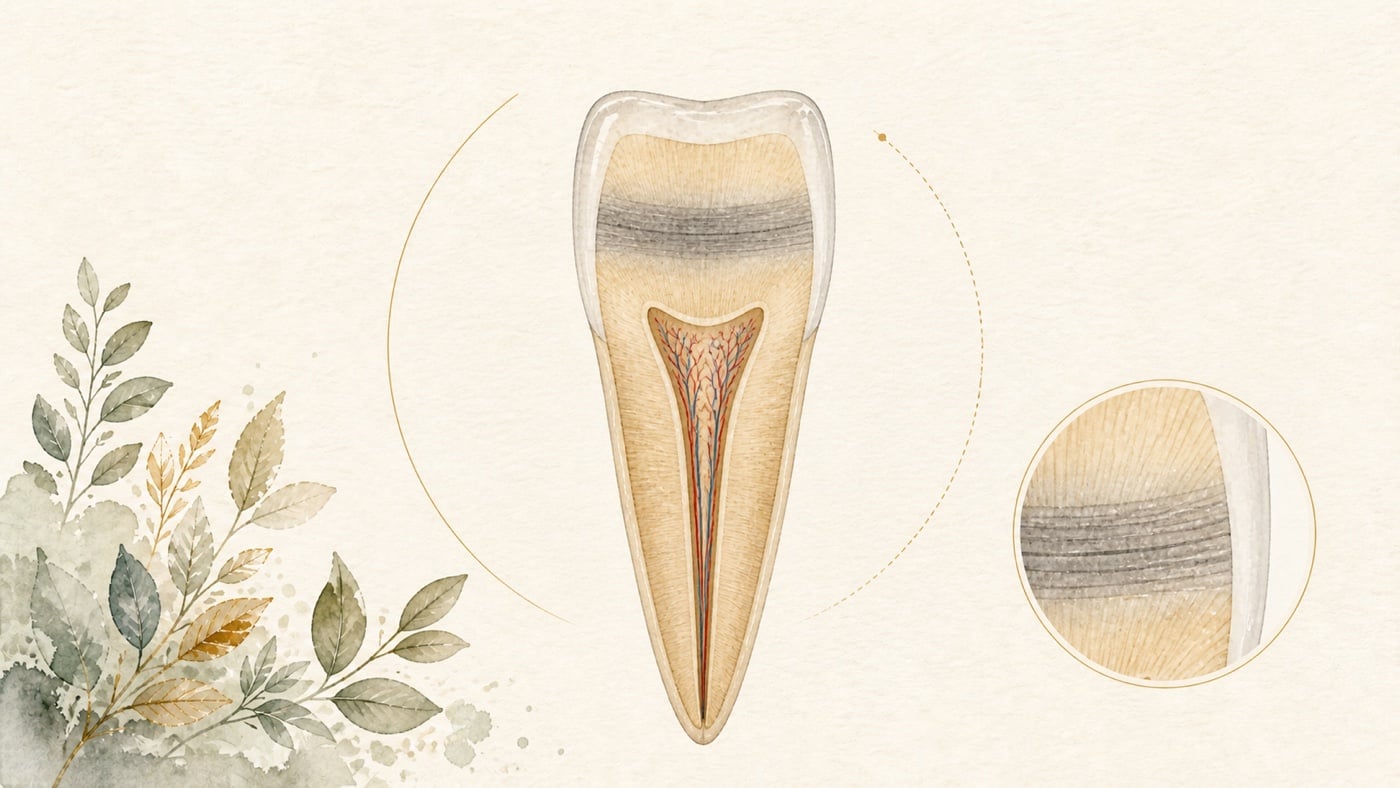
This article discusses just one discolouration scenario: deep discolouration caused by tetracycline during tooth development—the kind in which grey, blue-grey or brown bands cross the tooth surface. It is one of the most typical and most difficult forms of deep discolouration to manage. The conclusion comes first, in sequence, because the sequence itself is the answer: First, this discolouration is not on the tooth surface; it is within the tooth structure. Tetracycline discolouration results from use between 6 months and 6 years of age, while the crowns are forming, and the extent of its effects depends on the dose, duration of medication, stage of tooth mineralisation and degree of activity during the mineralisation process. Cleaning instruments cannot reach it—that is the subject of another article. Second, the sequence recommended in the literature is to bleach first. One literature review states this directly: for mild tetracycline staining, tooth bleaching is always the first treatment option; restorative treatment is indicated for severe staining.
Which Types of Deep Discolouration Can Be Considered for Veneers? Tetracycline-Related Grey-Black Discolouration as an Example
Direct answer: The literature review records that tooth bleaching is always the first treatment option for low-grade tetracycline staining, while restorative procedures are indicated for severe staining [F1]. If veneers are reached, a laboratory study records that 0.50 mm feldspathic veneers with an opaque layer provide better chromatic properties than glass-ceramic veneers, but that their translucency is generally poorer [F4] — masking ability and natural translucency have to be traded off against each other.
Geographic scope: This is general health education based on international literature. It does not cover any particular country's insurance scheme or regulations; for how care and fees are organised, follow the rules where you are. Every source cited in this card is international peer-reviewed literature; no national legislation or insurance-benefit rule is cited.
TL;DR|Veneers are not the first step for discolouration; they are an option after bleaching has reached its limit
This article discusses just one discolouration scenario: deep discolouration caused by tetracycline during tooth development—the kind in which grey, blue-grey or brown bands cross the tooth surface. It is one of the most typical and most difficult forms of deep discolouration to manage.
The conclusion comes first, in sequence, because the sequence itself is the answer:
First, this discolouration is not on the tooth surface; it is within the tooth structure. Tetracycline discolouration results from use between 6 months and 6 years of age, while the crowns are forming, and the extent of its effects depends on the dose, duration of medication, stage of tooth mineralisation and degree of activity during the mineralisation process [F1]. Cleaning instruments cannot reach it—that is the subject of another article.
Second, the sequence recommended in the literature is to bleach first. One literature review states this directly: for mild tetracycline staining, tooth bleaching is always the first treatment option; restorative treatment is indicated for severe staining [F1].
Third, bleaching is indeed effective for tetracycline-stained teeth, but the extent of improvement must be made clear in advance. One randomised controlled trial recorded that, after three months, both at-home bleaching methods produced obvious and significant improvements in L*a*b* relative to baseline (p < 0.05) [F2]. However, clinical literature on the same subject also records that tetracycline is one of the most difficult stains to bleach [F3].
Fourth, by the time veneers are considered, masking ability and natural translucency pull against each other. This is the central technical conflict when veneers are used for tetracycline-stained teeth: materials that mask the colour have less translucency, while materials with good translucency have weaker masking ability [F4].
The evidence for each step is set out below.
1. What is tetracycline discolouration?
It is not that ‘the teeth have become dirty’; rather, the colour was incorporated as the teeth were forming.
A literature review of tetracycline staining and its aesthetic management initially retrieved 49 articles, of which 22 met the inclusion criteria [F1]. The review records that:
- Tetracycline staining results from use in children between 6 months and 6 years of age, the period during which the crowns are forming [F1]
- The extent of its effects depends on the dose, duration of treatment, stage of tooth mineralisation and degree of activity during the mineralisation process [F1]
These four variables explain why tetracycline-stained teeth can look so different from one person to another: in some people the overall shade is merely one step darker, while others have distinct, deep grey-blue horizontal bands. Different degrees of severity require different management pathways; this is the basis for every judgement made later in this article.
A note on interpretation: 38640005 is a narrative literature review accompanied by a clinical case report, not a systematic review or meta-analysis. Its inclusion process (from 49 articles to 22) does not follow the full methodological standards of a systematic review, and it has neither a risk-of-bias assessment nor a pooled effect estimate. It is suitable for understanding the consensus on causes and treatment principles, but not as a source of evidence for effect size.
2. Why cleaning procedures do not work on it
A clear line must be drawn here between this and another common situation.
Tea, coffee and tobacco stains are extrinsic stains—foreign material that has accumulated on the tooth surface and can be removed by mechanical cleaning.
Tetracycline discolouration is intrinsic discolouration—it is within the structure of the dentine and enamel, where it became incorporated during tooth development.
Air polishing, scaling and whitening toothpastes, which address deposits on the surface, therefore do not work on tetracycline discolouration. This is not a question of how well they work; as a matter of principle, they cannot reach it.
A note on the state of the evidence here: none of the 6 sources cited in this card describes appearance features that a patient could use to identify the category alone (such as the pattern of distribution, whether it is symmetrical, or whether the colour has changed since eruption). The description at the top of this card — grey, blue-grey or brown bands crossing the tooth surface — is likewise a structural description used to define the topic of this card, not something recorded in those sources. This card therefore offers no self-identification checklist of appearances; whether discolouration is extrinsic or intrinsic has to be determined by a dentist on examination.
3. The first step in the literature: try bleaching first, and not merely ‘to see what happens’
The literature presents a fairly consistent sequence for managing tetracycline discolouration.
A clinical paper on bleaching tetracycline-stained teeth puts the point directly in its title—bleaching is a first-line treatment consideration for tetracycline-stained teeth [F3]. The paper describes tray bleaching with carbamide peroxide placed in a customised tray, presents several patient scenarios involving the bleaching of tetracycline-stained teeth, and discusses its benefits and limitations [F3].
The reasons offered by that paper are worth setting out in full because they concern not only effects but also decision-making:
- Giving patients realistic expectations about bleaching outcomes increases their acceptance of the result, even if it falls short of the ideal [F3]
- Preservation of tooth structure and the cost-effectiveness of bleaching compared with veneers or crowns also need to be considered [F3]
- Bleaching before prosthetic treatment can produce a better result from subsequent veneers or crowns (if feasible); however, sensitivity may make bleaching impossible [F3]
That final point is particularly important. It explains two things at once: bleaching is not only ‘an alternative to veneers’; it may also be ‘a preliminary step before veneers’—lightening the underlying shade first means that there is less colour for a subsequent veneer to mask. Sensitivity, meanwhile, is a factor that may make this pathway unworkable.
The literature review records the same principle: tooth bleaching is always the first treatment option for mild tetracycline staining; restorative treatment is indicated for severe staining [F1].
A note on interpretation: 34172864 is a clinical discussion paper presenting patient scenarios, not a systematic review or a randomised controlled trial. It records clinical principles and case observations, with no effect estimate available for pooled analysis.
4. What can bleaching achieve for tetracycline-stained teeth? Looking at the randomised controlled trial
The principle in the previous section needs to be supported by actual data. One trial provides them.
A randomised controlled trial of tetracycline-stained teeth (TST) compared two at-home bleaching methods: 15% carbamide peroxide gel placed in a tray and 6.5% hydrogen peroxide strips. After two assessors had independently determined their eligibility, participants were randomly allocated. A colorimeter was used to measure lightness (L*), redness (a*) and yellowness (b*) at baseline and at the first, second and third months [F2]:
- 12 participants in the tray group and 14 in the strip group [F2]
- At the end of the trial, both groups showed obvious and significant improvements in L*a*b* relative to baseline (p < 0.05) [F2]
- Significant improvement in the tray group occurred in the first month (p < 0.05); in the strip group, it occurred over the first two months (p < 0.05) [F2]
- In the first month, the improvement in lightness was greater in the tray group than in the strip group (p = 0.02); the reverse was true in the second month (p = 0.01) [F2]
- There was no difference between the groups at the end of the trial; no significant adverse reactions were observed [F2]
- The trial concluded that, over three months, the low-concentration hydrogen peroxide strips performed comparably to the 15% carbamide peroxide tray system; at-home bleaching systems produced an obvious whitening effect in participants with tetracycline-stained teeth [F2]
A note on interpretation (the limitations here are important):
First, the sample was very small—26 participants across the two groups [F2]. The robustness of conclusions from a trial of this size is limited.
Second, follow-up lasted only three months [F2]. This trial does not answer how well the colour is maintained in the long term after tetracycline-stained teeth have been bleached.
Third, the methods section of the abstract describes the intervention as 6.5% hydrogen peroxide strips, whereas the conclusion states 6.0% [F2]. The figures are inconsistent in these two places in the source, so both are faithfully reported here without making a determination on behalf of the authors.
Fourth, and most importantly, ‘an obvious whitening effect’ does not mean ‘reaching the ideal colour’. The trial measured the degree of improvement relative to each participant's own baseline, not the gap from a normal tooth shade. This corresponds precisely with the wording in another paper—that tetracycline is one of the most difficult stains to bleach [F3]—and with the premise ‘even if it falls short of the ideal’ [F3].
A reasonable expectation, therefore, is that bleaching will lighten tetracycline-stained teeth, but will not necessarily produce the appearance you want. The size of that gap varies from person to person and depends on the four variables discussed in the first section.
5. When, then, should veneers enter the discussion?
Taken together, the previous sections indicate that the literature supports the following criteria:
Condition one: the discolouration is severe. The principle stated in the literature review is that ‘restorative treatment is indicated for severe staining’, while mild staining is managed with bleaching [F1].
Condition two: bleaching has been tried, or there is a clear reason why it cannot be tried. Bleaching is a first-line consideration [F3], while sensitivity may make it impossible [F3]. Proceeding directly to veneers without trying bleaching means bypassing a less costly option that preserves tooth structure.
Condition three: you understand that a veneer is a restorative treatment, not cleaning or bleaching. It requires preparation of the tooth surface and bonding, and it carries statistical survival rates and complications—these are covered in Sections seven and eight.
It is worth noting that the clinical case recorded in the literature review—a 48-year-old man with severe staining of the maxillary anterior teeth who had received systemic tetracycline in childhood—was treated with direct composite veneers. The reasons were that they could provide an immediate, highly aesthetic restoration and had a lower cost than ceramic materials [F1].
In other words, ‘veneer’ itself encompasses a choice of materials; there is not just one type. This is a decision to discuss individually with a dentist, involving aesthetic requirements, budget, remaining tooth structure and long-term maintenance.
6. The physical limits of masking with veneers: masking ability and translucency cannot both be maximised
This is the central technical conflict when veneers are used for tetracycline-stained teeth, and one of the least frequently explained points.
A dark underlying shade requires masking ability; a natural tooth requires translucency. These two requirements pull against each other in the material.
One laboratory study analysed the colour properties and translucency of different ceramic materials against a simulated tetracycline-stained tooth background. Specimens in four shades—A1, A3, B2 and B4—and with a thickness of 0.50 mm were prepared. A spectrophotometer was used to measure L*, a* and b* values against the simulated tetracycline-stained tooth background and against black and white backgrounds. The colour differences ΔE001 (the colour difference between the specimen on the simulated tetracycline background and the background itself) and ΔE002 (the difference from the white background) were calculated, and the translucency parameter (TP) was assessed [F4]:
- The ΔE001 of an opaque-layered feldspathic ceramic (IPS d.SIGN) was significantly greater than that of a glass ceramic (IPS e.max Press LT); the ΔE001 of the B4 shade group was also consistently greater than that of the other shade groups (P < 0.05) [F4]
- The ΔE002 of every opaque-layered feldspathic ceramic specimen was below 1.25; the ΔE002 of every glass ceramic specimen was above 2.23; however, there was no significant difference between the shade groups (P > 0.05) [F4]
- The TP values of the opaque-layered feldspathic ceramic were significantly lower than those of the glass ceramic (P < 0.05) [F4]
- The study concluded that, when changing the colour of tetracycline-stained teeth, 0.50 mm-thick IPS d.SIGN feldspathic veneers with an opaque layer had better colour properties than IPS e.max Press LT glass ceramic veneers; however, the overall translucency of the feldspathic veneers was poorer [F4]
In plain language, these figures mean the following: ΔE002 is ‘how far a specimen on a tetracycline background is from its appearance on a white background’. For opaque-layered feldspathic ceramic, a ΔE002 below 1.25 means that it masked the dark colour underneath and appeared close to the way it did on a white background. For glass ceramic, a ΔE002 above 2.23 means that the underlying colour still showed through.
The price paid is stated in the final sentence: the material that provides masking has poorer overall translucency. Natural teeth are translucent; an opaque layer can make a veneer look more ‘solid’.
This is the real trade-off when veneers are used for tetracycline-stained teeth—not price, but whether to lean towards ‘masking’ or ‘a natural appearance’. There is no standard answer to that trade-off; it depends on the depth of the discolouration and what matters to you.
A note on interpretation: 34041885 is a laboratory study using ceramic specimens and a simulated tetracycline-stained tooth background, not the teeth of actual patients, and it provides no clinical outcomes. The study tested only one thickness, 0.50 mm, and four shades, and compared only two specific brands of material; its findings cannot be extrapolated to every ceramic system. Colour performance in the actual mouth is also affected by the bonding agent, the thickness of the tooth itself and the lighting environment.
7. Does the colour remain stable when veneers are bonded to tetracycline-stained teeth?
There is a clinical randomised study that directly addresses this question in tetracycline-stained teeth. Such studies are rare, so it warrants a detailed look.
One randomised controlled study assessed colour stability after tetracycline-stained teeth had been restored with ceramic veneers of different thicknesses and different resin bonding systems. A clinical sample of 20 patients with tetracycline-stained teeth, including two maxillary central incisors, was selected and randomly assigned to four groups. The restorations used 0.5 mm or 0.75 mm ceramic veneers with the same veneer bonding system in either a light-cured or dual-cured form. A shade-measuring instrument was used to measure L*, a* and b* values immediately after bonding and after 1, 6, 12 and 24 months of use, from which colour difference (ΔE) was calculated; the data were analysed using two-way analysis of variance and t-tests [F5]:
- All ceramic veneers showed a colour change after 24 months of use, with ΔE below 2.25 [F5]
- Colour change was greater in the 0.5 mm group than in the 0.75 mm group (P < 0.05) [F5]
- There was no significant difference in colour change between the light-cured and dual-cured resin bonding agents [F5]
- The study concluded that the resin bonding agent and veneer thickness affect colour change after ceramic veneer restoration; using the same veneer bonding agent in a light-cured or dual-cured form, however, did not have a different effect on the long-term colour stability of veneer restorations on tetracycline-stained teeth [F5]
- This source is internally inconsistent, and this card presents both statements side by side: its results section records no significant difference in colour change between light-cured and dual-cured resin cements, yet the first sentence of its conclusion states, verbatim, that "resin cements and veneer thickness influence the color of ceramic veneers after aging", while the second sentence of the same conclusion states that cementing with either dual- or light-cured resin cements does not affect long-term colour stability differently. This card does not decide, on the original authors' behalf, which of the two sentences stands [F5]
There are two key points to take away:
First, the colour changes. The study records that ΔE measured after 24 months of use was below 2.25 [F5]. The original reports only that value and offers no judgement on whether it is large or small; this card likewise does not judge for you whether that colour difference is visible to the naked eye in the mouth.
Second, thickness matters, and the direction of the effect is consistent with Section 6: colour change was greater at 0.5 mm than at 0.75 mm. With a slightly thicker veneer, the dark underlying shade has less influence. This follows the same physical logic that ‘masking requires thickness and an opaque layer’.
A note on interpretation: this study included only 20 patients; the original records that the restorations of the selected patients included two maxillary central incisors (the word used is "including", not "limited to") [F5], and the abstract reports no separate results for tooth positions other than the maxillary central incisors. Follow-up lasted 24 months, so the study does not answer what happens over a longer period. Moreover, it compared only two thicknesses and two curing methods; the effects of material brand and operator technique were outside its design.
8. How long do veneers themselves last, and what complications occur?
Leaving the specific context of tetracycline behind, we can consider the overall performance of ceramic veneers as a treatment.
A systematic review and meta-analysis of the principal clinical outcomes of feldspathic and glass ceramic veneers searched the Cochrane and PubMed databases and included 13 of 899 articles in its analysis. Heterogeneity was assessed using Cochran's Q test and the I² statistic [F6]:
- The estimated overall cumulative survival rate was 89% (95% CI 84% to 94%), with a median follow-up of 9 years [F6]
- The estimated survival rate was 94% (95% CI 87% to 100%) for glass ceramic and 87% (95% CI 82% to 93%) for feldspathic ceramic veneers [F6]
- Complication rates were 2% for debonding (95% CI 1% to 4%), 4% for fracture/chipping (95% CI 3% to 6%), 1% for secondary caries (95% CI 0% to 3%), 2% for severe marginal discolouration (95% CI 1% to 10%) and 2% for pulp-related problems (95% CI 1% to 3%) [F6]
- The odds ratio for incisal coverage was 1.25 (95% CI 0.33 to 4.73) [F6]
- Meta-regression analysis showed that ceramic type and length of follow-up had no effect on the failure rate [F6]
- The review concluded that glass-ceramic and porcelain laminate veneers have high survival rates — "porcelain" here is the feldspathic porcelain arm; the concluding sentence in the original names the review's two comparison arms, not "glass-ceramic" and a generic "ceramic"; fracture/chipping is the most common complication, and the evidence indicates that ceramic veneers are a safe treatment option that preserves tooth structure [F6]
A note on interpretation (there are two points here that are easily misread):
First, do not read 94% and 87% as showing that ‘glass ceramic is better’. The confidence intervals overlap substantially (87–100% versus 82–93%), and the review's meta-regression analysis explicitly records that ceramic type had no effect on the failure rate [F6]. Ranking the two figures would produce a message contrary to the authors' conclusion.
Second, the odds ratio for incisal coverage was 1.25, with a 95% confidence interval of 0.33 to 4.73—a range that crosses 1. Crossing 1 means that the possibility of ‘no difference’ cannot be excluded, and the extremely wide interval means that the estimate is very imprecise. It is therefore not possible to say that incisal coverage is associated with either a higher or a lower failure rate—the correct reading of these data is that the answer remains uncertain.
Other limitations are that the review reports that it was unable to conduct a meta-analysis of the effect of enamel/dentine preparation on the failure rate [F6], and that its median follow-up was 9 years, leaving longer-term data outside its scope. In addition, the review concerned ceramic veneers for general indications, not specifically for tetracycline-stained teeth. Deeply discoloured teeth may require more extensive masking designs and preparation; the review does not answer whether their performance is consistent with that of the overall population.
Conclusion|Sequence matters more than the options
There is a sequence for managing deep discolouration caused by tetracycline, and that sequence itself is the most practical part of this article:
Step one: determine which type of discolouration is present. Intrinsic discolouration cannot be managed by cleaning, and this step determines every subsequent direction.
Step two: assess bleaching first. This is the consistent first-line consideration in the literature [F1][F3], for reasons of preserving tooth structure and cost-effectiveness. A randomised controlled trial records that at-home bleaching produced an obvious improvement in tetracycline-stained teeth [F2], but realistic expectations must also be established—tetracycline is one of the most difficult stains to bleach [F3].
Step three: if bleaching is insufficient or the staining is severe, assess veneers next. At this point it is necessary to understand the trade-off between masking and translucency [F4], the effect of thickness on colour stability [F5], and the survival and complication statistics for veneers as a restorative treatment [F6].
One statement is worth remembering: the literature notes that giving patients realistic expectations about outcomes increases their acceptance of the result, even if it falls short of the ideal [F3]. The honesty of that statement is more valuable than any embellished claim.
There is no single answer to the management of tetracycline discolouration that applies to everyone—it depends on the depth of the discolouration, the condition of the teeth, the degree of sensitivity, aesthetic expectations and budget. Consider booking an examination with your own dentist and taking these questions to the consultation: how severe is my discolouration? How much effect might bleaching have for me? If I need veneers, should I lean towards masking or a natural appearance? Clarify these points first, then decide whether to begin.
Risk factors (what to know before treatment)
- The sequence itself is the indication criterion: the literature review records that tooth bleaching is always the first treatment option for low-grade tetracycline staining, while restorative procedures are indicated for severe staining [F1]. This is a population-level treatment principle, not a determination of whether your particular tooth is a candidate; that still requires examination by a dentist.
- The bleaching route may be closed off first: the clinical paper records that bleaching before prosthodontic treatment can provide a better outcome for subsequent veneers or crowns if that is possible, but that sensitivity may preclude bleaching [F3].
- The extent of bleaching is measured against your own baseline, not against the distance to a normal tooth shade: the same paper records that tetracycline is one of the most difficult stains to bleach [F3]; the randomised controlled trial recorded that both groups showed noticeable and significant L*a*b* improvement compared with baseline at the end of the 3-month trial (p < 0.05) [F2].
- No significant adverse reactions were observed in that trial, but the sample was small: the tray group and the strip group comprised 12 and 14 participants respectively, and no significant adverse reactions were observed [F2]; a sample of this size cannot detect uncommon adverse reactions.
- Greater masking means less translucency: the laboratory study records that the translucency parameter (TP) of feldspathic specimens with an opaque layer was significantly lower than that of glass-ceramic specimens (P < 0.05) [F4]; that study used ceramic specimens against a simulated tetracycline-tooth background, not the teeth of real patients [F4].
- Colour changes over time, and thickness is one of the variables: the clinical randomised controlled study records that colour difference (ΔE) measured after 24 months of use was less than 2.25, and that the 0.5 mm groups showed greater colour change than the 0.75 mm groups (P < 0.05) [F5]; that study included only 20 patients, the restorations included two maxillary central incisors (the original says "including", not "limited to"), and follow-up ran to 24 months [F5].
- The complication figures come from veneers placed for general indications, not for tetracycline-stained teeth: the meta-analysis records an estimated overall cumulative survival rate of 89% (95% CI 84% to 94%) over a median follow-up period of 9 years, with fracture/chipping the most frequent complication at 4% (95% CI 3% to 6%) [F6]. That review was not specific to tetracycline-stained teeth, and it does not answer whether deeply discoloured teeth behave in line with the overall population.
- This card does not compile a list of contraindications: no separate literature search was carried out for contraindications to veneers on tetracycline-stained teeth. Whether the treatment is suitable, whether to bleach first, and how to choose material and thickness must be assessed by a dentist according to the current condition of your teeth, the remaining tooth structure and your sensitivity.
Every clinical statement in this article is mapped line by line to its cited source (see the sources and evidence chain below). It has not been clinically reviewed by a licensed practitioner. This is health information, not individual advice; assessment by a clinician is required.
FAQ
- Do scaling or air polishing work on discolouration caused by tetracycline?
- No. Tetracycline discolouration is intrinsic: it became incorporated into the tooth structure during tooth development. It results from medication during crown formation between 6 months and 6 years of age, and its extent depends on the dose, duration of medication, mineralisation stage and degree of mineralisation activity [F1]. Cleaning procedures act on material attached to the tooth surface and cannot reach colour within the structure. This is not a difference in how well they work; the principle involves different layers.
- テトラサイクリンによる変色に、スケーリングやエアポリッシングは有効ですか? — 効果はありません。テトラサイクリンによる変色は内因性変色であり、歯の発育期に歯の構造へ取り込まれています。生後 6 か月から 6 歳までの歯冠形成期の投薬に由来し、その程度は用量、投与期間、石灰化段階、石灰化の活発さによって決まります [F1]。クリーニング処置が作用するのは歯面の付着物であり、構造内部の色には届きません。効果の良し悪しではなく、原理上、作用する層が異なります。
- Do scaling or air polishing work on discolouration caused by tetracycline? — No. Tetracycline discolouration is intrinsic: it became incorporated into the tooth structure during tooth development. It results from medication during crown formation between 6 months and 6 years of age, and its extent depends on the dose, duration of medication, mineralisation stage and degree of mineralisation activity [F1]. Cleaning procedures act on material attached to the tooth surface and cannot reach colour within the structure. This is not a difference in how well they work; the principle involves different layers.
- Do my tetracycline-stained teeth necessarily require veneers?
- Not necessarily, and the sequence recommended in the literature is to bleach first. One literature review records that **for mild tetracycline staining, tooth bleaching is always the first treatment option; restorative treatment is indicated for severe staining** [F1]. Another clinical paper likewise treats bleaching as a first-line consideration, for reasons that include preserving tooth structure and the cost-effectiveness of bleaching compared with veneers or crowns [F3]. Determining the actual degree of severity requires an examination by a dentist.
- 私のテトラサイクリン変色歯には、必ずベニアが必要ですか? — 必ずしも必要ではなく、文献が推奨する順番ではまず漂白を行います。ある文献レビューには、**軽度のテトラサイクリン着色では歯の漂白が常に最初の治療選択肢であり、修復処置は重度の着色に適応される**と記録されています [F1]。別の臨床文献も漂白を第一選択としており、その理由には歯質の保存と、ベニアやクラウンと比べた漂白の費用対効果が含まれます [F3]。実際にどの重症度に当たるかは、歯科医師の診察による判断が必要です。
- Do my tetracycline-stained teeth necessarily require veneers? — Not necessarily, and the sequence recommended in the literature is to bleach first. One literature review records that **for mild tetracycline staining, tooth bleaching is always the first treatment option; restorative treatment is indicated for severe staining** [F1]. Another clinical paper likewise treats bleaching as a first-line consideration, for reasons that include preserving tooth structure and the cost-effectiveness of bleaching compared with veneers or crowns [F3]. Determining the actual degree of severity requires an examination by a dentist.
- Does bleaching really work on tetracycline-stained teeth, and how much effect does it have?
- It has an effect, but realistic expectations about its extent need to be established in advance. One randomised controlled trial recorded that the 15% carbamide peroxide tray group and low-concentration hydrogen peroxide strip group (12 and 14 participants, respectively) both showed obvious and significant improvements in L\*a\*b\* relative to baseline after three months (p < 0.05), with no difference between the groups at the end of the trial and no significant adverse reactions observed [F2]. However, the trial included only 26 participants and followed them for only three months. At the same time, another paper records that **tetracycline is one of the most difficult stains to bleach** and stresses the need to give patients realistic expectations about the outcome, **even if it falls short of the ideal** [F3]. A reasonable statement, therefore, is that the teeth will become lighter, but not necessarily reach the ideal colour.
- テトラサイクリン変色歯にも漂白は本当に有効ですか?どの程度の効果がありますか? — 効果はありますが、どの程度かについて事前に妥当な期待を持つ必要があります。あるランダム化比較試験では、15% 過酸化尿素トレー群と低濃度過酸化水素ストリップ群(各 12 名と 14 名)のいずれも、3 か月後にベースラインと比べて明らかで有意な L\*a\*b\* の改善を示し(p < 0.05)、試験終了時に両群間の差はなく、有意な有害反応も観察されませんでした [F2]。ただし、この試験の標本数はわずか 26 名で、追跡期間も 3 か月だけでした。同時に別の文献には、**テトラサイクリン着色は最も漂白が難しい着色の一つである**と記録され、患者が結果について現実的な見通しを持つ必要があり、**たとえ結果が理想に届かなくても**受け入れられるようにすることが強調されています [F3]。したがって、妥当な表現は、明るくはなりますが、必ずしも理想的な色になるとは限らない、というものです。
- Does bleaching really work on tetracycline-stained teeth, and how much effect does it have? — It has an effect, but realistic expectations about its extent need to be established in advance. One randomised controlled trial recorded that the 15% carbamide peroxide tray group and low-concentration hydrogen peroxide strip group (12 and 14 participants, respectively) both showed obvious and significant improvements in L\*a\*b\* relative to baseline after three months (p < 0.05), with no difference between the groups at the end of the trial and no significant adverse reactions observed [F2]. However, the trial included only 26 participants and followed them for only three months. At the same time, another paper records that **tetracycline is one of the most difficult stains to bleach** and stresses the need to give patients realistic expectations about the outcome, **even if it falls short of the ideal** [F3]. A reasonable statement, therefore, is that the teeth will become lighter, but not necessarily reach the ideal colour.
- Can bleaching be done before veneers?
- The literature supports this sequence. One clinical paper records that **bleaching before prosthetic treatment can produce a better result from subsequent veneers or crowns** (if feasible); it also records that **sensitivity may make bleaching impossible** [F3]. The logic is reasonable: lightening the underlying shade first leaves less colour for the subsequent veneers to mask and reduces the need to sacrifice translucency (see Q5). Whether this is suitable still requires a dentist to assess your sensitivity and the extent of the discolouration.
- 先に漂白してからベニアを行えますか? — 文献はこの順番を支持しています。ある臨床文献には、**補綴処置の前に漂白を行うことで、後に行うベニアやクラウンの結果を改善できる可能性があります**(実施可能な場合)と記録されています。一方、**知覚過敏の問題によって漂白できない場合があります**とも記録されています [F3]。背景色を先に明るくすれば、その後のベニアで遮蔽すべき色が少なくなり、透明感を犠牲にする必要も減るという論理には妥当性があります(Q5 参照)。適しているかどうかは、知覚過敏の状態と変色の程度に基づき、歯科医師が評価する必要があります。
- Can bleaching be done before veneers? — The literature supports this sequence. One clinical paper records that **bleaching before prosthetic treatment can produce a better result from subsequent veneers or crowns** (if feasible); it also records that **sensitivity may make bleaching impossible** [F3]. The logic is reasonable: lightening the underlying shade first leaves less colour for the subsequent veneers to mask and reduces the need to sacrifice translucency (see Q5). Whether this is suitable still requires a dentist to assess your sensitivity and the extent of the discolouration.
- Can veneers completely conceal a dark colour, and will they look unnatural?
- This is precisely the central trade-off when veneers are used for tetracycline-stained teeth—**masking ability and translucency cannot both be maximised**. A laboratory study compared two ceramics against a simulated tetracycline-stained tooth background: every opaque-layered feldspathic ceramic specimen had a ΔE002 below 1.25 (indicating effective masking of the dark colour underneath), while every glass ceramic specimen was above 2.23 (indicating that the underlying colour still showed through); however, **the translucency parameter of the opaque-layered feldspathic ceramic was significantly lower than that of the glass ceramic** [F4]. In other words, the material that masks the colour has less translucency. This was a laboratory study that tested only one thickness, 0.50 mm, and two specific brands, so its findings cannot be extrapolated to all systems. The direction to favour should be decided jointly with a dentist according to the depth of the discolouration and your aesthetic expectations.
- ベニアで濃い色を完全に隠せますか?不自然に見えませんか? — まさにこれが、テトラサイクリン変色歯にベニアを用いる際の核心的なトレードオフです。**遮蔽力と透明感は両立できません**。ある実験室研究は、テトラサイクリン変色歯を模した背景で 2 種類のセラミックを比較しました。オペーク層を含む長石系セラミック試験片はすべて ΔE002 が 1.25 未満であり(下の濃い色を効果的に隠すことを示す)、ガラスセラミックではすべて 2.23 を超えました(背景色がなお透けることを示す)。しかし、**オペーク層を含む長石系セラミックの半透明性パラメーターは、ガラスセラミックより有意に低くなりました** [F4]。つまり、遮蔽できる材料ほど透明感が低くなります。この研究は実験室研究で、試験した厚さは 0.50 mm の一種類、材料も特定の 2 ブランドのみであり、すべてのシステムに外挿することはできません。どちらを重視するかは、変色の深さと審美的な希望に基づき、歯科医師と共同で決める必要があります。
- Can veneers completely conceal a dark colour, and will they look unnatural? — This is precisely the central trade-off when veneers are used for tetracycline-stained teeth—**masking ability and translucency cannot both be maximised**. A laboratory study compared two ceramics against a simulated tetracycline-stained tooth background: every opaque-layered feldspathic ceramic specimen had a ΔE002 below 1.25 (indicating effective masking of the dark colour underneath), while every glass ceramic specimen was above 2.23 (indicating that the underlying colour still showed through); however, **the translucency parameter of the opaque-layered feldspathic ceramic was significantly lower than that of the glass ceramic** [F4]. In other words, the material that masks the colour has less translucency. This was a laboratory study that tested only one thickness, 0.50 mm, and two specific brands, so its findings cannot be extrapolated to all systems. The direction to favour should be decided jointly with a dentist according to the depth of the discolouration and your aesthetic expectations.
- Will the colour of veneers bonded to tetracycline-stained teeth change back?
- There is a clinical study of this scenario. One randomised controlled study compared 0.5 mm and 0.75 mm ceramic veneers with light-cured or dual-cured bonding agents in 20 patients with tetracycline-stained teeth whose restorations included two maxillary central incisors, and followed them for 24 months: **all veneers showed a colour change, but ΔE was below 2.25**; **colour change was greater in the 0.5 mm group than in the 0.75 mm group** (P < 0.05); there was no significant difference between light curing and dual curing [F5]. The study included only 20 patients, restorations that included two maxillary central incisors (the original says "including", not "limited to"), and 24 months of follow-up; longer-term performance and separate results for other tooth positions were not reported in the abstract.
- テトラサイクリン変色歯に接着したベニアの色は、また元に戻りますか? — この状況を対象とした臨床研究があります。あるランダム化比較研究では、テトラサイクリン変色歯患者 20 名(修復範囲に上顎中切歯 2 歯を含む)を対象に、0.5 mm または 0.75 mm のセラミックベニアを光重合型またはデュアルキュア型の接着材と組み合わせ、24 か月まで追跡しました。**すべてのベニアで色の変化が認められましたが、ΔE は 2.25 未満でした**。**0.5 mm 群の色の変化は 0.75 mm 群より大きくなりました**(P < 0.05)。光重合とデュアルキュアの間に有意差はありませんでした [F5]。この研究の標本数はわずか 20 名で、修復範囲には上顎中切歯 2 歯が含まれ(原文は including〔含む〕であり「〜に限る」ではありません)、追跡期間は 24 か月でした。それより長期の成績や、ほかの歯種についての個別の結果は抄録に報告されていません。
- Will the colour of veneers bonded to tetracycline-stained teeth change back? — There is a clinical study of this scenario. One randomised controlled study compared 0.5 mm and 0.75 mm ceramic veneers with light-cured or dual-cured bonding agents in 20 patients with tetracycline-stained teeth whose restorations included two maxillary central incisors, and followed them for 24 months: **all veneers showed a colour change, but ΔE was below 2.25**; **colour change was greater in the 0.5 mm group than in the 0.75 mm group** (P < 0.05); there was no significant difference between light curing and dual curing [F5]. The study included only 20 patients, restorations that included two maxillary central incisors (the original says "including", not "limited to"), and 24 months of follow-up; longer-term performance and separate results for other tooth positions were not reported in the abstract.
- How long do veneers last?
- The literature can provide population-level survival statistics, not a promise of how many years they will last for an individual. A systematic review and meta-analysis including 13 studies recorded that the **estimated overall cumulative survival rate of ceramic veneers was 89% (95% CI 84% to 94%), with a median follow-up of 9 years** [F6]. The review's meta-regression analysis also recorded that **ceramic type and length of follow-up had no effect on the failure rate** [F6]. It should be noted that this review concerned ceramic veneers for general indications, not specifically tetracycline-stained teeth; it does not answer whether performance is the same in deeply discoloured teeth.
- ベニアはどのくらい持ちますか? — 文献から得られるのは集団レベルの生存率統計であり、個人に対する年数の保証ではありません。13 報を採用したシステマティックレビューとメタアナリシスでは、セラミックベニアの**全体の累積生存率は 89%(95% CI 84%~94%)、追跡期間の中央値は 9 年と推定されました** [F6]。同レビューのメタ回帰分析には、**セラミックの種類と追跡期間の長さは失敗率に影響しない**と記録されています [F6]。注意すべきなのは、このレビューが一般的な適応症のセラミックベニアを対象としており、テトラサイクリン変色歯だけを対象としていない点です。深部変色歯でも同じ成績となるかどうかについて、同レビューは答えていません。
- How long do veneers last? — The literature can provide population-level survival statistics, not a promise of how many years they will last for an individual. A systematic review and meta-analysis including 13 studies recorded that the **estimated overall cumulative survival rate of ceramic veneers was 89% (95% CI 84% to 94%), with a median follow-up of 9 years** [F6]. The review's meta-regression analysis also recorded that **ceramic type and length of follow-up had no effect on the failure rate** [F6]. It should be noted that this review concerned ceramic veneers for general indications, not specifically tetracycline-stained teeth; it does not answer whether performance is the same in deeply discoloured teeth.
- What are the most common problems with veneers?
- The systematic review recorded complication rates of **4% for fracture/chipping (95% CI 3% to 6%)**, **2% for debonding (95% CI 1% to 4%)**, **2% for severe marginal discolouration (95% CI 1% to 10%)**, **2% for pulp-related problems (95% CI 1% to 3%)** and **1% for secondary caries (95% CI 0% to 3%)**; **fracture/chipping was the most common complication** [F6]. It also needs to be explained that the odds ratio for incisal coverage in the review was 1.25, but its 95% confidence interval of 0.33 to 4.73 crossed 1 and was extremely wide [F6]. The effect of incisal coverage on the failure rate **therefore remains uncertain** and cannot support a one-sided judgement.
- ベニアで最も多い問題は何ですか? — 同システマティックレビューで記録された合併症発生率は、**破折/チッピング 4%(95% CI 3%~6%)**、**接着剥離 2%(95% CI 1%~4%)**、**重度の辺縁変色 2%(95% CI 1%~10%)**、**歯髄関連の問題 2%(95% CI 1%~3%)**、**二次う蝕 1%(95% CI 0%~3%)**で、なかでも**破折/チッピングが最も多い合併症**でした [F6]。さらに、同レビューにおける切縁被覆のオッズ比は 1.25 でしたが、95% 信頼区間は 0.33~4.73 で、1 をまたぐ非常に広い区間でした [F6]。したがって、**切縁を被覆するかどうかが失敗率に及ぼす影響については、まだ結論が出ておらず**、一方向の判断根拠にはできません。
- What are the most common problems with veneers? — The systematic review recorded complication rates of **4% for fracture/chipping (95% CI 3% to 6%)**, **2% for debonding (95% CI 1% to 4%)**, **2% for severe marginal discolouration (95% CI 1% to 10%)**, **2% for pulp-related problems (95% CI 1% to 3%)** and **1% for secondary caries (95% CI 0% to 3%)**; **fracture/chipping was the most common complication** [F6]. It also needs to be explained that the odds ratio for incisal coverage in the review was 1.25, but its 95% confidence interval of 0.33 to 4.73 crossed 1 and was extremely wide [F6]. The effect of incisal coverage on the failure rate **therefore remains uncertain** and cannot support a one-sided judgement.
- Does it have to be ceramic, or are there other options?
- There are alternatives. The clinical case in the literature review—a 48-year-old man with severe staining of the maxillary anterior teeth who had received systemic tetracycline in childhood—was treated with **direct composite veneers**, using a combination of resin materials in different shades. The reasons were that this could provide an immediate, highly aesthetic restoration and had a **lower cost than ceramic materials** [F1]. This was, however, a single case report and cannot establish a general comparative result. The choice of material must be discussed individually according to aesthetic requirements, budget, remaining tooth structure and the maintenance plan.
- セラミックでなければいけませんか?ほかの選択肢はありますか? — あります。文献レビューに含まれた臨床症例では、小児期にテトラサイクリンを全身投与され、上顎前歯に重度の着色がある 48 歳男性に、**ダイレクトコンポジットベニア**が用いられ、異なる色調のレジン材料を組み合わせて修復されました。即時に高い審美性を実現でき、かつ**セラミック材料より費用が低いこと**が理由でした [F1]。ただし、これは一症例の報告であり、一般的な比較結果を推論することはできません。材料の選択は、審美的な希望、予算、残存歯質、メインテナンス計画に基づいて個別に検討する必要があります。
- Does it have to be ceramic, or are there other options? — There are alternatives. The clinical case in the literature review—a 48-year-old man with severe staining of the maxillary anterior teeth who had received systemic tetracycline in childhood—was treated with **direct composite veneers**, using a combination of resin materials in different shades. The reasons were that this could provide an immediate, highly aesthetic restoration and had a **lower cost than ceramic materials** [F1]. This was, however, a single case report and cannot establish a general comparative result. The choice of material must be discussed individually according to aesthetic requirements, budget, remaining tooth structure and the maintenance plan.
Medical notice This article is provided for health education and medical information purposes. It is not a solicitation for medical services and does not constitute diagnosis or treatment advice. Actual treatment methods and outcomes vary between individuals and require evaluation by a dentist; every treatment has its own indications, limitations and possible risks. If you have related symptoms or treatment needs, please book a consultation for evaluation by a dentist.
Source anchors
- Tetracycline staining of the dentition: a review of the literature and report of a clinical case. [PMID:38640005] · https://pubmed.ncbi.nlm.nih.gov/38640005/ · 在 IDAEO 的其他引用
- A randomized controlled trial of home bleaching of tetracycline-stained teeth. [PMID:28478214] · https://pubmed.ncbi.nlm.nih.gov/28478214/ · 在 IDAEO 的其他引用
- Bleaching: the initial treatment consideration for tetracycline-stained teeth. [PMID:34172864] · https://pubmed.ncbi.nlm.nih.gov/34172864/ · 在 IDAEO 的其他引用
- Effect of ceramic materials on the optical properties of porcelain veneers for tetracycline-stained teeth. [PMID:34041885] · https://pubmed.ncbi.nlm.nih.gov/34041885/ · 在 IDAEO 的其他引用
- A randomized controlled study on color stability of tetracycline teeth restored with ceramic veneer. [PMID:34041884] · https://pubmed.ncbi.nlm.nih.gov/34041884/ · 在 IDAEO 的其他引用
- Main Clinical Outcomes of Feldspathic Porcelain and Glass-Ceramic Laminate Veneers: A Systematic Review and Meta-Analysis of Survival and Complication Rates. [PMID:26757327] · https://pubmed.ncbi.nlm.nih.gov/26757327/ · 在 IDAEO 的其他引用
Cite this article
Lucy・《Which Types of Deep Discolouration Can Be Considered for Veneers? Tetracycline-Related Grey-Black Discolouration as an Example》・IDAEO 知識庫・2026-07-20・https://km.idaeo.ai/post/dental/tetracycline-veneer-indicationUpdated 2026-08-26