

🏛 Part of the "dental" topic shelf →
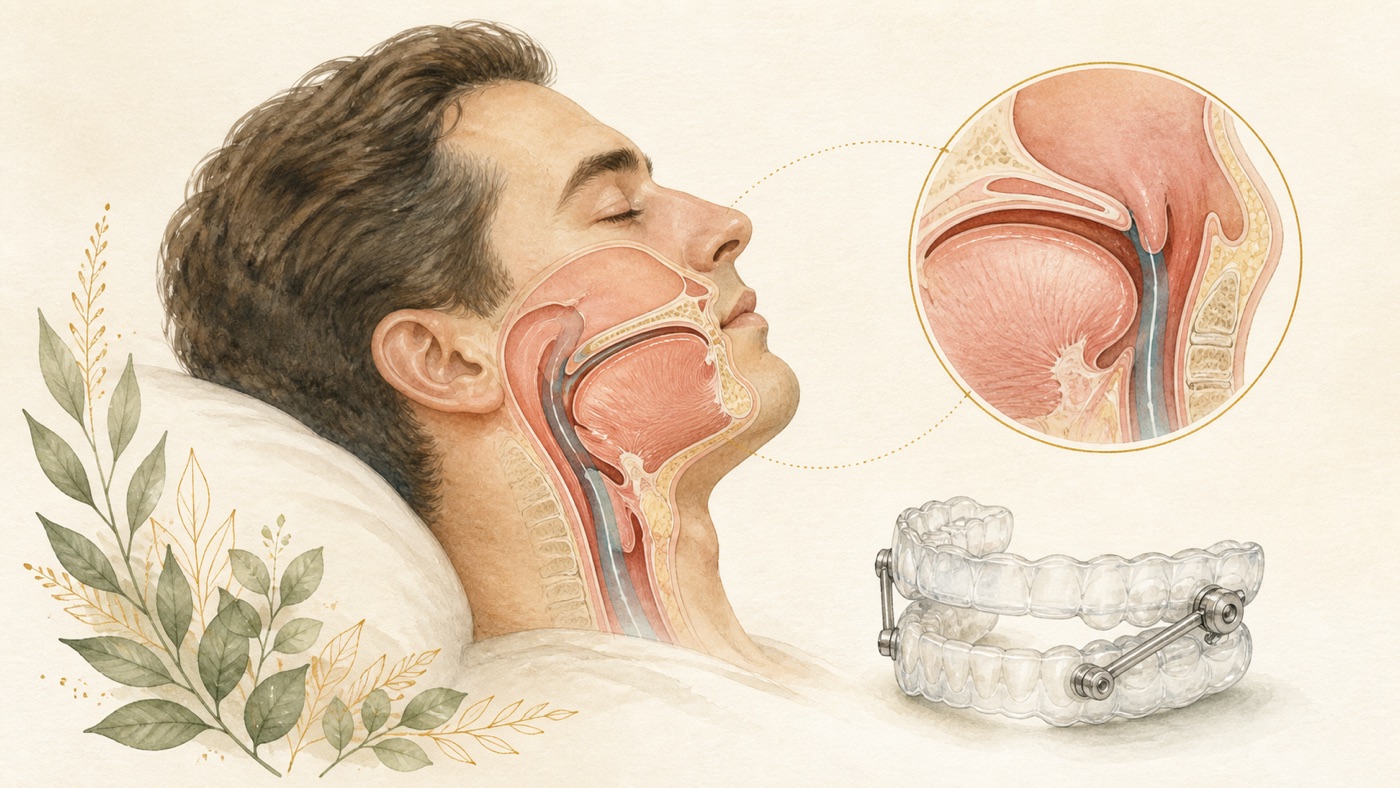
A complete guide to sleep-disordered breathing and oral appliances: a domain map running from upper-airway physiology and diagnostic responsibility through the treatment spectrum to the boundaries of the dental role
This is the map-layer article for the field of sleep-disordered breathing (snoring and obstructive sleep apnoea) and oral appliances; it does not answer any single question. It covers: why snoring and sleep apnoea are not synonyms, the physiological mechanism by which the upper airway collapses during sleep, how the prevalence figures are estimated and the limits of that estimation, how the severity-grading axis should be read, why diagnostic responsibility sits on the sleep-medicine side rather than in dentistry (including where questionnaires and home testing belong), a spectrum map of six treatment pathways, the mechanism and the efficacy evidence for mandibular advancement devices (including the full head-to-head picture against CPAP), the adherence difficulty specific to each of the two treatments, occlusal change as a demonstrated long-term adverse effect together with the follow-up it requires, the tension in the evidence on sleep bruxism, the concept-level flow of the referral pathway, and the logic of what costs are made of. Every question-level specific issue is summarised in one sentence and pointed to its corresponding canonical card or domain article.
A complete guide to sleep-disordered breathing and oral appliances: a domain map running from upper-airway physiology and diagnostic responsibility through the treatment spectrum to the boundaries of the dental role
TL;DR
Snoring is not the same thing as sleep apnoea [Fn1]; diagnosis rests on a sleep study [Fn2], while for adults the oral appliance is prescribed by a sleep physician [Fn3] and made [Fn4] and monitored [Fn57] by a qualified dentist.
(41 characters in the zh-Hant original, [Fn] markers and punctuation not counted; programmatic CJK character count 41, against a ceiling of 60 characters)
Introduction
This article is general oral-health education based on international literature. It does not address any country's insurance or regulations; consult local rules for care pathways and costs.
This article deliberately does not answer “does what I have count as sleep apnoea, and should I get an anti-snoring appliance”. Judgements of that kind can only be made with a sleep study and a clinical assessment, and this article provides no self-assessment scale, no questionnaire items and no score interpretation of any kind. What it handles is the domain-level gap: how these several terms relate to one another, why the upper airway gives way only once you are asleep, how the hundred-million-scale prevalence figures are arrived at, where the severity-grading axis sits within decision-making, why diagnostic responsibility falls on the sleep-medicine side, how many treatment pathways there actually are, which square of this map the oral appliance occupies, and what its demonstrated long-term cost is.
One thing has to be stated first, because it governs how every later section should be read: this domain has been cross-disciplinary from the outset. The international guideline states in its own words that it is designed to assist primary care providers as well as sleep medicine specialists, surgeons, and dentists who care for patients with OSA [Fn5], and the role the literature ascribes to the dental side is a pivotal one in early detection, screening and interdisciplinary management [Fn6]. “Participating” and “leading” are not a difference of wording; the difference decides who signs the diagnosis, who makes the appliance, and who is responsible for follow-up.
1. Separating three terms first: snoring, sleep-disordered breathing, and obstructive sleep apnoea
These three terms are constantly used interchangeably, so they are dealt with first.
| Term | How the literature describes it |
|---|---|
| Sleep-disordered breathing | An umbrella spectrum: recurrent episodes of upper-airway narrowing during sleep, whose symptomatic expressions include snoring, raised upper-airway resistance, or obstructive sleep apnoea [Fn7] |
| Obstructive sleep apnoea (OSA) | Sleep apnoea is a common disorder that causes breathing to stop or become very shallow [Fn8]; the pauses may last from a few seconds to minutes and may occur 30 times or more in an hour [Fn9]; the more common type is the obstructive one [Fn10], caused by the airway collapsing or becoming blocked during sleep [Fn11], with normal breathing often resuming with a snort or choking sound [Fn12]; its consequences are described as intermittent hypoxaemia, sleep fragmentation and excessive daytime sleepiness [Fn13] |
| Primary snoring | Snoring that is not accompanied by obstructive sleep apnoea — a separate category written explicitly into the text of the guideline's recommendation [Fn3] |
The official patient-education page puts the relationship between the two very plainly: people with sleep apnoea often snore loudly; however, not everyone who snores has sleep apnoea [Fn1].
The portable conclusion of this section: snoring is a symptom, not a diagnosis. It may be no more than primary snoring [Fn3], and it may equally be the outward expression of any segment of the spectrum above [Fn7]. Which side it belongs on is the business of section 5.
2. Why the upper airway gives way only once you are asleep (the anatomical and physiological background)
The airway is fine while you are awake and goes wrong the moment you fall asleep — and there is a clear mechanical explanation for that.
2-1 Two opposing sets of forces
The core description of the mechanism in the literature is that the fundamental abnormality lies in the inability of the upper-airway dilating muscles to withstand the negative forces generated within the upper airway during inspiration [Fn14]. Put another way, this is a set of “forces holding open” pitted against a set of “forces sucking closed”.
- On the side that increases the collapsing forces: the factors that narrow the oropharynx include abnormal craniofacial anatomy, soft-tissue accumulation in the neck, and rostral fluid shift in the recumbent position [Fn15].
- On the side that weakens the opening forces: the counteracting force of the upper-airway dilating muscles, especially the genioglossus, is negatively influenced by sleep onset itself [Fn16].
This is precisely why “fine awake, collapsing asleep” happens: the act of falling asleep itself weakens the side that holds the airway open [Fn16].
2-2 The craniofacial-structure axis
Craniofacial disharmony is listed as an important risk factor for this condition [Fn18]. A meta-analysis pooling cephalometric imaging studies supports the relationship between craniofacial disharmony and obstructive sleep apnoea [Fn19]. Population differences are recorded as well: East Asians have more restrictive craniofacial features, such as a reduced cranial base, maxilla and retropalatal space [Fn20] — a point that will reappear in section 7 when the external validity of the efficacy evidence is discussed.
At the level of official patient education, the risk profile is put like this: risk is higher if you are overweight, male, or have a family history or small airways [Fn21]. A review separately records that epidemiological data suggest a correlation between tooth loss and an increased risk of this condition, particularly among men over 65 [Fn22] — note that this is a statement of correlation, not a claim of causation.
2-3 Why the mechanism matters
Because when mechanisms diverge, management diverges. The literature says so outright: a detailed understanding of the complex pathophysiology encourages the development of therapies targeted at pathophysiological endotypes [Fn17]. In plain language: what sits underneath one and the same diagnostic label may not be the same problem, which is why no single appliance works equally well for everyone. This is the upstream reason for “who is more likely to respond” in section 7.
3. How large this field is: prevalence, and how the figure was arrived at
3-1 An estimate on the scale of hundreds of millions
A literature-based global analysis estimated that, among adults aged 30 to 69 years, 936 million (95% CI 903-970 million) have mild to severe obstructive sleep apnoea and 425 million (399-450 million) have moderate to severe obstructive sleep apnoea [Fn23]. The concluding sentence of that study puts it as almost 1 billion people affected, with prevalence exceeding 50% in some countries [Fn24].
*Unit note (translation only, no change of value): the zh-Hant original states these counts in the East Asian numeral unit of 10⁸ — 9.36 and 4.25, with intervals of 9.03-9.70 and 3.99-4.50 respectively. The figures are identical; only the unit of expression differs.*
3-2 But how that figure was produced has to be known alongside it
The same study declares four things about itself, and none of them can be dropped:
- reliable prevalence data were available for only 16 countries, from 17 studies [Fn25];
- countries without data were “matched” to a similar country with available data in order to be estimated [Fn26];
- the presence or absence of symptoms was not specifically analysed, because information about symptoms in the reference studies was scarce [Fn27].
- the funding source of that study was a respiratory-device manufacturer (the FUNDING field of the original records ResMed) [Fn28].
The portable reading: this is a model estimate standardised by an algorithm, not a census in which each of the 190-odd countries was measured one by one. Using it to grasp that “the order of magnitude is large” is legitimate; using it to say “such-and-such a share of the people in your country have this condition” goes beyond what it can support.
3-3 A second set of order-of-magnitude reference points
Different reviews report different population figures: one systematic review records in its background narrative that this condition affects 4-6% of middle-aged men and 2-4% of middle-aged women [Fn29]; another review records that it affects up to 11% of the adult Polish population and is more commonly diagnosed in men [Fn30]. These two sets of figures cannot be compared directly with the hundred-million-scale estimate in 3-1: both are background narrative in review articles, and their abstracts do not state the original source, the sampling method or the threshold used for determination (see F5); the latter, moreover, describes a population confined to a single country [Fn30], and this article takes only its order of magnitude.
The international consensus document itself also lists “improving the metrics of this disease” as one of the acknowledged knowledge gaps and research directions [Fn31]. Whenever you meet a prevalence figure, ask first which threshold it used, which age band it measured, and by what method it determined the condition.
4. Severity grading: how the AHI axis should be read
4-1 What grading is
The grading customarily used in the clinical literature takes the apnoea-hypopnoea index (AHI, events per hour) as its axis. A two-centre retrospective chart review from 2005 [Fn32b] described its population in mild / moderate / severe strata in its results section. ⚠ This article does not treat that study's stratification as a current diagnostic threshold: the cut-points of the grading and the scoring rules (including the magnitude of oxygen desaturation used to score hypopnoeas) are defined by current sleep-medicine standards and have gone through revisions; the source cited here is a single, comparatively old study and is not sufficient to represent the current standard. Actual grading is determined solely by the side that scores the sleep study, and the reader neither can nor needs to categorise themselves.
⚠ The grading axis does exist in the literature, but this article deliberately lists no cut-point values and provides no basis for self-assessment of any kind; interpreting individual values falls within the diagnostic scope of the sleep-medicine specialty (see section 5).
4-2 Why grading has to come before treatment
The guideline puts it in hard terms: the presence or absence and the severity of this condition must be determined before initiating treatment [Fn34]. The reason is written out in the same guideline — it is in order to identify patients at risk of developing complications, to guide the selection of appropriate treatment, and to provide a baseline against which the effectiveness of subsequent treatment can be established [Fn35].
The portable conclusion of this section: grading is not there to give the patient a label; it is the branch point of the decision tree. Without grading, there is no way to start choosing from the treatment spectrum in section 6.
5. Diagnostic responsibility: why dentists do not make the diagnosis
This is where the theme of this article sits, and it is the substantive source of the answer to “which specialty should I see about snoring”.
5-1 The standard tool for diagnosis
As the official patient-education page puts it: doctors diagnose sleep apnoea based on medical and family histories, a physical examination, and sleep study results [Fn36]. At guideline level the statement is more explicit: polysomnography is the standard diagnostic test for the diagnosis of this condition in adult patients [Fn2], and diagnostic testing for it should be performed in conjunction with a comprehensive sleep evaluation and adequate follow-up [Fn37]. The upstream evaluation guideline stipulates that suspicion of this condition should trigger a comprehensive sleep evaluation [Fn38], and that the diagnostic strategy comprises a sleep-oriented history and physical examination, objective testing, and education of the patient [Fn39].
5-2 A questionnaire is screening, not diagnosis
On this point the guideline is written as a strong recommendation: it is recommended that clinical tools, questionnaires and prediction algorithms not be used to diagnose this condition in adults in the absence of polysomnography or home sleep apnoea testing (STRONG) [Fn40].
So what is a questionnaire for? Take one widely used screening questionnaire as an example (this article does not list its items or its score interpretation): its systematic review and meta-analysis included 17 studies and 9,206 patients [Fn41], and the instrument is described as a validated screening tool [Fn42]; in the sleep-clinic population its sensitivity for detecting any severity, moderate-to-severe and severe disease was 90%, 94% and 96% respectively [Fn43]. But the same analysis also reports the corresponding negative predictive values of 46%, 75% and 90% [Fn44] — which is to say that a negative screen has limited power to rule the condition out at the lower thresholds.
The higher-level appraisal of the evidence is equally cautious: an evidence report and systematic review prepared for a preventive services task force concluded that there is uncertainty about the accuracy or clinical utility of all potential screening tools [Fn45]; that report also records that no randomised controlled trials compared screening with no screening [Fn46].
5-3 Where home sleep testing sits, and its limits
The guideline permits home sleep apnoea testing as one of the diagnostic pathways, but that pathway has explicit population boundaries — two of them, and dropping either one turns the statement into “home testing is for everyone”:
- Boundary one (who may use it): the strong recommendation applies only to adults who are uncomplicated and who present with signs and symptoms indicating an increased risk of moderate to severe disease, and the device used must be technically adequate [Fn47b].
- Boundary two (who may not use it): another strong recommendation in the same set states explicitly that for patients with significant cardiorespiratory disease, potential respiratory muscle weakness due to a neuromuscular condition, awake hypoventilation or suspicion of sleep-related hypoventilation, chronic opioid medication use, a history of stroke or severe insomnia, polysomnography rather than home testing should be used [Fn47c].
On top of those two boundaries there is also a fallback clause: if a single home sleep apnoea test is negative, inconclusive or technically inadequate, polysomnography should be performed [Fn47].
⚠ The inclusion and exclusion conditions above are criteria written for the clinical side, not a checklist for readers to apply to themselves. There are only two things the reader needs to take away: home testing is not suitable for everyone, and a negative result cannot be used by you to rule this condition out. Which test should be done, and how the result should be interpreted, is decided by the sleep-medicine side.
There is quantified evidence on the limits as well. A systematic review and meta-analysis of level IV (fewer-channel) portable monitoring devices included 24 studies and 2,068 suspected patients [Fn48], and the mean difference (bias) against the AHI measured by polysomnography ranged from -14.8 to 10.6 events/h [Fn49]; at a threshold of AHI ≥ 5 events/h, the sensitivity and specificity intervals for this class of device (in units of per cent) were 67.5 to 100 and 25 to 100 respectively [Fn50][Fn50b] (the original expresses these as percentages; to avoid confusion with marketing language this article presents them as intervals with the unit stated, with the values unchanged). The same review records that only 7 (29%) of the studies tested the devices in the home setting [Fn51], and concludes that current evidence is not very strong for stand-alone use of this class of device, though such devices can potentially widen access to diagnosis and treatment [Fn52], adding the reminder that policy recommendations should also consider the health and broader social implications of false positive and false negative diagnoses [Fn53].
One further point is often overlooked: even when polysomnography has been done, it is described as the more reliable confirmatory test for diagnosing this condition, yet the precise localisation of the site of obstruction to airflow cannot be detected by it [Fn54]. “Confirmed” and “knowing where the blockage is” are two different things.
5-4 What this boundary looks like in the guideline's own words
The guideline in question was produced by a seven-member task force jointly commissioned by the American Academy of Sleep Medicine and the American Academy of Dental Sleep Medicine [Fn55] — two academies, one document, which is itself evidence of the division of labour. Its recommendations draw the boundary here:
- Prescribing sits with the sleep physician: it is recommended that sleep physicians prescribe oral appliances, rather than no therapy, for adult patients who request treatment of primary snoring without obstructive sleep apnoea (STANDARD) [Fn3]; and that sleep physicians consider prescribing an oral appliance for adult patients who are intolerant of CPAP therapy or who prefer alternative therapy (STANDARD) [Fn56].
- Fabrication sits with a qualified dentist: when an oral appliance is prescribed by a sleep physician for an adult patient, it is suggested that a qualified dentist use a custom, titratable appliance rather than non-custom oral devices (GUIDELINE) [Fn4].
- Follow-up on the dental side sits with a qualified dentist: it is suggested that a qualified dentist provide oversight of oral appliance therapy in adult patients, to survey for dental-related side effects or occlusal changes and to reduce their incidence (GUIDELINE) [Fn57].
- Confirming efficacy goes back to the sleep physician: it is suggested that sleep physicians conduct follow-up sleep testing in patients fitted with an oral appliance, to improve or confirm treatment efficacy (GUIDELINE) [Fn58].
The portable conclusion of this section, which is also the core of the whole article: dentistry has explicit responsibilities in this field, written into the guideline — but those responsibilities are fabrication, oversight and follow-up, not diagnosis, and not deciding whether to treat. The guideline states in a strong recommendation that, in the absence of polysomnography or home sleep apnoea testing, clinical tools, questionnaires or prediction algorithms must not be used to diagnose this condition in adults [Fn40]; that set of recommendations is addressed to all clinicians who diagnose this condition [Fn40b], dentists included. The scope written into the guideline for the dental side is fabrication [Fn4], oversight [Fn57] and periodic return visits [Fn136].
6. A map of the treatment spectrum: six pathways, not a choice between two
The reason “do I have to use CPAP” is a hard question to answer is that it presupposes there are only two options. That is not how the literature is written.
The official patient-education page already uses the plural: lifestyle changes, mouthpieces, surgery and breathing devices can treat sleep apnoea in many people [Fn59]. At guideline level the statement is fuller: once the diagnosis is established, the patient should be included in deciding an appropriate treatment strategy, which may include positive airway pressure devices, oral appliances, behavioural treatments, surgery, and/or adjunctive treatments [Fn60].
What follows is where each of the six pathways stands in the evidence. This section describes only the existence of the pathways and the strength of the evidence behind them; it makes no individual recommendation whatsoever.
6-1 Positive airway pressure therapy (CPAP / PAP)
The guideline's strong recommendation is that clinicians use positive airway pressure, compared with no therapy, to treat this condition in adults with excessive sleepiness (STRONG) [Fn61]. A good practice statement in the same guideline further requires that treatment of this condition with positive airway pressure be based on a diagnosis established using objective sleep apnoea testing [Fn62].
6-2 Oral appliances (mandibular advancement devices)
Section 7 is given over to this in full. In summary of position: the guideline places it in two places — “primary snoring”, and “intolerance of CPAP or preference for an alternative therapy” [Fn3][Fn56].
6-3 Weight reduction (including bariatric surgery, lifestyle and pharmacological interventions)
One meta-analysis included 27 studies / 32 treatment arms [Fn63]. Before reading its figures, three qualifiers have to be attached:
- Type of intervention: of the 32 treatment arms, 15 used bariatric surgery and 15 used lifestyle intervention, with a further 2 using pharmacological interventions [Fn63b] — the results therefore cannot be described as entirely the result of “diet and exercise”.
- Inclusion conditions: included studies had to have an intervention period of ≥3 months, and participants had to have an AHI ≥15/h [Fn63c] — that is a moderate-to-severe threshold, and does not cover mild disease.
- Population: the subject of its concluding sentence is “people with this condition and obesity” [Fn63d].
Within those three qualifiers, the analysis found that weight reduction was associated with improvement in severity [Fn63d]: a 20% reduction in body mass index [Fn64] was associated with a 57% reduction in AHI [Fn64b], while beyond that magnitude further weight reduction had a smaller effect on AHI [Fn64c]. The authors also mark honestly that, as the prediction intervals are relatively wide, a precise relationship could not be conclusively established [Fn65].
⚠ This passage is a population-level statement of association whose validity is confined to the three qualifiers above [Fn63b][Fn63c][Fn63d]. It is not a weight-loss prescription, and not a body-weight target for anyone.
6-4 Sleeping-position modification (positional therapy)
A systematic review and meta-analysis found a benefit of positional modification techniques for patients with supine-predominant disease in terms of reducing the AHI and shortening time spent supine [Fn66], but pointed out at the same time that, while positional modification techniques were effective in reducing the AHI, CPAP was more effective than those techniques [Fn67], and that a reliable diagnosis of the supine-predominant type should be obtained first [Fn68]. There are stratified data on the distribution of the supine-predominant type as well: in the 2005 two-centre retrospective study mentioned above [Fn32b], the proportion in the mild stratum was markedly higher than in the severe stratum [Fn32], and the authors concluded that this type is “common, particularly in patients with mild disease” [Fn69].
A separate systematic review and meta-analysis of randomised controlled trials compared oral appliance therapy directly with positional therapy: the AHI in the non-supine position and the sleepiness-scale score were significantly lower in the oral appliance group [Fn70]; but on eight measures — total AHI, supine AHI, oxygen desaturation index, sleep efficiency, arousal index, the sleep functional outcomes questionnaire, adherence and mean oxygen saturation — there was no significant difference between the two groups [Fn71]. “No difference in adherence between the two groups” has to be written out alongside the rest, because the whole of section 8 argues that adherence is part of efficacy; leaving it out would tilt this article's argument in its own favour.
6-5 Surgery
A meta-analysis of maxillomandibular advancement surgery included 45 studies with individual data from 518 patients/interventions [Fn72]; the mean postoperative changes in the AHI and the respiratory disturbance index were -47.8 and -44.4 respectively [Fn73], and among the 455 patients with AHI data the rates of what the original calls surgical success and cure were 85.5% and 38.5% respectively [Fn74]. Both of those terms are statistical categories with operational definitions in the original, not promises about the outcome of any individual patient clinically: the original defines surgical success as “the percentage of patients with more than 50% reduction of the AHI to fewer than 20 events/h” and cure as “a post-operative AHI of fewer than 5 events/h” [Fn74b] — this article retains the original wording precisely so that a threshold-based definition is not read as a promise of outcome. What has to be known alongside this is that, among the 268 patients in that sample for whom data were available, 197 (73.5%) had already undergone other surgery for this condition [Fn75] — this is a sample composed mainly of a difficult-to-treat population, and its results cannot be extrapolated into what an ordinary patient should expect from initial treatment.
6-6 Neurostimulation
A systematic review and meta-analysis of hypoglossal nerve stimulation included 30 papers, of which 26 were single-arm studies, covering 549 middle-aged overweight patients [Fn76]; one of the devices reduced the AHI by 20.14 and 15.91 events/h in the short term and the long term respectively [Fn77]; the same paper records that the other devices assessed featured similar improvements but to a lesser extent [Fn77b] — this set of figures comes from the better-performing device of its class, not a representative value for the whole class of therapy, and 26 of the 30 included papers were single-arm studies [Fn76]. In their concluding section the authors of that review used the wording `safe and effective` along with high adherence and satisfaction rates [Fn78] (this article retains that as the original authors' wording and does not convert it into a judgement of safety by this site), while also noting that there remains room to refine the selection criteria [Fn79]. ⚠ The word “safe” is the wording of the authors of that review, not an endorsement by this article: 26 of the 30 papers it included were single-arm studies without a control group [Fn76], and the abstract cited here reports no rate of surgical complications, no rate of device-related adverse events and no list of contraindications — in the absence of matching safety-endpoint data, this article does not read it as any conclusion about safety. This is a surgical procedure requiring implantation, and its risks and indications are to be assessed by the sleep-medicine and surgical sides; they are outside the scope of this article.
6-7 One honest sentence that has to close this section
The summary of the evidence report referred to above is that multiple treatments reduce the AHI, sleepiness-scale scores and blood pressure [Fn80]; but trials of CPAP and other treatments have not established whether treatment reduces mortality or improves most other health outcomes, except for a modest improvement in sleep-related quality of life (the original's wording is modest) [Fn81]. The effect size the same paper reports is a Cohen d of 0.28 (95% CI 0.14-0.42) [Fn81b] — even for that single established health outcome the effect size is small; the zh-Hant version deliberately avoids rendering modest with a word that could be read back as moderate.
That sentence is not there to talk anyone out of treatment. It is there to calibrate expectations: the guideline describes this condition as a chronic disease requiring long-term, multidisciplinary management [Fn82], not an event that is closed out by a single procedure.
7. Oral appliances (mandibular advancement devices): mechanism, indications and efficacy evidence
7-1 How they work
A systematic review (which included 22 articles from the past 10 years that met its quality and inclusion criteria [Fn83]) describes the mechanism as follows: mandibular advancement devices increase the area of the airway; they bring the soft palate, tongue and hyoid bone forward and activate the masseter and submental muscles, so as to prevent closure [Fn84].
Read that against section 2: what it addresses is the insufficiency of the “forces holding open” and the narrowing of the oropharynx [Fn14][Fn15] — not any alteration of sleep itself.
7-2 Appliances are not all one and the same thing
The same review records that adjustable and custom-made mandibular advancement devices give better results than fixed and prefabricated appliances [Fn85]. The guideline's recommendation runs in the same direction: a qualified dentist should use a custom, titratable appliance rather than non-custom oral devices (GUIDELINE) [Fn4].
This one sentence has a directly portable meaning for patients: “anti-snoring appliance” is a loose term, and the things underneath it are not equivalent in the evidence.
7-3 The efficacy evidence: effective, but usually less so than CPAP
This passage is frequently quoted in one direction only, so all three directions are set out in full.
Compared with controls (effective)
- A Cochrane systematic review included 16 studies with 745 participants [Fn86]: oral appliances reduced daytime sleepiness in two crossover trials [Fn87] and improved the AHI [Fn88].
- A systematic review of randomised controlled trials in mild-to-moderate disease (122 of 1,316 retrieved articles fulfilled the inclusion criteria, of which 32 were RCTs) [Fn89] records that most studies reported significant improvement in the AHI, with mandibular advancement devices demonstrating consistent efficacy across multiple trials [Fn90]; its conclusion is that customised, titratable oral appliances are effective in reducing the AHI and improving sleep-related outcomes in patients with mild-to-moderate disease [Fn91].
- A systematic review and meta-analysis in East Asian populations included 12 studies with 382 patients [Fn92], and the pooled mean reduction in AHI was 19.1 (95% CI -23.9 to -14.3; I² = 91%) [Fn93][Fn93b] — an I² as high as 91% is extreme heterogeneity, and this point estimate has to be read together with that dispersion. The value of that paper lies in filling the gap in external validity across populations — existing studies were performed primarily in White populations [Fn94].
Compared with CPAP (less effective)
- Cochrane: oral appliances were less effective than CPAP in reducing the AHI [Fn95]; CPAP was also more effective than oral appliances at improving minimum arterial oxygen saturation during sleep [Fn96].
- An umbrella review (pooling 27 systematic reviews published between 2004 and 2022 [Fn97]): all systematic reviews that compared oral appliances with CPAP consistently reported that CPAP was more efficacious [Fn98].
But patient preference runs the other way
- Cochrane: in two small crossover studies, participants preferred oral appliance therapy to CPAP [Fn99].
- The umbrella review: however, patient preference favoured oral appliances over CPAP [Fn100].
- Cochrane's finding on the symptom side: no significant difference was observed between the two on symptom scores [Fn101].
How the original states the positioning
- The positioning sentence in the introduction of the umbrella review is that, among the conservative approaches, oral appliances are the preferred treatment for primary snoring, mild to moderate cases, and severe cases in patients who are intolerant of CPAP [Fn102].
- Its concluding sentence then reinforces CPAP as the standard for treatment of this condition (the original's wording is gold standard), with oral appliances representing a viable alternative, particularly for patients who have difficulty obtaining or tolerating CPAP [Fn103].
- Cochrane's authors' conclusion likewise writes the applicable group as a conditional clause, pointing to patients with mild disease and those unable to tolerate CPAP [Fn104].
Honest labelling of the quality of the evidence
- Cochrane: all the included studies had some shortcomings, such as small sample size, under-reporting of methods and data, and lack of blinding [Fn105].
- The umbrella review: the overall quality of evidence assessed with GRADE ranged from very low to moderate [Fn106]; and the majority of the included systematic reviews were published over a decade ago, highlighting a research gap in this area [Fn107].
- The concluding sentence of the East Asian meta-analysis: although treatment success is expected in most patients, complete resolution is unlikely [Fn108].
The portable conclusion of this section: the honest answer to “does an anti-snoring appliance work” is — it is effective in controlled trials, it is usually weaker in head-to-head comparison with CPAP, and patients are more willing to wear it. Those three sentences have to be said together.
7-4 Who is more likely to respond
A systematic review and meta-analysis (1,343 preliminary references screened, 99 studies included in the review, 60 entering the meta-analysis [Fn109]) starts from the premise that mandibular advancement device therapy is the most commonly used second-line treatment for this condition [Fn110], but that it may be ineffective in a subgroup of patients [Fn111]. The result of its meta-analysis is that responders tend to be younger patients with a smaller neck circumference and a lower body mass index [Fn112]; the authors mark at the same time that this conclusion is offered under a low to moderate evidence profile according to the GRADE scale [Fn113].
⚠ This is a population-level statistical tendency, not a criterion for individual suitability. Whether an appliance is suitable has to be assessed by the sleep physician and the dentist on the basis of actual examination findings.
7-5 A comparison that is easily misread: blood pressure
Does “weaker efficacy” mean “worse health outcomes”? On the single endpoint of blood pressure, the answer the evidence gives is not intuitive.
A network meta-analysis included 51 studies with 4,888 patients [Fn114]. Its composition only adds up if all four parts are listed: 44 compared CPAP with an inactive control, 3 compared oral appliances with an inactive control, 1 compared CPAP directly with an oral appliance, and a further 3 were three-arm trials comparing CPAP, oral appliances and an inactive control simultaneously (44 + 3 + 1 + 3 = 51) [Fn114]. Those 3 three-arm trials include both a CPAP arm and an oral-appliance arm [Fn114], so they should not be left out when counting “the directly comparative evidence”. The results: compared with an inactive control, CPAP was associated with a reduction in systolic blood pressure of 2.5 mmHg [Fn115]; compared with an inactive control, oral appliances were associated with a reduction in systolic blood pressure of 2.1 mmHg (95% CI 0.8 to 3.4) [Fn116]; and between CPAP and oral appliances there was no significant difference in their association with change in systolic blood pressure [Fn117]. The authors concluded that the network meta-analysis did not identify a statistically significant difference between the blood-pressure outcomes associated with these therapies [Fn118].
The same paper also records a finding that matters a great deal for section 8: an increase of 1 hour per night in mean CPAP use was associated with an additional reduction in systolic blood pressure of 1.5 mmHg [Fn119].
The portable reading: a larger drop in AHI does not mean winning on every health endpoint. The number of hours you can actually keep it on is itself part of the efficacy.
8. Adherence: the difficulty specific to each of the two treatments
Cochrane sets out the reality of this field in its background section: CPAP is the main treatment, but many patients are unable or unwilling to comply with it [Fn120].
8-1 The quantified evidence on the CPAP side
A systematic review spanning data from 1994 to 2015 included 82 papers [Fn121]; the overall non-adherence rate it reported (based on a sleep time of 7 hours per night) was 34.1% [Fn122], with no significant improvement across those twenty years [Fn123]; behavioural intervention improved adherence by about 1 hour per night on average [Fn124]. The authors' conclusion is put quite directly: this low rate of adherence is problematic and calls into question the concept of CPAP as the standard therapy for this condition [Fn125].
8-2 The quantified evidence on the oral appliance side
A systematic review and meta-analysis of 32 randomised controlled trials [Fn126]: the overall mean dropout rate was 0.171 (0.128-0.213) with a mean follow-up of 4.1 months [Fn127]; hours-per-night adherence was significantly higher for custom-made than for non-custom-made devices (6.418 vs 5.107 hours) [Fn128]; and meta-regression showed that the dropout rate increases significantly over time [Fn129]. The quality of the evidence is labelled very low to moderate [Fn130].
The portable conclusion of the comparison: an oral appliance is not the option that “is easier, so you are bound to keep it up” — its dropout rate accumulates with time in just the same way [Fn129]. The common enemy of both treatments is time.
8-3 Why adherence is treated as a question of efficacy
An individual-participant-data meta-analysis evaluated 4,186 participants (82.1% male) [Fn131]. Its population is not the general population with this condition but adults who already have cardiovascular disease together with this condition, that is, a secondary-prevention population [Fn131b]. The analysis found that, on intention-to-treat analysis, the first occurrence of a major adverse cardiovascular and cerebrovascular event was similar in the CPAP and non-CPAP groups (HR 1.01, 95% CI 0.87-1.17) [Fn132]; but in an on-treatment analysis using a marginal structural model, good adherence was associated with a reduced risk of events (HR 0.69, 95% CI 0.52-0.92) [Fn133]; that analysis defined good adherence as ≥4 hours per day [Fn133b]. The authors concluded that adherence is a key factor in secondary cardiovascular prevention in patients with this condition [Fn134].
⚠ This is the result of an observational weighted analysis, and it cannot be read as a causal promise that “wearing it enough prevents cardiovascular events”; the authors themselves use “associated with” rather than “causes”. The population behind this conclusion is moreover limited to secondary prevention in people who already have cardiovascular disease [Fn131c], and it must not be extrapolated to primary prevention in the general population.
The corresponding requirement in the guideline on this point is that there should be adequate follow-up after positive airway pressure therapy has been started and during treatment, including troubleshooting and monitoring of objective efficacy and usage data [Fn135].
9. Adverse effects and long-term follow-up: does the bite shift
This is where the answer to “will the appliance make my bite shift” sits. The conclusion first: it may — two independent systematic reviews record statistically significant mean changes in occlusal and dental measures in populations wearing these appliances long-term [Fn137][Fn140][Fn143][Fn144][Fn145][Fn146]. ⚠ These are population means; they do not mean that it happens to everyone, nor that the magnitude is the same in everyone; individual incidence and magnitude depend on the population and the follow-up conditions of each study.
9-1 The guideline wrote it into its follow-up recommendations long ago
The recommendation in the guideline referred to above requires explicitly that a qualified dentist provide oversight, in order to survey for dental-related side effects or occlusal changes and to reduce their incidence [Fn57]; and it recommends that sleep physicians and qualified dentists instruct adult patients treated with oral appliances to return for periodic office visits [Fn136]. When a guideline creates a follow-up clause for something, it is usually because that something happens.
9-2 The qualitative evidence
One systematic review included only studies with a follow-up of at least four years [Fn137], and 14 studies were selected for the final qualitative analysis [Fn138]. The side effects reported were upper incisor retroclination, lower incisor proclination, decreased overjet and overbite, and change in the total occlusal contact area [Fn139]. The review concluded that long-term mandibular advancement device therapy has statistically and clinically significant effects on occlusion [Fn140]. The authors also point out that the occlusal side effects of long-term therapy may result in poor patient compliance and patient drop-outs [Fn141] — adverse effects and the adherence of section 8 are one and the same loop.
Another review states it more briefly but in the same direction: long-term use may cause occlusal or dental changes [Fn142].
9-3 The quantified evidence
A systematic review and meta-analysis defined “long-term” as wear of ≥6 months [Fn143] and included 42 studies, of which 23 entered the meta-analysis [Fn144]. The results: long-term oral appliance treatment was associated with a significant decrease in overbite of 0.87 mm [Fn145] and a significant decrease in overjet of 0.86 mm (with 95% CIs of 0.69-1.05 and 0.69-1.03 respectively) [Fn145b][Fn145c]; there was significant retroclination of the upper incisors (U1-SN 2.58°, 95% CI 1.07-4.08) [Fn146] and significant proclination of the lower incisors (L1-MP -2.67°) [Fn147]; and subgroup analyses showed that the decrease in overbite and overjet changed progressively across the year intervals [Fn148].
What has to be set out alongside this is the skeletal side: skeletal changes were not significant [Fn149], with only a tendency towards clockwise rotation of the mandible [Fn150].
There are two directions in which this set of figures has to be read, and dropping either one misleads:
- Towards “do not play it down”: these are changes at the level of millimetres and degrees, significant both statistically and clinically, and they accumulate with the years [Fn140][Fn148]. This is not “it will probably be fine”.
- Towards “do not overstate it”: the magnitude is a decrease in overbite and overjet of under 1 millimetre and an incisor inclination of 2 to 3 degrees [Fn145][Fn145b][Fn146][Fn147]. ⚠ These numbers are group means from a meta-analysis and a trend over longer follow-up, and they cannot be used to predict for any individual when it will happen, whether it will happen, or how large it will be; individual situations have to be followed up and assessed periodically by the dentist providing the appliance.
9-4 Appliance type and adverse events
The review referred to above separately records that monobloc devices give rise to more adverse events, although these are generally mild and transient [Fn151]. This is the same trade-off as “adjustable and custom-made give better results” in 7-2 [Fn85].
⚠ This article offers no advice on appliance selection of any kind. Which type, how much advancement, and how often it is adjusted are all clinical decisions to be assessed by a dentist and coordinated with a sleep physician.
9-5 The question of temporomandibular discomfort
Discomfort related to the temporomandibular joint and the masticatory muscles is a question oral appliance users frequently raise. This article does not open it up here: the definition, classification, assessment and management of temporomandibular disorders belong to a separate domain — see domain article P09 (temporomandibular joint and maxillofacial); for comparisons of management involving occlusal splints and bruxism, see P18 (bruxism and occlusion). All this section can answer for is that the guideline has already made “dental-related side effects” an object of oversight by a qualified dentist [Fn57], so that the correct pathway for oral and jaw discomfort arising during wear is to go back to the dentist who provided the appliance to be assessed, rather than adjusting the appliance yourself. ⚠ But “do not adjust it yourself” does not mean “keep wearing it no matter what” — if the appliance fractures or a component comes loose, if it obstructs breathing or swallowing, if there is severe pain, or if the mouth cannot open or close normally, stop wearing it for that night and contact the dentist who provided it as soon as possible; if any of the above is accompanied by difficulty breathing, seek help through your local emergency system. Mild aching or a changed sensation of the bite does not require you to stop using it on your own initiative, but should be assessed at a return visit as soon as possible. This layering is an editorial safety-floor reservation, not a criterion taken from any single source.
10. The boundary with sleep bruxism: a tension in the evidence that has to be set out on both sides
“Is grinding related to snoring” — two recent reviews point in different directions: one reports that the prevalence of sleep bruxism is consistently higher in people with OSA than in the general population [Fn153], while the other reports that its odds do not differ from those of the control group [Fn159].
10-1 The side that supports “there is an association”
A 2025 systematic review (11 studies published between 2020 and 2025, risk of bias assessed with ROBINS-I and certainty of evidence with GRADE) [Fn152] found that the prevalence of sleep bruxism was consistently higher in individuals with this condition than in the general population [Fn153], and that several studies suggest a potential link through autonomic arousals and neurotransmitter dysregulation [Fn154].
But the same paper immediately labels its limitations: inconsistencies in diagnostic criteria and moderate methodological quality limited the strength of the findings [Fn155]; its background section already states that, although a possible association has been suggested, the causal relationship remains unclear [Fn156]; and its conclusion calls for standardised diagnostic criteria and larger, more standardised studies to clarify the relationship [Fn157].
10-2 The side that does not support “there is an association”
A 2024 systematic review and meta-analysis (conducted according to PRISMA 2020, with 14 studies included out of 2,260 records) [Fn158] gives the opposite result: the odds of sleep bruxism in patients with this condition did not differ from the control group (OR 1.23 [Fn159], 95% CI 0.47-3.20 [Fn159b]); and there was likewise no difference in the comparisons stratified by mild, moderate and severe disease [Fn160].
That paper is equally honest in its labelling: the quality of the major studies included is low, so the lack of correlation observed may require further research [Fn161]; and it adds a reminder that matters clinically — the results presented should not exempt clinicians from the exact diagnosis of concomitant sleep conditions in patients with this condition [Fn162].
10-3 How to read this tension
Both are recent systematic reviews from 2024 to 2025, and this is not a case of a newer version superseding an older one but of the contemporaneous evidence itself lacking consensus. The difference is that they are not measuring the same thing: one looked at whether the prevalence of bruxism is higher within the population with this condition [Fn153], the other at whether the odds ratio for the appearance of bruxism reaches a statistically significant difference [Fn159].
The position of this article is therefore: it does not write that “grinding causes snoring”, and it does not write that “grinding has nothing whatever to do with snoring”. What can be said is that the two have been observed to coexist in some populations [Fn153], that a mechanistic hypothesis exists but is unsettled [Fn154][Fn156], and that statistical significance was not supported in the more rigorous meta-analysis [Fn159][Fn160].
On orders of magnitude, incidentally: bruxism itself is described in the literature as occurring in a significant portion of the population, with an overall incidence ranging between 8% and 31% [Fn163]; while this condition is recorded as affecting 4-6% of middle-aged men and 2-4% of middle-aged women [Fn29]. The denominators of the two were never the same to begin with.
The evolution of the definition of bruxism, the levels of assessment, the evidence on occlusal splints and the boundaries of occlusal adjustment all belong to a different domain — see domain article P18 (bruxism and occlusion). This article does not repeat them.
11. The referral pathway: a concept-level overview of the flow
This section describes only the division of responsibility as set out in the literature and the guidelines; it describes no country's referral system, no reimbursement process and no institutional names. For local systems and costs, see the corresponding canonical card (TW) and domain article P12.
| Stage | The responsibility as described in the guideline | Basis |
|---|---|---|
| 1. A concern arises | Suspicion of this condition should trigger a comprehensive sleep evaluation | [Fn38] |
| 2. Evaluation | A sleep-oriented history and physical examination, objective testing, and education of the patient | [Fn39] |
| 3. Diagnosis | Polysomnography is the standard diagnostic test in adults; questionnaires and prediction algorithms must not be used for diagnosis in the absence of objective testing | [Fn2][Fn40] |
| 4. Grading | Presence or absence and severity must be determined before initiating treatment | [Fn34] |
| 5. Decision | The patient is included in deciding the treatment strategy, and the options are plural | [Fn60] |
| 6. If an oral appliance is chosen: prescription | Prescribed by a sleep physician | [Fn3][Fn56] |
| 7. If an oral appliance is chosen: fabrication | By a qualified dentist, using a custom, titratable appliance | [Fn4] |
| 8. Follow-up (dental side) | Oversight by a qualified dentist, surveying for dental-related side effects or occlusal changes | [Fn57] |
| 9. Follow-up (sleep-medicine side) | Follow-up sleep testing by a sleep physician to confirm efficacy | [Fn58] |
| 10. Long term | Periodic return visits; this condition is regarded as a chronic disease requiring long-term, multidisciplinary management | [Fn136][Fn82] |
The role of the dental side is summarised in the literature as follows: dentists play a pivotal role in early detection, screening and interdisciplinary management [Fn6], with emphasis on the importance of collaboration between dental professionals and sleep medicine specialists [Fn164]. The same review also records that mandibular advancement devices effectively reduce AHI values, improve oxygen saturation and alleviate snoring and daytime fatigue [Fn165] — but the precondition for that sentence holding is that it appears after step 6 in the table above, not at step 1.
The very existence of the international consensus document also supports the reading that this is a cross-disciplinary matter: the document was produced by an international collaborative of multidisciplinary experts [Fn166], and its scope covers disease definitions, pathophysiology, epidemiology, risk factors, screening methods, diagnostic testing types and multiple treatment modalities [Fn167]; it also lists “developing strategies for adherence to positive airway pressure and for longitudinal care, and enhancing the selection of alternatives to positive airway pressure and of surgery” among the acknowledged research gaps [Fn168].
12. What costs are made of (this article contains no amounts)
This section writes only about the structural axes and the variables of cost; it gives no currency, no amount, no bands and no comparisons. Charges, reimbursement and insurance rules in any country follow that locality's own system — see the corresponding canonical card (TW) and domain article P12.
Which structural factors drive cost:
- The diagnostic end: diagnosis requires objective sleep testing [Fn2]; testing may take place in a full laboratory environment or in the home, and if a home test is negative, inconclusive or technically inadequate the guideline requires that polysomnography be performed instead [Fn47] — “it may have to be done a second time” is a genuine variable on this axis.
- The appliance end: what the guideline recommends is a custom, titratable appliance rather than a non-custom device [Fn4], and the literature likewise shows that adjustable and custom-made appliances give better results than fixed and prefabricated ones [Fn85]. Customisation and titratability are themselves a source of difference in the cost structure.
- The follow-up end (dental side): oversight by a qualified dentist and periodic return visits are clauses written into the guideline [Fn57][Fn136], not an optional extra.
- The follow-up end (sleep-medicine side): follow-up sleep testing is used to confirm efficacy [Fn58], and is a separate test independent of the appliance.
- The time axis: the guideline describes this condition as a chronic disease requiring long-term, multidisciplinary management [Fn82], and the dropout rate for oral appliances rises significantly over time [Fn129] — the longer the treatment runs, the more items 3 and 4 accumulate.
- The corresponding items on the positive airway pressure side: its accompanying requirements include follow-up after initiation and during treatment, troubleshooting, and monitoring of objective efficacy and usage data [Fn135].
What the cost-effectiveness research says (direction only; no amounts are quoted): a systematic review and meta-analysis of cost-utility studies that included 34 studies, of which 15 entered the meta-analysis [Fn169], concluded that positive airway pressure is cost effective compared with all treatments collectively, and specifically compared with oral appliances and with no treatment, though with low certainty [Fn170]; the same analysis also reports extremely high heterogeneity (I² = 97.48%) [Fn171].
⚠ This is a conclusion at the level of a cost-utility analysis, and that meta-analysis itself states that its certainty is low [Fn170]. This article deliberately does not quote its monetary values, and this conclusion must not be used on its own to derive “treatment X has to be chosen” — it has to be read together with the clinical efficacy and adherence evidence of sections 6 to 8 [Fn98][Fn100][Fn122].
13. An overview of the signals for seeking care (no complete symptom list, no diagnostic grading criteria; a minimum safety net retained)
What this section lists is the categories of risk signal already recorded in the literature, and its use is to know that something is worth being assessed professionally, not to diagnose yourself. For interpreting any symptom in the moment and for red-flag grading, see domain article P13 (symptom triage and seeking care).
- Daytime function: the official patient-education page records that when sleep is interrupted throughout the night you can be drowsy during the day [Fn172], and that people with this condition are at higher risk for car crashes, work-related accidents and other medical problems [Fn173].
- Driving safety: a systematic review and meta-analysis whose object of examination was commercial motor vehicle drivers [Fn174b] concluded that individuals with this condition are clearly at increased risk for a crash [Fn174], with a mean crash-rate ratio likely to fall within the range of 1.21 to 4.89 [Fn175]; the authors concluded that untreated sleep apnoea is a significant contributor to motor vehicle crashes [Fn176]. ⚠ The range 1.21-4.89 is the result of a review in a commercial-driver population, and must not simply be extrapolated into a risk multiplier for drivers in general. At the level of the official patient-education page, the statement for the general population goes no further than the directional description “higher risk”, with no multiplier given [Fn173].
- Systemic comorbidity: this condition is frequently associated with metabolic, cardiovascular, renal, pulmonary and neuropsychiatric comorbidities [Fn177], and there is growing evidence of bidirectional relationships between it and comorbidity, especially for heart failure, metabolic syndrome and stroke [Fn178]. For the interface between systemic disease and dentistry, see domain article P19.
- Children: the official patient-education page records that children with enlarged tonsils or adenoids may also get it [Fn179]. The scope of this article is limited to adults; the assessment pathway and appliance considerations for children belong to another domain — see domain articles P14 (paediatric dentistry) and P08 (orthodontics).
- A summarising sentence from the official patient-education page: if you have it, it is important to get treatment [Fn180].
### ⚠ What this section calls for doing right now
The above is about what is “worth being assessed”, but sleepiness at the wheel is something to deal with in the moment:
- If you feel sleepy, vacant or unable to stay awake while driving or operating machinery, stop immediately, switch to another means of transport or rest somewhere safe first, and get medical assessment as soon as possible afterwards. Do not push on through the rest of the journey by opening a window, drinking coffee or turning up the volume.
- If there is difficulty breathing during sleep, blueness of the lips or fingertips, chest pain, or if someone else finds you unrousable or with altered consciousness — seek help through your local emergency system immediately.
>
These two items are an editorial safety-floor reservation, not criteria taken from any single source; the review cited in this article records that individuals with this condition are at increased crash risk (the object of examination in that review being commercial motor vehicle drivers) [Fn174b][Fn174].
⚠ This section provides no criterion of the form “how many is too many” or “how many seconds is too long”. Criteria fall within the diagnostic scope of the sleep-medicine specialty (section 5), and this article does not act in its place.
Risk factors (indications / adverse effects / contraindications and limits)
This section is the disclosure of medical risk and is at the same time a required section of the ANK structure. Everything below is a group-level conclusion at the level of the literature and the guidelines, and constitutes no determination of suitability for any individual.
Indications (the places the guideline writes them into)
- Oral appliances: a sleep physician prescribes them for adults who request treatment of primary snoring without obstructive sleep apnoea (STANDARD) [Fn3]; a sleep physician considers prescribing them for adult patients with this condition who are intolerant of CPAP or who prefer alternative therapy (STANDARD) [Fn56]. Their position within the spectrum of conservative therapy is: primary snoring, mild to moderate cases, and severe cases in patients intolerant of CPAP [Fn102].
- Positive airway pressure therapy: used in adults with this condition who have excessive sleepiness (STRONG) [Fn61], and it must be based on a diagnosis established using objective sleep testing [Fn62].
- Precondition (common to all treatments): presence or absence and severity must be determined before initiating treatment [Fn34].
Possible adverse effects and adverse outcomes
- Occlusal and dental change (demonstrated, not rare): upper incisor retroclination, lower incisor proclination, decreased overjet and overbite, change in the total occlusal contact area [Fn139]; significant both statistically and clinically [Fn140]; quantified as a decrease in overbite of 0.87 mm [Fn145], a decrease in overjet of 0.86 mm [Fn145b], upper incisor retroclination of 2.58° [Fn146] and lower incisor proclination of -2.67° [Fn147], changing progressively across the year intervals [Fn148].
- The skeletal level: skeletal changes were not significant [Fn149], with only a tendency towards clockwise rotation of the mandible [Fn150].
- Related to appliance type: monobloc devices give rise to more adverse events, though these are generally mild and transient [Fn151].
- Related to adherence: occlusal side effects may result in poor compliance and patient drop-outs [Fn141]; the dropout rate for oral appliances rises significantly over time [Fn129].
- On the positive airway pressure side: the non-adherence rate remained high across twenty years (34.1%) with no significant improvement [Fn122][Fn123].
Contraindications and limits of applicability (the range this article can be responsible for stating)
- It cannot replace diagnosis: questionnaires and prediction algorithms must not be used for diagnosis in the absence of objective testing (STRONG) [Fn40]; there is uncertainty about the accuracy and clinical utility of screening tools [Fn45].
- It cannot replace grading: presence or absence and severity must be determined before treatment [Fn34].
- Efficacy has a ceiling: compared with CPAP, oral appliances are weaker at reducing the AHI [Fn95] and at improving minimum oxygen saturation [Fn96]; complete resolution is unlikely [Fn108].
- It does not work for some people: oral appliances may be ineffective in a subgroup of patients [Fn111].
- The limits of the evidence itself: the studies included by Cochrane generally had the shortcomings of small samples, under-reporting and lack of blinding [Fn105]; the overall quality of evidence in the umbrella review was very low to moderate [Fn106], and most of the reviews it included were published over a decade ago [Fn107].
- Health outcomes not yet established: trials of CPAP and other treatments have not established whether treatment reduces mortality or improves most other health outcomes [Fn81].
- The scope limit of this article: the scope of this article is limited to adults, and it does not touch any country's insurance or regulations.
The actual treatment and its effect vary from person to person and must be decided by a dentist (working together with a sleep-medicine specialist) after assessment.
Every clinical statement in this article is mapped line by line to its cited source (see the sources and evidence chain below). It has not been clinically reviewed by a licensed practitioner. This is health information, not individual advice; assessment by a clinician is required.
FAQ
- Q1. Which specialty should I see about snoring? Can a dentist look after it for me?
- **At guideline level the division of labour is: diagnosis on the sleep-medicine side, fabrication and follow-up of the oral appliance on the dental side. Polysomnography is the standard diagnostic test in adults [Fn2], while the oral appliance is prescribed by a sleep physician [Fn3][Fn56], made by a qualified dentist using a custom, titratable appliance [Fn4], and monitored for side effects and occlusal change by a qualified dentist [Fn57].** The upstream guideline is itself designed to be used jointly by primary care providers, sleep medicine specialists, surgeons and dentists [Fn5], and the role of dentists in early detection, screening and interdisciplinary management is explicitly acknowledged in the literature [Fn6]. So the answer is not a choice between “see a dentist” and “do not see a dentist”, but that **both sides are in the process, just at different positions**. For the order in which to seek care and the general principles for choosing a practice, see domain article P13.
- Q1. いびきは何科にかかればよいのですか。歯科医師に診てもらえますか。 — **ガイドラインのレベルでの分担はこうです。診断は睡眠医学の側にあり、口腔内装置の製作と経過観察は歯科の側にあります。睡眠ポリグラフ検査が成人の標準的な診断検査であり [Fn2]、口腔内装置は睡眠医が処方し [Fn3][Fn56]、資格のある歯科医師がカスタムで調整可能な装置を用いて製作し [Fn4]、資格のある歯科医師が副作用と咬合の変化を管理します [Fn57]。** 上位のガイドライン自体が、プライマリケアの医師、睡眠医学の専門医、外科医、そして歯科医師が共同で使うために設計されたものであり [Fn5]、歯科医師の早期の発見、スクリーニング、診療科をまたぐ統合的な管理における役割は文献によって明確に認められています [Fn6]。ですから答えは「歯科にかかる」か「歯科にはかからない」かの二者択一ではなく、**両方が流れのなかにいて、ただ位置が違う**ということです。受診の順序と歯科医院を選ぶ一般の原則は領域記事 P13 をご覧ください。
- Q1. Which specialty should I see about snoring? Can a dentist look after it for me? — **At guideline level the division of labour is: diagnosis on the sleep-medicine side, fabrication and follow-up of the oral appliance on the dental side. Polysomnography is the standard diagnostic test in adults [Fn2], while the oral appliance is prescribed by a sleep physician [Fn3][Fn56], made by a qualified dentist using a custom, titratable appliance [Fn4], and monitored for side effects and occlusal change by a qualified dentist [Fn57].** The upstream guideline is itself designed to be used jointly by primary care providers, sleep medicine specialists, surgeons and dentists [Fn5], and the role of dentists in early detection, screening and interdisciplinary management is explicitly acknowledged in the literature [Fn6]. So the answer is not a choice between “see a dentist” and “do not see a dentist”, but that **both sides are in the process, just at different positions**. For the order in which to seek care and the general principles for choosing a practice, see domain article P13.
- Q2. Do anti-snoring appliances actually work?
- **They are effective, but usually less so than CPAP, and the effect comes with conditions: a Cochrane systematic review (16 studies, 745 people [Fn86]) shows that oral appliances reduce daytime sleepiness [Fn87] and improve the AHI [Fn88] compared with controls; but in comparison with CPAP, oral appliances are weaker at reducing the AHI [Fn95].** The umbrella review puts it as: all systematic reviews comparing the two consistently reported that CPAP was more efficacious [Fn98]; however, patient preference favoured oral appliances [Fn100], and no significant difference was observed between the two on symptom scores [Fn101]. The conclusion of the systematic review of RCTs in mild-to-moderate disease is that custom, titratable appliances are effective in reducing the AHI and improving sleep-related outcomes [Fn91]. What has to be known alongside this: complete resolution is unlikely [Fn108], and the quality of the evidence ranges from very low to moderate [Fn106].
- Q2. いびき用のマウスピースは本当に効くのですか。 — **有効ですが、通常は CPAP には及ばず、しかも効果には条件があります。Cochrane のシステマティックレビュー(16 篇の研究、745 名 [Fn86])は、口腔内装置が対照群と比べて日中の眠気を減らし [Fn87]、AHI を改善することを示しています [Fn88]。しかし CPAP との比較では、口腔内装置は AHI を下げる点でより弱いものでした [Fn95]。** アンブレラレビューの記述は、両者を比較したすべてのシステマティックレビューが一貫して CPAP のほうがより高い有効性を示したと報告している [Fn98]、しかしながら患者の好みは口腔内装置に傾いており [Fn100]、両者は症状の点数において有意な差が見られなかった [Fn101]、というものです。軽度から中等度の患者を対象とした RCT のシステマティックレビューの結論は、カスタムで調整可能な装置が AHI を有効に下げ睡眠に関連するアウトカムを改善する、というものです [Fn91]。あわせて知っておくべきことは、完全な消失は起こりにくく [Fn108]、エビデンスの品質は非常に低いから中等度の間にあるということです [Fn106]。
- Q2. Do anti-snoring appliances actually work? — **They are effective, but usually less so than CPAP, and the effect comes with conditions: a Cochrane systematic review (16 studies, 745 people [Fn86]) shows that oral appliances reduce daytime sleepiness [Fn87] and improve the AHI [Fn88] compared with controls; but in comparison with CPAP, oral appliances are weaker at reducing the AHI [Fn95].** The umbrella review puts it as: all systematic reviews comparing the two consistently reported that CPAP was more efficacious [Fn98]; however, patient preference favoured oral appliances [Fn100], and no significant difference was observed between the two on symptom scores [Fn101]. The conclusion of the systematic review of RCTs in mild-to-moderate disease is that custom, titratable appliances are effective in reducing the AHI and improving sleep-related outcomes [Fn91]. What has to be known alongside this: complete resolution is unlikely [Fn108], and the quality of the evidence ranges from very low to moderate [Fn106].
- Q3. Does sleep apnoea always have to be treated with CPAP?
- **It is not a case of “always”, but nor is it a free choice — the guideline writes it as shared decision-making: once the diagnosis is established, the patient should be included in deciding the treatment strategy, and the options include positive airway pressure devices, oral appliances, behavioural treatments, surgery and/or adjunctive treatments [Fn60].** The official patient-education page likewise puts the options in the plural [Fn59]. The strong recommendation on the CPAP side is for adults with excessive sleepiness [Fn61]; the positions the guideline gives the oral appliance are primary snoring [Fn3] and intolerance of CPAP or preference for an alternative therapy [Fn56]. Beyond these there are also the pathways of weight reduction [Fn64], positional modification [Fn66], surgery [Fn72] and neurostimulation [Fn78]. **The precondition for choosing is that a diagnosis and a grading exist first [Fn2][Fn34], not that a preference exists first.** For local systems and costs, see the corresponding canonical card (TW) and domain article P12.
- Q3. 睡眠時無呼吸には必ず CPAP を使わなければならないのですか。 — **「必ず」ではありませんが、「好きに選んでよい」でもありません——ガイドラインはこれを共同の意思決定として書いています。いったん診断が確定したら、患者は治療の方策を決める過程に加えられるべきであり、選択肢には陽圧呼吸の装置、口腔内装置、行動療法、手術、および/または補助的な治療が含まれます [Fn60]。** 公的な保健情報のページの記述も同様に複数の選択肢です [Fn59]。CPAP の側の強い推奨は過度の眠気のある成人に用いるというものであり [Fn61]、口腔内装置の側の推奨の位置は単純いびき [Fn3] と CPAP に耐えられない、あるいは代替の治療を希望する場合 [Fn56] です。このほかにも減量 [Fn64]、体位の調整 [Fn66]、手術 [Fn72]、神経刺激 [Fn78] といった経路があります。**選択の前提は先に診断とグレーディングがあることであって [Fn2][Fn34]、先に好みがあることではありません。** 各地域の制度と費用は対応する正典カード(TW)と領域記事 P12 をご覧ください。
- Q3. Does sleep apnoea always have to be treated with CPAP? — **It is not a case of “always”, but nor is it a free choice — the guideline writes it as shared decision-making: once the diagnosis is established, the patient should be included in deciding the treatment strategy, and the options include positive airway pressure devices, oral appliances, behavioural treatments, surgery and/or adjunctive treatments [Fn60].** The official patient-education page likewise puts the options in the plural [Fn59]. The strong recommendation on the CPAP side is for adults with excessive sleepiness [Fn61]; the positions the guideline gives the oral appliance are primary snoring [Fn3] and intolerance of CPAP or preference for an alternative therapy [Fn56]. Beyond these there are also the pathways of weight reduction [Fn64], positional modification [Fn66], surgery [Fn72] and neurostimulation [Fn78]. **The precondition for choosing is that a diagnosis and a grading exist first [Fn2][Fn34], not that a preference exists first.** For local systems and costs, see the corresponding canonical card (TW) and domain article P12.
- Q4. Will the appliance make my bite shift?
- **It can; this is a demonstrated long-term adverse effect, and it is precisely why the guideline requires periodic follow-up by a dentist [Fn57][Fn136].** A systematic review that included only studies with more than four years of follow-up [Fn137] records side effects including upper incisor retroclination, lower incisor proclination and decreased overjet and overbite [Fn139], and concludes that long-term therapy has effects on occlusion that are significant both statistically and clinically [Fn140]; another meta-analysis quantifies this as a decrease in overbite of 0.87 mm [Fn145], a decrease in overjet of 0.86 mm [Fn145b] and upper incisor retroclination of 2.58° [Fn146], changing progressively over the years [Fn148]. **But it should not be overstated either**: this is progressive displacement at the level of millimetres and degrees, and changes at the skeletal level were not significant [Fn149]. If any occlusal or oral-jaw discomfort arises during wear, the correct course is to go back to the dentist who provided the appliance to be assessed. For assessment and management of occlusion itself, see domain article P18; for questions related to the temporomandibular joint, see P09.
- Q4. マウスピースで咬合がずれてしまいませんか。 — **ずれます。これは確認されている長期の副作用であり、まさにガイドラインが歯科医師による定期的な経過観察を求めている理由です [Fn57][Fn136]。** 4 年以上の経過観察のある研究だけを組み入れたシステマティックレビュー [Fn137] が記載している副作用には、上顎切歯の舌側傾斜、下顎切歯の唇側傾斜、オーバージェットとオーバーバイトの減少が含まれ [Fn139]、結論は長期の治療が咬合に対して統計的にも臨床的にも二重に有意な影響を持つというものです [Fn140]。別のメタアナリシスはこれを、オーバーバイトの 0.87 mm の減少 [Fn145]、オーバージェットの 0.86 mm の減少 [Fn145b]、上顎切歯の 2.58° の舌側傾斜 [Fn146] として定量化しており、かつ年数とともに漸進的に変化するとしています [Fn148]。**しかし大げさにしないでください**:これはミリメートルと角度のオーダーの漸進的な変位であり、骨格の層の変化は有意には達していません [Fn149]。装着の期間中に咬合や口と顎の不快感が生じたときの正しいやり方は、装置を提供した歯科医師のところに戻って評価を受けることです。咬合そのものの評価と対応は領域記事 P18 を、顎関節に関連する問題は P09 をご覧ください。
- Q4. Will the appliance make my bite shift? — **It can; this is a demonstrated long-term adverse effect, and it is precisely why the guideline requires periodic follow-up by a dentist [Fn57][Fn136].** A systematic review that included only studies with more than four years of follow-up [Fn137] records side effects including upper incisor retroclination, lower incisor proclination and decreased overjet and overbite [Fn139], and concludes that long-term therapy has effects on occlusion that are significant both statistically and clinically [Fn140]; another meta-analysis quantifies this as a decrease in overbite of 0.87 mm [Fn145], a decrease in overjet of 0.86 mm [Fn145b] and upper incisor retroclination of 2.58° [Fn146], changing progressively over the years [Fn148]. **But it should not be overstated either**: this is progressive displacement at the level of millimetres and degrees, and changes at the skeletal level were not significant [Fn149]. If any occlusal or oral-jaw discomfort arises during wear, the correct course is to go back to the dentist who provided the appliance to be assessed. For assessment and management of occlusion itself, see domain article P18; for questions related to the temporomandibular joint, see P09.
- Q5. Is grinding related to snoring?
- **There is currently no consensus, the evidence shows a tension, and both sides have to be known: a 2025 systematic review (11 studies [Fn152]) found that the prevalence of sleep bruxism was consistently higher in patients with this condition than in the general population [Fn153]; but a 2024 systematic review and meta-analysis (14 studies [Fn158]) found no difference in the odds ratio between the two (OR 1.23 [Fn159], 95% CI 0.47-3.20 [Fn159b]).** The former states of itself that inconsistent diagnostic criteria and moderate methodological quality limited the strength of its conclusion [Fn155], and that the causal relationship remains unclear [Fn156]; the latter states of itself that the quality of the included studies is low and that the “lack of correlation” observed still requires further research [Fn161], adding the reminder that this should not exempt clinicians from the exact diagnosis of concomitant sleep conditions [Fn162]. **So the correct formulation is: the two have been observed to coexist, a mechanistic hypothesis exists but is unsettled, and statistical significance was not supported in the more rigorous meta-analysis.** For the complete domain map of bruxism, see domain article P18.
- Q5. 歯ぎしりといびきには関係がありますか。 — **現時点で合意はなく、エビデンスは緊張関係を示しており、両方の側を知っておく必要があります。2025 年のシステマティックレビュー(11 件の研究 [Fn152])は、睡眠時ブラキシズムの有病率がこの病気の患者において一般の人口より一貫して高いことを見いだしています [Fn153]。しかし 2024 年のシステマティックレビューとメタアナリシス(14 件の研究 [Fn158])は、両者のオッズ比に差がないことを見いだしています(OR 1.23 [Fn159]、95% CI 0.47–3.20 [Fn159b])。** 前者は診断基準の不一致と中等度の方法論的な品質が結論の強さを制限したと自ら述べており [Fn155]、因果関係もなお不明確です [Fn156]。後者は組み入れた研究の品質が低く、観察された「相関がない」ことにはさらなる研究が必要かもしれないと自ら述べており [Fn161]、これによって併存する睡眠の状態の的確な診断が免除されるべきではないと注意を促しています [Fn162]。**したがって正しい言い方はこうです。両者は共存が観察されており、機序の仮説は存在するが結論には至っておらず、統計学的な有意性はより厳密なメタアナリシスでは支持されていない。** ブラキシズムの完全な領域地図は領域記事 P18 をご覧ください。
- Q5. Is grinding related to snoring? — **There is currently no consensus, the evidence shows a tension, and both sides have to be known: a 2025 systematic review (11 studies [Fn152]) found that the prevalence of sleep bruxism was consistently higher in patients with this condition than in the general population [Fn153]; but a 2024 systematic review and meta-analysis (14 studies [Fn158]) found no difference in the odds ratio between the two (OR 1.23 [Fn159], 95% CI 0.47-3.20 [Fn159b]).** The former states of itself that inconsistent diagnostic criteria and moderate methodological quality limited the strength of its conclusion [Fn155], and that the causal relationship remains unclear [Fn156]; the latter states of itself that the quality of the included studies is low and that the “lack of correlation” observed still requires further research [Fn161], adding the reminder that this should not exempt clinicians from the exact diagnosis of concomitant sleep conditions [Fn162]. **So the correct formulation is: the two have been observed to coexist, a mechanistic hypothesis exists but is unsettled, and statistical significance was not supported in the more rigorous meta-analysis.** For the complete domain map of bruxism, see domain article P18.
Medical notice This article is provided for health education and medical information purposes. It is not a solicitation for medical services and does not constitute diagnosis or treatment advice. Actual treatment methods and outcomes vary between individuals and require evaluation by a dentist; every treatment has its own indications, limitations and possible risks. If you have related symptoms or treatment needs, please book a consultation for evaluation by a dentist.
Source anchors
- #01 | official_statement | Sleep Apnea(MedlinePlus Health Topic;內容出處標註 NIH: National Heart, Lung, and Blood Institute) | U.S. National Library of Medicine · https://medlineplus.gov/sleepapnea.html · 在 IDAEO 的其他引用
- #02 | clinical_guideline | Clinical Practice Guideline for the Treatment of Obstructive Sleep Apnea and Snoring with Oral Appliance Therapy: An Update for… · https://pubmed.ncbi.nlm.nih.gov/26094920/ · 在 IDAEO 的其他引用
- #03 | clinical_guideline | Clinical guideline for the evaluation, management and long-term care of obstructive sleep apnea in adults. | J Clin Sleep Med… · https://pubmed.ncbi.nlm.nih.gov/19960649/ · 在 IDAEO 的其他引用
- #04 | clinical_guideline | Clinical Practice Guideline for Diagnostic Testing for Adult Obstructive Sleep Apnea. | J Clin Sleep Med, 2017(PublicationType:… · https://pubmed.ncbi.nlm.nih.gov/28162150/ · 在 IDAEO 的其他引用
- #05 | clinical_guideline | Treatment of Adult Obstructive Sleep Apnea with Positive Airway Pressure. | J Clin Sleep Med, 2019(PublicationType: Practice… · https://pubmed.ncbi.nlm.nih.gov/30736887/ · 在 IDAEO 的其他引用
- #06 | peer_reviewed | Oral appliances for obstructive sleep apnoea. | Cochrane Database Syst Rev, 2006 | PMID 16437488 · · https://pubmed.ncbi.nlm.nih.gov/16437488/ · 在 IDAEO 的其他引用
- #07 | peer_reviewed | Oral appliance therapy for the management of obstructive sleep apnea in adults: an umbrella review. | JBI Evid Synth, 2025 | PMID… · https://pubmed.ncbi.nlm.nih.gov/40159944/ · 在 IDAEO 的其他引用
- #08 | peer_reviewed | Effectiveness of mandibular advancement devices in obstructive sleep apnea therapy for East Asian patients: a systematic review and… · https://pubmed.ncbi.nlm.nih.gov/40110631/ · 在 IDAEO 的其他引用
- #09 | peer_reviewed | Effectiveness of Customized Oral Appliances in Mild-to-Moderate Obstructive Sleep Apnea: A Systematic Review of Randomized Controlled… · https://pubmed.ncbi.nlm.nih.gov/42108628/ · 在 IDAEO 的其他引用
- #10 | peer_reviewed | Obstructive Sleep Apnea: The Expanding Role of Dental Sleep Medicine—A Systematic Review of Mandibular Advancement Devices, Treatment… · https://pubmed.ncbi.nlm.nih.gov/41590186/ · 在 IDAEO 的其他引用
- #11 | peer_reviewed | Relationship Between Bruxism and Obstructive Sleep Apnea: A Systematic Review of the Literature. | J Clin Med, 2025 | PMID 40725707 · · https://pubmed.ncbi.nlm.nih.gov/40725707/ · 在 IDAEO 的其他引用
- #12 | peer_reviewed | Sleep bruxism (SB) may be not associated with obstructive sleep apnea (OSA): A comprehensive assessment employing a systematic review… · https://pubmed.ncbi.nlm.nih.gov/39182463/ · 在 IDAEO 的其他引用
- #13 | peer_reviewed | The Occlusal Side Effects of Mandibular Advancement Device Therapy in Adult Sleep Apnea Patients: A Systematic Review. | Cureus, 2023 |… · https://pubmed.ncbi.nlm.nih.gov/38090465/ · 在 IDAEO 的其他引用
- #14 | peer_reviewed | Dentoskeletal changes of long-term oral appliance treatment in patients with obstructive sleep apnea: A systematic review and… · https://pubmed.ncbi.nlm.nih.gov/39327689/ · 在 IDAEO 的其他引用
- #15 | peer_reviewed | Cost effectiveness of obstructive sleep apnea therapies: a systematic review and meta-analysis of cost utility studies. | Expert Rev… · https://pubmed.ncbi.nlm.nih.gov/39773265/ · 在 IDAEO 的其他引用
- 本文證據鏈:逐條出處、行號與原文引句 · https://km.idaeo.ai/reports/dental-pillar-dental-sleep-evidence · 在 IDAEO 的其他引用
Cite this article
Lucy・《A complete guide to sleep-disordered breathing and oral appliances: a domain map running from upper-airway physiology and diagnostic responsibility through the treatment spectrum to the boundaries of the dental role》・IDAEO 知識庫・2026-08-13・https://km.idaeo.ai/post/dental/pillar-dental-sleepUpdated 2026-08-27