
🏛 Part of the "dental" topic shelf →
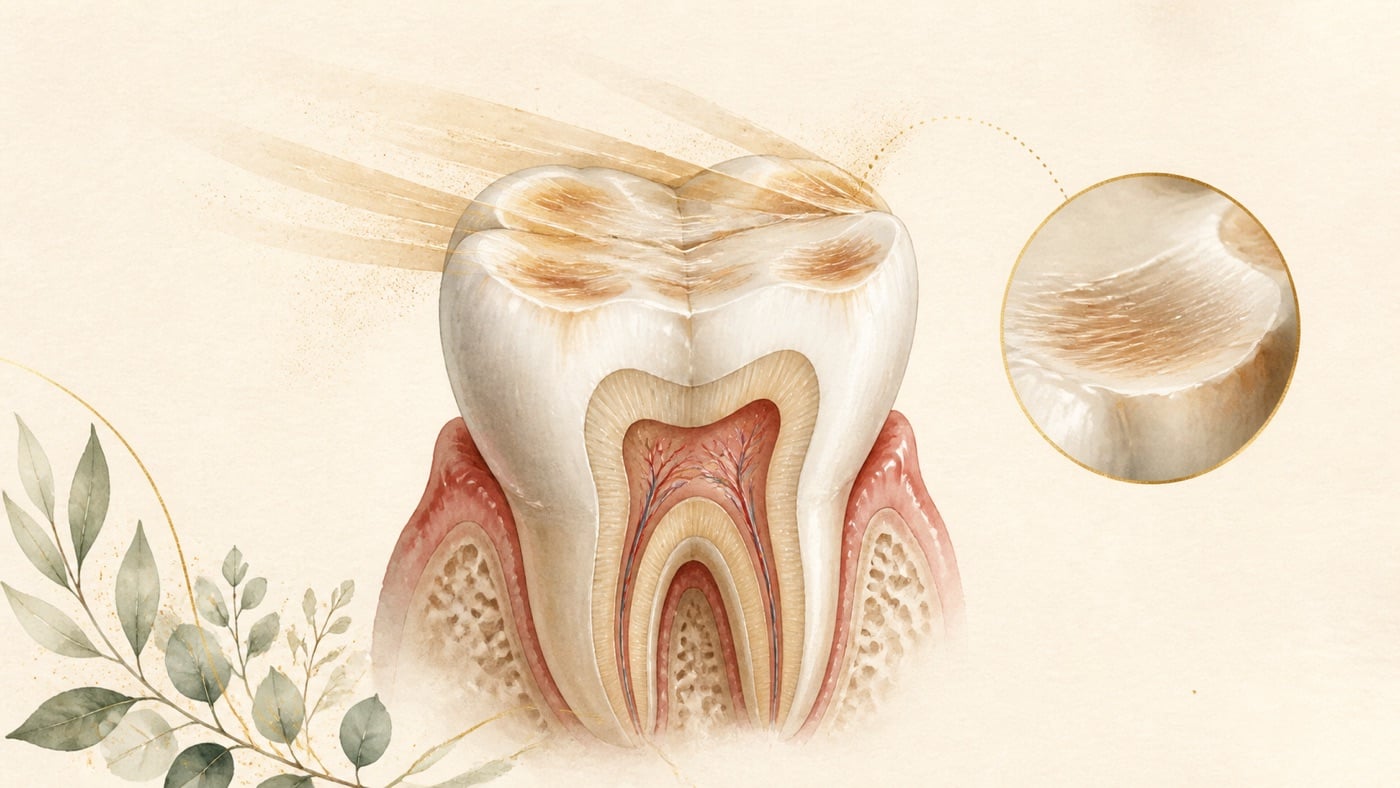
A complete guide to bruxism and occlusion: a map of the domain, from the evolution of the definition and the limits of assessment through the evidence on consequences to occlusal splints and occlusal adjustment
This is the map-layer article for the field of bruxism and occlusal management; it does not answer any single question. It covers: the evolution of the three versions of the international consensus definition and why it keeps being revised, the division between the sleep type and the awake type, why the prevalence figures differ so widely according to how they were measured, the gap in validity between self-report and instrumental assessment, associated factors and comorbidities (sleep disorders, gastro-oesophageal reflux, psychological factors), the tension in the evidence on “does bruxism wear teeth out”, the limits of the evidence on morning jaw pain and headache, the boundary with temporomandibular disorders, the comparison between types of occlusal splint and the ceiling on their certainty, why occlusal adjustment has to be conservative (including a record of the evidence gap left by one withdrawn publication), and the logic of what costs are made of. Every question-level specific issue is summarised in one sentence and pointed to its corresponding canonical card or domain article.
A complete guide to bruxism and occlusion: a map of the domain, from the evolution of the definition and the limits of assessment through the evidence on consequences to occlusal splints and occlusal adjustment
TL;DR
Bruxism is a repetitive jaw-muscle activity [Fn1], with a sleep type and an awake type [Fn2]; the 2018 international consensus regards it, in otherwise healthy individuals, as a behaviour rather than a disorder [Fn6], and no single approach to management works universally [Fn28].
(60 characters in the zh-Hant original, [Fn] markers and spaces not counted; 60 characters including spaces, both within the 60-character limit)
Introduction
This article is general oral-health education based on international literature. It does not address any country's insurance or regulations; consult local rules for care pathways and costs.
This article deliberately does not answer “am I actually grinding my teeth, and should I have a splint made”. That kind of individual judgement can only be made by a dentist who has examined your teeth and your history. What it handles is the domain-level gap: why the definition of this term has been changed three times in twelve years, which axes the professional community uses to describe it, why the frequently quoted prevalence figures can run all the way from 1% [Fn16] to 43% [Fn106], how far the folk certainty that “grinding wears your teeth out” holds up in the literature, what an occlusal splint can and cannot do, and why “grinding the teeth down to adjust the bite” is, on the evidence, an action that has to be taken very conservatively.
One thing has to be stated first, because it governs how every later section should be read: up to the point at which the international consensus was formed in 2013, this field had no agreement on what bruxism is or how it should be graded [Fn5]; and the 2018 consensus went further, proposing that in otherwise healthy individuals bruxism should not be regarded as a disorder but as a behaviour that may be a risk (or protective) factor for certain clinical consequences [Fn6]. “Behaviour” and “disorder” are not a difference of wording; the choice determines the threshold for intervening.
1. The evolution of the definition: why this term keeps changing
1-1 2013: pinning the term down first
In a written consensus, an international group of bruxism experts defined bruxism as a repetitive jaw-muscle activity characterised by clenching or grinding of the teeth and/or by bracing or thrusting of the mandible [Fn1]. The same consensus states that bruxism has two distinct circadian manifestations [Fn2]: it can occur during sleep (indicated as sleep bruxism) or during wakefulness (indicated as awake bruxism) [Fn3]. So that the definition could be operationalised, that consensus proposed a diagnostic grading system of “possible / probable / definite” [Fn4].
1-2 2018: from “disorder” to “behaviour”
The 2018 assessment consensus report did three things: it defined sleep and awake bruxism respectively as masticatory muscle activities occurring during sleep (characterised as rhythmic or non-rhythmic) and during wakefulness (characterised by repetitive or sustained tooth contact and/or by bracing or thrusting of the mandible) [Fn9]; it stated explicitly that in otherwise healthy individuals bruxism should not be considered a disorder, but rather a behaviour that can be a risk (and/or protective) factor for certain clinical consequences [Fn6]; and it noted that assessment can employ non-instrumental approaches (notably self-report) and instrumental approaches (notably electromyography) [Fn7].
There is also one conclusion that is often overlooked but is critical: for otherwise healthy individuals, standard cut-off points should not be used to establish the presence or absence of bruxism [Fn8]. In other words, this field itself objects to drawing a line that sorts people into “has bruxism” and “does not have bruxism”.
1-3 2025: the update to the current version
The current definition report comes from a closed (invitation-only) full-day workshop at the 2024 annual session of the International Association for Dental Research (IADR), which convened international bruxism experts to discuss the current definitions [Fn13]. The background to that report is that some aspects of the currently proposed, expert-driven definitions raise questions and cause confusion among clinicians, researchers, educators and patients [Fn14]. One of the report's three purposes is to provide a glossary of the existing definitions [Fn11].
Two things were specifically changed: the addendum “in otherwise healthy individuals” has been removed from the individual definitions of sleep bruxism and awake bruxism [Fn10]; and the hierarchical organisation originally proposed for the grading system was revised and clarified, so as to incorporate terms based on self-report, clinical examination and device-based assessment [Fn12].
The portable conclusion of this section: when you encounter inconsistent descriptions of “bruxism” in material from different years, it is usually not that someone has it wrong, but that the version of the definition differs. Check the version when you cite.
2. Prevalence: one and the same thing, so why do the figures differ so much
This is a passage of the field that is extremely easy to misread, so it is handled separately.
| Source and method | Figure reported |
|---|---|
| Umbrella review compiling 41 systematic reviews [Fn15] | Awake bruxism in adults 22%–30%; sleep bruxism in adults 1%–15%; sleep bruxism in children and adolescents 3%–49% [Fn16] |
| Systematic review of global prevalence | Sleep bruxism 21%, awake bruxism 23% [Fn105]; sleep and awake combined 22.22% [Fn107]; estimated at 43% among those determined by polysomnography [Fn106] |
| Meta-analysis of awake bruxism (17 studies, screened from 3,086) [Fn66] | Pooled prevalence 15.44% (99% confidence interval 10.81 to 20.72%) [Fn63] |
| Background statement of a systematic review on the management of awake bruxism | Approximately one in four individuals in the general population report awake bruxism [Fn68] |
The four sets of figures do not contradict one another, because they are not measuring the same thing: self-report, clinical examination and instrumental determination yield different denominators and different numerators. The 2018 consensus described above already states plainly that assessment divides into a non-instrumental and an instrumental route [Fn7], and the figure obtained by polysomnography is markedly higher than the self-report figures [Fn106][Fn105].
The methodological limits have to be set out alongside them: in the meta-analysis of awake bruxism, none of the included studies scored high in methodological quality across all nine items of the JBI checklist [Fn65], and the authors' conclusion is that the prevalence of awake bruxism in adults was low but that there was substantial methodological variability, which highlights the need for standardised guidelines [Fn64]. The global prevalence review states of itself that it could not analyse prevalence in Africa and Australia because of insufficient samples [Fn108]. The umbrella review likewise notes that associated factors and the effects of bruxism on the structures of the masticatory system were considerably heterogeneous and inconsistent [Fn22].
The portable way to read this: whenever you see any bruxism prevalence figure, first ask “was it measured by self-report, by clinical examination or by an instrument, and in whom”. The gap can exceed thirty percentage points, and that is not a contradiction but a difference in the method of measurement.
3. How you would know whether you grind: three levels and the ceiling on their validity
3-1 The three levels
Under the 2018 and 2025 consensus versions, assessment tools divide into the three classes of self-report, clinical examination and device-based [Fn7][Fn12], with the degree of confidence expressed through the grading of “possible / probable / definite” [Fn4]. Determination of sleep bruxism at research level normally presupposes polysomnography (PSG) and/or electromyography (EMG) [Fn27].
3-2 How low the validity of self-report is: a finding that has to be stated honestly
A case-control study in women with chronic myofascial temporomandibular disorders (124 of them) and a demographically matched control group (46) [Fn122][Fn122b] compared self-report directly against laboratory PSG determination [Fn117], and concluded that awareness of tooth grinding is highly unlikely to be a valid indicator of true sleep bruxism [Fn115]; self-report failed to significantly predict the presence or absence of moderate or severe sleep bruxism as assessed by PSG [Fn117].
This sentence will sting a good many people: “my family says I grind loudly at night” is not enough to constitute a diagnostic-level determination. But the reverse holds equally: nobody hearing it does not mean it is absent.
3-3 Why not simply send everyone for PSG
The same study writes plainly in its background section that laboratory polysomnographic assessment is extremely expensive and time-consuming [Fn116]. That is the practical reason why a great many studies in this field switch to self-report, and it is also the source of the limits on their evidential weight.
3-4 How the sleep-medicine side sees it
A clinical guidance paper interpreting the diagnostic criteria of the International Classification of Sleep Disorders, third edition, text revision (ICSD-3-TR), published in 2023 by the American Academy of Sleep Medicine (AASM), notes that the classification provides a standardised framework for identifying and classifying sleep disorders in medical settings [Fn75], but that its adaptation to dental clinical and research contexts remains complex [Fn78], the conceptual divergence between the two sides lying above all in whether sleep bruxism is a jaw motor behaviour or a sleep-related movement disorder [Fn76]. That paper also records that sleep bruxism may often be encountered by sleep physicians as an incidental finding during sleep recordings carried out for other sleep disorders [Fn77].
The portable conclusion of this section: “confirming” bruxism carries different thresholds in different professions and with different tools; this article provides no self-assessment scale of any kind.
4. Associated factors and comorbidities: not a single cause
4-1 The consistently associated factors listed by the umbrella review
After compiling 41 systematic reviews [Fn15], the factors held to be consistently associated with bruxism include alcohol, caffeine, tobacco, some psychotropic medications, oesophageal acidification and second-hand smoke [Fn17]; the signs and symptoms of temporomandibular disorders present what is described as a plausible association [Fn18].
⚠ The factors listed above are a record of associations at population level. They are not behavioural advice and not medication instructions; any adjustment to existing medication has to be decided by the prescribing doctor.
4-2 The sleep-disorder side
A systematic review in adults (37 studies screened from 1,539) [Fn123] found that the prevalence of sleep bruxism was higher than in the general population among adult patients with obstructive sleep apnoea, restless legs syndrome, periodic limb movement during sleep, sleep-related gastro-oesophageal reflux disease, REM behaviour disorder and sleep-related epilepsy [Fn101]. The authors also label honestly that the specific mechanisms behind these positive associations could not be identified [Fn102], and that sleep arousal may be a common factor with which these disorders are associated [Fn103]. That review therefore calls for more screening for sleep bruxism in patients with the sleep disorders above [Fn104].
4-3 The psychological side
A systematic review with qualitative analysis in adults (10 studies included out of 92) [Fn100] concludes that there seems to be an association between bruxism, temporomandibular disorders and psychological factors (stress, anxiety, depression) [Fn98]; the authors also state that more research is needed to understand how these factors interact [Fn99].
That is where “awake bruxism and stress” currently sits on the evidence: a signal of association, with no settled causal claim. Explaining an individual case with “you grind because you are under too much stress” goes beyond what this evidence can support.
4-4 The gastro-oesophageal reflux side
A systematic review (5 studies finally included) [Fn61] notes that bruxism and gastro-oesophageal reflux could have associations and act in synergy in dental wear [Fn60], that is, attacking the hard dental tissues from both a chemical (reflux) and a mechanical (bruxism) direction [Fn62].
5. Consequences (1): the tension in the evidence on “does bruxism wear teeth out”
This section has to set both sides out honestly, because the evidence does not point one way.
5-1 The gap between clinical intuition and the strength of the evidence
A study that examined this question with objective instrumentation writes directly in its background that clinically, sleep bruxism is considered to be associated with the presence of tooth wear, but that strong evidence is still lacking [Fn51].
5-2 The one finding that currently makes the comparison directly
That study recruited 63 possible sleep bruxers (19 male and 44 female) [Fn54], recorded wear on a clinical scale and then carried out one night of portable polysomnographic recording. The result: no significant correlation was found between tooth wear and the number of bruxism events per hour [Fn52]; and the presence of tooth wear was likewise not associated with self-reported parafunctions [Fn53].
Its limits have to be labelled at the same time: it is a single-centre primary study with a sample of 63 [Fn54] and a single night of recording, and it is not enough to support a settled conclusion that “bruxism has been shown not to wear teeth out”.
5-3 A larger gap in the evidence
The systematic review commissioned by the Health Technology Assessment programme of the United Kingdom's National Institute for Health Research (NIHR) included 52 randomised controlled trials [Fn37], and one of its findings deserves to be written into patient education: not one study measured tooth wear in patients with bruxism as an outcome [Fn38]. The conclusion of that review is therefore that the existing evidence is insufficient to determine whether or not splints reduce tooth wear in patients with bruxism [Fn39].
5-4 The effect on restorations and implants
The umbrella review records this in layers: bruxism might result in biomechanical complications regarding dental implants, whereas the evidence on other dental restorations and on periodontal impact remains inconclusive [Fn19]. The review of the management of awake bruxism describes the spectrum of consequences as ranging from tooth wear and fractures of dental restorations to orofacial pain related to musculoskeletal overload [Fn69].
At the implant end there are quantitative data: a systematic review and meta-analysis notes that the causal relationship between bruxism and implant failure remains controversial in the existing literature [Fn114]; its pooled odds ratio calculated per restoration was 4.72 (95% confidence interval 2.66–8.36) [Fn111] and per patient 3.83 [Fn112], the conclusion being that, in contrast to non-bruxers, prostheses in bruxers had a higher failure rate [Fn113].
⚠ Assessment of the indications for implants, their risks and their maintenance are outside the scope of this article; see domain article P01 (dental implants).
5-5 After wear has already occurred: the evidence on restoration and the conservative principle
The European expert consensus guidance (on the management of severe tooth wear) gives a clear direction: that guidance focuses on the definition of physiological versus pathological tooth wear and recommends diagnosis, prevention, counselling and monitoring as its main axes [Fn89]; management decisions are multifactorial, depending principally on the severity and effects of the wear and on the wishes of the patient [Fn90]; restorative intervention is typically better delayed as long as possible [Fn87]; and when intervention is judged to be indicated and agreed with the patient, a conservative, minimally invasive approach is recommended, complemented by supportive preventive measures [Fn88].
If restoration is genuinely needed, a systematic review provides a reference for the order of magnitude: the use of composite restorations for patients with tooth wear is considered a more conservative treatment option [Fn59]; the survival rates of anterior composites were >90% at 2.5 years and about 50% at 5 years [Fn55]. The qualifications attached to that same review matter just as much: meta-analysis could not be performed because of the heterogeneity of the included studies [Fn57], the overall strength of recommendation was graded B [Fn56], and long-term reporting of outcomes remains limited [Fn58].
Adjacent specific questions (each has its own canonical card and is not expanded here)
- How long a composite filling lasts and the variables that affect its lifespan — see canonical card KM-DENTAL-16 (in production); the complete domain map for caries and fillings is domain article P04.
- The definition, diagnosis and prognosis of cracked teeth and cracks in teeth — this round of searching obtained no systematic review addressing “the association between bruxism and cracked teeth”, so this article makes no such causal statement; the framework for managing cracked teeth is in section 4 of domain article P16 (sensitive teeth and dentine).
The portable conclusion of this section: both “bruxism is bound to wear your teeth out” and “bruxism does no harm to teeth at all” currently go beyond the evidence. What can be said with confidence is that tooth wear is multifactorial [Fn60][Fn62], and that intervention studies using wear as an outcome barely exist [Fn38].
6. Consequences (2): morning jaw soreness and headache
6-1 The part that holds up at the level of mechanism
The definition of bruxism is itself a repetitive jaw-muscle activity [Fn1], and the spectrum of consequences of awake bruxism explicitly lists orofacial pain related to musculoskeletal overload [Fn69]. In the clinical division of labour, once dentists have confirmed sleep bruxism they typically focus on mitigating oral complications such as tooth wear, on managing grinding sounds, and on addressing associated orofacial pain [Fn74].
Honest labelling: this round of searching obtained no systematic review using “the degree of jaw or masticatory-muscle soreness on waking” as an outcome measure. This article therefore provides no figure of the form “X% of people who grind wake up sore”; the above is a framework at the level of mechanism and clinical division of labour only.
6-2 The headache side has quantitative data, but they point in different directions
A systematic review of observational studies (5 included out of 544) [Fn126] found that among three tension-type headache studies there was a positive association only with awake bruxism, with an odds ratio of 5.23 (95% confidence interval 2.57 to 10.65) [Fn118]; whereas sleep bruxism showed no association with tension-type headache, and its association with migraine remains controversial [Fn119].
Three qualifications have to be set out alongside that: the certainty of the evidence in that review varied between low and very low [Fn120]; meta-analysis could not be performed because of high heterogeneity between the studies [Fn121]; and the upper multiple stated in its concluding sentence of the abstract is inconsistent with the upper bound of the confidence interval reported in its main text — this article takes the interval it reports as authoritative throughout and does not adopt the multiple stated in that concluding sentence.
6-3 Can an occlusal splint solve morning soreness
This is a fairly counter-intuitive set of findings within the field, and it is handled together in section 8 (see 8-3). The conclusion first: the current meta-analysis does not support the inference that “once a splint is worn, masticatory muscle activity will fall” [Fn46][Fn47].
Adjacent specific questions (each has its own canonical card and is not expanded here)
- Pain on biting, how to read occlusion-related pain and its possible causes — see canonical card KM-DENTAL-50 (in production).
- The grading of pain and an overview of red flags for seeking care form a separate domain; see domain article P13 (symptom triage and seeking care).
7. The boundary with temporomandibular disorders (TMD)
7-1 The two are concepts at different levels
Under the international consensus, bruxism is a jaw-muscle activity, a behaviour [Fn1][Fn6]; temporomandibular disorders are a group of disorders of the joint and the musculoskeletal structures. That is the starting point of the boundary: a behaviour is not a disease, and an association is not the same thing.
7-2 How strong the association is
A systematic review and meta-analysis (20 studies screened from 1,651 entering the meta-analysis) [Fn97] gives these results: the presence of bruxism increases the odds of temporomandibular disorders by 2.25 times [Fn91] (95% confidence interval 1.94–2.56 [Fn92]); split by type, awake bruxism increases the odds by 2.51 times [Fn93] (95% confidence interval 2.02–2.99 [Fn94]) and sleep bruxism by 2.06 times [Fn95] (95% confidence interval 1.82–2.30 [Fn96]).
The umbrella review words this more cautiously: the signs and symptoms of temporomandibular disorders present a plausible association with bruxism [Fn18]. The review of psychological factors suggests that the three of them (bruxism, temporomandibular disorders and psychological factors) are mutually entangled and that how they interact remains to be researched [Fn98][Fn99].
⚠ The three multipliers reported by the meta-analyses above are all odds ratios [Fn91][Fn93][Fn95]; an odds ratio is not causation.
7-3 The division of labour
Structural disorders of the temporomandibular joint itself (joint sounds, restricted opening, dislocation, matters relating to orthognathic surgery) are outside the scope of this article; see domain article P09 (temporomandibular joint and maxillofacial). This article deals only with the behaviour of bruxism itself and with its conceptual boundary with temporomandibular disorders.
8. Occlusal splints: what they can do and what they cannot
8-1 The higher-level conclusion first: three reviews do not point the same way
| Source of evidence | Scale | Conclusion on occlusal splints |
|---|---|---|
| Umbrella review (41 SRs) [Fn15] | Higher-level compilation | Occlusal appliances were considered effective for the management of bruxism, whereas the existing evidence on other therapies was judged weak [Fn20]; overall, the effectiveness of most therapies was inconclusive, occlusal appliances being the exception [Fn21] |
| Systematic review of splint efficacy (14 RCTs / quasi-RCTs from 22 identified) [Fn34] | Medium | Only a small number of studies were available in each comparison (one or two for some), all with a medium to high risk of bias [Fn35]; the evidence is insufficient to determine whether splint therapy for bruxism is superior to no treatment or to other therapies [Fn33] |
| NIHR Health Technology Assessment (52 RCTs) [Fn37] | Larger in scale, more rigorous in method | The evidence identified was of very low quality [Fn41]; the evidence is insufficient to determine whether or not splints reduce tooth wear in patients with bruxism [Fn39] |
The three are not contradicting one another; they asked different questions. The umbrella review asked “relative to other therapies, which class holds up better”; the other two asked “relative to no treatment or to other therapies, can benefit be demonstrated” [Fn20][Fn33][Fn39]. “Relatively defensible among the available options” and “shown to be effective” are two different things.
The same splint review writes directly to the clinical side in its statement of clinical significance: its finding is that there is insufficient evidence to recommend occlusal splint therapy over no treatment or other treatment modalities [Fn36], and it reminds clinicians who provide such appliances to be prudent in providing treatment [Fn35].
8-2 Comparison between types
A systematic review comparing different types of occlusal splint (only 15 of 808 articles meeting the inclusion criteria) [Fn124][Fn45] notes that adjustable splints — for example full-occlusion biofeedback splints — were more effective in reducing the number of sleep bruxism episodes, in improving patient-reported symptoms and in enhancing overall well-being [Fn43]. The same review also cautions that the impact of different splints on electromyographic activity varies and that potential adverse effects should be considered individually [Fn44].
Another review, on the management of sleep bruxism in adults, gives a similar but more restrained result: oral appliance therapy tended to reduce the number of sleep bruxism events, although there was no significant difference compared with other types of splint [Fn23].
8-3 A counter-intuitive physiological finding
A systematic review and meta-analysis (12 studies included, 3 of them randomised controlled trials) [Fn50] gives this pooled result: soft and hard appliances alike did not influence the muscle activity and bite force of bruxers [Fn46], summarised as occlusal appliances not affecting the masticatory muscle function of sleep bruxers [Fn47]; the sole effect observed was a reduction in tongue force [Fn48].
The qualifications have to be set out alongside: the certainty of the evidence was judged very low for muscle activity evaluated with hard appliances and for bite force evaluated with both appliance materials [Fn49].
So “wearing a splint lets the muscles relax and the soreness is gone in the morning” is not, at present, an inference the evidence supports. In the literature the occlusal splint is described as a non-invasive, reversible management option [Fn42] — its value proposition is closer to “taking up load and observing, in a way that can be undone” than to “correcting a cause”.
8-4 “How long should a splint be worn” — this article gives no number of hours
Honest labelling of the gap: the splint literature obtained in this round of searching (umbrella review, efficacy review, NIHR assessment, review comparing types) all answer “is it effective” and “which type is better”, and not one of them uses “how many hours a day” or “for how many weeks or months” as an outcome measure. This article therefore provides no figure for wearing time or length of treatment; frequency and duration of wear are matters of individual clinical judgement and have to be decided by a dentist according to the indications, the type of appliance and the results of follow-up.
The one thing that can be said on the evidence side is this: the existing studies generally call for more rigorous, larger-sample, longer-follow-up randomised controlled trials to clarify the efficacy and safety of management [Fn26][Fn32].
9. Where other approaches sit on the evidence spectrum (not recommendations, not medication instructions)
- Behavioural approaches: the review of the management of awake bruxism (9 studies with 165 participants, screened from 4,358 abstracts) [Fn125][Fn70] notes that although the included studies varied in risk of bias, they generally suggested positive effects of biofeedback, guided music listening, habit reversal, reminder prompts and counselling with self-management [Fn71]; meta-analysis was not carried out because of the high heterogeneity between studies [Fn73]; and its conclusion is that the available evidence is limited but still suggests benefits of a behavioural approach for the frequency and consequences of awake bruxism [Fn72]. The same review states explicitly that no official guidelines currently exist on the management of awake bruxism [Fn67].
- Cognitive behavioural therapy (sleep bruxism): the reading given by the review of the management of sleep bruxism in adults is that its potential benefits were not well supported [Fn24].
- Pharmacological and injection-type interventions: the same review records that some interventions of this kind showed significant reductions in specific sleep bruxism parameters, while several side effects were reported at the same time [Fn25]. Another meta-analysis of injection-type interventions included 6 studies with 148 participants [Fn109], and its authors label plainly that whether bruxism events recur or rebound after injection needs more follow-up clinical evidence [Fn110].
⚠ This article lists the name of no prescription medicine or injectable product, makes no statement about their effect and gives no medication instruction; interventions of this kind fall within the scope of a doctor's prescription, and whether they are applicable, their risks and the alternatives must be assessed by a doctor face to face. What is recorded here is only the state of the evidence — that this route has been studied and that the long-term data remain insufficient [Fn109][Fn110].
- The higher-level judgement overall: a 2025 systematic review and meta-analysis (22 studies suitable for data extraction) [Fn30] concludes that there is no single treatment that is universally effective for all patients [Fn28]; that a multidisciplinary approach combining different therapies may yield better results [Fn29]; that the effectiveness of appliances varies depending on design and material [Fn31]; and that further long-term, methodologically rigorous studies are still needed to evaluate the durability of the therapeutic effect [Fn32].
10. Occlusal adjustment: why it has to be conservative (this section is the centre of gravity of this article)
10-1 Defining the action first
The 2024 Cochrane review delimits “occlusal interventions” thus: occlusal interventions include splints and adjustments [Fn84]; and occlusal adjustment is the grinding down of teeth to improve occlusion [Fn79].
That definition in itself explains the reason for the conservative principle: tooth substance that has been ground away does not grow back. An occlusal splint is reversible [Fn42]; occlusal adjustment is not.
10-2 What the current Cochrane review says
The same Cochrane review included 57 studies with 2,846 participants, comparing occlusal splints with no treatment, placebo or another treatment [Fn80]; only one of them was judged to be at low risk of bias [Fn83]; the certainty of the evidence was judged very low for all outcomes in all comparisons, because of limitations in study design and imprecision [Fn82]; and the overall conclusion is that the evidence is insufficient to reach conclusions regarding the effectiveness of occlusal interventions for managing the symptoms of temporomandibular disorders [Fn81].
One point about how to read it deserves particular attention: the 57 studies included in that review all compared occlusal splints [Fn80] — which is to say that even when the scope is widened to “occlusal interventions”, the available clinical-trial evidence is almost entirely concentrated at the reversible end.
10-3 A record of the evidence gap left by a withdrawn publication
The frequently cited Cochrane review *Occlusal adjustment for treating and preventing temporomandibular joint disorders* has had its 2016 version withdrawn: the withdrawal statement records that the review is out of date and does not meet current Cochrane methodological standards [Fn85], and that it will be superseded by a new Cochrane review on occlusal interventions for managing temporomandibular disorders [Fn86].
Under the citation-grade rule of this line, a withdrawn publication cannot serve as peer_reviewed medical evidence, and this article records it only as an evidence gap; its original conclusions are not among the citations of this article. What this entry means is: if you read online that “Cochrane says occlusal adjustment does not work”, the version that citation points to has been withdrawn; the current state is that high-quality randomised controlled trial evidence on occlusal adjustment itself does not form the bulk of the studies included in the current version of the Cochrane review [Fn80].
10-4 How the conservative principle is derived
Joining the above together yields three principles that require no additional assumptions:
- Reversible before irreversible: the literature describes the occlusal splint as a non-invasive, reversible option [Fn42], whereas occlusal adjustment removes tooth substance [Fn79]. Where the certainty of the evidence is very low [Fn82], choose the one you can come back from first.
- Diagnose first, manage afterwards, and do not classify people with cut-off points: the consensus states plainly that standard cut-off points should not be used to establish the presence or absence of bruxism in healthy individuals [Fn8], and that in healthy individuals bruxism is regarded as a behaviour rather than a disorder [Fn6]. Applying an irreversible structural intervention to a “behaviour” should require a higher threshold.
- The management of wear itself argues for delay and minimal invasiveness: the European consensus guidance holds that restorative intervention is typically better delayed as long as possible [Fn87], that where it is needed a conservative, minimally invasive route complemented by preventive measures should be taken [Fn88], and that the decision depends on severity, effects and the patient's wishes [Fn90].
⚠ This section explains principles at the level of the evidence; it is not management advice for any individual case. Whether any form of occlusal intervention is needed has to be judged by a dentist on the basis of a complete examination.
11. What costs are made of (no amounts of any kind)
This article provides no price, fee or coverage information. This section only sets out the structural factors that drive cost.
- The level of assessment: assessment can fall at any of the three levels of self-report, clinical examination or device-based [Fn7][Fn12], and instrument-level sleep investigation is explicitly described in the literature as extremely expensive and time-consuming [Fn116]. The higher the level, the more examination is involved.
- The type and design of the appliance: different types of occlusal splint differ in their effects and adverse effects [Fn43][Fn44], and the therapeutic effect varies with design and material [Fn31] — that is where differences in appliance cost come from.
- Whether more than one discipline is needed: sleep bruxism is more prevalent in several populations with sleep disorders [Fn101], and that review calls for more screening [Fn104]; where collaboration with the sleep-medicine side is needed, the care involved is different.
- Follow-up and remaking: the existing studies are generally short to medium term and call for longer follow-up [Fn26][Fn32]; this means that management often requires repeated assessment rather than being closed out in one go.
- Whether a restorative stage is entered: the principle for restorative intervention is to delay as long as possible and to be conservative and minimally invasive [Fn87][Fn88]; once restoration is entered, the survival data for anterior composites showing about 50% at 5 years [Fn55] mean that the possibility of subsequent maintenance and remaking has to be counted in.
Local fee arrangements, insurance and the boundaries of coverage are outside the scope of this article: for local systems and costs see the corresponding canonical card (TW) and domain article P12 (the complete guide to costs and insurance systems).
12. Signals for seeking care (conceptual level; this article compiles no symptom grading table)
This article labels its scope honestly: symptom grading and red-flag criteria form a separate domain, taken up by P13 (symptom triage and seeking care), and this article does not compile a symptom table of its own.
The literature of this field supports only three conceptual signals:
- Self-assessment has a structural ceiling — awareness of tooth grinding is highly unlikely to be a valid indicator of true sleep bruxism [Fn115], and the consensus opposes using standard cut-off points to establish presence or absence [Fn8]. So neither “I think I do” nor “I think I don't” is a reliable basis for action.
- Once consequences appear, they are a clinical problem that can be assessed — the spectrum of consequences covers tooth wear, fractures of dental restorations and orofacial pain related to musculoskeletal overload [Fn69], and those are exactly what dentists focus on once sleep bruxism has been confirmed [Fn74].
- Where other sleep problems coexist, screening should cover both — sleep bruxism is more prevalent in several populations with sleep disorders [Fn101], and the literature explicitly calls for more screening [Fn104].
So the one piece of advice the domain level can give is this: when observable consequences appear (wear, damaged restorations, persistent jaw and facial pain), or when other sleep problems are present at the same time, the correct next step is a clinical assessment, not judging for yourself or buying an appliance for yourself.
13. Risk factors (indications / adverse effects / contraindications and limits)
Indications (at the level of the literature, not advice for any individual case)
- Any discussion of management presupposes that assessment and grading have been completed, and assessment divides into the three levels of self-report, clinical examination and device-based [Fn7][Fn12], with the degree of confidence expressed as “possible / probable / definite” [Fn4].
- In otherwise healthy individuals, bruxism is regarded by the international consensus as a behaviour rather than a disorder [Fn6] — which means that “having bruxism” does not in itself automatically constitute an indication for management.
- Occlusal appliances are listed in the umbrella review among the few approaches considered effective [Fn20][Fn21], but another review in the same field holds that the evidence is insufficient to determine that they are superior to no treatment [Fn33]; the two have to be set out together.
- Judging the indication for restorative intervention depends on the severity and effects of the wear and on the patient's wishes, and the principle is to delay as long as possible [Fn90][Fn87].
Possible adverse effects and unwanted outcomes
- Appliance-related: the impact of different occlusal splints on electromyographic activity varies, and potential adverse effects should be considered individually [Fn44]. In the systematic review of 52 RCTs [Fn37], adverse events were generally not reported, and seemed infrequent when they were [Fn40] — “reported rarely” is not the same as “absent”; it only means this aspect has been under-studied.
- Pharmacological and injection-type interventions: the literature records that interventions of this kind produced significant reductions in specific bruxism parameters while several side effects were reported [Fn25]; and whether recurrence or rebound follows injection-type intervention still needs more follow-up evidence [Fn110]. This article lists no product name, makes no statement about effect and gives no medication instruction.
- Irreversible management: occlusal adjustment is the act of removing tooth substance [Fn79]; it does not form the bulk of the clinical-trial evidence in the current Cochrane review [Fn80], and the certainty of the evidence for occlusal interventions as a whole was judged very low [Fn82].
- The restoration end: bruxism might result in biomechanical complications regarding implants [Fn19]; prostheses in bruxers had a comparatively higher failure rate [Fn113], although the causal relationship remains controversial in the literature [Fn114].
Contraindications and limits of applicability (the ceiling of the evidence)
- No universal solution: there is no single treatment that is universally effective for all patients [Fn28].
- No official guideline (awake bruxism): no official guidelines currently exist on the management of awake bruxism [Fn67].
- Limits on the quality of the evidence: in the splint efficacy review, the studies in every comparison carried a medium to high risk of bias [Fn35]; the evidence identified in the NIHR assessment was of very low quality [Fn41]; the certainty for all comparisons and outcomes in Cochrane 2024 was very low [Fn82]; the certainty in the meta-analysis of masticatory muscle function was likewise very low [Fn49]; and the certainty in the review of headache associations varied between low and very low [Fn120].
- Design limits: the prevalence figures and associated factors cited in this article come mostly from observational or cross-sectional studies, which can show association only and cannot support causal inference; the studies included in the meta-analysis of the temporomandibular disorder association are likewise observational [Fn97].
- Sample limits: the tooth-wear comparison study had only 63 participants at a single centre [Fn54]; the review of the management of awake bruxism had only 9 studies with 165 participants [Fn70]; the meta-analysis of injection-type intervention had only 6 studies with 148 participants [Fn109]; the review of psychological factors was a qualitative analysis of only 10 studies [Fn100].
- Limits of geographical coverage: the global prevalence review states of itself that it could not analyse Africa and Australia [Fn108].
- This article contains no self-management, medication, dose or procedural instruction of any kind; nor does it provide any splint wearing time or length of treatment.
⚠ This section is a disclosure of medical risk and does not constitute treatment advice for any individual. Actual treatment approaches and outcomes vary from person to person and must be assessed by a dentist.
Every clinical statement in this article is mapped line by line to its cited source (see the sources and evidence chain below). It has not been clinically reviewed by a licensed practitioner. This is health information, not individual advice; assessment by a clinician is required.
FAQ
- Q1. I grind my teeth in my sleep — what should I do?
- **Start by establishing what “bruxism” is professionally: it is a repetitive jaw-muscle activity characterised by clenching or grinding of the teeth and/or by bracing or thrusting of the mandible [Fn1], and in otherwise healthy individuals it is regarded by the international consensus as a behaviour rather than a disorder [Fn6]; on the management side, there is no single treatment that is universally effective for all patients [Fn28].** The umbrella review regards occlusal appliances as one of the few exceptions among therapies considered effective [Fn21], but another systematic review devoted to assessing splints holds that the evidence is insufficient to determine that they are superior to no treatment or to other therapies [Fn33] — the two conclusions have to be set out together. Behavioural approaches show a positive tendency in awake bruxism, on limited evidence [Fn71][Fn72]. The reasonable next step is a clinical assessment, with the dentist judging whether management is needed and which kind, rather than buying an appliance for yourself.
- Q1. 寝ているあいだの歯ぎしりはどうすればよいですか? — **まず「ブラキシズム」が専門的に何を指すのかを確認してください:それは歯を食いしばることまたはこすり合わせること、および/または下顎を支え前方に突き出すことを特徴とする、反復的な下顎の筋活動であり [Fn1]、その他の点では健康な個体においては国際的な合意により疾患ではなく行動とみなされています [Fn6];対応の面では、すべての患者に普遍的に有効な単一の治療は存在しません [Fn28]。** アンブレラレビューは、咬合装置を大多数の療法の中で有効と考えられた数少ない例外とみなしていますが [Fn21]、オクルーザルスプリントを専門に評価した別のシステマティックレビューは、それが無治療または他の療法に勝ると判定するにはエビデンスが不十分だとしています [Fn33]——この二つの結論は並べて示さなければなりません。行動に基づく対応は覚醒時ブラキシズムにおいて正の傾向がありますが、エビデンスは限られています [Fn71][Fn72]。妥当な次の一歩は臨床評価を受けることであり、対応が必要かどうか、どの対応かは歯科医師が判断します。自分で装置を購入することではありません。
- Q1. I grind my teeth in my sleep — what should I do? — **Start by establishing what “bruxism” is professionally: it is a repetitive jaw-muscle activity characterised by clenching or grinding of the teeth and/or by bracing or thrusting of the mandible [Fn1], and in otherwise healthy individuals it is regarded by the international consensus as a behaviour rather than a disorder [Fn6]; on the management side, there is no single treatment that is universally effective for all patients [Fn28].** The umbrella review regards occlusal appliances as one of the few exceptions among therapies considered effective [Fn21], but another systematic review devoted to assessing splints holds that the evidence is insufficient to determine that they are superior to no treatment or to other therapies [Fn33] — the two conclusions have to be set out together. Behavioural approaches show a positive tendency in awake bruxism, on limited evidence [Fn71][Fn72]. The reasonable next step is a clinical assessment, with the dentist judging whether management is needed and which kind, rather than buying an appliance for yourself.
- Q2. How long does a splint have to be worn?
- **This article provides no number of hours or months: the splint literature obtained in this round of searching all answers “is it effective” and “which type is better”, and not one study uses wearing time or length of treatment as an outcome measure.** What can be said concerns differences at the level of type — adjustable splints (for example the full-occlusion biofeedback type) were more effective in reducing sleep bruxism episodes and in improving patient-reported symptoms [Fn43], but the impact of different appliances on electromyographic activity varies and potential adverse effects have to be considered individually [Fn44], and oral appliances showed no significant difference compared with other types of splint [Fn23]. Frequency and duration of wear are matters of individual clinical judgement and have to be decided by a dentist according to the indications and the results of follow-up.
- Q2. オクルーザルスプリントはどのくらい装着するのですか? — **本記事は時間数も月数も一切示しません:今回の検索で得られたオクルーザルスプリントの文献が答えているのはいずれも「効くのか効かないのか」と「どの型がよりよいのか」であり、装着の時間数や治療期間の長さを結果指標とした研究は一つもありません。** 言えるのは型のレベルでの違いです——調整可能な(たとえば全咬合バイオフィードバック型の)スプリントは、睡眠時ブラキシズムのエピソードを減らすことと自己申告による症状を改善することにおいてより効果的でした [Fn43]。しかし装置によって筋電図活動への影響は一様ではなく、起こりうる有害作用は個別に考慮する必要があり [Fn44]、また口腔内装置は他の型のスプリントと比べて有意差がありませんでした [Fn23]。装着の頻度と期間は個別の臨床判断に属し、歯科医師が適応と経過観察の結果に応じて決める必要があります。
- Q2. How long does a splint have to be worn? — **This article provides no number of hours or months: the splint literature obtained in this round of searching all answers “is it effective” and “which type is better”, and not one study uses wearing time or length of treatment as an outcome measure.** What can be said concerns differences at the level of type — adjustable splints (for example the full-occlusion biofeedback type) were more effective in reducing sleep bruxism episodes and in improving patient-reported symptoms [Fn43], but the impact of different appliances on electromyographic activity varies and potential adverse effects have to be considered individually [Fn44], and oral appliances showed no significant difference compared with other types of splint [Fn23]. Frequency and duration of wear are matters of individual clinical judgement and have to be decided by a dentist according to the indications and the results of follow-up.
- Q3. Does grinding wear the teeth out?
- **The evidence at present is more complicated than the folk certainty: clinically the two are considered to be related, but strong evidence is still lacking [Fn51]; a study measuring objectively with polysomnography found no significant correlation between tooth wear and the number of bruxism events per hour [Fn52]; and in the systematic review of 52 randomised controlled trials [Fn37] not one study used tooth wear in patients with bruxism as an outcome measure [Fn38].** At the same time the reverse claim, that bruxism does no harm to teeth at all, cannot be made either: the umbrella review records that bruxism might result in biomechanical complications regarding implants [Fn19], the spectrum of consequences of awake bruxism covers tooth wear and fracture of restorations [Fn69], and tooth wear is itself a multifactorial phenomenon in which mechanical and chemical factors may act in synergy [Fn60][Fn62]. The objective-measurement study above had only 63 participants at a single centre [Fn54], which is not enough to settle the question.
- Q3. ブラキシズムは歯を壊しますか? — **現時点のエビデンスは世間の常識より複雑です:臨床的には両者に関連があると考えられていますが、強いエビデンスはなお不足しています [Fn51];睡眠ポリグラフ検査で客観的に測定したある研究は、歯の摩耗と、時間あたりのブラキシズムのエピソード数とのあいだに有意な相関を認めませんでした [Fn52];そして 52 編のランダム化比較試験のシステマティックレビューでは [Fn37]、ブラキシズムの患者の歯の摩耗を結果指標とした研究が一つもありませんでした [Fn38]。** 同時に、逆にブラキシズムがまったく歯を傷めないと主張することもできません:アンブレラレビューはブラキシズムがインプラントに生物力学的な合併症をもたらしうると記載しており [Fn19]、覚醒時ブラキシズムの帰結のスペクトラムも歯の摩耗と補綴物の破折を含み [Fn69]、また歯の摩耗そのものが機械的要因と化学的要因が相乗しうる多因子性の現象です [Fn60][Fn62]。上記の客観的に測定した研究は 63 人、単一施設のみであり [Fn54]、結論とするには足りません。
- Q3. Does grinding wear the teeth out? — **The evidence at present is more complicated than the folk certainty: clinically the two are considered to be related, but strong evidence is still lacking [Fn51]; a study measuring objectively with polysomnography found no significant correlation between tooth wear and the number of bruxism events per hour [Fn52]; and in the systematic review of 52 randomised controlled trials [Fn37] not one study used tooth wear in patients with bruxism as an outcome measure [Fn38].** At the same time the reverse claim, that bruxism does no harm to teeth at all, cannot be made either: the umbrella review records that bruxism might result in biomechanical complications regarding implants [Fn19], the spectrum of consequences of awake bruxism covers tooth wear and fracture of restorations [Fn69], and tooth wear is itself a multifactorial phenomenon in which mechanical and chemical factors may act in synergy [Fn60][Fn62]. The objective-measurement study above had only 63 participants at a single centre [Fn54], which is not enough to settle the question.
- Q4. My jaw aches when I get up — is grinding the cause?
- **All that can be said is that it is plausible at the level of mechanism but lacks studies that measure it directly: the definition of bruxism is a repetitive jaw-muscle activity [Fn1], the spectrum of consequences of awake bruxism includes orofacial pain related to musculoskeletal overload [Fn69], and what dentists focus on once sleep bruxism is confirmed also includes associated orofacial pain [Fn74].** But this round of searching obtained no systematic review using “degree of soreness on waking” as an outcome measure, so this article provides no proportion of any kind. On headache there are quantitative data, but they point in different directions: among three tension-type headache studies only awake bruxism showed a positive association (odds ratio 5.23, 95% confidence interval 2.57 to 10.65) [Fn118], whereas sleep bruxism showed no association with tension-type headache [Fn119], and the certainty of the evidence varied between low and very low [Fn120]. Persistent or worsening jaw and facial pain should be assessed by a dentist; for how to read pain on biting see canonical card KM-DENTAL-50 (in production).
- Q4. 起床時の顎のだるさ・痛みは、ブラキシズムによるものですか? — **言えるのは機序の上では筋が通るということだけで、直接測定した研究は不足しています:ブラキシズムの定義そのものが下顎の筋の反復的な活動であり [Fn1]、覚醒時ブラキシズムの帰結のスペクトラムには筋骨格系の過負荷に関連する口腔顔面痛が含まれ [Fn69]、歯科医師が睡眠時ブラキシズムを確認した後に注目する焦点にも関連する口腔顔面痛が含まれます [Fn74]。** しかし今回の検索では「起床時のだるさ・痛みの程度」を結果指標としたシステマティックレビューは一つも得られなかったため、本記事はいかなる割合の数字も示しません。頭痛については定量的なデータがありますが、方向は分かれています:三編の緊張型頭痛の研究において正の関連を示したのは覚醒時ブラキシズムのみであり(オッズ比 5.23、95% 信頼区間 2.57 から 10.65)[Fn118]、睡眠時ブラキシズムと緊張型頭痛のあいだには関連が認められませんでした [Fn119]。またエビデンスの確実性は低から非常に低のあいだにあります [Fn120]。持続するまたは悪化する顎顔面の痛みは歯科医師の評価を受けるべきです;咬合痛の読み解きは正典カード KM-DENTAL-50(制作中)をご参照ください。
- Q4. My jaw aches when I get up — is grinding the cause? — **All that can be said is that it is plausible at the level of mechanism but lacks studies that measure it directly: the definition of bruxism is a repetitive jaw-muscle activity [Fn1], the spectrum of consequences of awake bruxism includes orofacial pain related to musculoskeletal overload [Fn69], and what dentists focus on once sleep bruxism is confirmed also includes associated orofacial pain [Fn74].** But this round of searching obtained no systematic review using “degree of soreness on waking” as an outcome measure, so this article provides no proportion of any kind. On headache there are quantitative data, but they point in different directions: among three tension-type headache studies only awake bruxism showed a positive association (odds ratio 5.23, 95% confidence interval 2.57 to 10.65) [Fn118], whereas sleep bruxism showed no association with tension-type headache [Fn119], and the certainty of the evidence varied between low and very low [Fn120]. Persistent or worsening jaw and facial pain should be assessed by a dentist; for how to read pain on biting see canonical card KM-DENTAL-50 (in production).
- Q5. My dentist has suggested “adjusting the bite” by grinding the teeth down — what should I watch out for?
- **Start by understanding what the action is: occlusal adjustment is the grinding down of teeth to improve occlusion [Fn79], which makes it an irreversible intervention; whereas the occlusal splint is described in the literature as a non-invasive, reversible option [Fn42].** On the evidence, the 2024 Cochrane review included 57 studies with 2,846 participants and judged the certainty very low for all comparisons and outcomes [Fn80][Fn82], the overall conclusion being that the evidence is insufficient to reach conclusions regarding the effectiveness of occlusal interventions for the symptoms of temporomandibular disorders [Fn81]; and the clinical trials included in that review all compared occlusal splints [Fn80]. In addition, the frequently cited Cochrane review of occlusal adjustment has had its 2016 version withdrawn as out of date and not meeting current methodological standards [Fn85], and this article records it only as an evidence gap. On the management of tooth wear, the European consensus guidance holds that restorative intervention should be delayed as long as possible [Fn87] and that where needed a conservative, minimally invasive route should be taken [Fn88]. **This passage neither opposes nor recommends any management**; it explains why the threshold for deciding on an irreversible intervention should be higher. The actual judgement has to be made by a dentist on the basis of a complete examination and after full discussion with you.
- Q5. 医師から「咬合を調整する」ために歯を削ることを勧められました。何に注意すべきですか? — **まずこの動作が何であるかを理解してください:咬合調整とは、咬合を改善するために歯を削り低くすることを指し [Fn79]、不可逆的な対応に属します;一方、オクルーザルスプリントは文献の中で非侵襲的で可逆的な選択肢と記述されています [Fn42]。** エビデンスの面では、Cochrane の 2024 年のレビューは 57 編の研究、2,846 人を組み入れており、すべての比較と結果指標の確実性は非常に低く [Fn80][Fn82]、全体の結論は、顎関節症の症状に対する咬合的介入の効果について結論に達するにはエビデンスが不十分である、というものです [Fn81];しかも当該レビューが組み入れた臨床試験が比較しているのは、いずれもオクルーザルスプリントです [Fn80]。さらに、過去にしばしば引用されてきた咬合調整の Cochrane レビューは、その 2016 年版が古くなっており現行の方法論的基準を満たさないという理由ですでに撤回されており [Fn85]、本記事はこれをエビデンスギャップとしてのみ記録しています。歯の摩耗への対応については、欧州の合意ガイドラインが、修復的な介入を可能な限り遅らせること [Fn87]、必要な場合には保守的で低侵襲な経路を採ること [Fn88] を主張しています。**この段落はいかなる対応にも反対せず、推奨もしません**。不可逆的な対応の意思決定の閾値がなぜより高くあるべきかを説明しているだけです;実際の判断は、歯科医師が完全な検査結果に基づき、あなたと十分に話し合ったうえで決める必要があります。
- Q5. My dentist has suggested “adjusting the bite” by grinding the teeth down — what should I watch out for? — **Start by understanding what the action is: occlusal adjustment is the grinding down of teeth to improve occlusion [Fn79], which makes it an irreversible intervention; whereas the occlusal splint is described in the literature as a non-invasive, reversible option [Fn42].** On the evidence, the 2024 Cochrane review included 57 studies with 2,846 participants and judged the certainty very low for all comparisons and outcomes [Fn80][Fn82], the overall conclusion being that the evidence is insufficient to reach conclusions regarding the effectiveness of occlusal interventions for the symptoms of temporomandibular disorders [Fn81]; and the clinical trials included in that review all compared occlusal splints [Fn80]. In addition, the frequently cited Cochrane review of occlusal adjustment has had its 2016 version withdrawn as out of date and not meeting current methodological standards [Fn85], and this article records it only as an evidence gap. On the management of tooth wear, the European consensus guidance holds that restorative intervention should be delayed as long as possible [Fn87] and that where needed a conservative, minimally invasive route should be taken [Fn88]. **This passage neither opposes nor recommends any management**; it explains why the threshold for deciding on an irreversible intervention should be higher. The actual judgement has to be made by a dentist on the basis of a complete examination and after full discussion with you.
Medical notice This article is provided for health education and medical information purposes. It is not a solicitation for medical services and does not constitute diagnosis or treatment advice. Actual treatment methods and outcomes vary between individuals and require evaluation by a dentist; every treatment has its own indications, limitations and possible risks. If you have related symptoms or treatment needs, please book a consultation for evaluation by a dentist.
Source anchors
- #01 | clinical_guideline | Bruxism defined and graded: an international consensus. | J Oral Rehabil, 2013(PublicationType: Consensus Statement) | PMID… · https://pubmed.ncbi.nlm.nih.gov/23121262/ · 在 IDAEO 的其他引用
- #02 | clinical_guideline | International consensus on the assessment of bruxism: Report of a work in progress. | J Oral Rehabil, 2018(Consensus Statement) |… · https://pubmed.ncbi.nlm.nih.gov/29926505/ · 在 IDAEO 的其他引用
- #03 | clinical_guideline | Updating the Bruxism Definitions: Report of an International Consensus Meeting. | J Oral Rehabil, 2025(Consensus Statement) | PMID… · https://pubmed.ncbi.nlm.nih.gov/40312776/ · 在 IDAEO 的其他引用
- #04 | peer_reviewed | Bruxism: An umbrella review of systematic reviews. | J Oral Rehabil, 2019(Systematic Review) | PMID 30993738 · · https://pubmed.ncbi.nlm.nih.gov/30993738/ · 在 IDAEO 的其他引用
- #05 | peer_reviewed | Managements of sleep bruxism in adult: A systematic review. | Jpn Dent Sci Rev, 2022(索引為 Review) | PMID 35356038 · · https://pubmed.ncbi.nlm.nih.gov/35356038/ · 在 IDAEO 的其他引用
- #06 | peer_reviewed | Bruxism treatment outcomes: A systematic review and meta-analysis. | Medicine (Baltimore), 2025(Systematic Review, Meta-Analysis) |… · https://pubmed.ncbi.nlm.nih.gov/41366915/ · 在 IDAEO 的其他引用
- #07 | peer_reviewed | The efficacy of occlusal splints in the treatment of bruxism: A systematic review. | J Dent, 2021(Systematic Review) | PMID 33652054 · · https://pubmed.ncbi.nlm.nih.gov/33652054/ · 在 IDAEO 的其他引用
- #08 | peer_reviewed | Oral splints for patients with temporomandibular disorders or bruxism: a systematic review and economic evaluation. | Health Technol… · https://pubmed.ncbi.nlm.nih.gov/32065109/ · 在 IDAEO 的其他引用
- #09 | peer_reviewed | Comparative analysis of different types of occlusal splints for the management of sleep bruxism: a systematic review. | BMC Oral… · https://pubmed.ncbi.nlm.nih.gov/38182999/ · 在 IDAEO 的其他引用
- #10 | peer_reviewed | Influence of occlusal appliances on the masticatory muscle function in individuals with sleep bruxism: A systematic review and… · https://pubmed.ncbi.nlm.nih.gov/38421263/ · 在 IDAEO 的其他引用
- #11 | peer_reviewed | Association between polysomnographic parameters of sleep bruxism and attrition-type tooth wear. | J Oral Rehabil, 2021(原始研究) | PMID… · https://pubmed.ncbi.nlm.nih.gov/33474786/ · 在 IDAEO 的其他引用
- #12 | peer_reviewed | Survival rates of anterior composites in managing tooth wear: systematic review. | J Oral Rehabil, 2016(Systematic Review) | PMID… · https://pubmed.ncbi.nlm.nih.gov/26440584/ · 在 IDAEO 的其他引用
- #13 | peer_reviewed | Correlation between Bruxism and Gastroesophageal Reflux Disorder and Their Effects on Tooth Wear. A Systematic Review. | J Clin Med… · https://pubmed.ncbi.nlm.nih.gov/35207380/ · 在 IDAEO 的其他引用
- #14 | peer_reviewed | Prevalence of awake bruxism in the adult population: a systematic review and meta-analysis. | Clin Oral Investig, 2023(Systematic… · https://pubmed.ncbi.nlm.nih.gov/37853263/ · 在 IDAEO 的其他引用
- #15 | peer_reviewed | Management of awake bruxism: a systematic review. | BMC Oral Health, 2026(Systematic Review) | PMID 41735990 · · https://pubmed.ncbi.nlm.nih.gov/41735990/ · 在 IDAEO 的其他引用
- #16 | peer_reviewed | Navigating the assessment of sleep-related bruxism: Clinical guidance for applying the 2023 ICSD-3-TR criteria. | Sleep Med… · https://pubmed.ncbi.nlm.nih.gov/41192107/ · 在 IDAEO 的其他引用
- #W1 | peer_reviewed | Occlusal interventions for managing temporomandibular disorders | Cochrane Database Syst Rev, 2024(Systematic Review, Meta-Analysis) |… · https://pubmed.ncbi.nlm.nih.gov/39282765/ · 在 IDAEO 的其他引用
- Withdrawn record (not evidence; reason: out of date and does not meet current Cochrane methodological standards): #W2 | withdrawn_publication/not_evidence | WITHDRAWN: Occlusal adjustment for treating and preventing temporomandibular joint disorders | Cochrane Database… · https://pubmed.ncbi.nlm.nih.gov/26727292/ · 在 IDAEO 的其他引用
- #W3 | clinical_guideline | Severe Tooth Wear: European Consensus Statement on Management Guidelines | J Adhes Dent, 2017(PublicationType: Practice Guideline)… · https://pubmed.ncbi.nlm.nih.gov/28439579/ · 在 IDAEO 的其他引用
- #W4 | peer_reviewed | Is bruxism associated with temporomandibular joint disorders? A systematic review and meta-analysis | Evid Based Dent, 2023(Systematic… · https://pubmed.ncbi.nlm.nih.gov/37474733/ · 在 IDAEO 的其他引用
- #W5 | peer_reviewed | Evaluation of the relationship between bruxism and/or temporomandibular disorders and stress, anxiety, depression in adults: A… · https://pubmed.ncbi.nlm.nih.gov/40127752/ · 在 IDAEO 的其他引用
- #W6 | peer_reviewed | Associations between sleep bruxism and other sleep-related disorders in adults: a systematic review | Sleep Med, 2022(Systematic… · https://pubmed.ncbi.nlm.nih.gov/34879286/ · 在 IDAEO 的其他引用
- #W7 | peer_reviewed | Global Prevalence of Sleep Bruxism and Awake Bruxism in Pediatric and Adult Populations: A Systematic Review and Meta-Analysis | J Clin… · https://pubmed.ncbi.nlm.nih.gov/39064299/ · 在 IDAEO 的其他引用
- #W8 | peer_reviewed | Efficacy of botulinum-A for nocturnal bruxism pain and the occurrence of bruxism events: a meta-analysis and systematic review | Br J… · https://pubmed.ncbi.nlm.nih.gov/34955330/ · 在 IDAEO 的其他引用
- #W9 | peer_reviewed | Does Bruxism Contribute to Dental Implant Failure? A Systematic Review and Meta-Analysis | Clin Implant Dent Relat Res, 2016(Systematic… · https://pubmed.ncbi.nlm.nih.gov/25726844/ · 在 IDAEO 的其他引用
- #W10 | peer_reviewed | Validity of self-reported sleep bruxism among myofascial temporomandibular disorder patients and controls | J Oral Rehabil… · https://pubmed.ncbi.nlm.nih.gov/26010126/ · 在 IDAEO 的其他引用
- #W11 | peer_reviewed | Association Between Primary Headache and Bruxism: An Updated Systematic Review | J Oral Facial Pain Headache, 2021 Spring(Systematic… · https://pubmed.ncbi.nlm.nih.gov/34129658/ · 在 IDAEO 的其他引用
- 本文證據鏈:逐條出處、行號與原文引句 · https://km.idaeo.ai/reports/dental-pillar-bruxism-occlusion-evidence · 在 IDAEO 的其他引用
Cite this article
Lucy・《A complete guide to bruxism and occlusion: a map of the domain, from the evolution of the definition and the limits of assessment through the evidence on consequences to occlusal splints and occlusal adjustment》・IDAEO 知識庫・2026-08-13・https://km.idaeo.ai/post/dental/pillar-bruxism-occlusionUpdated 2026-08-27