

🏛 Part of the "dental" topic shelf →
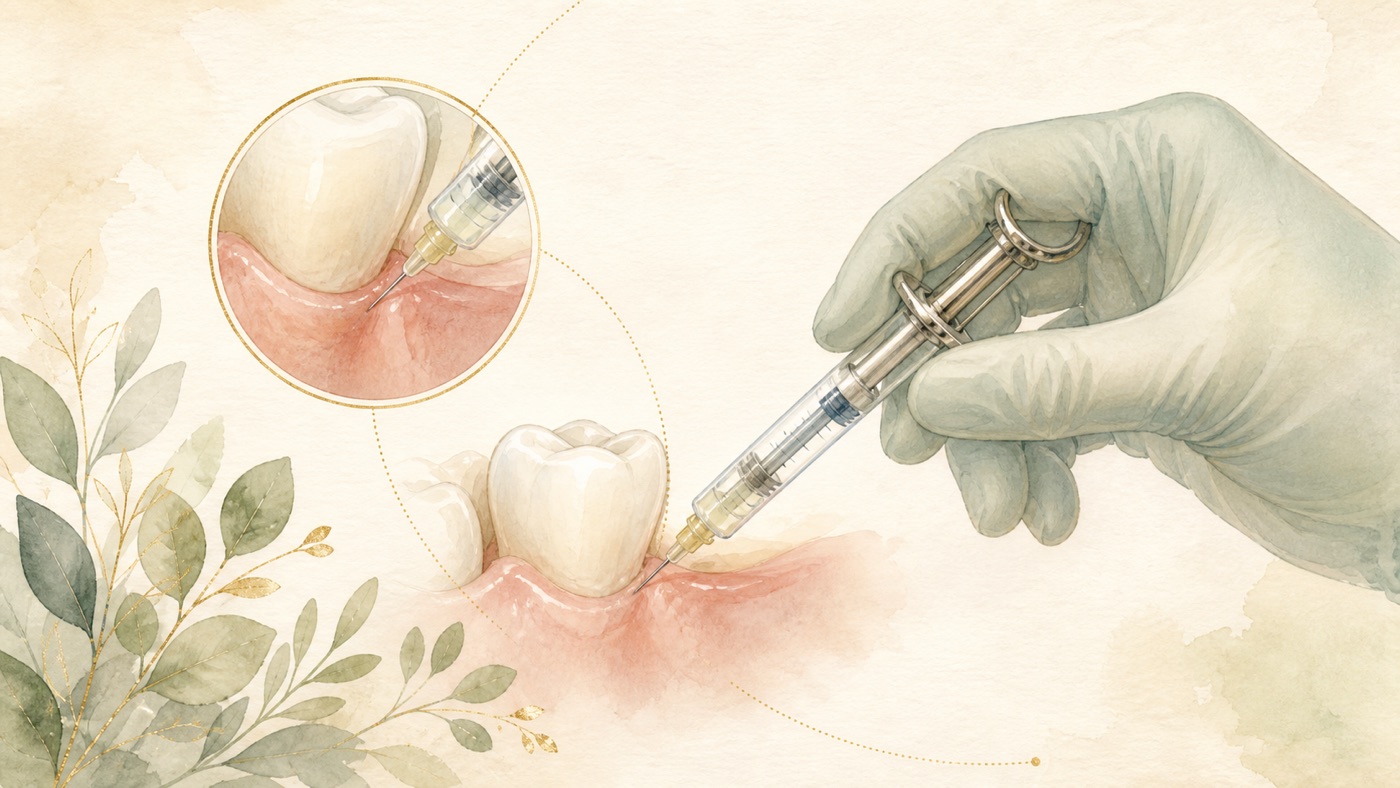
A complete guide to dental anaesthesia, sedation and fear of the dentist: a domain map running from how local anaesthesia works, through the sedation spectrum, to the assessment of anxiety
This is the map-layer article for the field of dental anaesthesia and anxiety; it does not answer any single question. It covers: the classificatory definitions of the three levels of anaesthesia / sedation / general anaesthesia; the evidence on injection pain in local anaesthesia and the evidence gap around “duration”; the mechanism of self-inflicted injury before the anaesthetic wears off, together with management strategies; the differential map for adverse reactions to local anaesthesia (toxicity / vasoconstrictor reaction / vasovagal / psychosomatic reaction); the classification ladder for true versus pseudo allergy and the standardised diagnostic pathway; the efficacy and safety figures for each band of the sedation spectrum (nitrous oxide / oral / intravenous / general anaesthesia) together with the population limits attached to them; where twelve international guidelines on “conscious sedation in paediatric dentistry” converge and diverge on monitoring requirements; the prevalence of dental fear in adults and the instruments used to assess it; the strength of the evidence behind behavioural and psychological management; and the list of questions worth asking the dentist before a procedure. Every question-level specific issue is summarised in one sentence and pointed to its corresponding canonical card. This article gives no dosing instruction of any kind, no advice about stopping any medicine, no prices and no recommendation of any clinic.
A complete guide to dental anaesthesia, sedation and fear of the dentist: a domain map running from how local anaesthesia works, through the sedation spectrum, to the assessment of anxiety
TL;DR
Sedation comes in three levels — minimal, moderate and deep — and is different from full anaesthesia [Fn1]; true local-anaesthetic allergy involving IgE-mediated reactions and anaphylaxis is rare, accounting for less than one per cent of adverse reactions [Fn2].
(54 characters in the zh-Hant original, [Fn] markers and punctuation not counted)
Introduction
This article is general oral-health education based on international literature. It does not address any country's insurance or regulations; consult local rules for care pathways and costs.
This article deliberately does not answer “how many injections will this tooth of mine need tomorrow” or “am I able to have sedation”. Individual questions of that kind can only be answered by a dentist who has examined that person and read that person's history. What this article handles is the domain-level gap: what each of the three frequently conflated words — anaesthesia, sedation and general anaesthesia — actually refers to in professional vocabulary, how “fear of the dentist” is measured in the literature, which of the commonly repeated figures in fact carry population limits, which statements that look like consensus are in fact evidence gaps, and what a person can find out by asking before walking into the surgery.
One thing has to be made clear first, because it governs how every later section is to be read: the axis of this domain is not “does it hurt”, but “how far along the scale of consciousness and physiological response has the patient been adjusted”. The official patient-education page of the U.S. National Library of Medicine puts that axis very plainly — sedation is different from full anaesthesia, sedation does not make a person completely unconscious, and recovery is quicker [Fn3]; and sedation itself is further divided into three levels, minimal, moderate (conscious sedation) and deep [Fn4][Fn5][Fn6].
The second thing is a sense of scale. A systematic review and meta-analysis that included 31 population-based observational studies covering 72,577 adults 18 years of age or older reports that the global estimated pooled prevalence of dental fear and anxiety (DFA) is 15.3% (95%CI 10.2–21.2) [Fn7], with high DFA at 12.4% (95%CI 9.5–15.6) and severe DFA at 3.3% (95%CI 0.9–7.1) [Fn8]. The authors of that same study also mark honestly that 28 of the 31 included studies carry a high risk of bias [Fn9], and that the instruments used to measure fear themselves affect the prevalence that is measured [Fn10].
That last sentence is the key to this article. It means that “how many people fear the dentist” is not a single fact but a figure that moves with the definition and the scale used — and every percentage that follows has to be read in that same way.
1. The grading map: anaesthesia, sedation and general anaesthesia are three different levels
1-1 The four terms in the official classification
The patient-education page of the U.S. National Library of Medicine (NIH/NLM) divides anaesthesia into four categories, and that is the terminological basis shared by the rest of this article:
| Category | Core of the official definition | State of consciousness |
|---|---|---|
| Local anaesthesia (local) | Numbs a small area, for example a single tooth or a wound that needs stitches [Fn11] | The patient is awake during the procedure [Fn12] |
| Regional anaesthesia (regional) | Numbs a larger area, for example an arm or a leg [Fn13] | The patient may be awake, or may be given sedation at the same time [Fn14] |
| General anaesthesia (general) | The official patient-education page describes it as affecting the whole body and feeling like a deep sleep [Fn15]; the aim is for the patient to undergo the procedure while unconscious, but the same source also lists “awareness under general anaesthesia” as a rare risk [Fn106] | Used for major surgery [Fn16] |
| Monitored sedation (monitored sedation) | Makes a person relaxed or sleepy; they may still be able to talk, and will most likely not remember the procedure [Fn17] | The official page explicitly lists it as usable for dental work [Fn18] |
The same page separately splits the depth of sedation into three bands: minimal sedation is being awake but more relaxed [Fn4]; moderate sedation (that is, conscious sedation) may involve drowsiness and poor recall, while the person can still respond when spoken to or touched [Fn5]; deep sedation is being very drowsy, possibly responding only to repeated or stronger stimulation [Fn6].
A portable way to read this: what is colloquially called “sedation dentistry” or “having it done asleep” is not a single point in professional vocabulary but may fall into any one of minimal, moderate (conscious sedation) or deep sedation [Fn4][Fn5][Fn6], and it may also refer to general anaesthesia, which is different from sedation, affects the whole body and feels like a deep sleep [Fn3][Fn15]. Before asking “is it safe”, establish which band is being talked about — because the official page itself writes these bands as states with different definitions [Fn4][Fn5][Fn6][Fn15].
1-2 Four things the word “asleep” can mean in dentistry
The same sentence, “I want to be asleep for it”, may correspond clinically to four completely different arrangements:
- Local anaesthesia only: awake [Fn12]; it is simply that the tooth has no sensation.
- Nitrous oxide (inhalation sedation): relaxed but awake, with both onset and recovery being rapid [Fn19].
- Oral or intravenous sedation: drowsy, and most people will not remember the procedure [Fn17]. The recovery-period monitoring evidence this article is able to cite is confined to intravenous sedation — an observational study of intravenous sedation (the agent used is recorded in the fact ledger) defined the point of awakening by the bispectral index and re-assessed the patient with the post-anaesthetic discharge scoring system every 20 minutes [Fn20]; on the oral sedation side this article obtained no corresponding monitoring or recovery-time evidence, and makes no equivalent statement.
- General anaesthesia: affects the whole body and is like a deep sleep [Fn15]; in professional guidelines it is positioned as a procedure requiring a complete referral and assessment pathway [Fn21].
The difference between the four is not only “how deeply asleep”, but how much monitoring manpower is required, how long recovery takes, and how the risk profile differs. That is also exactly what the whole of section 4 below deals with.
2. Local anaesthesia: the area it acts on, injection pain, and the evidence gap around “how long until it wears off”
2-1 Why dentistry almost always starts from local anaesthesia
The opening sentence of a Cochrane systematic review is the bedrock of this domain: pain during dental treatment is a common fear among patients, and it can be successfully controlled by local anaesthesia [Fn22]. That review included 123 studies with 19,223 participants [Fn23] and compared 14 different formulations [Fn24] — which is to say that “local anaesthesia” is not one drug but a whole family of drugs.
2-2 Does having the injection hurt: injection pain is a variable that has been measured, and in which an intervention has shown potential in a paediatric population
There is direct pooled evidence on this question, but it carries an explicit population limit, which has to be stated first.
A 2025 systematic review and meta-analysis screened 1,253 records down to 20 randomised controlled trials, in children aged 3 to 14 years [Fn25]. The results show that a computer-controlled local anaesthetic delivery system (CCLAD), compared with conventional injection, significantly reduced pain perception on the Wong-Baker pain scale (SMD = -0.98, p = 0.011) [Fn26], and likewise on heart-rate measurements (SMD = -0.25, p = 0.013) [Fn27]; subgroup analysis showed that the pain reduction with CCLAD was significant compared with the conventional inferior alveolar nerve block (IANB) injection [Fn28].
The authors at the same time mark four things honestly: heterogeneity was high and moderate respectively [Fn27]; on other scales and other injection techniques the results were inconsistent, with some non-significant differences appearing [Fn139]; on other pain assessment parameters no significant differences were observed [Fn140]; and the overall certainty of the evidence ranged from very low to moderate, with only 5 studies at low risk of bias [Fn29]. The authors' own concluding wording is therefore reserved: CCLAD “demonstrates potential” for reducing injection pain in children [Fn141].
⚠ The population for this evidence is children aged 3–14 years [Fn25]. This article does not extrapolate it into an effect claim for adults, and does not read “demonstrates potential” [Fn141] as an established effect.
As for the post-injection pain caused by the agent itself, moderate-quality evidence from Cochrane shows that the difference in post-injection pain between different local anaesthetics is very small, and that one of them may cause slightly less post-injection pain in that comparison [Fn30] (⚠ the main text of this article makes no comparative recommendation by drug name or concentration; which one is used is decided by the dentist according to the procedure and the individual's circumstances). The same review records that adverse events were rare [Fn31].
⚠ This passage is a compilation of the literature at drug level and constitutes no medication instruction of any kind. Which local anaesthetic is used, and by what technique it is given, is in every case decided by the dentist according to individual circumstances.
2-3 How long until the anaesthetic wears off: this is an evidence gap, not a number
This is the passage this article needs to handle with particular honesty.
One of the primary objectives of that Cochrane review states plainly that it set out to compare, between different local anaesthetic formulations, the success of anaesthesia, the speed of onset and duration, and systemic and local adverse reactions [Fn32]. But in the results section what the authors wrote was: for the comparisons assessing onset and duration, no clinical studies met their outcome definitions [Fn33].
Put another way: at the level of systematic review, “how long until the anaesthetic wears off” has so far not been pooled into an authoritative cross-formulation answer. The various “wears off in so many hours” figures circulating online are not repeated by this article — because evidence at the Cochrane level shows clearly that the question has not yet been measured under a unified definition.
What can honestly be said is this: local anaesthesia is a family containing 14 different formulations [Fn24], and different formulations behave differently in the first place (Cochrane did compare differences between formulations in the success of anaesthesia [Fn34]), so “how long until it wears off” is not physiologically a universal constant. For the actual timing, ask the dentist who prescribed and gave the injection.
2-4 While the anaesthetic has not yet worn off: self-inflicted soft-tissue injury
The reason “how long until it wears off” is a genuine question is mainly that the window before the anaesthetic wears off carries a real risk.
A 2026 systematic review screened 574 records down to 21 studies (9 RCTs, 6 case reports, 6 cohort studies), mainly focusing on children aged 6 to 12 years [Fn35], on precisely the subject of soft-tissue injuries secondary to local anaesthesia together with their differential diagnosis and treatment pathway [Fn36]. The conclusion states that soft-tissue injuries occurring in children after local anaesthesia can cause significant pain and cooperation issues [Fn37], and that effective strategies include early intervention with pharmacological and non-pharmacological approaches [Fn38].
The interventions compiled in that review include phentolamine mesylate (2 studies) [Fn39], along with non-pharmacological strategies such as intraoral appliances (2 studies) and photobiomodulation (2 studies) [Fn40]. The authors at the same time mark that the included studies varied greatly in design, sample size and duration, that effect sizes and confidence intervals were inconsistently reported, and that the risk-of-bias assessment likewise showed methodological heterogeneity and potential reporting bias [Fn41].
⚠ This passage is a compilation of the literature at the level of mechanism and strategy, and provides no procedural instruction and no medication instruction. What to watch for before the anaesthetic wears off, and whether any intervention is needed, must be explained individually by the dentist according to the extent of that particular treatment and the person's age.
The boundary with behaviour guidance in children: the evidence in this section has children as its main population [Fn35]; behaviour guidance on the paediatric side, management of cooperation and the role of the parent belong to another domain — see domain article P14 (paediatric dentistry).
2-5 Palpitations, shaking, dizziness: the differential map for adverse reactions
Many people record “palpitations after the injection” directly as “I am allergic to the anaesthetic”. In the literature these are two different things.
One review states at the outset that adverse reactions to local anaesthesia are usually a reaction to adrenaline, vasovagal syncope, or overdose toxicity [Fn42]. And in a standardised diagnostic series at an allergy centre, among 24 cases self-reporting “local anaesthetic allergy”, those classified as psychosomatic reactions accounted for 29.1%, symptoms of sympathetic stimulation 12.5%, and vasovagal syncope 8.3% [Fn43].
At the other end are the genuinely serious but rare complications. A 2026 narrative review states that local anaesthetic systemic toxicity (LAST) is a rare but potentially fatal complication of local anaesthesia in dentistry and in oral and maxillofacial surgery [Fn44], and stresses that a structured differential diagnosis is needed in order to separate LAST from the more common dental emergencies [Fn45]. The same review records three institutional facts that are useful to readers: between different guideline sources there are clinically significant discrepancies in the recommended upper limits of dose [Fn46]; the additive toxicity of combined amide agents remains underappreciated [Fn47]; and in management, intravenous lipid emulsion (ILE) is the specific rescue therapy for severe or cardiovascular LAST, while airway support and oxygenation remain the priority intervention [Fn48]. That review further points out that patient-specific factors substantially lower the effective toxic threshold [Fn49].
⚠ This article provides no dose figures, no method of calculation, and no advice about taking or stopping any medicine. The above only explains “why this is something that needs to be carried out by trained professionals in a setting prepared for emergencies”.
A portable way to read this: breaking “feeling unwell after the injection” into four possibilities — an adrenaline reaction, vasovagal syncope, toxicity, and true allergy [Fn42][Fn44] — is a very useful set of words to have before walking into the surgery. Because in the literature these four belong to different mechanisms [Fn42][Fn44][Fn50], the interpretive pathway on the professional side also differs: LAST is required to be separated from the more common dental emergencies by a structured differential diagnosis [Fn45], whereas someone with suspected allergy has a pathway to follow of detailed history-taking plus standardised skin testing and challenge testing [Fn66][Fn67][Fn68]. As for whether the agent should subsequently be changed, that falls within what must be tailored to each individual patient's medical condition [Fn71], and is not something a reader can determine for themselves.
3. “Allergy” to the anaesthetic: true allergy, pseudo allergy, and allergy that has been mislabelled
3-1 The classification ladder: three mechanisms that must not be spoken of interchangeably
A 2025 systematic review divides allergic reactions in dental practice into three classes of mechanism: immediate-type allergic reactions mediated by immunoglobulin E (IgE) [Fn50], delayed-type reactions mediated by sensitised T lymphocytes [Fn51], and pseudoallergic reactions, which occupy an independent position in the classification [Fn52]. That review at the same time stresses the importance of cross-reactions — several structurally similar molecules may bind to the same IgE antibodies or T lymphocytes [Fn53].
On the list of triggers, that review places local anaesthetics (such as lidocaine and benzocaine) among the significant triggers of allergic reactions in dentistry [Fn54], alongside antibiotics (penicillins and cephalosporins), latex products (gloves and rubber dam), the acrylic materials used in dentures and fillings, and metal alloys containing nickel, chromium and cobalt [Fn55].
That list is itself the point: reactions that occur in the dental surgery do not come only from the anaesthetic.
3-2 How rare true allergy is: the order of magnitude in two publications
A 2023 review writes the order of magnitude out directly: true allergic reactions involving IgE-mediated reactions and anaphylaxis are rare, have only been identified in case reports, and account for less than 1% of adverse local anaesthetic reactions [Fn56]; most reactions are non-allergic, or are allergy to other sources such as preservatives and excipients [Fn57].
A 2025 review took stock over a 25-year span: between January 2000 and December 2024, true allergy to articaine confirmed by standard allergological procedures such as skin testing and/or challenge testing was found in a total of only 10 case reports and 6 case series, amounting to 29 patients [Fn58]. Of these, 20 were diagnosed with immediate-type (type I) allergy and 5 with delayed-type (type IV) [Fn59], and cross-reactivity with other amide local anaesthetics was reported in only 3 cases [Fn60]. The authors' conclusion is written very directly: true allergy to articaine is exceedingly rare [Fn61].
⚠ Marked honestly: the latter is a compilation of case reports and case series (a design that depends on reporting), so it can only demonstrate that “the number of confirmed cases is extremely small”, which is not the same as having precisely measured a population incidence.
3-3 Why “mislabelling” has a cost
That same 2023 review points out the consequence of mislabelling: local anaesthetic reactions misclassified as true allergy may lead to unnecessary avoidance of local anaesthetic drugs, or to delay of surgery that requires them [Fn62].
On the evidence for standardised diagnosis, a retrospective series from an allergy centre gives a concrete picture: among 24 patients investigated at that allergy centre on suspicion of “local anaesthetic allergy” [Fn63] (the original wording is investigated…on suspicion of, and the referral source and initial diagnosis are not recorded), only 3 cases were considered local anaesthetic allergy after standardised skin testing and drug challenge testing [Fn64]; a further 3 cases (12.5%) had been positive on previous skin tests and were proved under the standardised procedure to be tolerated [Fn65]. The study concludes that true allergic reactions to local anaesthetics are rare, and that through standardised skin testing and drug challenge testing the great majority of patients who self-report “local anaesthetic allergy” can have allergy ruled out [Fn66].
⚠ Marked honestly: that study is a retrospective series of 24 people [Fn63] from a single medical centre, and the sample is very small; this article uses only its direction and its procedure, and does not use its percentages to make inferences about a population.
3-4 The diagnostic pathway, and the options after a confirmed diagnosis
That 2023 review sets out the pathway clearly: detailed history-taking about prior reactions is the opening step in understanding the nature of the reaction, and a key step at that [Fn67]; those in whom an immediate-type allergic reaction is suspected can be assessed with skin prick and intradermal testing followed by graded challenge [Fn68]; those in whom a delayed-type allergic reaction is suspected can be assessed with patch testing [Fn69].
After a confirmed diagnosis there is still a way forward in the literature. A review covering several special medical circumstances notes that, for those with confirmed amide allergies, it records the existence of alternative anaesthetic options from a different chemical class [Fn70] (⚠ the main text of this article gives no selection advice by drug name — which agent can be tolerated after a confirmed diagnosis, who administers it and under what monitoring conditions, has to be decided after assessment by an allergy or anaesthesia specialist); the summing-up of that same review is that the choice of local anaesthetic must be tailored to each patient's medical condition [Fn71]. Another review records that patients with a true allergy may sometimes be treated under general anaesthesia [Fn72].
⚠ This passage constitutes no medication advice, constitutes no advice about stopping any medicine, and gives no doses. Whether allergy testing is needed, which specialty carries it out, and what plan is adopted after a confirmed diagnosis, must be assessed by the dentist together with an allergy or anaesthesia specialist.
4. The sedation spectrum: from nitrous oxide to general anaesthesia
4-1 First, lay the spectrum out
| Band | State of consciousness | Population of the evidence cited here | Main limitation |
|---|---|---|---|
| Local anaesthesia | Awake [Fn12] | Across populations (Cochrane, 123 studies) [Fn23] | No eligible clinical studies on onset and duration [Fn33] |
| Nitrous oxide (inhalation sedation) | Relaxed, awake | Children aged 2–12 years [Fn73] | The figures come from the mild-anxiety subgroup [Fn19] |
| Oral sedation | Drowsy, possible amnesia [Fn17] | Children aged 2–12 years [Fn73] | Lower success rate in moderate cases [Fn74] |
| Intravenous sedation | Drowsy through to deep [Fn6] | Adult dental implant patients [Fn75] | The main direct evidence is a single RCT from 2011 |
| General anaesthesia | Like a deep sleep [Fn15] | Mainly children [Fn76] | The guideline itself states that the evidence is scarce [Fn77] |
4-2 What nitrous oxide is: effect, onset and recovery
A 2026 systematic review included 25 studies with approximately 12,500 participants [Fn78], in children aged 2 to 12 years [Fn73], comparing nitrous oxide–oxygen (N₂O/O₂) with oral sedation as minimally invasive options.
On the nitrous oxide side, that review records: in a population with mild anxiety the efficacy is 85–92%, complications are under 5% (such as nausea), and onset takes only 30–60 s [Fn19]; it describes recovery as relatively rapid, and on that basis positions nitrous oxide as suited to short procedures (⚠ recovery, and whether a person may leave, are in every case determined by the monitoring carried out on the day and by that team's discharge criteria, and not by any fixed number of minutes; that figure comes from a review in a paediatric population) [Fn79]. Safety was high overall (adverse events under 5%), and nitrous oxide is relatively safer for outpatient use [Fn80].
⚠ Three limits have to be held in mind together: (i) the figure of 85–92% corresponds to the mild anxiety subgroup [Fn19] and does not apply to moderate or severe anxiety; (ii) the study population is children aged 2–12 years [Fn73], and this article does not extrapolate it into a figure for adults; (iii) that review used qualitative synthesis because of heterogeneity, and the authors state limitations including protocol variability and a limited number of RCTs [Fn81].
4-3 Oral sedation: the success rate falls as the degree of anxiety rises
On the oral sedation side the same review records: success for moderate cases is 70–85% [Fn74]; the review separately records differences in response between oral agents, one commonly used agent showing 5–10% paradoxical excitation (that is, in the opposite direction to the one expected) [Fn82]. The main text of this article gives no recommendation by drug name, dose or drug combination, and repeats no combination success rate (what the source states is retained in the fact ledger for traceability) — the evidence on oral sedation is heterogeneous, an individual's response may run the opposite way or go deeper than expected, and the choice of agent has to be made by a qualified team under conditions where monitoring and rescue are available [Fn83].
There is a portable way to read this: from 85–92% in mild anxiety [Fn19] to 70–85% in moderate cases [Fn74], the figures inside that one review already fall as the degree of anxiety rises. Any claim that applies a single high figure to everybody violates the stratification of the original data.
⚠ Drug names are repeated from the literature only and constitute no medication instruction; this article provides no dose, no route and no timing of administration.
4-4 Intravenous sedation and dental implants: the direct evidence, and how old it is
“Is implant surgery under sedation safe” is one of the few questions in this domain that has direct evidence at population level, but the age and the design of that evidence have to be read together with it.
A randomised controlled trial included 255 consecutive patients undergoing dental implant surgery [Fn75], randomly assigned to a group given intravenous sedation with local anaesthesia (n = 123) and a group given local anaesthesia only (n = 132) [Fn85]. The results show that, on comparisons of percentage change, of maximum values and of the incidence of larger rises, systolic and/or diastolic blood pressure was significantly higher in the non-sedation group than in the sedation group [Fn86]; the results section of that study says that this intravenous sedation regimen stabilised haemodynamics and contributed to the safety of the patient during implant surgery [Fn87]; but the wording of its conclusion section is narrower than that sentence — it says only that the administration of intravenous sedation had a beneficial effect for haemodynamic changes during implant surgery [Fn142], and does not mention safety again.
⚠ Marked honestly: this is a single RCT from 2011, and the outcome variable measured is haemodynamic stability, not complications or survival; this article does not read it as any assurance of overall safety [Fn75][Fn85][Fn87][Fn142]. The phrase “contributed to the safety of the patient” above comes from the results section and not from the conclusion section [Fn87][Fn142] — which is exactly the same kind of citation error that section 4-7 of this article sets out to point at (taking a sentence from outside the conclusion as the authors' conclusion). The standard has to be applied consistently, so its location is marked plainly here.
On the side of “how long after it is over before I can go home”, a prospective observational study gives concrete times: the patients were American Society of Anesthesiologists (ASA) grade I or II [Fn88], 46 in total [Fn89], with the recovery process quantified by the bispectral index and the post-anaesthetic discharge scoring system [Fn20]. The result: on that study's premise that “approximately 50 minutes of conscious sedation was properly controlled”, patients could go home within approximately 90–110 minutes from the start of administration [Fn90], which converts to going home within about 40–60 minutes after awakening [Fn91].
⚠ Marked honestly: that study is an observational study of 46 people at a single institution, not a randomised controlled trial, and it excluded people under 18 years old, people with a history of drug allergies, people with a body mass index of 26 or more, and people in regular use of antipsychotic, psychotropic or hypnotic substances [Fn92]. This means that this set of time figures cannot be applied directly to the populations that were excluded. Equally important: the conclusion sentence in the original carries a conditional premise (approximately 50 minutes of conscious sedation being properly controlled) and uses the word “approximately” [Fn90]; this set of figures is bound to the sedation duration of that study, and it is not the case that a sedation procedure of any length is covered by it.
Assessment, procedure and aftercare for dental implants themselves belong to another domain — see domain article P01 (dental implants); the question-level answer to “does a dental implant hurt” is in canonical card KM-DENTAL-47 (in production).
4-5 General anaesthesia: how the guideline positions it, and the frequency stratification of risk
Positioning at guideline level. The clinical guideline of the British Society for Disability and Oral Health (BSDH) states that general anaesthesia may be needed to support care within Special Care Dentistry services, for reasons that include enabling people with severe learning disability or severe dental phobia to receive extensive dental treatment [Fn93]; the guideline says plainly that, because providing dental care using general anaesthesia involves potential risks, implications and costs, these teams need guidance [Fn94]. The guideline itself is presented as a set of overarching principles followed by six key sections, reflecting the complete pathway from the patient's referral to dental services through to their care during and after general anaesthesia [Fn21], and it stresses the necessity of comprehensive, person-centred assessment and planning [Fn95].
⚠ This guideline states honestly that there is little evidence available from which to form guidance, and that the recommendations are therefore based mainly on the expert consensus opinion of the working group [Fn77]. On that basis this article reads it as a framework, and not as evidence of effect.
Frequency stratification of risk. A systematic review compiled the morbidity of children after oral surgery procedures under general anaesthesia: the leading indication by share was caries and its complications (up to 91.0% of patients) [Fn76], followed by lack of cooperation in the surgery and/or anxiety and/or fear of dental procedures (between 39.8% and 47.9%) [Fn96]; the prevalence of treatment in the special patient group reached 87.7%, compared with 63.3% in healthy patients [Fn97]. On complications, between 43.0% and 98.9% of cases experienced discomfort within the first 24 hours [Fn98], the main reason being pain (between 14.0% and 95.0%) [Fn99]. The review concludes that paediatric dental procedures carried out under general anaesthesia carry a very low risk of major complications, but an incidence of minor complications that is almost universal [Fn100].
The official list of risks. The page of the U.S. National Library of Medicine puts it this way: anaesthesia is generally safe, but there can be risks, especially with general anaesthesia [Fn101]; and it lists heart rhythm problems [Fn102], breathing problems [Fn103], an allergic reaction to the anaesthesia [Fn104], temporary confusion (which can last several days in some people over the age of 60, and appears briefly in children after waking up from anaesthesia) [Fn105], and awareness under general anaesthesia (usually meaning that the person hears sounds, and occasionally that they can feel pain, which is rare) [Fn106]. The advice on that page is to talk to your health care provider about the benefits and risks of anaesthesia [Fn107].
⚠ The above is frequency information at population level together with an official list of risks, and constitutes no risk prediction for any individual patient. Actual risk has to be assessed by the dentist together with anaesthesia professionals on the basis of the individual history.
4-6 Monitoring requirements: where twelve international guidelines on “conscious sedation in paediatric dentistry” agree and where they do not
This section is the core of “how to judge whether a sedation arrangement follows the rules”, because what it gives is the intersection of guidelines from different countries. But its scope has to be made clear first.
A comparative analysis and evidence mapping study included twelve international clinical guidelines on the subject of conscious sedation in paediatric dentistry [Fn108]. The results fall into two halves:
The part where they agree (which can be used as a list of questions) — complete convergence was observed in the core safety domains, comprising patient assessment, monitoring and the training of professionals [Fn109]; convergence was 91.67% on discharge criteria and 83.33% on contraindications [Fn110].
The part where they do not agree (which has to be understood as varying from place to place) — substantial variation appears at the level of pharmacological protocol, with only 16.67% of guidelines providing a complete description of drugs and doses [Fn111]; recommendations on route of administration and on emergency equipment are reported unevenly, appearing in 66.67% and 50% of guidelines respectively [Fn112]. The authors conclude that although foundational safety principles are consistently addressed, significant heterogeneity persists in pharmacological and procedural recommendations, and that this variability may contribute to differences in practice and to uncertainty among practitioners [Fn113].
⚠ Subject and population limits (which must travel with these figures): the twelve guidelines included in that comparative study are on the subject of conscious sedation in paediatric dentistry [Fn108]; they are not about adult sedation, and they do not cover general anaesthesia. This article cites the study for one structural fact — which safety domains are consistently treated as necessary by guidelines across countries [Fn109] — and does not extrapolate any convergence percentage into a consensus of adult guidelines or of general anaesthesia guidelines.
A portable way to read this: patient assessment, monitoring and staff training are the three things that all twelve of those paediatric dentistry conscious sedation guidelines write in [Fn108][Fn109]. Asking about those three things in the pre-procedure conversation is therefore a line of questioning grounded in guideline text from several countries, and not an awkwardness — but remember that this grounding comes from guideline text on conscious sedation in children [Fn108], and this article does not claim that adult or general anaesthesia guidelines carry the same convergence figures.
4-7 An evidence gap that has to be disclosed honestly: in the population younger than 18 years there is no head-to-head RCT of sedation versus general anaesthesia
One claim circulates widely on the Chinese-language internet: “replacing general anaesthesia with sedation can reduce complications and cost.” The source of that sentence is in fact the background section of a Cochrane review [Fn115], not its research findings [Fn116].
The title of that review is precisely a comparison of the efficiency of sedation and of general anaesthesia for the provision of dental treatment to patients younger than 18 years [Fn114], and in its background it writes that historically such situations have been managed by using general anaesthesia in children, whereas the use of sedation may lead to reduced morbidity and cost [Fn115] — note that the verb is “may”, and that it sits in the background section.
Its results, however, are these: the original review identified 16 studies for possible inclusion and, having obtained the full texts, found none to be eligible [Fn116]; the 2012 update identified no additional studies, and the 2015 update identified 2 studies for possible inclusion which were again judged ineligible [Fn117]. The authors' conclusion states that randomised controlled studies comparing dental general anaesthesia with sedation are needed, in order to quantify differences such as morbidity and cost [Fn118].
So the correct statement is: at the Cochrane level, and confined to the subject scope of dental treatment for patients younger than 18 years [Fn114], there is as yet no eligible randomised controlled evidence available for comparing sedation with general anaesthesia [Fn116][Fn118]. What has to be said alongside it: the inclusion criteria of that review were from the outset limited to children and adolescents up to 18 years of age [Fn114], and head-to-head comparison in an adult population was not within its search scope, so this empty review can prove neither that such evidence exists for adults nor that it does not. Choices in practice therefore rest on guideline consensus and on individual assessment [Fn77][Fn95], rather than on head-to-head trials.
4-8 What costs are made of and what makes them vary (this article quotes no prices)
This article lists no amounts. What can be explained is what costs are made of and what they move with:
- Staff and training: the training of professionals is a core safety domain covered consistently by all twelve of those international guidelines on conscious sedation in paediatric dentistry [Fn108][Fn109], which means that conscious sedation requires staff with corresponding training to be present; on the general anaesthesia side, a separate professional guideline lists cost alongside risks and implications as a reason why guidance is needed [Fn94].
- Monitoring: monitoring is likewise a domain covered consistently by those twelve paediatric dentistry conscious sedation guidelines [Fn108][Fn109]; and sedation itself is divided into the three levels of minimal, moderate and deep [Fn4][Fn5][Fn6], so “which band is being used this time, and how monitoring is arranged” is a matter that can be confirmed with the dentist.
- Facilities and emergency preparedness: although recommendations on emergency equipment are reported unevenly across those twelve guidelines (appearing in 50%) [Fn108][Fn112], it is indeed one of the domains included in the comparison.
- Time: assessment for going home after intravenous sedation requires recovery-room time; on the premise that approximately 50 minutes of conscious sedation was properly controlled, one observational study measured approximately 90–110 minutes from the start of administration [Fn90].
- The extent of the procedure itself: in the guideline, general anaesthesia is linked to the situation of “enabling extensive dental treatment within Special Care Dentistry services to be carried out” [Fn93]; the greater the extent, the more complex the make-up.
- The professional society guideline itself also plainly lists “cost” alongside risks and implications as a reason why guidance is needed [Fn94].
For local systems and costs see the corresponding canonical card (TW): the general framework of dental costs and insurance systems is in domain article P12; reimbursement rules, insurance applicability and fee-approval systems are highly localised from country to country, and this article makes no country-specific statement.
5. Dental fear and anxiety in adults: how it is measured, how it is managed
5-1 Look at the scale first, then at why it moves
The global estimates were already given in the introduction: the pooled prevalence of DFA in adults is 15.3%, high DFA 12.4% and severe DFA 3.3% [Fn7][Fn8], from a sample of 31 studies and 72,577 individuals [Fn119]. Subgroup analysis shows that DFA, high DFA and severe DFA are more prevalent among women and younger adults [Fn120].
Two things to read alongside them: 28 of the 31 studies presented a high risk of bias [Fn9]; and the instruments used to measure it themselves affect the prevalence [Fn10].
A portable way to read this: on meeting any claim of the form “X% of people fear the dentist”, ask two things first — which level is being measured (that same study separately produced pooled estimates of DFA 15.3%, high DFA 12.4% and severe DFA 3.3% [Fn7][Fn8]), and which scale was used [Fn10].
⚠ These three figures are the result of three separate pooled estimates [Fn7][Fn8], and the authors state plainly that the measurement instrument used affects the prevalence obtained [Fn10]; this article therefore does not subtract them from one another to produce any “gap” figure, and does not read them as a nested stratification inside one and the same sample.
5-2 Assessment instruments: this domain uses questionnaires, not impressions
A scale is the threshold for inclusion in the research.[Fn121] The systematic review of psychological treatment of dental anxiety among adults required, as a condition of inclusion, that the study sample had dental anxiety measured on a validated scale, naming the Dental Anxiety Scale (DAS) and the Dental Fear Survey (DFS), or that it met psychiatric diagnostic criteria for dental phobia [Fn121].
What a common scale looks like. The Modified Dental Anxiety Scale (MDAS) is a short questionnaire made up of five items, with a total score ranging from 5 to 25 [Fn122]. In a validation study of 230 patients undergoing oral surgery [Fn123], the internal consistency of that version was high (Cronbach's alpha = 0.92) [Fn124]; scores were significantly higher in women, and significantly higher in those with previous distressing experiences in a medical or dental setting [Fn125], while the correlations with age and with frequency of dental visits were likewise significant [Fn126].
⚠ Marked honestly: the authors of that validation study state themselves that, because the participants were limited to an oral surgery population, it might not provide an estimation of anxiety prevalence in the general dental population [Fn127]. This article cites it in order to explain the form and the reliability of this class of instrument, not in order to use its values for inferences about a population.
What this means for readers: dental anxiety is, professionally, a measurable variable, and not a verdict on “mental strength”. This does not mean that you should score yourself — choosing, administering and interpreting a scale is the work of professionals; the score by itself cannot diagnose dental phobia, and it cannot determine whether sedation is to be used. What is actually usable by a reader is this: describe the specific situations and past experiences that you are afraid of to the clinical staff, and let them assess on that basis.
5-3 Behavioural and psychological management: there is support, but the quality of the evidence has to be stated honestly
Evidence one. A systematic review identified 10 RCT publications [Fn128], with this result: cognitive behavioural therapy / behaviour therapy (CBT/BT) brought a significant reduction in dental anxiety, with a mean difference of -2.7 as measured using the DAS [Fn129]; but the authors at the same time mark that this result was based on low quality of evidence [Fn130]. That same review separately notes that there was also some support that CBT/BT improves the patients' acceptance of dental treatment more than general anaesthesia does (again low quality of evidence) [Fn131]. Its summing-up is that there is evidence that behavioural interventions can help adults with dental anxiety/phobia; however, it is clear that more well-designed studies on the subject are needed [Fn132].
Evidence two. A 2022 systematic review and meta-analysis — whose title and central subject are “Efficacy of Hypnosis on Dental Anxiety and Phobia”, and which is not on the subject of CBT [Fn133] — examined 19 clinical trials aimed at reducing dental anxiety and fearful avoidance in adults [Fn133], covering treatments that include various forms of CBT, relaxation training, benzodiazepine premedication, self-hypnosis by audio therapy, hypnotherapy and nitrous oxide sedation [Fn134]. Its conclusion is that CBT delivered in its various forms (including single-session treatment) showed the most evidence for the efficacy of anxiety reduction [Fn135]; and that because the methods were highly heterogeneous, only five studies could be included in the meta-analysis, while the application of hypnosis showed contrasting results [Fn136].
Both directions have to be stated. The same authors also wrote down the positive side for hypnosis: the results of the systematic review are promising, and hypnosis can also be regarded as a powerful and successful method for anxiety reduction; but in the same sentence they go on to write that there are also studies with a small or even slightly negative effect [Fn138]. The authors therefore recommend a more consistent use of methods to examine anxiety for hypnosis research [Fn137].
⚠ Source-positioning disclosure: this article cites that review for its comparative statement about CBT [Fn135] and for its own account of methodological heterogeneity [Fn136], and both of those come from a review whose subject is hypnosis [Fn133]; readers should know that context of provenance, and this article has at the same time presented both the positive and the reserved sides of what the authors say about hypnosis [Fn136][Fn138].
⚠ The shared message of the two reviews is: the direction has support, the quality has yet to improve [Fn130][Fn132][Fn136]. This article does not write it up as “proven effective”.
5-4 A decision framework for the three pathways
Drawing all the preceding passages together, adult “fear of the dentist” has roughly three pathways in the literature; they are not a list of mutually exclusive options but levels of differing intensity:
| Pathway | Support in the literature | Honest limits |
|---|---|---|
| Behavioural / psychological management (CBT, relaxation and so on) | Significant reduction in anxiety (DAS mean difference -2.7) [Fn129]; CBT has the most supporting evidence [Fn135] | Low quality of evidence [Fn130]; more well-designed studies are needed [Fn132]; Fn135 comes from a review whose subject is hypnosis [Fn133] |
| Pharmacological sedation (nitrous oxide / oral / intravenous) | Nitrous oxide 85–92% in the mild-anxiety subgroup of children aged 2–12 years [Fn19][Fn73]; intravenous sedation had a beneficial effect for haemodynamic changes (wording of the conclusion section) [Fn142] | The main evidence population is children aged 2–12 years [Fn73]; the direct evidence for intravenous sedation is a single RCT from 2011 [Fn75] |
| General anaesthesia | The guideline records, in the context of Special Care Dentistry services, that it can be used for people with severe dental phobia [Fn93] | The guideline itself states that the evidence is scarce [Fn77]; minor complications are almost universal (paediatric population) [Fn100]; in the population younger than 18 years there is no eligible RCT comparison against sedation [Fn114][Fn116] |
What this table conveys is not “which one is good” but “which one has been studied more clearly”. The three pathways differ in the thickness of their evidence, and there is no shared head-to-head trial between them to rely on: the result of Cochrane's search in the population younger than 18 years was that not one study was eligible [Fn114][Fn116], the adult population was not within the scope of that review [Fn114], and the authors' conclusion is that randomised controlled studies of this kind are still needed [Fn118]. Which pathway is actually adopted, and whether they can be combined, has to be assessed by the dentist according to individual circumstances.
6. The boundary with behaviour guidance in children
A considerable proportion of the sedation and anaesthesia evidence cited in this article has children as its original population or subject scope, and it is listed here item by item: the systematic review of nitrous oxide and oral sedation was in ages 2–12 [Fn73]; the meta-analysis of injection pain reduction was in ages 3–14 [Fn25]; the review of self-inflicted injury before the anaesthetic wears off was mainly in ages 6–12 [Fn35]; the review of morbidity after general anaesthesia likewise had children as its subjects [Fn76]; the comparative analysis of twelve guidelines has as its subject conscious sedation in paediatric dentistry [Fn108]; and the inclusion criteria of the empty Cochrane review on “sedation vs general anaesthesia” were limited to children and adolescents younger than 18 years [Fn114].
This means two things:
- This article has marked the population item by item when repeating these figures, and readers should not apply effect figures from a paediatric population to adults.
- Non-pharmacological behaviour guidance on the paediatric side is itself another domain — it involves variables such as developmental stage, whether a parent is present and communication technique, and it is not the same set of methods as cognitive behavioural therapy in adults. See domain article P14 (paediatric dentistry).
7. Risk factors (indications, possible adverse effects and contraindications)
Indications (the situations of use recorded in the literature and in guidelines)
- Local anaesthesia: controlling pain during dental treatment [Fn22].
- Monitored sedation: the official patient-education page explicitly lists it as usable for dental work [Fn18].
- Nitrous oxide and oral sedation: positioned as minimally invasive options for managing dental anxiety in children [Fn78], with nitrous oxide suited to short procedures [Fn79].
- Intravenous sedation: a regimen used in combination with local anaesthesia during dental implant surgery, measured by a single 2011 RCT as having a beneficial effect for haemodynamic changes [Fn142].
- General anaesthesia: a professional guideline records that it may be needed within Special Care Dentistry (SCD) services, in order to enable people with severe learning disability or severe dental phobia to receive extensive dental treatment [Fn93] (the stated scope of that guideline is adults within SCD services [Fn93]); in a paediatric population the leading indication by share is caries and its complications [Fn76], followed by lack of cooperation / anxiety / fear [Fn96].
Possible adverse effects and complications
- The local anaesthetic injection itself can cause pain perception, and there are differences between agents [Fn30].
- Self-inflicted soft-tissue injury may occur while the anaesthetic has not yet worn off, causing significant pain and cooperation issues [Fn37].
- Local anaesthetic systemic toxicity (LAST): rare but potentially fatal [Fn44]; patient-specific factors lower the effective toxic threshold [Fn49].
- Allergic reactions: local anaesthetics are one of the triggers of allergic reactions in dentistry [Fn54]; true allergy involving IgE-mediated reactions and anaphylaxis is rare (less than 1% of adverse local anaesthetic reactions) [Fn56] — the scope of that proportion is confined to that type and does not cover delayed-type (type IV) true allergy (in the 25-year stocktake of articaine, that type accounted for 5 confirmed cases [Fn59]).
- Nitrous oxide (the data population is children aged 2–12 years [Fn73], and the efficacy figures correspond to the mild anxiety subgroup [Fn19]): complications under 5%, for example nausea [Fn19].
- Oral sedation (the data population is children aged 2–12 years [Fn73]): that review records that one commonly used oral sedative agent shows 5–10% paradoxical excitation (a response running opposite to the direction expected) [Fn82]. The drug name is in the fact ledger; this section gives no selection advice.
- General anaesthesia: the officially listed risks include heart rhythm problems [Fn102], breathing problems [Fn103], allergic reactions [Fn104], temporary confusion [Fn105] and intra-operative awareness (rare) [Fn106]; in a paediatric population 43.0–98.9% experienced discomfort within 24 hours after the procedure, the main reason being pain [Fn98][Fn99], while the risk of major complications is very low [Fn100].
Contraindications and situations requiring individual assessment
- Contraindications are one of the domains with higher convergence (83.33%) among the twelve international guidelines on conscious sedation in paediatric dentistry referred to above [Fn108][Fn110], which means that this is an area with a basis in guideline text across countries but one that will still vary from place to place; the scope of that percentage is confined to guidelines on conscious sedation in children [Fn108], and this article does not extrapolate it into a convergence figure for adult or general anaesthesia guidelines.
- For those with confirmed amide local anaesthetic allergies, that review records the existence of alternative options from a different chemical class (not that the whole class is usable) [Fn70]. This section names no drug — which agent can be tolerated after a confirmed diagnosis, who administers it and under what monitoring conditions, has to be decided by an allergy or anaesthesia specialist; the drug name given in the source is retained in the fact ledger for traceability.
- The choice of local anaesthetic for people with systemic disease (cardiovascular, liver and kidney function, diabetes, thyroid, bleeding tendency, pregnancy, advanced age and so on) falls within what requires individual assessment [Fn71]. The interface between systemic disease and dentistry is in domain article P19, and pregnancy and special populations are in P20.
- The intravenous sedation recovery-time study referred to above explicitly excluded people under 18 years old, people with a history of drug allergies, people with a body mass index of 26 or more, and people in regular use of particular substances [Fn92] — exclusion criteria of that kind themselves signal the populations that need separate assessment.
⚠ This section is risk disclosure at the level of the literature, and is not an individual diagnosis. The actual method of treatment and its effect vary from person to person, and have to be assessed by a dentist.
8. Questions worth asking the dentist before a procedure (built out of the domains on which international guidelines converge)
The questions below are not a challenge; they fall within the core safety domains on which the twelve international guidelines on conscious sedation in paediatric dentistry referred to above show “complete convergence” [Fn108][Fn109], and within the person-centred assessment stressed by the British Society for Disability and Oral Health guideline in the context of general anaesthesia in Special Care Dentistry [Fn93][Fn95]:
- Which band will be used for me this time? Local anaesthesia, minimal / moderate / deep sedation, or general anaesthesia — the four levels have different definitions [Fn11][Fn15][Fn4][Fn5][Fn6].
- What will the patient assessment involve? Patient assessment is a core safety domain covered consistently by those twelve paediatric dentistry conscious sedation guidelines [Fn108][Fn109].
- How will I be monitored during the procedure, and by whom? Monitoring and the training of professionals are likewise domains covered consistently by those twelve guidelines [Fn108][Fn109].
- In what circumstances would this not be suitable for me? Convergence on contraindications across those twelve guidelines is 83.33% [Fn108][Fn110].
- What conditions have to be met afterwards before I can leave? Convergence on discharge criteria across those twelve guidelines is 91.67% [Fn108][Fn110]; and one observational study of intravenous sedation (whose participants excluded anyone under 18 years old [Fn92]) quantified the decision about going home using a scoring system [Fn20].
- That time in the past when the injection made me feel unwell — which kind was it? A detailed history of prior reactions is the opening step in understanding the nature of the reaction [Fn67]; feeling unwell may be an adrenaline reaction, vasovagal syncope or toxicity, rather than allergy [Fn42].
- What are the risks and the benefits of this anaesthesia? The advice on the official patient-education page is precisely to talk to your health care provider about the benefits and risks of anaesthesia [Fn107].
⚠ The source scope of this list has to be read alongside it: the convergence data cited in questions 2–5 all come from one comparative study of guidelines on conscious sedation in paediatric dentistry [Fn108]; question 7 comes from an official patient-education page addressed to the general public [Fn107]. This article lists these domains as directions of enquiry for adult readers, taking from them the structural meaning of “which safety domains are consistently treated as necessary by guidelines”, and makes no claim that those percentages themselves apply to adults or to the general anaesthesia setting.
For local systems and costs see the corresponding canonical card (TW): the legal form of informed consent, the specification of consent documents and the approval of fees belong to each country's own system, and this article makes no country-specific statement.
Every clinical statement in this article is mapped line by line to its cited source (see the sources and evidence chain below). It has not been clinically reviewed by a licensed practitioner. This is health information, not individual advice; assessment by a clinician is required.
FAQ
- Q1. Does having the injection hurt? Is there any way to make it hurt less?
- **Injection pain is a variable that has been measured: a meta-analysis including 20 RCTs in children aged 3–14 years shows that a computer-controlled local anaesthetic delivery system, compared with conventional injection, significantly reduced pain perception on the Wong-Baker scale (SMD = -0.98, p = 0.011) [Fn26], and likewise on heart rate [Fn27].** What has to be read alongside it: the study population was children [Fn25]; on other scales and other injection techniques the results were inconsistent, with some **non-significant** differences appearing [Fn139]; on other pain assessment parameters **no significant differences were observed** [Fn140]; the overall certainty of the evidence ranged from very low to moderate [Fn29]; and the authors' own concluding wording is that CCLAD “demonstrates potential” [Fn141]. This article does not extrapolate it into a figure for adults, and does not read it as an established effect. On the agent side, moderate-quality evidence from Cochrane shows that the difference in post-injection pain between different local anaesthetics is very small, and that one of them may be slightly less in that comparison [Fn30] (⚠ **neither the main text nor the FAQ of this article lists drug names or concentrations**; which one is used is decided by the dentist according to the procedure and the individual's circumstances, and the drug names given in the source are retained in the fact ledger for traceability), and that adverse events were rare [Fn31]. Pain in dental treatment is in any case a common fear among patients, and it can be successfully controlled by local anaesthesia [Fn22]. Which approach is actually adopted has to be assessed by the dentist.
- Q1. 麻酔の注射は痛いですか。より痛くない方法はありますか。 — **注射時の痛みは測定されたことのある変数です。20 件のランダム化比較試験を組み入れ、対象が 3–14 歳の小児であるメタアナリシスは、コンピュータ制御局所麻酔注入システムが従来の注射と比較して、Wong-Baker の尺度で痛みの感じ方を有意に低下させ(SMD = -0.98, p = 0.011)[Fn26]、心拍数でも同様であったことを示しています [Fn27]。** あわせて読むべきことは次のとおりです。この研究の集団は小児であること [Fn25]、他の尺度と他の注射方法では結果が一致せず、一部に**有意でない**差が生じたこと [Fn139]、他の痛みの評価指標では**有意差が観察されなかった**こと [Fn140]、全体のエビデンスの確実性はきわめて低いものから中等度であること [Fn29]、そして著者自身の結論の言い回しは CCLAD が「可能性を示している」というものであること [Fn141]。本記事はこれを成人の数字へ外挿せず、確立した効果としても読みません。薬剤の面では、Cochrane の中等度の質のエビデンスが次を示しています。異なる局所麻酔薬の間で注射後の痛みの差はごく小さく、そのうちの一つはその比較においてやや少ないかもしれない [Fn30](⚠ **本記事の本文と FAQ は薬剤名と濃度を挙げません**。どれを用いるかは処置と個々の状態に応じて歯科医師が決めます。出典の原文に記載された薬剤名は、トレーサビリティのために事実台帳に保持しています)。そして望ましくない事象はまれです [Fn31]。歯科治療の痛みはもともと患者によくある恐怖であり、それは局所麻酔によってうまくコントロールできます [Fn22]。実際にどの方法を採るかは、歯科医師の評価が必要です。
- Q1. Does having the injection hurt? Is there any way to make it hurt less? — **Injection pain is a variable that has been measured: a meta-analysis including 20 RCTs in children aged 3–14 years shows that a computer-controlled local anaesthetic delivery system, compared with conventional injection, significantly reduced pain perception on the Wong-Baker scale (SMD = -0.98, p = 0.011) [Fn26], and likewise on heart rate [Fn27].** What has to be read alongside it: the study population was children [Fn25]; on other scales and other injection techniques the results were inconsistent, with some **non-significant** differences appearing [Fn139]; on other pain assessment parameters **no significant differences were observed** [Fn140]; the overall certainty of the evidence ranged from very low to moderate [Fn29]; and the authors' own concluding wording is that CCLAD “demonstrates potential” [Fn141]. This article does not extrapolate it into a figure for adults, and does not read it as an established effect. On the agent side, moderate-quality evidence from Cochrane shows that the difference in post-injection pain between different local anaesthetics is very small, and that one of them may be slightly less in that comparison [Fn30] (⚠ **neither the main text nor the FAQ of this article lists drug names or concentrations**; which one is used is decided by the dentist according to the procedure and the individual's circumstances, and the drug names given in the source are retained in the fact ledger for traceability), and that adverse events were rare [Fn31]. Pain in dental treatment is in any case a common fear among patients, and it can be successfully controlled by local anaesthesia [Fn22]. Which approach is actually adopted has to be assessed by the dentist.
- Q2. How long until the anaesthetic wears off? What should I watch for while it has not yet worn off?
- **The honest answer is that at the level of systematic review there is at present no pooled general figure for this question.** One of Cochrane's primary objectives included comparing the speed of onset and duration [Fn32], but the result was that no clinical studies met its outcome definitions [Fn33]. Local anaesthesia itself covers 14 different formulations [Fn24], so the timing will not be a constant. What genuinely needs watching is the window before the anaesthetic wears off: a systematic review including 21 studies, mainly in children aged 6–12 years, notes that soft-tissue injuries secondary to local anaesthesia can cause significant pain and cooperation issues [Fn37], and that effective strategies include early intervention with pharmacological and non-pharmacological approaches [Fn38]. **This article provides no procedural instruction and no medication instruction**; what to watch for on the day is to be explained by the dentist who gives the injection.
- Q2. 麻酔はどれくらいで切れますか。まだ切れていないときは何に注意すればよいですか。 — **誠実な答えは次のとおりです。システマティックレビューの層において、この問いには現時点で統合された共通の数字がありません。** Cochrane の主要な目的の一つには効き始めの速さと持続時間の比較が含まれていましたが [Fn32]、結果はそのアウトカムの定義を満たす臨床研究が一件もなかったというものでした [Fn33]。局所麻酔そのものが 14 種類の異なる製剤を含むため [Fn24]、時間は一つの定数にはなりません。本当に注意すべきなのは麻酔が切れる前の空白の時間です。21 件の研究を組み入れ、6–12 歳の小児を主とするシステマティックレビューは、局所麻酔の後に続発する軟組織の損傷が著しい痛みと協力の問題を引き起こしうると指摘しており [Fn37]、有効な方策には薬理学的および非薬理学的な手段による早期の介入が含まれます [Fn38]。**本記事はいかなる操作の指示も薬の使用の指示も提供しません**。その回に何に注意すべきかは、施行した歯科医師から説明を受けてください。
- Q2. How long until the anaesthetic wears off? What should I watch for while it has not yet worn off? — **The honest answer is that at the level of systematic review there is at present no pooled general figure for this question.** One of Cochrane's primary objectives included comparing the speed of onset and duration [Fn32], but the result was that no clinical studies met its outcome definitions [Fn33]. Local anaesthesia itself covers 14 different formulations [Fn24], so the timing will not be a constant. What genuinely needs watching is the window before the anaesthetic wears off: a systematic review including 21 studies, mainly in children aged 6–12 years, notes that soft-tissue injuries secondary to local anaesthesia can cause significant pain and cooperation issues [Fn37], and that effective strategies include early intervention with pharmacological and non-pharmacological approaches [Fn38]. **This article provides no procedural instruction and no medication instruction**; what to watch for on the day is to be explained by the dentist who gives the injection.
- Q3. If I am afraid of the dentist, can I “have it done asleep”? What is the difference between nitrous oxide, sedation and general anaesthesia?
- **Professionally, “asleep” is not a switch but a set of layers: sedation does not make a person completely unconscious and recovery is quicker [Fn3], and it is divided into the three bands of minimal, moderate (conscious sedation) and deep [Fn4][Fn5][Fn6]; general anaesthesia is the level that affects the whole body and is like a deep sleep [Fn15].** The thickness of the evidence differs from band to band: in the mild-anxiety population of children aged 2–12 years, nitrous oxide has an efficacy of 85–92%, complications under 5% and an onset of 30–60 s [Fn19][Fn73], with full recovery in five minutes [Fn79]; oral sedation is 70–85% for moderate cases in children aged 2–12 years [Fn73][Fn74]; intravenous sedation was measured in a 255-patient implant RCT as having a beneficial effect for haemodynamic changes [Fn75][Fn142]; and general anaesthesia is recorded by the British Society for Disability and Oral Health guideline, in the context of **Special Care Dentistry services**, as possibly being needed to enable people with severe learning disability or severe dental phobia to receive extensive dental treatment [Fn93], although that guideline states that the available evidence is scarce [Fn77]. **What also has to be known**: Cochrane's search for randomised controlled studies of “sedation vs general anaesthesia” in **patients younger than 18 years** found, after three rounds of searching, that not one was eligible [Fn114][Fn116][Fn117]; that population therefore has no head-to-head empirical comparison, and the authors' conclusion is that such studies are still needed [Fn118]; **the adult population was not within the search scope of that review** [Fn114], and this empty review cannot be read as any conclusion about adults. The non-pharmacological pathway exists just as much: CBT/BT can significantly reduce dental anxiety in adults (DAS mean difference -2.7, low quality of evidence) [Fn129][Fn130]. Which one to choose has to be assessed by the dentist.
- Q3. 歯科が怖いのですが「眠っている間に」できますか。笑気、鎮静、全身麻酔はどう違いますか。 — **「眠る」は専門の上ではスイッチではなく、層に分かれています。鎮静は意識を完全に失わせるものではなく、回復もより速く [Fn3]、軽度・中等度(意識下鎮静)・深度の三段階に分かれます [Fn4][Fn5][Fn6]。全身麻酔こそが全身に作用し、深い眠りのように感じられる層です [Fn15]。** 各段階のエビデンスの厚みは異なります。笑気は 2–12 歳の小児の軽度の不安の集団で効果が 85–92%、合併症は 5% 未満、効き始めは 30–60 秒 [Fn19][Fn73]、5 分間以内に完全に回復するとされます [Fn79]。経口鎮静は 2–12 歳の小児の中等度の症例で 70–85% [Fn73][Fn74]。静脈内鎮静は 255 名のインプラント手術の RCT で血行動態の変化に有益な効果が測定されています [Fn75][Fn142]。全身麻酔は英国障害者口腔保健学会のガイドラインが**スペシャルケア歯科のサービス**の文脈において、重度の学習障害または重度の歯科恐怖症のある人が広範な歯科治療を受けられるようにするために必要となりうると記載していますが [Fn93]、同ガイドライン自身が利用できるエビデンスは乏しいと述べています [Fn77]。**もう一つ知っておくべきことは次のとおりです**:Cochrane は**18 歳未満の患者**について「鎮静 vs 全身麻酔」のランダム化比較研究を探し、三度の検索の後も一件も適格ではありませんでした [Fn114][Fn116][Fn117]。この集団にはそのため直接比較の実証がなく、著者の結論はこの種の研究がなお必要だというものです [Fn118]。**成人の集団はそのレビューの検索の範囲に入っておらず** [Fn114]、この空のレビューを成人についてのいかなる結論としても読むことはできません。非薬理学的な経路も存在します。CBT/BT は成人の歯科不安を有意に低下させます(DAS 平均差 -2.7、質の低いエビデンス)[Fn129][Fn130]。どれを選ぶかは、歯科医師の評価が必要です。
- Q3. If I am afraid of the dentist, can I “have it done asleep”? What is the difference between nitrous oxide, sedation and general anaesthesia? — **Professionally, “asleep” is not a switch but a set of layers: sedation does not make a person completely unconscious and recovery is quicker [Fn3], and it is divided into the three bands of minimal, moderate (conscious sedation) and deep [Fn4][Fn5][Fn6]; general anaesthesia is the level that affects the whole body and is like a deep sleep [Fn15].** The thickness of the evidence differs from band to band: in the mild-anxiety population of children aged 2–12 years, nitrous oxide has an efficacy of 85–92%, complications under 5% and an onset of 30–60 s [Fn19][Fn73], with full recovery in five minutes [Fn79]; oral sedation is 70–85% for moderate cases in children aged 2–12 years [Fn73][Fn74]; intravenous sedation was measured in a 255-patient implant RCT as having a beneficial effect for haemodynamic changes [Fn75][Fn142]; and general anaesthesia is recorded by the British Society for Disability and Oral Health guideline, in the context of **Special Care Dentistry services**, as possibly being needed to enable people with severe learning disability or severe dental phobia to receive extensive dental treatment [Fn93], although that guideline states that the available evidence is scarce [Fn77]. **What also has to be known**: Cochrane's search for randomised controlled studies of “sedation vs general anaesthesia” in **patients younger than 18 years** found, after three rounds of searching, that not one was eligible [Fn114][Fn116][Fn117]; that population therefore has no head-to-head empirical comparison, and the authors' conclusion is that such studies are still needed [Fn118]; **the adult population was not within the search scope of that review** [Fn114], and this empty review cannot be read as any conclusion about adults. The non-pharmacological pathway exists just as much: CBT/BT can significantly reduce dental anxiety in adults (DAS mean difference -2.7, low quality of evidence) [Fn129][Fn130]. Which one to choose has to be assessed by the dentist.
- Q4. In the past the injection gave me palpitations / shaking / a rash — is that an allergy to the anaesthetic?
- **⚠ First, what is happening right now: if at this moment there is difficulty breathing, swelling of the throat or tongue, widespread urticaria, altered consciousness or convulsions, get help immediately through your local emergency service and do not look it up online first. What follows is the way of telling them apart, which is only needed once the situation is stable.** **Not necessarily: the literature notes that adverse reactions to local anaesthesia are usually a reaction to adrenaline, vasovagal syncope or overdose toxicity [Fn42]; allergic reactions genuinely involving IgE-mediated reactions and anaphylaxis are rare, accounting for less than 1% of adverse local anaesthetic reactions [Fn56] (that proportion covers only that type, and does not cover delayed-type, type IV, true allergy [Fn59]).** In a standardised diagnostic series of 24 people at an allergy centre, only 3 cases were considered local anaesthetic allergy after testing [Fn64], a further 3 cases who had been positive on previous skin tests were proved to be tolerated [Fn65], and the remainder were classified as psychosomatic reactions (29.1%), sympathetic stimulation (12.5%), vasovagal syncope (8.3%) and so on [Fn43]. Mislabelling has a cost — it may lead to unnecessary avoidance of local anaesthetic drugs, or to delay of surgery that requires them [Fn62]. The correct pathway is this: a detailed history of prior reactions is the opening step [Fn67]; a suspected immediate type can be assessed with skin prick and intradermal testing plus graded challenge [Fn68]; a suspected delayed type can be assessed with patch testing [Fn69]. If an amide allergy is confirmed, that review records the existence of **alternative options from a different chemical class** (not that the whole class is usable) [Fn70]. ⚠ **Neither the main text nor the FAQ of this article names any drug** — which agent can be tolerated after a confirmed diagnosis, who administers it and under what monitoring conditions, has to be decided by an allergy or anaesthesia specialist; the drug names given in the source are retained in the fact ledger for traceability.
- Q4. 以前に麻酔で動悸/ふるえ/発疹が出ました。これは麻酔薬のアレルギーですか。 — **⚠ まず、いま起きている状況について述べます。この瞬間に呼吸困難、のどや舌の腫れ、広範なじんましん、意識の異常、けいれんがある場合は、ただちに所在地の救急のしくみに助けを求めてください。先にインターネットで調べないでください。以下は状況が安定してから知っておけばよい見分け方です。** **そうとは限りません。文献は、局所麻酔に対する望ましくない反応が通常はアドレナリンへの反応、血管迷走神経性失神、または過量による中毒であると指摘しています [Fn42]。真に IgE が介在する反応とアナフィラキシーを伴うアレルギー反応はまれで、局所麻酔薬の望ましくない反応の 1% 未満です [Fn56](この比率はその型のみを含み、遅延型 type IV の真のアレルギーは含みません [Fn59])。** あるアレルギーセンターの 24 名の標準化された診断のシリーズでは、検査の後に局所麻酔薬アレルギーと判定されたのはわずか 3 例であり [Fn64]、さらに 3 例は過去の皮膚テストが陽性でしたが耐容できることが確認され [Fn65]、残りは心身反応(29.1%)、交感神経刺激(12.5%)、血管迷走神経性失神(8.3%)などに分類されました [Fn43]。誤ったラベルには代償があります——局所麻酔薬の不必要な回避や、それを必要とする手術の遅れにつながりうるからです [Fn62]。正しい経路は次のとおりです。過去の反応についての詳細な病歴が最初の一歩であり [Fn67]、即時型が疑われる場合は皮膚プリックテストと皮内テストに段階的な誘発試験を加えて評価しえ [Fn68]、遅延型が疑われる場合はパッチテストを用いえます [Fn69]。アミド型のアレルギーが確定した場合、同レビューは**異なる化学的分類に属する代替の選択肢**が存在すると記載しています(分類の全体が使えるという意味ではありません)[Fn70]。⚠ **本記事の本文と FAQ は薬剤名を挙げません**——確定診断の後にどれが耐容できるか、誰が施行するか、どのようなモニタリングの条件のもとで行うかは、アレルギーまたは麻酔の専門が決める必要があります。出典の原文に記載された薬剤名は、トレーサビリティのために事実台帳に保持しています。
- Q4. In the past the injection gave me palpitations / shaking / a rash — is that an allergy to the anaesthetic? — **⚠ First, what is happening right now: if at this moment there is difficulty breathing, swelling of the throat or tongue, widespread urticaria, altered consciousness or convulsions, get help immediately through your local emergency service and do not look it up online first. What follows is the way of telling them apart, which is only needed once the situation is stable.** **Not necessarily: the literature notes that adverse reactions to local anaesthesia are usually a reaction to adrenaline, vasovagal syncope or overdose toxicity [Fn42]; allergic reactions genuinely involving IgE-mediated reactions and anaphylaxis are rare, accounting for less than 1% of adverse local anaesthetic reactions [Fn56] (that proportion covers only that type, and does not cover delayed-type, type IV, true allergy [Fn59]).** In a standardised diagnostic series of 24 people at an allergy centre, only 3 cases were considered local anaesthetic allergy after testing [Fn64], a further 3 cases who had been positive on previous skin tests were proved to be tolerated [Fn65], and the remainder were classified as psychosomatic reactions (29.1%), sympathetic stimulation (12.5%), vasovagal syncope (8.3%) and so on [Fn43]. Mislabelling has a cost — it may lead to unnecessary avoidance of local anaesthetic drugs, or to delay of surgery that requires them [Fn62]. The correct pathway is this: a detailed history of prior reactions is the opening step [Fn67]; a suspected immediate type can be assessed with skin prick and intradermal testing plus graded challenge [Fn68]; a suspected delayed type can be assessed with patch testing [Fn69]. If an amide allergy is confirmed, that review records the existence of **alternative options from a different chemical class** (not that the whole class is usable) [Fn70]. ⚠ **Neither the main text nor the FAQ of this article names any drug** — which agent can be tolerated after a confirmed diagnosis, who administers it and under what monitoring conditions, has to be decided by an allergy or anaesthesia specialist; the drug names given in the source are retained in the fact ledger for traceability.
- Q5. How great is the risk of general anaesthesia?
- **It has to be looked at in the two layers of “major” and “minor”: a systematic review of children undergoing oral surgery under general anaesthesia concludes that the risk of major complications is very low, but that the incidence of minor complications is almost universal [Fn100].** The concrete figures: between 43.0% and 98.9% of cases experienced discomfort within the first 24 hours [Fn98], the main reason being pain (14.0–95.0%) [Fn99]. The risks listed on the official patient-education page include heart rhythm problems [Fn102], breathing problems [Fn103], allergic reactions [Fn104], temporary confusion [Fn105] and rare intra-operative awareness [Fn106], and it advises talking to your health care provider about the benefits and risks [Fn107]. The position of the professional guideline (whose scope is **adults within Special Care Dentistry services** [Fn93]) is that providing dental care using general anaesthesia involves potential risks, implications and costs [Fn94], which is why it stresses comprehensive, person-centred assessment and planning [Fn95]; and the guideline itself also states honestly that the available evidence is scarce [Fn77]. ⚠ The above is information at population level and **constitutes no risk prediction for any individual patient**; actual risk has to be assessed by the dentist together with anaesthesia professionals on the basis of the individual history.
- Q5. 全身麻酔のリスクはどれくらいですか。 — **「重大」と「軽微」の二つの層に分けて見る必要があります。小児が全身麻酔下で口腔外科の処置を受けることを対象としたシステマティックレビューの結論は次のとおりです——重大な合併症のリスクはきわめて低いが、軽微な合併症の発生はほぼ普遍的である [Fn100]。** 具体的な数字は次のとおりです。43.0% から 98.9% の症例が最初の 24 時間以内に不快な症状を示し [Fn98]、主な理由は痛みです(14.0–95.0%)[Fn99]。公式の患者向けページが挙げるリスクには不整脈 [Fn102]、呼吸の問題 [Fn103]、アレルギー反応 [Fn104]、一過性の意識の混乱 [Fn105]、まれな術中の覚醒 [Fn106] が含まれ、利益とリスクについて医療提供者と話し合うことを勧めています [Fn107]。専門のガイドライン(その適用の対象は**スペシャルケア歯科のサービスにおける成人**です [Fn93])の立場は次のとおりです。全身麻酔を用いて歯科のケアを提供することには潜在的なリスク、影響、費用が伴い [Fn94]、そのため包括的で人を中心に据えた評価と計画を強調しています [Fn95]。またガイドライン自身も、利用できるエビデンスは乏しいと誠実に宣言しています [Fn77]。⚠ 上記は集団のレベルの情報であり、**いかなる個々の患者に対するリスクの予測も構成しません**。実際のリスクは、歯科医師が麻酔の専門とともに個別の病歴に応じて評価する必要があります。
- Q5. How great is the risk of general anaesthesia? — **It has to be looked at in the two layers of “major” and “minor”: a systematic review of children undergoing oral surgery under general anaesthesia concludes that the risk of major complications is very low, but that the incidence of minor complications is almost universal [Fn100].** The concrete figures: between 43.0% and 98.9% of cases experienced discomfort within the first 24 hours [Fn98], the main reason being pain (14.0–95.0%) [Fn99]. The risks listed on the official patient-education page include heart rhythm problems [Fn102], breathing problems [Fn103], allergic reactions [Fn104], temporary confusion [Fn105] and rare intra-operative awareness [Fn106], and it advises talking to your health care provider about the benefits and risks [Fn107]. The position of the professional guideline (whose scope is **adults within Special Care Dentistry services** [Fn93]) is that providing dental care using general anaesthesia involves potential risks, implications and costs [Fn94], which is why it stresses comprehensive, person-centred assessment and planning [Fn95]; and the guideline itself also states honestly that the available evidence is scarce [Fn77]. ⚠ The above is information at population level and **constitutes no risk prediction for any individual patient**; actual risk has to be assessed by the dentist together with anaesthesia professionals on the basis of the individual history.
Medical notice This article is provided for health education and medical information purposes. It is not a solicitation for medical services and does not constitute diagnosis or treatment advice. Actual treatment methods and outcomes vary between individuals and require evaluation by a dentist; every treatment has its own indications, limitations and possible risks. If you have related symptoms or treatment needs, please book a consultation for evaluation by a dentist.
Source anchors
- #S01 | official_statement | Anesthesia(MedlinePlus Health Topic) | U.S. National Library of Medicine(NIH · https://medlineplus.gov/anesthesia.html · 在 IDAEO 的其他引用
- #S02 | clinical_guideline | The use of general anaesthesia in special care dentistry: A clinical guideline from the British Society for Disability and Oral… · https://pubmed.ncbi.nlm.nih.gov/35061301/ · 在 IDAEO 的其他引用
- #S03 | peer_reviewed | Comparison of injection pain levels using conventional and computer-controlled local anesthetic delivery systems in pediatric… · https://pubmed.ncbi.nlm.nih.gov/40254248/ · 在 IDAEO 的其他引用
- #S04 | peer_reviewed | Injectable local anaesthetic agents for dental anaesthesia. | Cochrane Database Syst Rev, 2018 | PMID 29990391 · · https://pubmed.ncbi.nlm.nih.gov/29990391/ · 在 IDAEO 的其他引用
- #S05 | peer_reviewed | Diagnosis and management of traumatic injuries in pediatric patients secondary to dental local anesthesia: A systematic review. | Adv… · https://pubmed.ncbi.nlm.nih.gov/40856087/ · 在 IDAEO 的其他引用
- #S06 | peer_reviewed | Intravenous sedation and hemodynamic changes during dental implant surgery. | Int J Oral Maxillofac Implants, 2011(RCT) | PMID… · https://pubmed.ncbi.nlm.nih.gov/22167437/ · 在 IDAEO 的其他引用
- #S07 | peer_reviewed | Recovery Time Following Continuous Midazolam Infusion During Dental Implant Surgery: A Prospective Observational Study. | Cureus, 2026… · https://pubmed.ncbi.nlm.nih.gov/41717147/ · 在 IDAEO 的其他引用
- #S08 | peer_reviewed | Nitrous Oxide and Oral Sedation for Managing Dental Anxiety in Children: A Systematic Review. | Cureus, 2026 | PMID 41694161 · · https://pubmed.ncbi.nlm.nih.gov/41694161/ · 在 IDAEO 的其他引用
- #S09 | peer_reviewed | International Guidelines on Conscious Sedation in Pediatric Dentistry: A Comparative Analysis and Evidence Mapping Study. | J Clin… · https://pubmed.ncbi.nlm.nih.gov/41976973/ · 在 IDAEO 的其他引用
- #S10 | peer_reviewed | Psychological treatment of dental anxiety among adults: a systematic review. | Eur J Oral Sci, 2013 | PMID 23659254 · · https://pubmed.ncbi.nlm.nih.gov/23659254/ · 在 IDAEO 的其他引用
- #S11 | peer_reviewed | Allergic Reactions in Dental Practice: Classification of Medicines, Mechanisms of Action, and Clinical Manifestations. | Clin Rev… · https://pubmed.ncbi.nlm.nih.gov/39954171/ · 在 IDAEO 的其他引用
- #S12 | peer_reviewed | Local Anaesthetic Systemic Toxicity in Dental and Oral and Maxillofacial Surgery: Safe Dosing, Combination Agents, and Emergency… · https://pubmed.ncbi.nlm.nih.gov/42505765/ · 在 IDAEO 的其他引用
- #S13 | peer_reviewed | Selection of the safest local anesthetic for dental treatment in medically compromised patients: A comprehensive review. | Saudi J… · https://pubmed.ncbi.nlm.nih.gov/41710613/ · 在 IDAEO 的其他引用
- #S14 | peer_reviewed | Pediatric morbidity after oral surgery procedures under general anaesthesia: A systematic review. | J Stomatol Oral Maxillofac Surg… · https://pubmed.ncbi.nlm.nih.gov/35961509/ · 在 IDAEO 的其他引用
- #S15 | peer_reviewed | Sedation versus general anaesthesia for provision of dental treatment to patients younger than 18 years. | Cochrane Database Syst Rev… · https://pubmed.ncbi.nlm.nih.gov/26413895/ · 在 IDAEO 的其他引用
- " · https://eutils.ncbi.nlm.nih.gov/entrez/eutils/efetch.fcgi?db=pubmed&id=33711405,38596946,27885969,35624907,29952645,35482282,40422600,38186148,26173721&rettype=abstract&retmode=xml · 在 IDAEO 的其他引用
- #W16 | peer_reviewed | Estimated prevalence of dental fear in adults: A systematic review and meta-analysis. | J Dent, 2021 | PMID 33711405 · |… · https://pubmed.ncbi.nlm.nih.gov/33711405/ · 在 IDAEO 的其他引用
- #W17 | peer_reviewed | Allergy to Local Anesthetics is a Rarity: Review of Diagnostics and Strategies for Clinical Management. | Clin Rev Allergy Immunol… · https://pubmed.ncbi.nlm.nih.gov/35482282/ · 在 IDAEO 的其他引用
- #W18 | peer_reviewed | True Allergies to Articaine: A 25-Year Analysis. | Dent J (Basel), 2025 | PMID 40422600 · | 提供 25 年跨度之確認案例計數,使「罕見」有可核對之絕對數字 · https://pubmed.ncbi.nlm.nih.gov/40422600/ · 在 IDAEO 的其他引用
- #W19 | peer_reviewed | Efficacy of Hypnosis on Dental Anxiety and Phobia: A Systematic Review and Meta-Analysis. | Brain Sci, 2022 | PMID 35624907 · | 錨定檔… · https://pubmed.ncbi.nlm.nih.gov/35624907/ · 在 IDAEO 的其他引用
- #W20 | peer_reviewed | Modified dental anxiety scale: validation of the italian version. | Minerva Stomatol, 2015 | PMID 26173721 · | 本篇範圍要求「評估工具」… · https://pubmed.ncbi.nlm.nih.gov/26173721/ · 在 IDAEO 的其他引用
- #W21 | peer_reviewed | [Standardized diagnosis results of suspected local anesthetics allergy]. | Zhonghua Yu Fang Yi Xue Za Zhi, 2023 | PMID 38186148 · |… · https://pubmed.ncbi.nlm.nih.gov/38186148/ · 在 IDAEO 的其他引用
- #W22 | peer_reviewed | True Allergy to Amide Local Anesthetics: A Review and Case Presentation. | Anesth Prog, 2018 | PMID 29952645 · |… · https://pubmed.ncbi.nlm.nih.gov/29952645/ · 在 IDAEO 的其他引用
- 本文證據鏈:逐條出處、行號與原文引句 · https://km.idaeo.ai/reports/dental-pillar-anesthesia-anxiety-evidence · 在 IDAEO 的其他引用
Cite this article
Lucy・《A complete guide to dental anaesthesia, sedation and fear of the dentist: a domain map running from how local anaesthesia works, through the sedation spectrum, to the assessment of anxiety》・IDAEO 知識庫・2026-08-13・https://km.idaeo.ai/post/dental/pillar-anesthesia-anxietyUpdated 2026-08-27