

🏛 Part of the "dental" topic shelf →
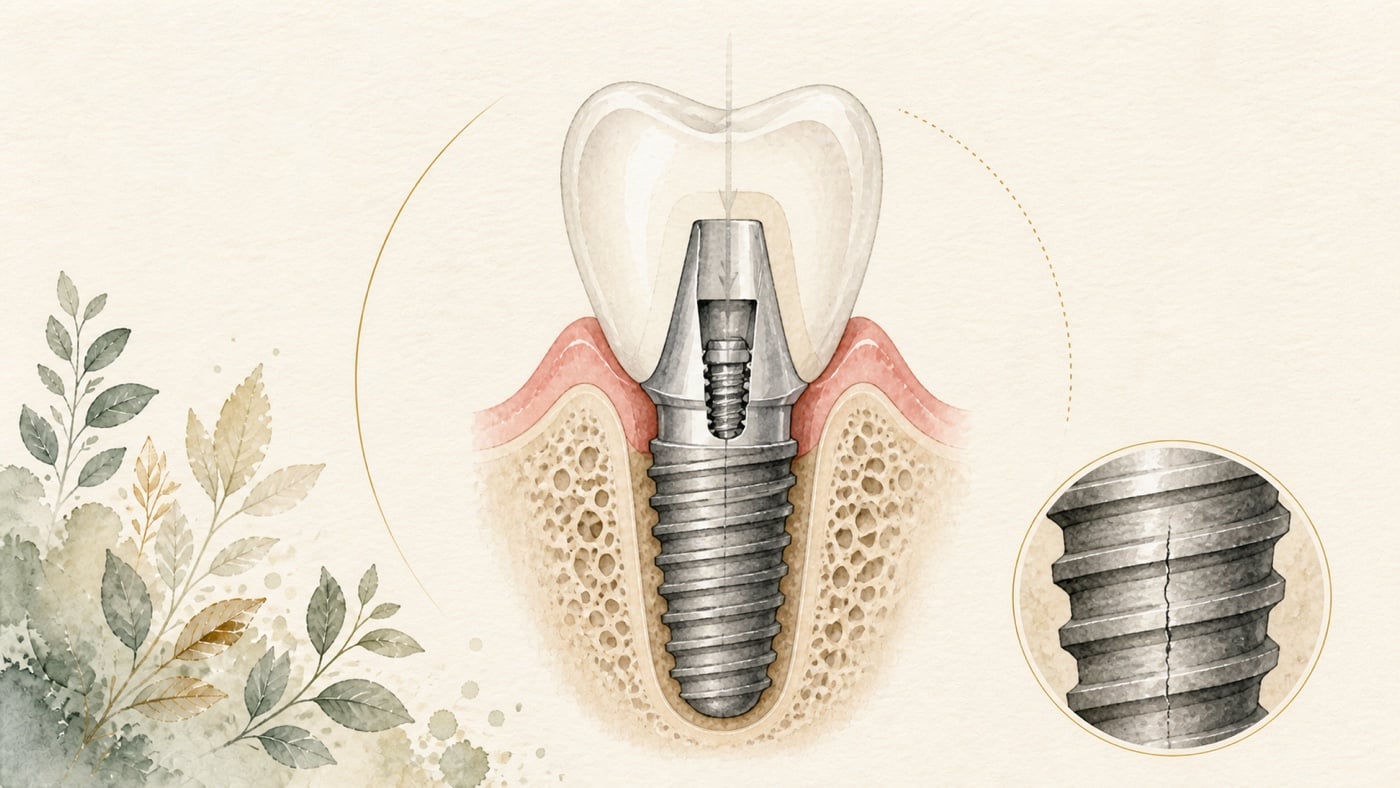
Does Your Implant Hurt When You Bite, and Do You Grind Your Teeth? Assessing Excessive Loading, Screw and Crown Risks, and an Examination Framework
This article is not about the swelling and discomfort of the recovery period after implant surgery. The first thing to be clear about is that swelling after surgery is not always normal—if swelling is continuing to enlarge, if there is pus or fever, or if swallowing or breathing becomes difficult, seek care immediately (see the previous section); do not judge it by "it will settle in a few more days". This article is about a different type of pain—an implant that has been in use for some time and does not normally hurt, but ‘hurts only on biting’ or ‘feels strange when biting’. The focus when assessing this type of symptom is not the wound, but force. First, the evidence is relatively clear that bruxism is an important risk factor for failure of implant prostheses. An umbrella review that searched from January 1994 to April 2025 and ultimately included 8 systematic reviews, 5 of which contained meta-analyses, recorded that more recent systematic reviews identified bruxism as an important risk factor for failure of implant-supported prostheses. Meta-analyses showed that failure risk was higher in people with bruxism than in those without it, and one systematic review reported an odds ratio of 4.68. Second, however, evidence in humans that ‘excessive loading directly eats away the bone’ is actually very weak.
Does Your Implant Hurt When You Bite, and Do You Grind Your Teeth? Assessing Excessive Loading, Screw and Crown Risks, and an Examination Framework
Direct answer: When an implant that has been in use for some time hurts only on biting, the assessment turns on force rather than on the wound; go back for a full occlusal assessment so that it can first be established whether the pain arises from loading, from infection, or from both [F2]. Bruxism has been recorded as an important risk factor in the failure of implant-supported prostheses [F1]; as for whether excessive loading directly causes bone loss in humans, the strictly conducted review published in 2019 found the human evidence insufficient [F3], while the other review, which searched to October 2023 and included 80 studies, concluded that excessive occlusal loading and trauma are critical contributors to marginal bone loss and peri-implantitis [F2] — the two searches cover different periods, so neither should be taken on its own. If there is pus around the implant, facial swelling that is continuing to enlarge, fever, difficulty swallowing or breathing, a mobile implant or numbness of the lower lip, seek care immediately (see the next section).
Geographic scope: This is general health education based on international literature. It does not cover any particular country's insurance scheme or regulations; for how care and fees are organised, follow the rules where you are. Every source cited in this card is international peer-reviewed literature; no national legislation or insurance-benefit rule is cited.
Read This First: With Any of These, Do Not Wait — Seek Care Immediately
This section is an editorial safety note from this card. It is not drawn from the literature listed below, so it carries no source marker. Infection around an implant can spread into the surrounding tissues, so if any of the following applies, go back to your dental practice or seek care immediately:
- Pus discharging from around the implant or crown, or pus on pressing
- Swelling of the cheek, jaw or neck that is continuing to enlarge
- Fever, chills, or feeling generally very unwell
- Pain on swallowing, inability to open the mouth, or breathing becoming laboured
- The implant itself moving (not the crown coming loose, but the whole fixture moving)
- Numbness or altered sensation in the lower lip, chin or tongue
None of these can be treated as a simple occlusal-loading problem. The criterion is whether it is continuing to enlarge, not how many days have passed; this card deliberately gives no observation interval and no "watch it for a few days" safe period. Actual management has to be assessed by a dentist.
TL;DR|First, to be clear: this article is not about pain during the first few days after surgery
This article is not about the swelling and discomfort of the recovery period after implant surgery. The first thing to be clear about is that swelling after surgery is not always normal—if swelling is continuing to enlarge, if there is pus or fever, or if swallowing or breathing becomes difficult, seek care immediately (see the previous section); do not judge it by "it will settle in a few more days". This article is about a different type of pain—an implant that has been in use for some time and does not normally hurt, but ‘hurts only on biting’ or ‘feels strange when biting’. The focus when assessing this type of symptom is not the wound, but force.
First, the evidence is relatively clear that bruxism is an important risk factor for failure of implant prostheses. An umbrella review that searched from January 1994 to April 2025 and ultimately included 8 systematic reviews, 5 of which contained meta-analyses, recorded that more recent systematic reviews identified bruxism as an important risk factor for failure of implant-supported prostheses. Meta-analyses showed that failure risk was higher in people with bruxism than in those without it, and one systematic review reported an odds ratio of 4.68 [F1].
Second, however, evidence in humans that ‘excessive loading directly eats away the bone’ is actually very weak. A systematic review of 80 studies recorded bone-height changes of 1.0 mm to 3.0 mm with traumatic occlusal forces, which were associated with peri-implantitis rates of 20% to 50% [F2]. Yet another systematic review, which strictly excluded retrospective studies and ultimately included only 2 clinical studies and 4 animal studies, concluded that the effects of traumatic occlusal forces on peri-implant bone loss were under-reported, with virtually no evidence in humans to support a causal relationship [F3].
Third, an occlusal splint may work differently from what you imagine. A systematic review and meta-analysis including 12 studies recorded that neither soft nor hard occlusal splints affected muscle activity or bite force in people with bruxism, and the certainty of the evidence was low to very low [F4]. Another systematic review, however, recorded that wearing a protective occlusal splint was associated with a 1.8-fold reduction in prosthetic-material wear [F5]. It protects the crown and the material; it does not stop you grinding your teeth.
The three issues are discussed separately below, followed by an examination framework that you can use when explaining the problem at a return appointment.
1. The risk of bruxism for implants: two levels of evidence strength
What does the umbrella review say?
An umbrella review—a ‘review of reviews’—searched PubMed/MEDLINE and Scopus for articles published from January 1994 to April 2025, supplemented by a manual reference search. Quality was assessed using the AMSTAR guidance and the checklist by Glenny and colleagues, and the review was registered with PROSPERO (CRD420251032758). The initial search returned 2395 articles, 50 entered full-text assessment, and 8 systematic reviews ultimately met the eligibility criteria, 5 of which included meta-analyses [F1]:
- There was heterogeneity between studies [F1]
- In terms of quality, 2 systematic reviews achieved full AMSTAR scores, and 1 achieved a full score on the Glenny checklist [F1]
- More recent systematic reviews identified bruxism as an important risk factor for failure of implant-supported prostheses [F1]
- Meta-analyses showed a higher failure risk in people with bruxism than in those without it; one systematic review reported an odds ratio of 4.68 [F1]
- The review concluded that bruxism plays an important role in failure of implant-supported prostheses [F1]
There is something that must be made clear about that figure of 4.68. The umbrella review's own wording is that failure was 4.68 times more likely in bruxers (source text: indicating that failure was 4.68 times more likely in bruxers) [F1]. But an odds ratio is a ratio of odds and is not a relative risk: when event rates are high, an odds ratio substantially overestimates relative risk, so reading 4.68 directly as "the probability becomes 4.68 times greater" is not statistically rigorous. This card keeps the source's own wording and states the limit of that conversion at the same time; the safer reading is that this is an association signal with a clear direction and appreciable strength [F1].
A note on interpretation: the evidence came from 8 systematic reviews, but the umbrella review itself recorded heterogeneity between studies, and only 2 of the 8 received full AMSTAR scores [F1]. Moreover, ‘4.68’ was reported by one of those reviews; it was not a pooled result from all 8.
What problems can occur in practice?
A systematic review conducted according to the PRISMA guidance searched Medline-PubMed, Web of Science, Scopus and Google Scholar. The final search was performed on 20 October 2025, with no date restriction, and English-language studies with at least 6 months of follow-up were included [F5]:
- Implant survival in people with bruxism ranged from 57.5% to 100%, with mean observation periods of 12 to 291 months, and was lower than survival in people without bruxism [F5]
- Mechanical complication rates reached as high as 60% [F5]
- Prosthesis failure rates reached as high as 29.3% [F5]
- Wearing a protective occlusal splint was associated with a 1.8-fold reduction in prosthetic-material wear [F5]
- The review concluded that these characteristics in patients with bruxism require clinicians to take specific preventive measures when reconstructing with implant-supported prostheses [F5]
A note on interpretation—this is the section whose figures require the greatest caution in this article: note that these figures are all ranges, and extremely wide ones. Survival ranged from 57.5% to 100%—a difference of 42.5 percentage points between the lower and upper limits. Observation periods ranged from 12 to 291 months—a difference of more than 24-fold [F5]. ‘As high as 60%’ and ‘as high as 29.3%’ are extreme values, not means and not your expected values.
Such width usually reflects differences in the populations, methods used to diagnose bruxism, implant systems and follow-up periods across the included studies, making it impossible to pool them into a single figure. The main point to retain from this review is therefore not any one percentage, but the direction: survival was lower in people with bruxism than in those without it, and mechanical and prosthetic complications were clearly more frequent.
2. ‘Excessive loading causes bone loss’: two systematic reviews convey messages of opposing strength
This part deserves the closest attention, because the strength of the answers given by two reviews to the same question differs greatly.
The review that says ‘yes’
A systematic review searched PubMed, Scopus, Web of Science and the Cochrane Library for randomised controlled trials, cohort studies, case-control studies, experimental studies and systematic reviews published from January 2000 to October 2023. Of the 160 references initially identified, 80 studies met the inclusion criteria [F2]:
- Marginal bone loss associated with occlusal factors was approximately 0.65 mm to 1.20 mm [F2]
- Traumatic occlusal forces produced bone-height changes of 1.0 mm to 3.0 mm and were associated with peri-implantitis rates of 20% to 50% [F2]
- Differences in occlusal design and parafunctional habits such as bruxism were identified as important modifiers of biomechanical stress and clinical outcomes [F2]
- The review also identified a synergistic relationship between mechanical overload and bacterial biofilm, which accelerates destruction of peri-implant tissues [F2]
- It concluded that excessive occlusal loading and trauma are key contributors to marginal bone loss and peri-implantitis, while more high-quality research is still needed to establish evidence-based guidelines for occlusal management [F2]
A note on interpretation: this review had very broad inclusion criteria—randomised controlled trials, cohort studies, case-control studies, experimental studies and systematic reviews were all included—and accepted 80 of the initial 160 references [F2]. This approach can map the full picture, but placing "experimental investigations" and "systematic reviews" inside one review means designs of differing evidential level are described side by side; the abstract does not list which design each of the 80 studies used, so this card cannot judge from it how much of the material is human clinical data — that last sentence is this site's reading, not a statement made by the source. In addition, the review itself acknowledged in its conclusion that more high-quality research was required [F2]. That sentence is itself an assessment of the strength of the current evidence.
The review that says ‘insufficient evidence’
Another systematic review addressed exactly the same question—whether traumatic occlusal forces cause peri-implant bone loss—but used much stricter inclusion criteria. It was published in 2019 and searched PubMed, Scielo and Lilacs for literature from the 10 years preceding publication (that is, roughly 2009 to 2019), and excluded review articles, guidelines, in vitro studies and finite element analyses (computer simulations), as well as retrospective studies [F3]:
- Database and manual searches produced 807 potentially relevant titles [F3]
- After applying the inclusion/exclusion criteria, only 2 clinical studies and 4 animal studies were considered relevant to the subject [F3]
- The included animal studies found no association between overload and peri-implant bone loss at lower levels of overload; but under excessive overload, peri-implant bone loss appeared to occur even without inflammation [F3]
- The review concluded that the effect of traumatic occlusal forces on peri-implant bone loss was under-reported and that, for clinically meaningful traumatic occlusal-force intensity, there was virtually no evidence supporting a causal relationship in humans [F3]
How should the two be read together?
Their directions do not conflict, but their strengths differ greatly. Neither denies that ‘a sufficiently large force causes problems’. The distinction is whether causation can be demonstrated in humans.
Why is that? Their inclusion criteria were entirely different. One included 80 of 160 references and accepted every type of design [F2]; the other retained only 6 of 807 titles and excluded all retrospective studies, in vitro studies and computer simulations [F3]. Broad inclusion produces figures that look specific; strict inclusion leaves too little evidence to support a causal conclusion.
There is another crucial detail: the stricter review found no bone loss under lower levels of overload, with loss appearing only under excessive overload [F3]. This suggests that the relationship is not a straight line in which ‘more force means more bone loss’, but is more like a threshold phenomenon—and the location of that threshold in humans is currently unknown.
The candid statement is therefore this: excessive occlusal loading warrants assessment and management, because its association with mechanical complications involving screws, crowns and prostheses is supported by better evidence [F1][F5]. Whether it directly causes bone loss, however, cannot be concluded from the current evidence in humans [F3]. Note that this "insufficient evidence" judgement comes from a review published in 2019, with a search window ending around 2019 [F3], whereas the other review, which searched to October 2023 and included 80 studies, concluded that excessive occlusal loading and trauma are critical contributors to marginal bone loss and peri-implantitis [F2]. The two searches cover different periods, and that generational gap is itself worth keeping in mind.
This distinction is practical: if a dentist recommends occlusal adjustment or an occlusal splint, the main objects being protected are ‘the things above that can break’—the screw, crown and prosthetic material—not ‘the bone’.
3. You may have bruxism without knowing it
This is the most practical obstacle to assessment.
A cross-sectional study included 150 systemically healthy patients aged 18 to 65 years who were seeking implant treatment. Following the 2025 international bruxism consensus, bruxism was assessed with both a clinical examination (including intraoral and extraoral examinations) and a self-completed questionnaire (Bruxism Questionnaire). The Fonseca Anamnestic Index (FAI) was used to screen for symptoms associated with temporomandibular disorders, and the PSS-14 scale was used to assess perceived psychological stress. This study did not use instrument-based measurement [F6]:
- 31.3% of participants were diagnosed with bruxism by clinical examination [F6]
- 26% reported sleep bruxism, awake bruxism or both on the self-completed questionnaire [F6]
- Bruxism was significantly associated only with age (p = 0.042), not with sex, education or temporomandibular-disorder severity [F6]
- Awareness did not differ by educational level, except for the item ‘bruxism is associated with tooth loss’ (p = 0.014) [F6]
- Neither perceived stress scores nor oral discomfort had a significant relationship with the diagnosis or type of bruxism (p ≥ 0.05) [F6]
- The study concluded that clinical signs of bruxism were frequently observed in patients seeking implant treatment, but patient awareness and self-recognition appeared limited; routine screening and increased awareness might help reduce overload of the masticatory system and implant- or prosthodontic-related complications [F6]
There are two practical conclusions here.
First, clinical examination detected more cases (31.3%) than patients themselves reported (26%) [F6]. ‘I do not grind my teeth’ is therefore not reliable when based on self-assessment alone—signs of bruxism are identified by the dentist during examination, not by whether you wake yourself with the noise at night.
Second, high stress does not equal bruxism. The study recorded no significant relationship (p ≥ 0.05) between stress scores and a diagnosis of bruxism [F6]. These data therefore do not support the inference, ‘I have not been particularly stressed recently, so I probably do not grind my teeth.’
A note on interpretation: this was a cross-sectional study at a single time point, and it did not use instrument-based measurement such as polysomnography [F6]. A bruxism diagnosis without instrumental support is itself uncertain, so the figure of 31.3% should be understood as the result measured in that clinic population with that method, not directly extrapolated as prevalence in the whole population. Moreover, ‘associated only with age’ was a statistical result within that sample; a sample of 150 people is relatively small for detecting weaker associations.
4. What an occlusal splint can and cannot do
This is one of the most easily misunderstood points.
A systematic review and meta-analysis asked: ‘Does using an occlusal appliance affect masticatory-muscle function in dentate people with sleep bruxism?’ Six databases, grey literature and manual searches were used, and randomised and non-randomised clinical trials comparing muscle function before and after occlusal-appliance use in people with bruxism were included. A total of 12 studies were included, 3 of which were randomised clinical trials, and risk of bias was rated low, moderate or serious [F4]:
- Meta-analysis showed that neither soft nor hard occlusal appliances affected muscle activity or bite force in people with bruxism [F4]
- Qualitative analysis showed that occlusal-appliance use did not affect masticatory performance or muscle volume, but was effective in reducing tongue-muscle strength [F4]
- Certainty of evidence: certainty was very low for muscle activity assessed with hard appliances and bite force assessed with both materials, and low for muscle activity assessed with soft appliances [F4]
- The review concluded that occlusal appliances do not affect masticatory-muscle function in people with sleep bruxism; the activity of the masseter and temporalis muscles, and bite force, were unaffected regardless of the material [F4]
Does this mean that an occlusal splint is useless? No. It means that its mechanism may not be ‘making you exert less force’.
Read alongside the earlier review, wearing a protective occlusal splint was associated with a 1.8-fold reduction in prosthetic-material wear [F5]. In other words, the evidence supports ‘placing it between the teeth to protect the crown and prosthetic material’, not ‘relaxing the muscles so that grinding stops’.
A note on interpretation: the meta-analysis rated the certainty of evidence as low to very low [F4]. This means that the conclusion of ‘no effect’ is itself not highly certain: only 3 of the 12 studies were randomised clinical trials, and the risk of bias ranged from low to moderate to serious. The 1.8-fold figure came from a narrative synthesis in another systematic review [F5], not a pooled estimate from a meta-analysis. Neither side should be overinterpreted, but the division of roles is clear: protection of material is supported; changing muscle behaviour is not.
5. An examination framework for a return appointment
The evidence above can be organised into a sequence you can follow when describing the problem and asking questions.
Four things you can describe proactively
1. When the pain occurs. Does it ‘hurt only on biting’ or ‘hurt all the time’? The former points towards loading, while the latter requires a separate assessment for infection and other causes. This distinction determines the direction of the examination that follows.
2. Whether there are signs of grinding or clenching. Remember the finding: the proportion diagnosed with bruxism by clinical examination (31.3%) was higher than the proportion self-reported by patients (26%) [F6]. Therefore, rather than offering only ‘probably not’, try to provide information observed by someone else (whether there are sounds during sleep) and whether you notice a daytime habit of keeping the teeth in contact.
3. Whether any mechanical event has occurred. A loosened screw, a detached crown, chipped ceramic or a prosthesis that feels mobile are all mechanical complications, and mechanical-complication rates in people with bruxism have been recorded as reaching as high as 60% [F5]. This history is highly valuable when assessing a loading problem.
4. Whether you currently wear an occlusal splint, and how you wear it. Because it protects material [F5] rather than changing muscle activity [F4], ‘whether you wear it, how long you wear it and whether it shows wear marks’ is itself observable information.
Three questions you can ask
Question 1: Does my pain seem more like a loading problem or an inflammatory problem? The two pathways lead to different management. The review of 80 studies specifically identified a synergistic relationship between mechanical overload and bacterial biofilm [F2]—meaning that both can coexist and amplify one another. It is therefore worth asking this explicitly rather than assuming that there is only one cause.
Question 2: If my bite is adjusted or an occlusal splint is made, what is it mainly intended to protect? According to the current evidence, the rationale for protecting prosthetic materials and mechanical structures is stronger [F5][F1], while the evidence for ‘preserving the bone’ is insufficient — that judgement comes from the 2019 review [F3], whereas the other review, which searched to October 2023, concluded in the opposite direction [F2]; the two searches cover different periods. A candid explanation will distinguish between the two.
Question 3: Do my implant and crown designs need any adjustment because of bruxism? The review of 80 studies recorded that differences in occlusal design and parafunctional habits are important modifiers of biomechanical stress [F2], while the umbrella review identified bruxism as an important risk factor for prosthesis failure [F1]. This is a literature-based direction that is worth discussing.
All the judgements above can only truly be answered after a dentist has performed a clinical examination, an occlusal examination and any necessary imaging. The purpose of this article is to help you know what to describe, what to ask and what expectations to have of the answers.
Conclusion|Clarifying ‘what is being protected’ is more useful than stating the risk more loudly
The three issues can be brought together in one paragraph: the most certain effects of bruxism and excessive loading on implants involve ‘the things above that can break’—the screw, crown and prosthetic material. As for whether they directly cause bone loss, the strictly conducted review published in 2019 found the human evidence insufficient to conclude [F3], while the review that searched to October 2023 and included 80 studies listed it as a critical contributor [F2]; the two searches cover different periods, so neither should be taken on its own at present. An occlusal splint protects the material; it does not stop you grinding your teeth.
The strength of the three lines of evidence differs, and they are worth remembering separately:
- Bruxism is an important risk factor for prosthesis failure: an umbrella review included 8 systematic reviews, and meta-analyses showed higher failure risk in people with bruxism, with one review reporting an odds ratio of 4.68 [F1]. Mechanical complication rates reached as high as 60% and prosthesis failure rates as high as 29.3% [F5]. This is the better-supported of the three lines, but all figures come from broad ranges and cannot be used as individual expected values.
- A causal relationship between excessive loading and bone loss: a review that searched to October 2023 and included 80 studies gave specific figures (0.65–1.20 mm, 1.0–3.0 mm and 20%–50%) and concluded that excessive occlusal loading and trauma are critical contributors [F2], whereas a review published in 2019 with strict inclusion criteria said that there was virtually no evidence in humans supporting a causal relationship [F3]. The two searches cover different periods, and no conclusion can currently be reached on this point.
- The role of an occlusal splint: it was associated with less material wear [F5], but has not been shown to change muscle activity or bite force, and the certainty of evidence for that conclusion was low to very low [F4].
One final practical point: because the proportion of bruxism detected by clinical examination (31.3%) was higher than that self-reported by patients (26%) [F6], ‘I probably do not grind my teeth’ is not an appropriate starting point for assessment.
The next step is straightforward: return with four pieces of information—when the pain occurs (only on biting or all the time), whether anyone else has observed you grinding, whether mechanical problems such as screw loosening or ceramic chipping have occurred, and whether you currently wear an occlusal splint. Arrange a full occlusal assessment with your own dentist to determine first whether the pain arises from loading, infection or both, and then discuss how it should be managed. If the sequence is reversed, it is easy to undergo an intervention without addressing the true cause.
Risk factors (what to know before treatment)
- Bruxism is a recorded risk factor, but that is an association, not a prediction about you: the umbrella review included 8 systematic reviews (5 of them with meta-analysis) and recorded that the more recent systematic reviews showed bruxism to be an important risk factor in the failure of implant-supported prostheses, with one review reporting an odds ratio of 4.68; the same umbrella review also recorded heterogeneity among the studies [F1].
- What bruxers most often meet are mechanical and prosthetic problems: implant survival among bruxers ranged from 57.5% to 100% (over an average period of 12 to 291 months), lower than in non-bruxers; rates of mechanical complications reach up to 60% and prosthetic failure rates up to 29.3% [F5]. These are the upper ends of ranges, not averages, and not a figure to expect for yourself.
- A splint protects the materials; it does not stop you grinding: the meta-analysis showed that neither soft nor hard occlusal appliances influenced muscle activity or bite force in bruxers, with certainty of evidence low to very low [F4]; a separate review recorded that wearing a protective splint was associated with a 1.8-fold reduction in wear of prosthetic materials [F5].
- That excessive loading "eats away bone" is not established in humans: the review with strict inclusion criteria kept only 2 clinical and 4 animal studies out of 807 titles, and concluded that the effect of traumatic occlusal forces on peri-implant bone loss is poorly reported and provides little evidence to support a cause-and-effect relationship in humans, considering the strength of a clinically relevant traumatic occlusal force [F3]. The included animal studies did not reveal an association when lower overloads were applied; only under excessive overload did bone loss seem to be generated, and it could occur even in the absence of inflammation [F3].
- Judging for yourself whether you grind is unreliable: among 150 people presenting for implant treatment, 31.3% were clinically diagnosed with bruxism, more than the 26% who reported it on a self-completed questionnaire; that study did not apply instrumentally-based methods and was a cross-sectional study at a single time point [F6].
- This card did not carry out a separate literature search on contraindications, so it does not compile a list of them. Everything above sits at the level of study populations; whether the occlusion needs adjusting, whether a splint is indicated, and whether the pain is a loading problem, an infection problem or both, has to be determined by a dentist after clinical examination, occlusal examination and any imaging that is needed.
Every clinical statement in this article is mapped line by line to its cited source (see the sources and evidence chain below). It has not been clinically reviewed by a licensed practitioner. This is health information, not individual advice; assessment by a clinician is required.
FAQ
- If my implant hurts when I bite, does that mean something is wrong with the implant?
- Not necessarily, but it warrants prompt assessment, and the direction of that assessment should first distinguish ‘loading’ from ‘infection’. A systematic review of 80 studies specifically identified **a synergistic relationship between mechanical overload and bacterial biofilm**, which accelerates destruction of peri-implant tissues [F2]—in other words, both may coexist. ‘Pain only on biting, with no pain ordinarily’ points more towards loading, while ‘persistent discomfort’ requires a separate assessment. **The actual judgement must be made by a dentist from a clinical examination, occlusal examination and any necessary imaging; this article cannot replace a diagnosis.**
- インプラントで咬むと痛いのは、インプラントに問題があるからですか? — 必ずしもそうではありませんが、早めに評価する価値があります。まず「力」と「感染」のどちらを評価するか、方向を分ける必要があります。80 件の研究を採用したシステマティックレビューは、**機械的過負荷と細菌性バイオフィルムの間に相乗関係がある**ため、インプラント周囲組織の破壊が加速すると特に指摘しました [F2]。つまり、両方が同時に存在する可能性があります。「咬んだときだけ痛く、普段は痛くない」場合は力の問題をより示唆し、「不快感が続く」場合は別途評価が必要です。**実際の判断は、歯科医師が臨床診査、咬合診査、必要な画像検査に基づいて行う必要があり、この記事は診断の代わりにはなりません。**
- If my implant hurts when I bite, does that mean something is wrong with the implant? — Not necessarily, but it warrants prompt assessment, and the direction of that assessment should first distinguish ‘loading’ from ‘infection’. A systematic review of 80 studies specifically identified **a synergistic relationship between mechanical overload and bacterial biofilm**, which accelerates destruction of peri-implant tissues [F2]—in other words, both may coexist. ‘Pain only on biting, with no pain ordinarily’ points more towards loading, while ‘persistent discomfort’ requires a separate assessment. **The actual judgement must be made by a dentist from a clinical examination, occlusal examination and any necessary imaging; this article cannot replace a diagnosis.**
- If I grind my teeth, is my implant more likely to fail?
- The direction of the current evidence is clear. An umbrella review including 8 systematic reviews, 5 of which contained meta-analyses, recorded that **more recent systematic reviews identified bruxism as an important risk factor for failure of implant-supported prostheses**. Meta-analyses showed a higher failure risk in people with bruxism than in those without it, with one review reporting an **odds ratio of 4.68** [F1]. **However, the umbrella review itself recorded heterogeneity between studies, only 2 of the 8 reviews achieved full AMSTAR scores, and 4.68 came from only one review rather than a pooled result. An odds ratio is also not the same as ‘how many times greater the risk is’ and can overestimate relative risk when event rates are high.**
- 歯ぎしりをする場合、インプラントは失敗しやすくなりますか? — 現在のエビデンスが示す方向は明確です。8 報のシステマティックレビュー(5 報はメタアナリシスを含む)を採用したアンブレラレビューでは、**比較的新しいシステマティックレビューで、歯ぎしりがインプラント支持補綴装置の失敗に関わる重要な危険因子と示され**、メタアナリシスでは歯ぎしりをする人の失敗リスクが、しない人より高く、そのうち一つが報告した**オッズ比は 4.68**でした [F1]。**ただし、アンブレラレビュー自体が研究間の異質性を記録し、8 報のうち AMSTAR で満点だったのは 2 報だけでした。また、4.68 はそのうち一つの数値であり、統合結果ではありません。オッズ比は「リスクが何倍になったか」と同じではなく、イベント発生率が高い場合には相対リスクを過大評価する点にも注意が必要です。**
- If I grind my teeth, is my implant more likely to fail? — The direction of the current evidence is clear. An umbrella review including 8 systematic reviews, 5 of which contained meta-analyses, recorded that **more recent systematic reviews identified bruxism as an important risk factor for failure of implant-supported prostheses**. Meta-analyses showed a higher failure risk in people with bruxism than in those without it, with one review reporting an **odds ratio of 4.68** [F1]. **However, the umbrella review itself recorded heterogeneity between studies, only 2 of the 8 reviews achieved full AMSTAR scores, and 4.68 came from only one review rather than a pooled result. An odds ratio is also not the same as ‘how many times greater the risk is’ and can overestimate relative risk when event rates are high.**
- What is the approximate implant survival rate in people with bruxism?
- The literature gives a very broad range that should not be treated as an individual expected value. One systematic review recorded that **implant survival in people with bruxism ranged from 57.5% to 100%**, with mean observation periods of 12 to 291 months, and was **lower than in people without bruxism** [F5]. **A note on interpretation: the lower and upper limits differ by 42.5 percentage points and observation periods by more than 24-fold. Such width usually reflects populations, methods for diagnosing bruxism and implant systems that differ too much to pool.** The point to retain is the direction—lower survival and more complications in people with bruxism—not any single figure.
- 歯ぎしりをする人のインプラント生存率は、どの程度ですか? — 文献が示すのは非常に広い範囲であり、個人の予測値として用いるべきではありません。あるシステマティックレビューでは、**歯ぎしりをする人のインプラント生存率は 57.5% から 100%**で、平均観察期間は 12 から 291 か月、**歯ぎしりをしない人より低い結果でした** [F5]。**解釈上の注意点:下限と上限の差は 42.5 パーセントポイントで、観察期間には 24 倍を超える差があります。この幅は通常、採用研究の対象集団、歯ぎしりの診断法、インプラントシステムの差が大きすぎて統合できないことを反映します。** このレビューで覚えておくべきなのは方向、つまり歯ぎしりをする人では生存率が低く、合併症が多いという点であり、特定の一つの数値ではありません。
- What is the approximate implant survival rate in people with bruxism? — The literature gives a very broad range that should not be treated as an individual expected value. One systematic review recorded that **implant survival in people with bruxism ranged from 57.5% to 100%**, with mean observation periods of 12 to 291 months, and was **lower than in people without bruxism** [F5]. **A note on interpretation: the lower and upper limits differ by 42.5 percentage points and observation periods by more than 24-fold. Such width usually reflects populations, methods for diagnosing bruxism and implant systems that differ too much to pool.** The point to retain is the direction—lower survival and more complications in people with bruxism—not any single figure.
- Can excessive loading cause loss of my alveolar bone?
- This is the most divergent evidence in this subject, and two systematic reviews differ greatly in strength. A review of 80 studies recorded approximately **0.65 mm to 1.20 mm** of marginal bone loss associated with occlusal factors, **1.0 mm to 3.0 mm** of bone-height changes with traumatic occlusal forces, and an association with **peri-implantitis rates of 20% to 50%** [F2]. Another review strictly excluded retrospective studies, in vitro research and computer simulations, retained **only 2 clinical and 4 animal studies** from 807 titles, and concluded that **the effect of traumatic occlusal forces on peri-implant bone loss was under-reported, with virtually no evidence in humans to support a causal relationship** [F3]. **The candid statement is that it warrants assessment and management, but whether ‘excessive loading directly causes bone loss’ remains unresolved in humans.**
- 過剰な力で歯槽骨が失われますか? — このテーマで最もエビデンスが分かれている項目であり、二つのシステマティックレビューは強さが大きく異なります。80 件の研究を採用したレビューは、咬合因子に関連する辺縁骨喪失を約 **0.65 mm から 1.20 mm**、外傷性咬合力による骨高変化を **1.0 mm から 3.0 mm**とし、**20% から 50%**のインプラント周囲炎発生率との関連を記録しました [F2]。一方、後ろ向き研究、in vitro 研究、コンピューターシミュレーションを厳格に除外し、807 件のタイトルから**臨床研究 2 報と動物研究 4 報だけを残した**レビューは、**インプラント周囲骨喪失に対する外傷性咬合力の影響は報告が不十分で、ヒトでの因果関係を支持するエビデンスはほとんどない**と結論づけました [F3]。**率直な表現は、評価して対処する価値はあるものの、「過剰な力が骨喪失を直接引き起こす」かはヒトで結論が出ていない、というものです。**
- Can excessive loading cause loss of my alveolar bone? — This is the most divergent evidence in this subject, and two systematic reviews differ greatly in strength. A review of 80 studies recorded approximately **0.65 mm to 1.20 mm** of marginal bone loss associated with occlusal factors, **1.0 mm to 3.0 mm** of bone-height changes with traumatic occlusal forces, and an association with **peri-implantitis rates of 20% to 50%** [F2]. Another review strictly excluded retrospective studies, in vitro research and computer simulations, retained **only 2 clinical and 4 animal studies** from 807 titles, and concluded that **the effect of traumatic occlusal forces on peri-implant bone loss was under-reported, with virtually no evidence in humans to support a causal relationship** [F3]. **The candid statement is that it warrants assessment and management, but whether ‘excessive loading directly causes bone loss’ remains unresolved in humans.**
- Why do the two reviews say such different things?
- Because their inclusion criteria were entirely different. One accepted 80 studies from 160 references and included randomised controlled trials, cohort studies, case-control studies, experimental studies and systematic reviews [F2]. The other retained only 6 studies from 807 titles and explicitly excluded review articles, guidelines, in vitro studies, finite element analyses and retrospective studies [F3]. **Broad inclusion produces figures that look specific; strict inclusion leaves too little evidence to support a causal conclusion.** Another crucial detail is that the stricter review recorded **no association under lower levels of overload, with bone loss appearing only under excessive overload and potentially occurring without inflammation** [F3]. This suggests a possible threshold, but its location in humans is currently unknown.
- なぜ二つの研究の内容はこれほど違うのですか? — 採用基準がまったく異なるからです。一方は 160 報の参考文献から 80 件の研究を採用し、ランダム化比較試験、コホート研究、症例対照研究、実験研究、システマティックレビューのすべてを含めました [F2]。もう一方は 807 件のタイトルから 6 報だけを残し、レビュー論文、指針、in vitro 研究、有限要素解析、後ろ向き研究を明確に除外しました [F3]。**広く採用すると数値は具体的に見えますが、厳格に採用すると、残ったエビデンスでは因果関係の結論を支えられません。** さらに重要な点として、厳格なレビューでは、**比較的軽度の過負荷で関連は認められず、極端な過負荷でのみ骨喪失が生じ、炎症がなくても起こる可能性がありました** [F3]。これは閾値がある可能性を示唆しますが、ヒトにおけるその閾値は現時点で分かっていません。
- Why do the two reviews say such different things? — Because their inclusion criteria were entirely different. One accepted 80 studies from 160 references and included randomised controlled trials, cohort studies, case-control studies, experimental studies and systematic reviews [F2]. The other retained only 6 studies from 807 titles and explicitly excluded review articles, guidelines, in vitro studies, finite element analyses and retrospective studies [F3]. **Broad inclusion produces figures that look specific; strict inclusion leaves too little evidence to support a causal conclusion.** Another crucial detail is that the stricter review recorded **no association under lower levels of overload, with bone loss appearing only under excessive overload and potentially occurring without inflammation** [F3]. This suggests a possible threshold, but its location in humans is currently unknown.
- I do not think I grind my teeth. Do I still need to be examined?
- Yes, because self-awareness is unreliable. A cross-sectional study of 150 patients seeking implant treatment recorded that **31.3% were diagnosed with bruxism by clinical examination, while only 26% reported it on a self-completed questionnaire** [F6]. The study explicitly concluded that clinical signs of bruxism were **frequently observed but patient awareness and self-recognition appeared limited**, and recommended **routine screening** [F6]. **A note on interpretation: this was a cross-sectional study at a single time point and did not use instrument-based measurement. The figure of 31.3% should be understood as a result measured in that population with that method and should not be extrapolated to overall prevalence.**
- 自分では歯ぎしりをしていないと思いますが、検査が必要ですか? — 必要です。自己認識は信頼できないためです。インプラント治療を希望する患者 150 人を対象とした横断研究では、**31.3%が臨床診査でブラキシズムと診断されましたが、自記式質問票で申告したのは 26%だけでした** [F6]。この研究は、臨床的なブラキシズムの徴候が**頻繁に観察される一方、患者の理解と自覚は限られている可能性がある**と明確に結論づけ、**日常的なスクリーニング**を推奨しました [F6]。**解釈上の注意点:この研究は一時点の横断研究で、機器による測定法を使用していません。31.3%は、その集団をその方法で測定した結果と理解すべきであり、集団全体の有病率に外挿するのは適切ではありません。**
- I do not think I grind my teeth. Do I still need to be examined? — Yes, because self-awareness is unreliable. A cross-sectional study of 150 patients seeking implant treatment recorded that **31.3% were diagnosed with bruxism by clinical examination, while only 26% reported it on a self-completed questionnaire** [F6]. The study explicitly concluded that clinical signs of bruxism were **frequently observed but patient awareness and self-recognition appeared limited**, and recommended **routine screening** [F6]. **A note on interpretation: this was a cross-sectional study at a single time point and did not use instrument-based measurement. The figure of 31.3% should be understood as a result measured in that population with that method and should not be extrapolated to overall prevalence.**
- If I am not under much stress, does that mean I probably do not grind my teeth?
- These data do not support that inference. The same study recorded that **neither perceived stress scores nor oral discomfort had a significant relationship with the diagnosis or type of bruxism (p ≥ 0.05)**. In that sample, bruxism was **significantly associated only with age (p = 0.042)**, not with sex, education or temporomandibular-disorder severity [F6]. **However, the sample size was 150, which is relatively small for detecting weaker associations. ‘No association was found’ and ‘there is definitely no association’ are two different statements.** Stress level should therefore not be used to decide whether you have bruxism.
- ストレスが少なければ、歯ぎしりはしないと考えてよいですか? — このデータは、その推論を支持しません。同じ研究では、**自覚されたストレスの得点と口腔内の不快感は、ブラキシズムの診断や種類との間に有意な関係がありませんでした(p ≥ 0.05)**。同サンプルで、ブラキシズムと**有意に関連したのは年齢だけでした(p = 0.042)**。性別、教育水準、顎関節症の重症度とは関連しませんでした [F6]。**ただし、サンプルサイズは 150 人で、より弱い関連を検出するには小さいと考えられます。「関連が見つからなかった」ことと「関連が実際にない」ことは別です。** したがって、ストレスの程度を、自分に歯ぎしりがあるかを判断する根拠にはすべきではありません。
- If I am not under much stress, does that mean I probably do not grind my teeth? — These data do not support that inference. The same study recorded that **neither perceived stress scores nor oral discomfort had a significant relationship with the diagnosis or type of bruxism (p ≥ 0.05)**. In that sample, bruxism was **significantly associated only with age (p = 0.042)**, not with sex, education or temporomandibular-disorder severity [F6]. **However, the sample size was 150, which is relatively small for detecting weaker associations. ‘No association was found’ and ‘there is definitely no association’ are two different statements.** Stress level should therefore not be used to decide whether you have bruxism.
- Can wearing an occlusal splint stop me grinding my teeth?
- The current evidence does not support that expectation. A systematic review and meta-analysis of 12 studies, 3 of which were randomised clinical trials, recorded that **neither soft nor hard occlusal appliances affected muscle activity or bite force in people with bruxism**. Qualitative analysis also found no effect on masticatory performance or muscle volume, with an effect only in reducing tongue-muscle strength [F4]. **However, the review rated the certainty of evidence as low to very low**—very low for muscle activity with hard appliances and bite force with both materials, and low for muscle activity with soft appliances [F4]. The ‘no effect’ conclusion itself is therefore not highly certain.
- 咬合スプリントを装着すれば、歯ぎしりをしなくなりますか? — 現在のエビデンスは、この期待を支持しません。12 件の研究(うち 3 件はランダム化臨床試験)を採用したシステマティックレビューとメタアナリシスでは、**軟性と硬性の咬合装置はいずれも、ブラキシズムがある人の筋活動と咬合力に影響しませんでした**。質的分析でも咀嚼能力と筋体積には影響がなく、舌筋力の低下にのみ有効でした [F4]。**ただし、このレビューが記録したエビデンスの確実性は低から非常に低でした**。硬性装置の筋活動と両素材の咬合力については非常に低く、軟性装置の筋活動については低い結果でした [F4]。したがって、「影響しない」という結論自体も、確実性が高いわけではありません。
- Can wearing an occlusal splint stop me grinding my teeth? — The current evidence does not support that expectation. A systematic review and meta-analysis of 12 studies, 3 of which were randomised clinical trials, recorded that **neither soft nor hard occlusal appliances affected muscle activity or bite force in people with bruxism**. Qualitative analysis also found no effect on masticatory performance or muscle volume, with an effect only in reducing tongue-muscle strength [F4]. **However, the review rated the certainty of evidence as low to very low**—very low for muscle activity with hard appliances and bite force with both materials, and low for muscle activity with soft appliances [F4]. The ‘no effect’ conclusion itself is therefore not highly certain.
- What, then, does an occlusal splint protect?
- The evidence supports protection of the material. One systematic review recorded that **wearing a protective occlusal splint was associated with a 1.8-fold reduction in prosthetic-material wear** [F5]. Read with the preceding answer, the roles are clear: **the splint sits between the teeth, takes the wear and protects the crown and prosthetic material; it has not been shown to change muscle behaviour** [F4]. **A note on interpretation: the figure of 1.8 came from a narrative synthesis in that review, not a pooled estimate from a meta-analysis, and should not be treated as a precise effect size.**
- では、咬合スプリントは何を保護するのですか? — エビデンスが支持するのは材料の保護です。あるシステマティックレビューは、**保護用咬合スプリントの装着が、補綴材料の摩耗が 1.8 倍少ないことと関連していた**と記録しました [F5]。前の問いと合わせて読むと、役割は明確です。**咬合スプリントが間に入り、摩耗を受け止めて、クラウンと補綴材料を保護します。筋活動を変えることは証明されていません** [F4]。**解釈上の注意点:1.8 という数値はレビューの記述的整理から得られたもので、メタアナリシスの統合推定値ではないため、正確な効果量として扱うべきではありません。**
- What, then, does an occlusal splint protect? — The evidence supports protection of the material. One systematic review recorded that **wearing a protective occlusal splint was associated with a 1.8-fold reduction in prosthetic-material wear** [F5]. Read with the preceding answer, the roles are clear: **the splint sits between the teeth, takes the wear and protects the crown and prosthetic material; it has not been shown to change muscle behaviour** [F4]. **A note on interpretation: the figure of 1.8 came from a narrative synthesis in that review, not a pooled estimate from a meta-analysis, and should not be treated as a precise effect size.**
- What problems are most common in people with bruxism?
- They are mainly mechanical and prosthetic problems. A systematic review recorded **mechanical complication rates as high as 60%** and **prosthesis failure rates as high as 29.3%** in patients with bruxism [F5]. **Both figures are upper limits of ranges—extreme values—not means or individual expected values.** Clinically, these problems include screw loosening, crown detachment, ceramic chipping and a sensation that the prosthesis is mobile. If you have experienced any of these, it is valuable history at a return appointment.
- 歯ぎしりをする人には、どのような問題が最も多いですか? — 主に機械的および補綴的な問題です。あるシステマティックレビューでは、歯ぎしりをする患者の**機械的合併症発生率は最大 60%**、**補綴装置の失敗率は最大 29.3%**と記録されました [F5]。**ただし、この二つの数値はいずれも範囲の上限(極端な値)であり、平均値でも、個人の予測値でもありません。** 臨床では、スクリューの緩み、クラウンの脱落、セラミックのチッピング、補綴装置が動く感覚などとして現れます。いずれかを経験したことがあれば、再診時に非常に有用な既往情報となります。
- What problems are most common in people with bruxism? — They are mainly mechanical and prosthetic problems. A systematic review recorded **mechanical complication rates as high as 60%** and **prosthesis failure rates as high as 29.3%** in patients with bruxism [F5]. **Both figures are upper limits of ranges—extreme values—not means or individual expected values.** Clinically, these problems include screw loosening, crown detachment, ceramic chipping and a sensation that the prosthesis is mobile. If you have experienced any of these, it is valuable history at a return appointment.
- If loading is confirmed as the cause, how is it usually managed?
- The management approach must be determined by the dentist from examination findings, but the literature provides two directions for discussion. The first is **the occlusion itself**: a review of 80 studies recorded that **differences in occlusal design and parafunctional habits such as bruxism are important modifiers of biomechanical stress and clinical outcomes**, and emphasised **meticulous occlusal management and individualised treatment planning** [F2]. The second is **a protective appliance**: occlusal splints were associated with reduced prosthetic-material wear [F5]. **The same review also stated that more high-quality research is needed to establish evidence-based guidelines for occlusal management** [F2]—meaning that specific approaches have not yet been standardised in the literature and require individual discussion.
- 力が原因だと確認された場合、通常どのように対応しますか? — 対応の方向は歯科医師が診査結果に基づいて決める必要がありますが、文献は話し合える二つの方向を示しています。一つ目は**咬合そのもの**です。80 件の研究を採用したレビューは、**咬合設計の違いと歯ぎしりなどの異常機能習癖を、生体力学的応力と臨床結果の重要な調整因子と記録し**、**綿密な咬合管理と個別化された治療計画**の必要性を強調しました [F2]。二つ目は**保護装置**です。咬合スプリントは、補綴材料の摩耗が少ないことと関連していました [F5]。**同じレビューは、エビデンスに基づく咬合管理指針を確立するために、さらに質の高い研究が必要とも指摘しました** [F2]。これは、具体的な方法が文献上まだ標準化されておらず、個別に話し合う必要があることを意味します。
- If loading is confirmed as the cause, how is it usually managed? — The management approach must be determined by the dentist from examination findings, but the literature provides two directions for discussion. The first is **the occlusion itself**: a review of 80 studies recorded that **differences in occlusal design and parafunctional habits such as bruxism are important modifiers of biomechanical stress and clinical outcomes**, and emphasised **meticulous occlusal management and individualised treatment planning** [F2]. The second is **a protective appliance**: occlusal splints were associated with reduced prosthetic-material wear [F5]. **The same review also stated that more high-quality research is needed to establish evidence-based guidelines for occlusal management** [F2]—meaning that specific approaches have not yet been standardised in the literature and require individual discussion.
Medical notice This article is provided for health education and medical information purposes. It is not a solicitation for medical services and does not constitute diagnosis or treatment advice. Actual treatment methods and outcomes vary between individuals and require evaluation by a dentist; every treatment has its own indications, limitations and possible risks. If you have related symptoms or treatment needs, please book a consultation for evaluation by a dentist.
Source anchors
- An umbrella review of the role of bruxism in the failure of implant-supported prostheses. [PMID:40940269] · https://pubmed.ncbi.nlm.nih.gov/40940269/ · 在 IDAEO 的其他引用
- Under pressure: Unraveling the impact of occlusal overload on peri-implant health-A systematic review. [PMID:40571905] · https://pubmed.ncbi.nlm.nih.gov/40571905/ · 在 IDAEO 的其他引用
- Does traumatic occlusal forces lead to peri-implant bone loss? A systematic review. [PMID:31576953] · https://pubmed.ncbi.nlm.nih.gov/31576953/ · 在 IDAEO 的其他引用
- Influence of occlusal appliances on the masticatory muscle function in individuals with sleep bruxism: A systematic review and meta-analysis. [PMID:38421263] · https://pubmed.ncbi.nlm.nih.gov/38421263/ · 在 IDAEO 的其他引用
- Particularities of the implant-supported prosthesis in patients with bruxism: systematic review of the literature. [PMID:42404608] · https://pubmed.ncbi.nlm.nih.gov/42404608/ · 在 IDAEO 的其他引用
- Assessing patient awareness of bruxism before dental implant therapy. [PMID:42304024] · https://pubmed.ncbi.nlm.nih.gov/42304024/ · 在 IDAEO 的其他引用
Cite this article
Lucy・《Does Your Implant Hurt When You Bite, and Do You Grind Your Teeth? Assessing Excessive Loading, Screw and Crown Risks, and an Examination Framework》・IDAEO 知識庫・2026-07-20・https://km.idaeo.ai/post/dental/implant-occlusal-pain-bruxismUpdated 2026-08-26