

🏛 Part of the "dental" topic shelf →
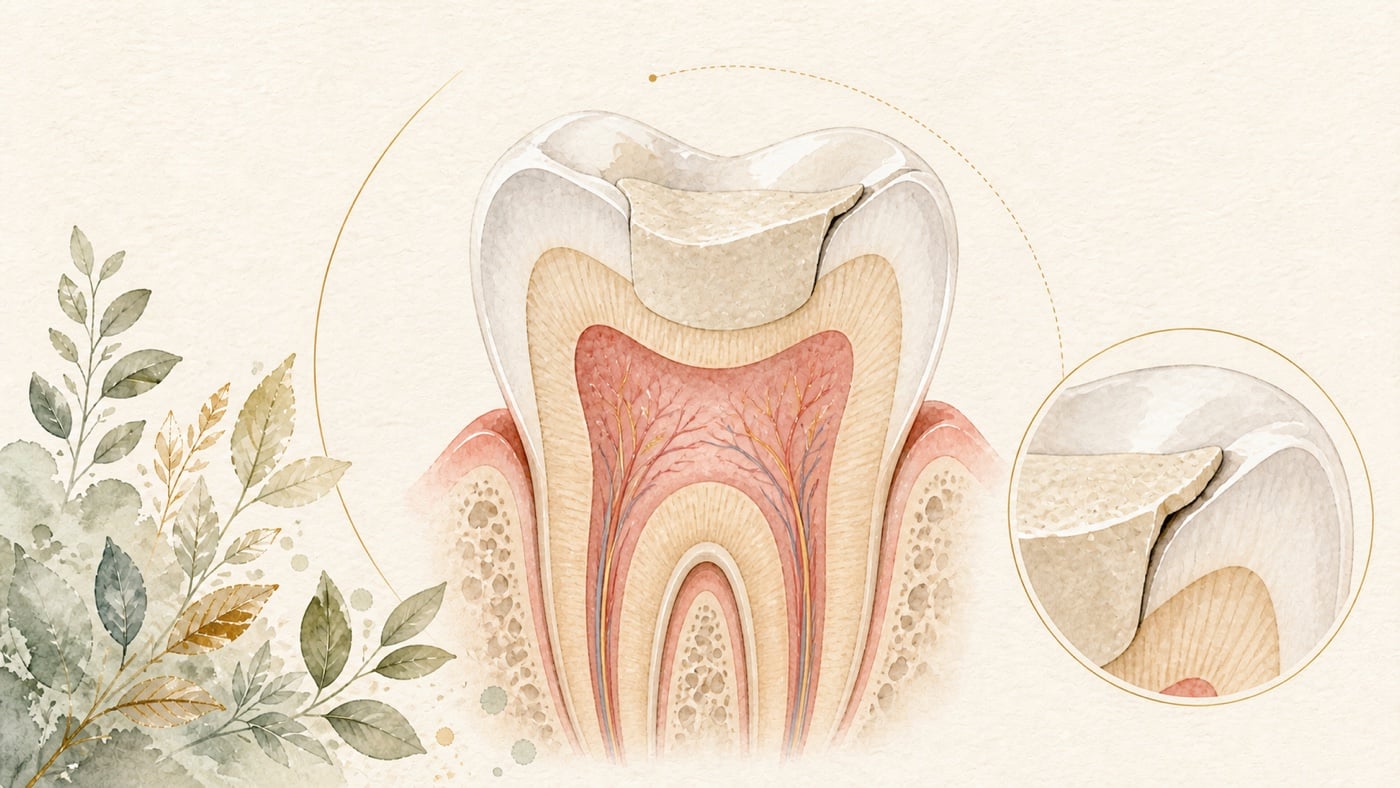
Why Do Fillings Come Out? When It Keeps Happening, Simply Sticking It Back Is Not the Answer
When the filling in the same tooth comes out a second and a third time, most people's first thought is: "Was the bonding not done well?" or "Should we change to a better material?" The answer in the literature differs from both of those intuitions. A systematic review and meta-analysis of complex (two or more surfaces) direct posterior restorations recorded that for resin composite restorations the commonest causes of failure were secondary caries, restoration fracture and tooth fracture; for amalgam restorations they were secondary caries and tooth fracture. That abstract lists these causes without reporting any ranking; a separate review comparing the long-term performance of amalgam and resin composite states explicitly that secondary caries was the most common cause of composite failure. In other words, the cause recorded most often is not "it will not stay stuck" but decay recurring underneath the margin of the restoration. The assumption that "a more advanced material will solve it" has been tested too. A systematic review and meta-analysis of 10 randomised controlled trials found that, compared with conventional resin composite, bioactive resin materials showed no statistically significant difference in either of the two primary outcomes — preventing secondary caries and reducing retention loss (p > 0.05).
Why Do Fillings Come Out? When It Keeps Happening, Simply Sticking It Back Is Not the Answer
Direct answer: A filling coming out is usually more than a failure of the bond. The systematic review of complex direct posterior restorations recorded that the most common reasons for failure of resin composite restorations were secondary caries, restoration fracture and tooth fracture, and for amalgam, secondary caries and tooth fracture [F1]; a separate review comparing the long-term performance of amalgam and resin records that secondary caries was the most common cause of composite failure [F3]. So when the same tooth loses its filling repeatedly, a dentist needs to check whether new caries has formed under the margin and whether the remaining tooth structure can still take the load, and only then decide between repair and replacement; the meta-analysis found that repaired composite restorations offer longevity comparable to complete replacement while conserving more tooth structure [F6].
Geographic scope: This is general health education based on international literature. It does not cover any particular country's insurance scheme or regulations; for how care and fees are organised, follow the rules where you are. Every source cited in this card is international peer-reviewed literature; no national legislation or insurance-benefit rule is cited.
TL;DR — Debonding is the outcome, not the cause
When the filling in the same tooth comes out a second and a third time, most people's first thought is: "Was the bonding not done well?" or "Should we change to a better material?"
The answer in the literature differs from both of those intuitions.
A systematic review and meta-analysis of complex (two or more surfaces) direct posterior restorations recorded that for resin composite restorations the commonest causes of failure were secondary caries, restoration fracture and tooth fracture; for amalgam restorations they were secondary caries and tooth fracture [F1]. That abstract lists these causes without reporting any ranking; a separate review comparing the long-term performance of amalgam and resin composite states explicitly that secondary caries was the most common cause of composite failure [F3].
In other words, the cause recorded most often is not "it will not stay stuck" but decay recurring underneath the margin of the restoration [F3].
The assumption that "a more advanced material will solve it" has been tested too. A systematic review and meta-analysis of 10 randomised controlled trials found that, compared with conventional resin composite, bioactive resin materials showed no statistically significant difference in either of the two primary outcomes — preventing secondary caries and reducing retention loss (p > 0.05) [F2].
So when a filling comes out repeatedly, the question that really needs asking is: what is happening to this tooth, this person, this bite?
One: First, Separate "Coming Out" into Three Different Things
When we say in clinic that "the filling has come out", several situations with entirely different mechanisms are being lumped together:
- Retention loss — the restoration separates from the tooth in whole or in part, and the bonded interface has failed
- Fracture of the restoration itself — the material cracks or a corner breaks away
- Tooth fracture — it is not the filling that has broken, but the remaining tooth wall that could not hold up
These three are managed differently. The third matters especially, because it means the problem lies in the structure of the remaining tooth tissue rather than in the filling — in that situation, sticking the material back will simply lead to another failure.
The systematic review of complex posterior restorations mentioned above lists the three separately and records plainly that, out of 6,303 studies, only 15 randomised controlled trials met the inclusion criteria, of which only 2 directly compared resin composite with amalgam; the pooled data showed a trend towards a higher failure rate for complex resin restorations, but the difference did not reach statistical significance (p = 0.06) and the quality of evidence was low [F1].
The review's conclusion is very reserved in its wording: studies comparing resin with amalgam in complex restorations are too scarce, and the evidence is insufficient to support either material as performing better [F1].
This is worth making clear at the outset: on the question of "which material is less likely to come out", the available evidence gives no clean answer.
Two: Secondary Caries — the Commonest Underlying Reason for Repeated Debonding
How the literature records it
A systematic review comparing the long-term performance of amalgam and resin composite in adult posterior teeth included 8 studies published between 2003 and 2023 (randomised clinical trials, prospective, retrospective and cross-sectional studies) [F3]:
- Amalgam restorations had a median survival of more than 16 years, and resin composite 11 years [F3]
- Secondary caries was the commonest cause of failure for resin composite restorations [F3]
- The main reason for replacing amalgam was fracture [F3]
- Patient-side factors — including oral hygiene and bruxism — significantly influenced the lifespan of restorations [F3]
How to read it: this is not "you ought to have amalgam"
First, the authors' own judgement, as written in their abstract: amalgam restorations demonstrate greater durability than composite resins in posterior teeth [F3] (that abstract is unstructured, and the sentence is not separately labelled as a conclusions section). This card keeps the authors' wording but does not translate it into a material recommendation for any individual patient — the reasons follow in the next two paragraphs.
The studies included here span 20 years and mix designs (randomised trials sit alongside retrospective studies), and the review itself records that aesthetic considerations and the continuing improvement of resin materials are still driving resin use, recommending that future research focus on improving the longevity of resin [F3].
The point genuinely worth taking away is the last item: oral hygiene and bruxism, two patient-side factors, were recorded as variables significantly influencing lifespan [F3]. This means that the same dentist, the same material and the same procedure can give different results in different mouths. [F7]
It is also why "coming out repeatedly" deserves to be treated as a signal rather than an accident.
Three: Bruxism — a Variable Recorded as a Risk Factor
A scoping review specifically analysed the relationship between bruxism and the failure of direct and indirect restorations. The review searched MEDLINE (Ovid), Scopus and PubMed for literature from 2012 to 2024; after 66 papers went to full-text assessment, 46 were included in the data charting [F4].
The distribution of studies is quite uneven [F4]:
- Implant-related studies accounted for 58.7%
- Mixed restoration types 10.9%
- Indirect full crowns and fixed bridges 15.2%
- Indirect partial coverage restorations (inlay/onlay/overlay/crown) 6.5%
- Veneers 4.3%
- Direct restorations accounted for only 4.3% as well
These two statements sit in different sections of the source. Under limitations of evidence the review writes: most of the included studies were retrospective, with few prospective studies or clinical trials; however, bruxism is a risk factor for the failure of direct and indirect restorations; under clinical significance it writes: clinicians should be aware that direct and indirect restorations are at risk of failure in the presence of bruxism, with the exception of indirect monolithic zirconia [F4]. The conclusions section itself only lists the number of included papers and how the studies were distributed.
How to read it: note the shape of the evidence
Two limitations must be read alongside this paper.
First, it is a scoping review, intended to map the distribution of and gaps in the literature; it is not a meta-analysis, and therefore gives no pooled estimate of the size of the risk.
Second, the review records explicitly that most included studies were retrospective, with very few prospective studies or clinical trials [F4]. And direct restorations make up only 4.3% of the research volume — for the specific combination of "fillings coming out" and "bruxism", the body of evidence is in fact very thin.
So the correct statement is this: bruxism is listed in the literature as a risk factor and is worth checking when a filling repeatedly debonds; but one cannot say "your filling came out because of bruxism".
Four: The Details of Technique — Technique Sensitivity Can Be Quantified
Resin filling is a highly technique-sensitive procedure, and this has been broken down and measured.
A systematic review assessing how operative technique affects the clinical and laboratory outcomes of Class II resin restorations searched PubMed, the Cochrane Library and Embase for a total of 57 records and, after deduplication and screening, included 21 studies (11 randomised controlled trials and 10 in vitro studies) [F5]:
- Multi-step adhesives showed the highest 5-year survival (reaching 91%), with lower rates of secondary caries [F5]
- Incremental layering reduced postoperative sensitivity and improved marginal adaptation [F5]
- Sectional matrices produced tighter proximal contacts: 76% versus 42% [F5]
- Soft-start curing reduced the marginal gap from 112 micrometres to 45 micrometres [F5]
- Single-step adhesives and uncontrolled bulk-fill showed higher failure and sensitivity rates [F5]
The review concluded that multi-step adhesives, incremental layering, sectional matrices and soft-start curing give the most favourable outcomes, supporting standardisation of technique in practice [F5].
How to read it
The review records explicitly that heterogeneity was too high for a meta-analysis to be performed [F5]. And 10 of the 21 studies were in vitro — micrometre figures for marginal gaps in vitro cannot be translated directly into "will my filling come out".
For patients, though, the most useful information in this section is the gap between 76% and 42% for proximal contacts, which explains why a dentist spends time on the matrix and wedge when restoring a posterior tooth. If the proximal contact is not right, food packs in, and food accumulating over time is exactly the breeding ground for secondary caries.
Five: After It Comes Out — Repair, or Replace Entirely?
This is the real decision point after a debonding.
A systematic review and meta-analysis assessed the relative longevity of "repairing" versus "completely replacing" partially fractured direct resin restorations. The review included 9 studies published between 2006 and 2018, with follow-up of 2 to 15 years; observational studies were appraised with the Newcastle-Ottawa scale and interventional studies with the Cochrane ROB-2 tool [F6]:
- The repair group had better marginal adaptation: RR = 0.47 (p < 0.05) [F6]
- The repair group had a lower incidence of secondary caries: RR = 0.72 (p > 0.05) [F6]
- No significant differences were found for anatomical form, surface roughness or marginal staining [F6]
The review concluded that repaired resin restorations are comparable to complete replacement in longevity while preserving more tooth structure and reducing patient discomfort; the studies consistently emphasised the benefits of repair in conserving tooth structure and reducing the invasiveness of treatment, and it recommended giving priority to the conservative option of repair before choosing to redo the restoration entirely [F6].
How to read it: note that p value
Look carefully at the difference between the two figures [F6]:
- Marginal adaptation RR = 0.47, p < 0.05 (statistically significant)
- Secondary caries RR = 0.72, p > 0.05 (not statistically significant)
That is, although the direction "repair gives less secondary caries" was observed, it did not reach statistical significance in these data and cannot be treated as an established conclusion. The review itself also records that the methodological quality of the included studies was uneven, calling for more standardised long-term research [F6].
Six: So What Should Be Checked When It Keeps Coming Out?
Putting the evidence above together, repeated debonding deserves to be investigated as a set of questions rather than treated as a single repair:
- Has decay recurred beneath the margin? — secondary caries is recorded as the commonest cause of failure for resin restorations [F3] and is among the commonest for complex restorations too [F1]
- Can the remaining tooth wall still hold up? — tooth fracture and restoration fracture are two different failures [F1]
- Is there bruxism? — bruxism is listed as a risk factor for the failure of direct and indirect restorations [F4]
- Were the proximal contact and marginal adaptation done well? — matrix and curing methods have been measured to affect contact quality and marginal gaps [F5]
- Should this one be repaired or redone? — repair has advantages in conserving tooth structure, with longevity comparable to complete replacement [F6]
- Will changing the material solve it? — bioactive resins have not been shown to be superior to conventional resin in preventing secondary caries or reducing retention loss [F2]
That last item is especially worth remembering. A systematic review and meta-analysis of 10 randomised controlled trials, across 5 countries, 411 participants and 1 to 8 years of follow-up, evaluated bioactive materials such as ACTIVA™ BioACTIVE, Giomer and Cention N and concluded that these materials perform clinically much like conventional resin composite in preventing secondary caries and maintaining restoration retention, offering no additional benefit in extending the lifespan of restorations [F2]. Subgroup analysis showed no difference across different follow-up periods either [F2].
In this particular comparison, the material is not the variable.
But the scope of that sentence is exactly that comparison: bioactive resin materials against conventional resin composites [F2]. It does not carry across to other classes of material — the other review cited in this same card states in its abstract that amalgam restorations demonstrate greater durability than composite resins in posterior teeth, with median survival exceeding 16 years against 11 years for composite [F3].
Data Anchors — Checkable Numbers on Fillings Coming Out
| Question | Data anchor | How to read it | Source |
|---|---|---|---|
| Causes of failure in resin restorations | Secondary caries, restoration fracture, tooth fracture [F1] | A qualitative synthesis from 15 RCTs; the quality of evidence was low, and the abstract reports no ranking | [F1] |
| Causes of failure in amalgam | Secondary caries and tooth fracture [F1] | As above; only 2 studies compared the two materials directly | [F1] |
| Difference between the two materials | A trend towards higher failure for complex resin restorations, but p = 0.06 [F1] | Not statistically significant; evidence insufficient to favour either material | [F1] |
| Median survival | Amalgam over 16 years, resin 11 years [F3] | 8 studies from 2003–2023 with mixed designs | [F3] |
| Patient-side factors | Oral hygiene and bruxism significantly influence the lifespan of restorations [F3] | A qualitative synthesis in that review, not an individual risk prediction | [F3] |
| Where bruxism sits | Bruxism is a risk factor for the failure of direct and indirect restorations [F4] | A scoping review with no pooled effect size; most studies retrospective | [F4] |
| Distribution of bruxism research | Direct restorations account for only 4.3% of included studies; implants 58.7% [F4] | The evidence base for "fillings coming out × bruxism" is in fact thin | [F4] |
| Adhesive steps | Multi-step adhesives reached 5-year survival of 91% with lower secondary caries [F5] | No meta-analysis owing to heterogeneity; 10 of the 21 studies were in vitro | [F5] |
| Quality of proximal contact | Sectional matrices 76% versus 42% [F5] | Explains why the matrix step matters; cannot predict an individual outcome | [F5] |
| Curing method | Soft-start curing reduced the marginal gap from 112 micrometres to 45 micrometres [F5] | A micrometre-level measurement; it cannot be extrapolated to clinical debonding rates | [F5] |
| Higher-risk technique | Single-step adhesives and uncontrolled bulk-fill had higher failure and sensitivity rates [F5] | A relative observation within the same review | [F5] |
| Repair versus redo (margins) | The repair group had better marginal adaptation, RR = 0.47 (p < 0.05) [F6] | Statistically significant | [F6] |
| Repair versus redo (caries) | The repair group had less secondary caries, RR = 0.72 (p > 0.05) [F6] | Not statistically significant; a directional observation cannot serve as a conclusion | [F6] |
| Other repair outcomes | No significant differences in anatomical form, surface roughness or marginal staining [F6] | 9 studies, follow-up 2–15 years, uneven methodological quality | [F6] |
| Bioactive materials | No significant difference in preventing secondary caries or reducing retention loss (p > 0.05) [F2] | 10 RCTs, 411 people, follow-up 1–8 years; no difference in subgroups either | [F2] |
Conclusion — Treat "It Came Out Again" as a Reason to Investigate
A filling coming out is not a single event; it is the shared outward sign of several different mechanisms: secondary caries beneath the margin, fracture of the material itself, and fracture of the remaining tooth structure, each needing different management.
The literature is in fact quite consistent on this:
- The commonest cause of failure is secondary caries, not bond failure [F3][F1]
- Changing to a newer material has not shown an advantage in preventing secondary caries or retention loss [F2]
- Bruxism is listed as a risk factor, but the evidence base for direct restorations is thin [F4]
- Details of technique (matrix, curing, adhesive steps) have measurable effects [F5]
- After a debonding, repair is a conservative option worth considering first [F6]
If the filling in the same tooth has come out more than once, treat it as a signal that needs to be understood, and take these questions to your dentist: which kind of failure is it this time? Is there new decay beneath the margin? Is the remaining tooth wall sufficient? Do my bite and any grinding need to be addressed?
Understanding the cause matters more than changing the material.
Risk factors (what to know before treatment)
- The underlying cause most often recorded for repeated debonding is secondary caries: the systematic review of complex posterior restorations listed the most common reasons for failure of resin composite restorations as secondary caries, restoration fracture and tooth fracture [F1]; the review comparing the long-term performance of amalgam and composite likewise recorded secondary caries as the most common cause of composite failure, with fracture the primary reason for amalgam replacement [F3].
- Tooth fracture and restoration fracture are two different failures: that review lists them separately as reasons for failure [F1]. The first points to the structure of the remaining tooth, and calls for a dentist to reassess whether the remaining walls can carry the occlusal load, rather than simply putting the material back.
- Bruxism is listed as a risk factor, but the evidence specific to direct restorations is thin: the scoping review states under limitations of evidence that bruxism is a risk factor for the failure of direct and indirect restorations, and reminds readers under clinical significance that both are at risk of failure in the presence of bruxism, with the exception of indirect monolithic zirconia; neither sentence is in the conclusions section [F4]. The same review records that most of the included studies were retrospective, with few prospective studies or clinical trials, and that direct restorations accounted for only a small share of the included studies [F4].
- Patient-side factors are recorded as significantly influencing longevity: the review comparing amalgam and composite records that patient factors, including oral hygiene and bruxism, significantly influenced restoration longevity [F3]. That is a population-level finding, not a prediction of how long your own filling will last.
- What this card does not cover: switching to bioactive resin materials showed no statistically significant difference from conventional resin composites on the two primary outcomes of preventing secondary caries and reducing retention loss, and offered no additional benefit in extending longevity [F2]. In the comparison of repair against complete replacement, marginal adaptation reached statistical significance while secondary caries did not, and that review records that the methodological quality of the included studies varied [F6]. This card did not run a separate literature search on contraindications or material allergy and therefore compiles no list of contraindications; which approach suits you, and whether your occlusion and bruxism need to be addressed, has to be judged by a dentist after examination.
*This article is educational content compiled from the literature; every systematic review and meta-analysis cited is labelled with its PMID for verification. The figures given are statistical results for study populations and do not constitute a prediction of outcome or a treatment recommendation for any individual. Please discuss your actual treatment plan with your own dentist in person.*
Every clinical statement in this article is mapped line by line to its cited source (see the sources and evidence chain below). It has not been clinically reviewed by a licensed practitioner. This is health information, not individual advice; assessment by a clinician is required.
FAQ
- The filling has come out — can it just be stuck back?
- The piece that came out is usually already deformed or chipped, and the real problem often lies on the tooth side. The literature records that the commonest cause of failure for resin restorations is **secondary caries** [F3][F1] — meaning that when a filling debonds, there is often already new decay underneath. That is why a dentist first cleans the margin and checks the state of the remaining tooth structure before deciding whether to repair or redo it, rather than re-cementing the original piece.
- 詰め物が取れたら、そのまま付け直してもらえますか — 取れてきたその一片は多くの場合すでに変形したり欠けたりしていますし、本当の問題は歯の側にあることが少なくありません。文献はレジン修復で最も多い失敗の原因が**二次う蝕**であることを記録しています [F3][F1]。つまり修復物が外れたとき、その下にはすでに新しいう蝕が生じていることが多いのです。歯科医師がまず辺縁を清掃し、残存歯質の状態を確認してから補修するかやり直すかを決めるのは、そのためであり、もとの一片をそのまま付け直すためではありません。
- The filling has come out — can it just be stuck back? — The piece that came out is usually already deformed or chipped, and the real problem often lies on the tooth side. The literature records that the commonest cause of failure for resin restorations is **secondary caries** [F3][F1] — meaning that when a filling debonds, there is often already new decay underneath. That is why a dentist first cleans the margin and checks the state of the remaining tooth structure before deciding whether to repair or redo it, rather than re-cementing the original piece.
- So should it be repaired or the whole thing redone?
- The literature supports **considering repair first**. A systematic review and meta-analysis of 9 studies with follow-up of 2 to 15 years recorded that repaired resin restorations are comparable to complete replacement in longevity while preserving more tooth structure and reducing the invasiveness of treatment [F6]. The advantage in marginal adaptation reached statistical significance (RR = 0.47, p < 0.05), but the secondary caries outcome did not (RR = 0.72, p > 0.05) [F6]. What is actually chosen depends on the extent of the fracture, the state of the margin and the remaining tooth structure — which requires examination by a dentist.
- では結局、補修すべきなのか、それとも修復物を全部やり直すべきなのか — 文献は**まず補修を検討すること**を支持しています。9 件の研究を組み入れ 2 年から 15 年追跡したシステマティックレビューおよびメタアナリシスは、補修されたレジン修復が寿命の点で全部交換と同等であり、同時により多くの歯質を保存し、治療の侵襲性を下げることを記録しています [F6]。そのうち辺縁適合の優位性は統計学的有意に達しましたが(RR = 0.47、p < 0.05)、二次う蝕の項目は有意に達していません(RR = 0.72、p > 0.05)[F6]。実際にどちらを選ぶかは、破折の範囲、辺縁の状態、残存歯質によって決まり、歯科医師の診査による判断が必要です。
- So should it be repaired or the whole thing redone? — The literature supports **considering repair first**. A systematic review and meta-analysis of 9 studies with follow-up of 2 to 15 years recorded that repaired resin restorations are comparable to complete replacement in longevity while preserving more tooth structure and reducing the invasiveness of treatment [F6]. The advantage in marginal adaptation reached statistical significance (RR = 0.47, p < 0.05), but the secondary caries outcome did not (RR = 0.72, p > 0.05) [F6]. What is actually chosen depends on the extent of the fracture, the state of the margin and the remaining tooth structure — which requires examination by a dentist.
- Will a more expensive, newer material be less likely to come out?
- For bioactive resins at least, the answer is that there is no evidence to support it. A systematic review and meta-analysis of 10 randomised controlled trials found **no statistically significant difference** between bioactive resins and conventional resin composite in either **preventing secondary caries** or **reducing retention loss**, with no additional benefit in extending lifespan [F2]. As for resin versus amalgam, a systematic review of complex posterior restorations records it directly: **the evidence is insufficient to support either material as performing better** [F1].
- もっと高価で新しい材料に替えれば、外れにくくなりますか — 少なくともバイオアクティブレジンというカテゴリーについては、それを支持するエビデンスはありません。10 件のランダム化比較試験を組み入れたシステマティックレビューおよびメタアナリシスは、バイオアクティブレジンと従来のコンポジットレジンのあいだで、**二次う蝕の予防**と**維持力の喪失の低減**のいずれにおいても、**統計学的に有意な差はなく**、寿命を延ばすうえで追加の利益はなかったと見いだしています [F2]。 レジンとアマルガムのあいだについては、複雑な臼歯部修復を対象としたシステマティックレビューが端的に記録しています。**いずれかの材料が優れていると支持するにはエビデンスが不十分である** [F1]。
- Will a more expensive, newer material be less likely to come out? — For bioactive resins at least, the answer is that there is no evidence to support it. A systematic review and meta-analysis of 10 randomised controlled trials found **no statistically significant difference** between bioactive resins and conventional resin composite in either **preventing secondary caries** or **reducing retention loss**, with no additional benefit in extending lifespan [F2]. As for resin versus amalgam, a systematic review of complex posterior restorations records it directly: **the evidence is insufficient to support either material as performing better** [F1].
- I grind my teeth — does that mean any filling is bound to come out?
- No. What the literature says is that bruxism **is a risk factor**, not an inevitable outcome [F4]. And note the shape of the evidence: of the 46 studies included in that scoping review, direct restorations made up only **4.3%**, and most were retrospective [F4] — for the specific combination of "fillings coming out" and "bruxism", there is in fact not much usable evidence. If you do have bruxism, what is worth discussing with your dentist is occlusal analysis, a night guard and the design of the restoration, rather than simply changing the adhesive.
- 歯ぎしりがあります。詰めても必ず外れる運命なのでしょうか — そうではありません。文献の言い方は、ブラキシズムが**一つのリスク因子である**というものであって、必然の結果ではありません [F4]。そしてエビデンスの形にもご注意ください。このスコーピングレビューが組み入れた 46 編のうち、直接充填はわずか **4.3%** であり、しかも大半は後ろ向き研究です [F4]。「詰め物の脱離 × ブラキシズム」というこの具体的な組み合わせについて、利用できるエビデンスは実のところ多くありません。 ブラキシズムがある場合、歯科医師と話し合う価値があるのは咬合の分析、就寝時の保護装置、そして修復物の設計の選択であって、接着材を替えるだけのことではありません。
- I grind my teeth — does that mean any filling is bound to come out? — No. What the literature says is that bruxism **is a risk factor**, not an inevitable outcome [F4]. And note the shape of the evidence: of the 46 studies included in that scoping review, direct restorations made up only **4.3%**, and most were retrospective [F4] — for the specific combination of "fillings coming out" and "bruxism", there is in fact not much usable evidence. If you do have bruxism, what is worth discussing with your dentist is occlusal analysis, a night guard and the design of the restoration, rather than simply changing the adhesive.
- Why does a dentist take so long over a posterior filling?
- Because details of technique have been measured to affect the outcome. The same systematic review recorded that sectional matrices achieved acceptable proximal contacts in **76%, against 42% for non-sectional**; that soft-start curing reduced the marginal gap from **112 micrometres to 45 micrometres**; and that multi-step adhesives **reached 91%** five-year survival with lower secondary caries [F5]. The review also records, however, that heterogeneity was too high for **a meta-analysis to be performed**, and that 10 of the 21 studies were in vitro [F5] — these figures explain "why the process is slow", not a prediction of any individual outcome.
- なぜ歯科医師は臼歯の充填にあれほど時間をかけるのですか — 手技の細部が結果に影響することが測定されているからです。同じシステマティックレビューは、セクショナルマトリックスによって隣接面接触点の適合率が **76% に達し、セクショナルでない場合は 42%** であったこと、ソフトスタート照射によって辺縁間隙が **112 マイクロメートルから 45 マイクロメートルに減少**したこと、多ステップ接着システムの 5 年生存率が **91% に達し**二次う蝕の発生も低かったことを記録しています [F5]。 ただしこのレビューは、異質性が高すぎるため**メタアナリシスを実施できなかった**こと、21 件のうち 10 件が体外研究であることも記録しています [F5]。これらの数字が説明しているのは「なぜ工程がゆっくりなのか」であって、個々の結果を予測するものではありません。
- Why does a dentist take so long over a posterior filling? — Because details of technique have been measured to affect the outcome. The same systematic review recorded that sectional matrices achieved acceptable proximal contacts in **76%, against 42% for non-sectional**; that soft-start curing reduced the marginal gap from **112 micrometres to 45 micrometres**; and that multi-step adhesives **reached 91%** five-year survival with lower secondary caries [F5]. The review also records, however, that heterogeneity was too high for **a meta-analysis to be performed**, and that 10 of the 21 studies were in vitro [F5] — these figures explain "why the process is slow", not a prediction of any individual outcome.
- What can I do myself afterwards?
- What the evidence allows us to say is this: **oral hygiene and bruxism, two patient-side factors, were recorded as variables significantly influencing the lifespan of restorations** [F3]. And secondary caries is the commonest cause of failure [F3]. So cleaning — particularly between the teeth and around the margins of restorations — and returning regularly so the margins can be checked are the parts you can take part in directly.
- 治療のあと、自分にできることは何ですか — エビデンスから言えるのはこうです。**口腔衛生とブラキシズムという二つの患者側の要因が、修復物の寿命に有意な影響を与える変数として記録されています** [F3]。そして二次う蝕は最も多い失敗の原因です [F3]。ですから清掃——とくに歯間部と修復物の辺縁の清掃——と、辺縁の状態を確認するための定期的な再診が、あなたが直接関われる部分になります。
- What can I do myself afterwards? — What the evidence allows us to say is this: **oral hygiene and bruxism, two patient-side factors, were recorded as variables significantly influencing the lifespan of restorations** [F3]. And secondary caries is the commonest cause of failure [F3]. So cleaning — particularly between the teeth and around the margins of restorations — and returning regularly so the margins can be checked are the parts you can take part in directly.
Medical notice This article is provided for health education and medical information purposes. It is not a solicitation for medical services and does not constitute diagnosis or treatment advice. Actual treatment methods and outcomes vary between individuals and require evaluation by a dentist; every treatment has its own indications, limitations and possible risks. If you have related symptoms or treatment needs, please book a consultation for evaluation by a dentist.
Source anchors
- Clinical Longevity of Complex Direct Posterior Resin Composite and Amalgam Restorations: A Systematic Review and Meta-analysis. [PMID:40458903] · https://pubmed.ncbi.nlm.nih.gov/40458903/ · 在 IDAEO 的其他引用
- Effectiveness of bioactive resin materials in preventing secondary caries and retention loss in direct posterior restorations: A systematic review and meta-analysis. [PMID:39547467] · https://pubmed.ncbi.nlm.nih.gov/39547467/ · 在 IDAEO 的其他引用
- Longevity of Amalgam Versus Composite Resin Restorations in Permanent Posterior Teeth: A Systematic Review. [PMID:40873828] · https://pubmed.ncbi.nlm.nih.gov/40873828/ · 在 IDAEO 的其他引用
- Bruxism and direct and indirect restorations failure: A scoping review. [PMID:40199416] · https://pubmed.ncbi.nlm.nih.gov/40199416/ · 在 IDAEO 的其他引用
- Influence of Operative Techniques on Clinical and Laboratory Outcomes in Class II Resin-Based Composite Restorations: A Systematic Review. [PMID:42035254] · https://pubmed.ncbi.nlm.nih.gov/42035254/ · 在 IDAEO 的其他引用
- Longevity of Repair Versus Replacement of Partially Fractured Direct Composite Restorations in Permanent Teeth: A Systematic Review and Meta-Analysis. [PMID:40831823] · https://pubmed.ncbi.nlm.nih.gov/40831823/ · 在 IDAEO 的其他引用
- Longevity of composite restorations is definitely not only about materials. [PMID:36494241] · https://pubmed.ncbi.nlm.nih.gov/36494241/ · 在 IDAEO 的其他引用
Cite this article
Lucy・《Why Do Fillings Come Out? When It Keeps Happening, Simply Sticking It Back Is Not the Answer》・IDAEO 知識庫・2026-07-20・https://km.idaeo.ai/post/dental/filling-debondingUpdated 2026-08-26