

敏感性牙齒與牙本質全指南:從機轉、鑑別到處置證據光譜的領域地圖|證據鏈
本頁是〈敏感性牙齒與牙本質全指南:從機轉、鑑別到處置證據光譜的領域地圖〉的事實單元帳:每一條主張對應的來源、證據等級、地域與期間、原文引句與限制,逐條攤開。
敏感性牙齒與牙本質全指南:從機轉、鑑別到處置證據光譜的領域地圖|證據鏈
F-Units(事實單元帳)
F1|牙本質敏感的先決條件是牙本質暴露於口腔環境
- 來源#: #12|confidence: high|basis: peer_reviewed(PMID 24571559)|geo: universal|period: Compend Contin Educ Dent, 2014
- caveat: 該期刊屬繼續教育性質,證據位階低於系統性回顧;本條僅取其定性架構,不用於任何量化宣稱。
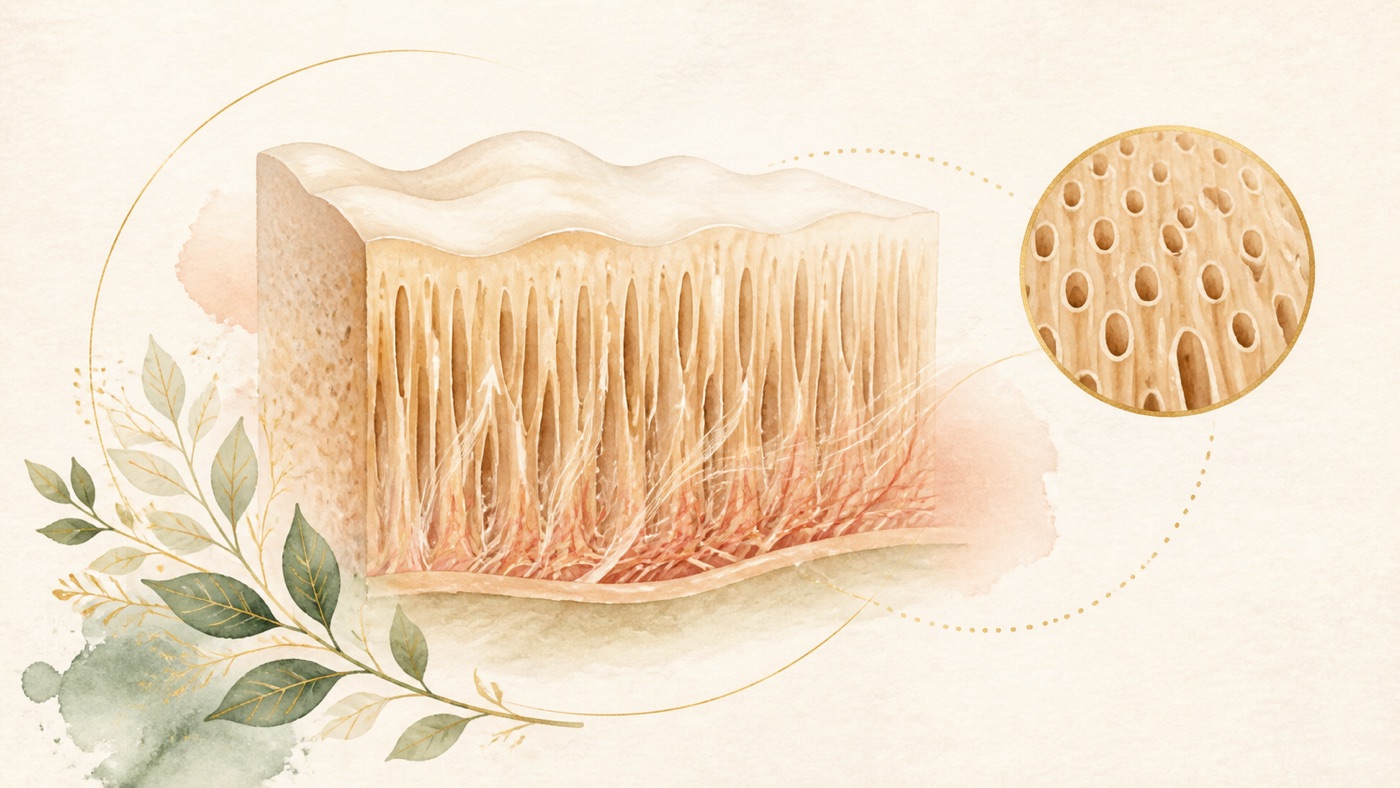
F2|疼痛的主流機轉解釋為牙本質小管內液體流動(水動力理論)
- 來源#: #10|confidence: high|basis: peer_reviewed(PMID 32762733)|geo: universal|period: BMC Oral Health, 2020
- caveat: 為「廣泛被接受的解釋」,非已被實驗證實的單一機轉;同一份回顧明載底層神經感覺機轉至今仍不清楚(Fn89)。本條不支撐任何關於疼痛「性質」(短促/尖銳/隨刺激結束)的描述——本輪檢索之全部摘要皆無此類逐字表述,故正文已刪除該描述。見 F3。
F3|文獻已提出五種並非互斥的牙本質感覺機轉,牙髓損傷反應可改變其相對貢獻,牙髓發炎可致神經萌芽與周邊敏化
- 來源#: #11|confidence: moderate|basis: peer_reviewed(PMID 34302871)|geo: universal|period: J Endod, 2021
- caveat: 屬敘述性回顧;「可能」為原文語氣,不得改寫為必然。原文的推論方向是「牙髓對組織損傷的反應→各機轉相對貢獻可能改變」,不得反向讀成「症狀性質改變→機轉組成改變」(原文未討論症狀性質與機轉的對應關係)。本條不支撐任何個別症狀的診斷推論。
F4|敏感與侵蝕性牙齒磨耗、牙齦退縮呈統計顯著關聯;與心口灼熱亦有顯著關聯;使用電動牙刷者相關指標較低
- 來源#: #13|confidence: moderate|basis: peer_reviewed(PMID 39317300)|geo: universal|period: J Dent, 2024;七國橫斷面
- caveat: 橫斷面設計只能顯示關聯,不能推論因果。該摘要未報告敏感與齲齒之關聯,不得反推「與蛀牙無關」。
F5|沒有直接證據能確認刷牙是造成牙齦退縮或非齲性頸部病灶的單一成因;局部與病人因素高度相關
- 來源#: #04|confidence: high|basis: clinical_guideline(EFP 第11屆工作坊共識報告,PMID 25626357)|geo: universal|period: J Clin Periodontol, 2015
- caveat: 「無直接證據」指證據缺口,非證明刷牙無關;本條不構成任何刷牙方式指示。
F6|成人族群的敏感盛行率報告值差異大:57%(綜述引述)與 75.9%(七國臨床實測,Schiff ≥ 1)
- 來源#: #12(57%)/#13(75.9%)|confidence: moderate|basis: peer_reviewed(PMID 24571559/39317300)|geo: universal|period: 2014/2024
- caveat: 兩數字測量方式不同,不可互比亦不可取平均;#12 的 57% 原文為 `up to 57 percent`,屬上限值而非點估計,正文已標示;#13 作者自陳其盛行率高於多數既有文獻。兩者之差為 18.9 個百分點,正文只寫「將近十九個百分點」,不得寫成「二十個百分點以上」(本輪修正命中)。
F7|敏感盛行率在約 38–47 歲之後下降;門齒受影響比例高於臼齒
- 來源#: #13(年齡曲線)/#W9(牙位分布)|confidence: low|basis: peer_reviewed(PMID 39317300/37434150)|geo: universal|period: 2024/2023
- caveat: 兩者為不同國家、不同抽樣的橫斷面研究,牙位分布結論來自單一國家樣本(土耳其,259 女+209 男,年齡 18–72,Fn92),且百分比之分母為牙齒層級(共 12,048 顆牙,Fn93)而非人數,不得概括為普世模式,亦不得與以人為分母的盛行率互比。正文三處提及 #W9 之處已逐一補上國別、樣本與分母層級(本輪修正命中)。
F8|領域內至今無普世接受的鑑別診斷與治療選擇指引;多種疾病症狀相似導致診斷混淆
- 來源#: #10|confidence: high|basis: peer_reviewed(PMID 32762733)|geo: universal|period: 2020
- caveat: 屬 2020 年之表述;本輪未檢得其後有普世指引問世之證據,但不排除區域性指引存在。
F9|正確診斷需病史、含 X 光之臨床檢查、多種測試、風險因子辨識與鑑別診斷五要素;共識另建立診斷演算法與臨床決策閾值
- 來源#: #12(五要素)/#02(演算法)/#01(決策閾值)|confidence: high|basis: clinical_guideline+peer_reviewed(PMID 24571559/12662460/35049250)|geo: universal|period: 2014/2003/2022
- caveat: #02 為 2003 年共識,年代較早;三者均屬專家共識或綜述層級,非隨機對照試驗結論。
F10|全國性調查揭露之臨床落差包含低度診斷與錯誤鑑別診斷;學會據以建議常規篩檢並提出個案定義分類系統
- 來源#: #03|confidence: moderate|basis: clinical_guideline(ISP 官方建議,PMID 35959314)|geo: universal|period: J Indian Soc Periodontol, 2022
- caveat: 調查對象為印度牙醫師(3,000 人,2020 年 12 月,Fn95),不得外推為全球臨床現況;正文凡引用此條之處(§4-1、§十、§十一)皆須帶國別,本輪已補齊 §十 與 §十一 漏標之處。該文 PubMed PublicationType 未標 Consensus Statement,屬學會官方建議層級。
F11|裂齒為自牙冠起始向牙齦下進行之不完全性斷裂;因裂痕範圍未知使診斷困難;修復與根管處置尚無文獻共識;ESE 已提出立場聲明
- 來源#: #W5(定義/無共識/存活與監測)/#W6(診斷困難)/#W4(ESE 立場聲明)|confidence: moderate|basis: clinical_guideline(#W4, PMID 39840523)+peer_reviewed(PMID 35809233/33770422)|geo: universal|period: 2025/2022/2021
- caveat: #W4 摘要僅載明範圍與性質,未含可引用之具體判準;本文未逐字引用其全文內容。
F12|已修復之裂齒五年存活機率經回顧記載為 74.1–96.8%
- 來源#: #W6|confidence: low|basis: peer_reviewed(敘述性回顧,PMID 33770422)|geo: universal|period: Eur J Prosthodont Restor Dent, 2021
- caveat: 區間極寬且來自敘述性回顧而非統合分析,原文同時標示預後為 guarded;僅供量級參考,不得作為個別牙齒之預期。
F13|脫敏處置僅兩條作用路線(小管封閉/阻斷牙髓神經反應);多數製劑作用於症狀端,長期結果不確定
- 來源#: #04(兩條路線)/#10(症狀端與長期不確定)|confidence: high(機轉分類)/moderate(長期不確定)|basis: clinical_guideline+peer_reviewed(PMID 25626357/32762733)|geo: universal|period: 2015/2020
- caveat: 「長期結果不確定」為原文表述,不等於無效;亦不得反向推論「短期有效即代表病因已處理」。
F14|居家脫敏牙膏之成分層級證據:125 篇 RCT/12,541 人之網絡統合分析顯示 CSP 相對含氟牙膏對照對三種刺激皆有利(高至中等確定性);32 篇/4,638 人之網絡統合分析建議亞錫(stannous)、鉀鹽±亞錫或精胺酸配方每日兩次;53 篇/4,796 人之統合分析列出七類有效成分(證據等級分為低與中等兩層)並不建議含鍶與非晶型磷酸鈣者
- 來源#: #06/#07/#08|confidence: moderate|basis: peer_reviewed(PMID 32037944/36753794/29787782)|geo: universal|period: 2020/2023/2018
- caveat: 三份分析對含鍶製劑的結論方向不同(#08 不建議 vs #04 顯示效果),須並陳不得擇一;均為短期疼痛結局,非長期病因結局;本文不涉任何品牌。本輪補正三點:①#06 的效果量對照物是含氟牙膏(Fn90)而非安慰劑或「不用藥」,正文與 FAQ 皆已明寫;②#06 冷刺激項可信區間下界僅 0.34、接近零,正文已揭露區間;③#08 的七類成分證據等級不齊平(含鍶、鉀+鍶、鉀+氟化亞錫為低品質,其餘五類中等,Fn91),不得抹平為並列;④#07 原文僅寫 `stannous`,未指定為氟化亞錫,正文已改為「亞錫」。
F15|此領域之黃金標準治療模式尚未確立;11 種製劑、105 篇 RCT 因異質性無法進行統合分析;專業施用製劑之相對效果證據有限
- 來源#: #05|confidence: high|basis: peer_reviewed(EFP 工作坊系統性回顧,PMID 25495777)|geo: universal|period: J Clin Periodontol, 2015
- caveat: 檢索截止 2014 年 7 月,其後新證據(如 #06/#07)未納入;本條用於標示證據上限,非否定個別製劑效果。
F16|診間處置證據:含精胺酸與 CSP 之專業預防糊劑顯示效果;15% CSP 對牙周治療後敏感優於對照(證據等級低);生物活性玻璃於 30 篇研究、2,845 人顯示可降低敏感反應(時間窗至 12 週,長期與其他製劑相當);雷射於 34 篇研究顯示可控制疼痛症狀但無法建立協定、多數追蹤上限 6 個月
- 來源#: #04/#09/#W8/#W7|confidence: moderate(生物活性玻璃、雷射之短期結局)/low(15% CSP)|basis: clinical_guideline+peer_reviewed(PMID 25626357/26544035/40462050/37023343)|geo: universal|period: 2015/2015/2025/2023
- caveat: 所有診間結論皆為短中期;無任何直接比較可支持某一種診間處置優於其他;本文不提供操作或劑量指示。雷射條目另補方法學限定(本輪修正命中):#W7 的 34 篇中僅 11 篇進入量化分析,且統合分析比較的是「治療前 vs 治療 3 個月後的平均疼痛」(Fn94),屬組內前後比較而非對照組比較,無法排除安慰劑效應與自然變化;其唯一的組間比較(高功率 vs 低功率)未達統計顯著。故「有效選項」一詞只能在此限定下閱讀。
F17|牙周治療(洗牙/根面平整)後之敏感為已被研究之臨床現象:EFP 工作坊將其處置納入審查範圍;RCT 招募 75 名 SRP 後敏感病人比較三種方案
- 來源#: #04/#14|confidence: moderate|basis: clinical_guideline+peer_reviewed(PMID 25626357/33552783)|geo: universal|period: 2015/2021
- caveat: #14 為單中心、75 人、短期試驗;本輪未檢得以緩解時間(天/週)為結局之系統性回顧,故不得提供任何天數。
F18|診間美白具高比例敏感風險,成因為牙髓組織之發炎過程;居家美白高濃度增加敏感風險與強度,惟平均強度屬輕度、證據品質低
- 來源#: #W3(機轉與風險)/#W1(濃度—風險與限定)|confidence: low(因 QoE 低)|basis: peer_reviewed(PMID 31446977/40484311)|geo: universal|period: JADA, 2019/J Dent, 2025
- caveat: #W1 自陳證據品質為低、多數納入研究高偏誤風險;不得將「高濃度風險較高」讀成任何濃度選擇建議——該決定屬牙醫師。本輪另補兩點:①#W3 之機轉句出自該文 BACKGROUND 段,該研究的 PICO 是「消炎止痛藥能否預防美白後敏感」,其 GRADE 高等級評的是藥物無效這個結局、不是機轉本身,故正文 §8-1 與 §十一 皆已標示此句為背景敘述;②濃度分層的具體數字與研究規模已自正文移除(原 Fn73/Fn74 退役),該子題屬正典卡 KM-DENTAL-19,本文只留一句摘述+下鏈。
F19|縮短居家美白凝膠使用時間可顯著減少敏感事件,惟應謹慎應用(色澤改變參數在依建議時間使用時較佳)
- 來源#: #W10|confidence: moderate|basis: peer_reviewed(PMID 39623180)|geo: universal|period: Clin Oral Investig, 2024
- caveat: 屬取捨關係之描述,非操作指示;本文不提供任何美白方案之時間或濃度建議。
F20|脫敏牙膏在美白情境下之效果依方案而異(高濃度過氧化尿素居家與單次高濃度診間顯示效果;低濃度居家與兩次療程診間未顯示效果)
- 來源#: #W2|confidence: low|basis: peer_reviewed(PMID 39078468)|geo: universal|period: Clin Oral Investig, 2024
- caveat: 僅 5 篇研究、387 人,各情境的子群樣本更小;不得外推至未被研究的美白方案。
F21|高等級證據不支持以消炎與止痛藥物預防診間美白所致之敏感
- 來源#: #W3|confidence: high(原文標示 GRADE 高等級)|basis: peer_reviewed(PMID 31446977)|geo: universal|period: JADA, 2019
- caveat: 本條為「不支持某預防路徑」之陰性結論,不得反向解讀為任何用藥建議;本文不含用藥指示。
F22|CSP 使用之副作用資料稀少(僅兩篇研究報告)
- 來源#: #09|confidence: low|basis: peer_reviewed(PMID 26544035)|geo: universal|period: PLoS One, 2015
- caveat: 資料稀少≠安全;為安全性面向的證據缺口記錄。
合規註記
- 本文為衛生教育與醫學新知整理,屬一般性衛教資訊,未涉招徠醫療業務,不構成醫療廣告,亦不構成診斷或治療建議。
- 本文不提供任何金額、收費或給付資訊,不推薦任何醫療機構、醫師、品牌或產品,不含任何可識別個案,亦無第三人對療程的主觀評述。
- 文中所有脫敏成分與處置之陳述均為成分/方法層級的文獻整理,非產品效能宣稱;口腔清潔用品不得替代診斷與治療。
- 本文不含任何用藥、劑量或操作指示;涉及藥物的引用僅呈現研究之陰性結論。
- 文中所有數據均為族群層級之研究結果,實際治療方式與效果因人而異,須由牙醫師評估後決定。
來源清單
取用/實測日期:2026-08-06(全部來源同日以 curl/PubMed E-utilities 實測,HTTP 200,逐字 span 以程式比對通過)
錨定檔既驗來源
| # | basis | 標題 | 出處 | PMID/URL |
|---|---|---|---|---|
| #01 | clinical_guideline | The Decision Tree for Clinical Management of Dentin Hypersensitivity. A Consensus Report. | Oral Health Prev Dent, 2022 | PMID 35049250|https://pubmed.ncbi.nlm.nih.gov/35049250/ |
| #02 | clinical_guideline | Consensus-based recommendations for the diagnosis and management of dentin hypersensitivity. | J Can Dent Assoc, 2003 | PMID 12662460|https://pubmed.ncbi.nlm.nih.gov/12662460/ |
| #03 | clinical_guideline | ISP Good Clinical Practice Recommendations for the management of Dentin Hypersensitivity. | J Indian Soc Periodontol, 2022 | PMID 35959314|https://pubmed.ncbi.nlm.nih.gov/35959314/ |
| #04 | clinical_guideline | Effect of professional mechanical plaque removal on secondary prevention of periodontitis…: consensus report of group 4 of the 11th European Workshop on Periodontology | J Clin Periodontol, 2015 | PMID 25626357|https://pubmed.ncbi.nlm.nih.gov/25626357/ |
| #05 | peer_reviewed | Management of dentine hypersensitivity: efficacy of professionally and self-administered agents. | J Clin Periodontol, 2015 | PMID 25495777|https://pubmed.ncbi.nlm.nih.gov/25495777/ |
| #06 | peer_reviewed | Desensitizing Toothpastes for Dentin Hypersensitivity: A Network Meta-analysis. | J Dent Res, 2020 | PMID 32037944|https://pubmed.ncbi.nlm.nih.gov/32037944/ |
| #07 | peer_reviewed | Comparative efficacy of self-administered dentifrices for the management of dentine hypersensitivity - A systematic review and network meta-analysis. | J Dent, 2023 | PMID 36753794|https://pubmed.ncbi.nlm.nih.gov/36753794/ |
| #08 | peer_reviewed | Effect of desensitizing toothpastes on dentine hypersensitivity: A systematic review and meta-analysis. | J Dent, 2018 | PMID 29787782|https://pubmed.ncbi.nlm.nih.gov/29787782/ |
| #09 | peer_reviewed | The Effect of Calcium Sodium Phosphosilicate on Dentin Hypersensitivity: A Systematic Review and Meta-Analysis. | PLoS One, 2015 | PMID 26544035|https://pubmed.ncbi.nlm.nih.gov/26544035/ |
| #10 | peer_reviewed | Pathogenesis, diagnosis and management of dentin hypersensitivity: an evidence-based overview for dental practitioners. | BMC Oral Health, 2020 | PMID 32762733|https://pubmed.ncbi.nlm.nih.gov/32762733/ |
| #11 | peer_reviewed | Current Concepts of Dentinal Hypersensitivity. | J Endod, 2021 | PMID 34302871|https://pubmed.ncbi.nlm.nih.gov/34302871/ |
| #12 | peer_reviewed | Dentin hypersensitivity: differential diagnosis, tests, and etiology. | Compend Contin Educ Dent, 2014 | PMID 24571559|https://pubmed.ncbi.nlm.nih.gov/24571559/ |
| #13 | peer_reviewed | Prevalence of dentine hypersensitivity, erosive tooth wear, gingival recession and periodontal health in seven European countries. | J Dent, 2024 | PMID 39317300|https://pubmed.ncbi.nlm.nih.gov/39317300/ |
| #14 | peer_reviewed | Comparative Efficacy of Cow Milk, KNO3, and Warm Saline Rinses in Treating Dentin Hypersensitivity Following Nonsurgical Periodontal Treatment: A Randomized Controlled Trial. | Cureus, 2021 | PMID 33552783|https://pubmed.ncbi.nlm.nih.gov/33552783/ |
錨定檔第〇節聲明:本領域 official_statement 階層從缺(NIDCR 專頁實測 404、MedlinePlus 無對題主題頁),位階較高的威信來源實質落在 clinical_guideline;依 owner 2026-08-06 全線 global 定調,台灣法規/健保/衛生局內容未作為本篇任何醫學或制度宣稱之 basis,在地制度一律下鏈至對應 TW 正典卡與 P12。
WRITER-ADDED SOURCES(本文新增,含實測證據)
新增理由:錨定檔涵蓋四個病人問題,但本篇領域範圍另含①美白後敏感(劑量—風險、脫敏策略、藥物預防之陰性結論)、②與裂齒的鑑別(定義、診斷困難、官方立場聲明、預後)、③診間處置光譜中的雷射與生物活性玻璃、④風險因子與牙位分布之獨立橫斷面佐證。以下 10 條全部經本機 curl 實測(HTTP 200)並程式化逐字比對通過,未修改錨定檔。
| # | basis | 標題 | 出處 | PMID/URL |
|---|---|---|---|---|
| #W1 | peer_reviewed | Effect of at-home bleaching agents and concentrations on tooth sensitivity: A systematic review and network meta-analysis | J Dent, 2025 | PMID 40484311|https://pubmed.ncbi.nlm.nih.gov/40484311/ |
| #W2 | peer_reviewed | Effectiveness of desensitizing toothpastes in reducing tooth sensitivity after tooth bleaching: a systematic review | Clin Oral Investig, 2024 | PMID 39078468|https://pubmed.ncbi.nlm.nih.gov/39078468/ |
| #W3 | peer_reviewed | Effect of anti-inflammatory and analgesic drugs for the prevention of bleaching-induced tooth sensitivity: A systematic review and meta-analysis | J Am Dent Assoc, 2019 | PMID 31446977|https://pubmed.ncbi.nlm.nih.gov/31446977/ |
| #W4 | clinical_guideline | Position statement on longitudinal cracks and fractures of teeth(European Society of Endodontology) | Int Endod J, 2025(PublicationType: Consensus Statement) | PMID 39840523|https://pubmed.ncbi.nlm.nih.gov/39840523/ |
| #W5 | peer_reviewed | Treatment of cracked teeth: A comprehensive narrative review | Clin Exp Dent Res, 2022 | PMID 35809233|https://pubmed.ncbi.nlm.nih.gov/35809233/ |
| #W6 | peer_reviewed | Cracked Tooth Syndrome: Assessment, Prognosis and Predictable Management Strategies | Eur J Prosthodont Restor Dent, 2021 | PMID 33770422|https://pubmed.ncbi.nlm.nih.gov/33770422/ |
| #W7 | peer_reviewed | Treatment outcome for dentin hypersensitivity with laser therapy: Systematic review and meta-analysis | Dent Med Probl, 2023 | PMID 37023343|https://pubmed.ncbi.nlm.nih.gov/37023343/ |
| #W8 | peer_reviewed | Efficacy of bioactive glass-based desensitizer compared to other desensitizing agents or techniques in dentin hypersensitivity: a systematic review | BMC Oral Health, 2025 | PMID 40462050|https://pubmed.ncbi.nlm.nih.gov/40462050/ |
| #W9 | peer_reviewed | The prevalence and predictive factors of dentine hypersensitivity among adults in Turkey | BMC Oral Health, 2023(Observational) | PMID 37434150|https://pubmed.ncbi.nlm.nih.gov/37434150/ |
| #W10 | peer_reviewed | Effect of the reduction in the exposure time to at-home bleaching gel on color change and tooth sensitivity: A systematic review and meta-analysis | Clin Oral Investig, 2024 | PMID 39623180|https://pubmed.ncbi.nlm.nih.gov/39623180/ |
FAQ
- Q1. 喝冰水牙齒會酸痛,是什麼在痛?
- **這類疼痛的前提是牙本質暴露於口腔環境 [Fn2],主流解釋是牙本質小管內的液體流動 [Fn1];但機轉不只一種,文獻整理出五種並非互斥的假說 [Fn5][Fn6],且牙髓受損時各機轉的相對貢獻可能改變 [Fn7]。** 在一項土耳其成人橫斷面研究中,冷刺激引發的敏感確實高於吹氣刺激 [Fn9][Fn92]。至於你這顆牙屬於哪一種,需要臨床鑑別 [Fn24]。
- Q1. 冷たい水を飲むと歯がしみて痛むのは、何が痛んでいるのですか? — **この種の痛みの前提は象牙質が口腔環境に露出していることであり [Fn2]、主流の説明は象牙細管内の液体の移動です [Fn1];ただしメカニズムは一つではなく、文献は互いに排他的ではない 5 つの仮説を整理しており [Fn5][Fn6]、また歯髄が損傷を受けたときには各メカニズムの相対的な寄与が変わりうるとされています [Fn7]。** トルコの成人を対象とした横断研究では、冷刺激によって引き起こされる知覚過敏はたしかにエアブロー刺激より高いという結果でした [Fn9][Fn92]。あなたのその歯がどれに当たるのかについては、臨床的な鑑別が必要です [Fn24]。
- Q1. My teeth ache when I drink iced water — what is it that is hurting? — **The precondition of pain of this kind is that dentine is exposed to the oral environment [Fn2], and the mainstream explanation is fluid movement inside the dentinal tubules [Fn1]; but there is more than one mechanism — the literature sets out five hypotheses that are not mutually exclusive [Fn5][Fn6], and when the pulp is injured the relative contribution of each mechanism may change [Fn7].** In a cross-sectional study of Turkish adults, the sensitivity provoked by the cold stimulus was indeed greater than that provoked by the air-blast stimulus [Fn9][Fn92]. Which of these that tooth of yours belongs to needs clinical differentiation [Fn24].
- Q2. 敏感性牙膏有用嗎?
- **有成分層級的實證,但它處理的是症狀而不是病因:多數脫敏製劑透過封閉牙本質小管降低症狀 [Fn38],長期結果並不確定 [Fn39]。** 證據面上,125 篇 RCT、12,541 人的網絡統合分析顯示,**相對於含氟牙膏對照** [Fn90],CSP 對三種刺激皆呈現有利效果(高至中等確定性)[Fn41][Fn42]——請注意這個「有利」是相對含氟牙膏,不是相對「不用藥」;32 篇研究、4,638 人的網絡統合分析則指出,每日兩次使用含亞錫(原文 stannous)、鉀鹽±亞錫或精胺酸之配方可被建議 [Fn43][Fn44]。同時要知道:黃金標準治療模式尚未確立 [Fn52],且不同回顧對部分成分(如鍶)結論方向不同 [Fn47][Fn48]。本段為成分層級的文獻整理,不是產品推薦,適用與否須由牙醫師評估。
- Q2. 知覚過敏用の歯磨剤は役に立ちますか? — **成分レベルの実証はありますが、それが対処しているのは症状であって病因ではありません:多くの知覚過敏抑制材は象牙細管を封鎖することで症状を軽減し [Fn38]、長期的な結果は確実ではありません [Fn39]。** エビデンスの面では、125 件の RCT、12,541 名によるネットワークメタアナリシスが、**フッ化物配合歯磨剤の対照と比べて** [Fn90]、CSP は 3 種類の刺激すべてに対して有利な効果を示した(高〜中等度の確実性)と報告しています [Fn41][Fn42]——この「有利」はフッ化物配合歯磨剤と比べてのことであり、「何も使わないこと」と比べてではない点に注意してください;32 件の研究、4,638 名によるネットワークメタアナリシスは、スズ(原文は stannous)、カリウム塩±スズ、またはアルギニンの配合を 1 日 2 回使用することは推奨されうる、と指摘しています [Fn43][Fn44]。同時に知っておくべきことは:ゴールドスタンダードとなる治療法はまだ確立されておらず [Fn52]、一部の成分(ストロンチウムなど)についてはレビューごとに結論の方向が異なる [Fn47][Fn48]、ということです。本段落は成分レベルの文献の整理であって製品の推奨ではなく、適するかどうかは歯科医師が評価する必要があります。
- Q2. Do toothpastes for sensitive teeth work? — **There is evidence at the level of ingredients, but what it deals with is the symptom and not the cause: most desensitising agents lower the symptom by occluding the dentinal tubules [Fn38], and the long-term outcome is uncertain [Fn39].** On the evidence: a network meta-analysis of 125 RCTs and 12,541 people shows that **relative to a fluoride toothpaste comparator** [Fn90], CSP has a favourable effect for all three stimuli (high to moderate certainty) [Fn41][Fn42] — note that this "favourable" is relative to fluoride toothpaste, not relative to "using no agent at all"; a network meta-analysis of 32 studies and 4,638 people states that twice-daily use of formulations containing stannous (the source wording is stannous), potassium ± stannous or arginine can be recommended [Fn43][Fn44]. At the same time it should be known that the gold standard treatment modality has not yet been established [Fn52], and that different reviews reach conclusions pointing in different directions on some of the ingredients, strontium for example [Fn47][Fn48]. This passage is a compilation of the literature at the level of ingredients, not a product recommendation; whether it applies has to be assessed by a dentist.
- Q3. 牙齒敏感是蛀牙嗎?
- **不能自己判斷:多種牙科疾病在不同階段會出現與敏感相似的症狀 [Fn3],而領域內至今沒有普世接受的鑑別診斷指引 [Fn4];正確判斷需要病史、含 X 光的臨床檢查與多項測試 [Fn24]。** 需要特別注意的是,本文未檢得任何「多少比例的敏感其實是蛀牙」的可靠數字,因此不提供比例。蛀牙該不該補、能拖多久,詳見正典卡 KM-DENTAL-12、KM-DENTAL-15(皆產製中)與領域文 P04。
- Q3. 歯がしみるのは、う蝕(むし歯)ですか? — **自分では判断できません:複数の歯科疾患が異なる段階で知覚過敏と似た症状を示し [Fn3]、この領域には今なお普遍的に受け入れられた鑑別診断の指針が存在しません [Fn4];正確な判断には病歴、エックス線写真を含む臨床検査、複数の検査が必要です [Fn24]。** とくに注意が必要なのは、本記事が「知覚過敏のうちどれくらいの割合が実はう蝕なのか」という信頼できる数値を検索で得られなかったため、割合を示さないという点です。う蝕を充填すべきかどうか、どのくらい先延ばしできるかは、正典カード KM-DENTAL-12、KM-DENTAL-15(いずれも制作中)と領域記事 P04 を参照してください。
- Q3. Does a sensitive tooth mean decay? — **You cannot judge it for yourself: several dental conditions produce symptoms resembling sensitivity at different stages [Fn3], and within the domain there is to this day no universally accepted guideline for differential diagnosis [Fn4]; correct judgement requires the patient history, a clinical examination including radiographs, and multiple tests [Fn24].** What needs particular attention is that this article retrieved no reliable figure of the kind "what proportion of sensitivity turns out to be caries", and it therefore gives no proportion. Whether a decayed tooth should be filled, and how long it can be left, are set out in canonical cards KM-DENTAL-12 and KM-DENTAL-15 (both in production) and in pillar article P04.
來源錨定
- #01 | clinical_guideline | The Decision Tree for Clinical Management of Dentin Hypersensitivity. A Consensus Report. | Oral Health Prev Dent, 2022 | PMID… · https://pubmed.ncbi.nlm.nih.gov/35049250/ · 在 IDAEO 的其他引用
- #02 | clinical_guideline | Consensus-based recommendations for the diagnosis and management of dentin hypersensitivity. | J Can Dent Assoc, 2003 | PMID… · https://pubmed.ncbi.nlm.nih.gov/12662460/ · 在 IDAEO 的其他引用
- #03 | clinical_guideline | ISP Good Clinical Practice Recommendations for the management of Dentin Hypersensitivity. | J Indian Soc Periodontol, 2022 | PMID… · https://pubmed.ncbi.nlm.nih.gov/35959314/ · 在 IDAEO 的其他引用
- #04 | clinical_guideline | Effect of professional mechanical plaque removal on secondary prevention of periodontitis…: consensus report of group 4 of the… · https://pubmed.ncbi.nlm.nih.gov/25626357/ · 在 IDAEO 的其他引用
- #05 | peer_reviewed | Management of dentine hypersensitivity: efficacy of professionally and self-administered agents. | J Clin Periodontol, 2015 | PMID… · https://pubmed.ncbi.nlm.nih.gov/25495777/ · 在 IDAEO 的其他引用
- #06 | peer_reviewed | Desensitizing Toothpastes for Dentin Hypersensitivity: A Network Meta-analysis. | J Dent Res, 2020 | PMID 32037944 · · https://pubmed.ncbi.nlm.nih.gov/32037944/ · 在 IDAEO 的其他引用
- #07 | peer_reviewed | Comparative efficacy of self-administered dentifrices for the management of dentine hypersensitivity - A systematic review and network… · https://pubmed.ncbi.nlm.nih.gov/36753794/ · 在 IDAEO 的其他引用
- #08 | peer_reviewed | Effect of desensitizing toothpastes on dentine hypersensitivity: A systematic review and meta-analysis. | J Dent, 2018 | PMID 29787782 · · https://pubmed.ncbi.nlm.nih.gov/29787782/ · 在 IDAEO 的其他引用
- #09 | peer_reviewed | The Effect of Calcium Sodium Phosphosilicate on Dentin Hypersensitivity: A Systematic Review and Meta-Analysis. | PLoS One, 2015 | PMID… · https://pubmed.ncbi.nlm.nih.gov/26544035/ · 在 IDAEO 的其他引用
- #10 | peer_reviewed | Pathogenesis, diagnosis and management of dentin hypersensitivity: an evidence-based overview for dental practitioners. | BMC Oral… · https://pubmed.ncbi.nlm.nih.gov/32762733/ · 在 IDAEO 的其他引用
- #11 | peer_reviewed | Current Concepts of Dentinal Hypersensitivity. | J Endod, 2021 | PMID 34302871 · · https://pubmed.ncbi.nlm.nih.gov/34302871/ · 在 IDAEO 的其他引用
- #12 | peer_reviewed | Dentin hypersensitivity: differential diagnosis, tests, and etiology. | Compend Contin Educ Dent, 2014 | PMID 24571559 · · https://pubmed.ncbi.nlm.nih.gov/24571559/ · 在 IDAEO 的其他引用
- #13 | peer_reviewed | Prevalence of dentine hypersensitivity, erosive tooth wear, gingival recession and periodontal health in seven European countries. | J… · https://pubmed.ncbi.nlm.nih.gov/39317300/ · 在 IDAEO 的其他引用
- #14 | peer_reviewed | Comparative Efficacy of Cow Milk, KNO3, and Warm Saline Rinses in Treating Dentin Hypersensitivity Following Nonsurgical Periodontal… · https://pubmed.ncbi.nlm.nih.gov/33552783/ · 在 IDAEO 的其他引用
- #W1 | peer_reviewed | Effect of at-home bleaching agents and concentrations on tooth sensitivity: A systematic review and network meta-analysis | J Dent… · https://pubmed.ncbi.nlm.nih.gov/40484311/ · 在 IDAEO 的其他引用
- #W2 | peer_reviewed | Effectiveness of desensitizing toothpastes in reducing tooth sensitivity after tooth bleaching: a systematic review | Clin Oral… · https://pubmed.ncbi.nlm.nih.gov/39078468/ · 在 IDAEO 的其他引用
- #W3 | peer_reviewed | Effect of anti-inflammatory and analgesic drugs for the prevention of bleaching-induced tooth sensitivity: A systematic review and… · https://pubmed.ncbi.nlm.nih.gov/31446977/ · 在 IDAEO 的其他引用
- #W4 | clinical_guideline | Position statement on longitudinal cracks and fractures of teeth(European Society of Endodontology) | Int Endod J… · https://pubmed.ncbi.nlm.nih.gov/39840523/ · 在 IDAEO 的其他引用
- #W5 | peer_reviewed | Treatment of cracked teeth: A comprehensive narrative review | Clin Exp Dent Res, 2022 | PMID 35809233 · · https://pubmed.ncbi.nlm.nih.gov/35809233/ · 在 IDAEO 的其他引用
- #W6 | peer_reviewed | Cracked Tooth Syndrome: Assessment, Prognosis and Predictable Management Strategies | Eur J Prosthodont Restor Dent, 2021 | PMID… · https://pubmed.ncbi.nlm.nih.gov/33770422/ · 在 IDAEO 的其他引用
- #W7 | peer_reviewed | Treatment outcome for dentin hypersensitivity with laser therapy: Systematic review and meta-analysis | Dent Med Probl, 2023 | PMID… · https://pubmed.ncbi.nlm.nih.gov/37023343/ · 在 IDAEO 的其他引用
- #W8 | peer_reviewed | Efficacy of bioactive glass-based desensitizer compared to other desensitizing agents or techniques in dentin hypersensitivity: a… · https://pubmed.ncbi.nlm.nih.gov/40462050/ · 在 IDAEO 的其他引用
- #W9 | peer_reviewed | The prevalence and predictive factors of dentine hypersensitivity among adults in Turkey | BMC Oral Health, 2023(Observational) | PMID… · https://pubmed.ncbi.nlm.nih.gov/37434150/ · 在 IDAEO 的其他引用
- #W10 | peer_reviewed | Effect of the reduction in the exposure time to at-home bleaching gel on color change and tooth sensitivity: A systematic review and… · https://pubmed.ncbi.nlm.nih.gov/39623180/ · 在 IDAEO 的其他引用
引用本文
Lucy・《敏感性牙齒與牙本質全指南:從機轉、鑑別到處置證據光譜的領域地圖|證據鏈》・IDAEO 知識庫・2026-08-13・https://km.idaeo.ai/post/reports/dental-pillar-sensitivity-evidence更新於 2026-08-27